Unique Pearl Necklaces: 2026 Technical Guide to Baroque & Keshi
Discover the technical nuances of unique pearl necklaces in 2026. Expert analysis of baroque, keshi, and coin pearls, nacre depth, and drilling methods.

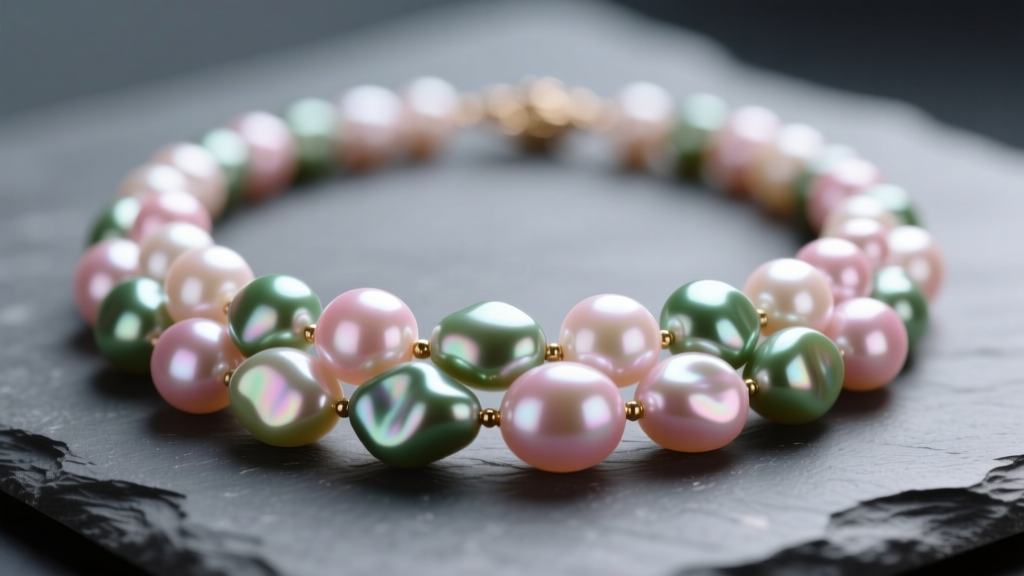
The Anatomy of Asymmetry: Why Irregular Pearls Dominate 2026
The landscape of fine jewelry has fundamentally shifted. While perfectly spherical Akoya and South Sea pearls remain staples of traditional couture, the modern collector and artisan are increasingly drawn to the organic, unpredictable geometry of asymmetrical gems. When designing or sourcing unique pearl necklaces, understanding the structural and gemological differences between round and baroque specimens is no longer optional—it is a baseline requirement for high-end curation. In 2026, the market values the distinct optical properties of Keshi, Baroque, Coin, and Edison pearls, driven by a consumer desire for bespoke, non-replicable adornments.
Unlike their round counterparts, which are evaluated primarily on symmetry and surface cleanliness, asymmetrical pearls are graded on their orient (the iridescent play of color across the surface) and the artistic distribution of their ridges and grooves. According to the Gemological Institute of America (GIA), the very irregularities that would downgrade a round pearl are responsible for the superior light diffraction seen in high-grade baroque specimens. The uneven layers of aragonite platelets act as microscopic prisms, creating a depth of color that spherical pearls rarely achieve.
Nacre Thickness and Luster Grading in Non-Spherical Gems
To truly evaluate unique pearl necklaces, one must look beneath the surface—literally. The nacre (the crystalline substance secreted by the mollusk) dictates both the durability and the optical performance of the pearl.
- Keshi Pearls: These are entirely composed of solid nacre. Because they form when the mollusk rejects the bead nucleus but continues to secrete conchiolin and aragonite, a 6mm Keshi pearl possesses 6mm of solid nacre. This results in an exceptionally high, almost metallic luster.
- Baroque Freshwater Pearls: Typically bead-nucleated with a shaped shell core or tissue-nucleated, yielding thick nacre layers (often 2.0mm to 4.0mm) that conform to the irregular shape of the mantle tissue implant.
- Edison Pearls: A modern marvel of freshwater cultivation, these are bead-nucleated but grown over 2 to 3 years, resulting in nacre thicknesses exceeding 3.0mm. Their metallic overtones are a direct result of the dense, highly organized aragonite crystallization.
When grading luster on asymmetrical shapes, gemologists look for the sharpness of light reflection on the highest peaks of the pearl's ridges. A high-grade baroque pearl will exhibit a crisp, mirror-like reflection on its convex surfaces, while the concave grooves will display deep, saturated body colors and secondary overtones.
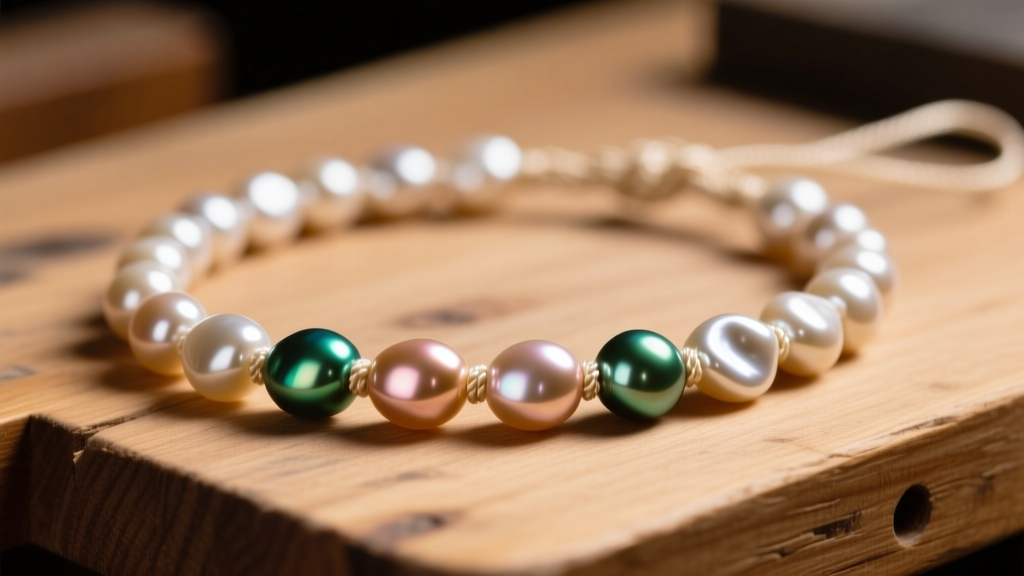
Drilling Engineering for Irregular Shapes
Manufacturing unique pearl necklaces presents severe mechanical challenges that do not exist when working with round pearls. Drilling an asymmetrical pearl requires advanced spatial planning to prevent "exit blowout"—a catastrophic chipping of the nacre where the drill bit exits the stone.
Axis Alignment and Laser Guidance
For elongated baroque or drop-shaped pearls, the drill channel must follow the longest structural axis to maintain the gem's center of gravity when suspended on a strand. In 2026, high-end ateliers utilize low-RPM, high-torque diamond-core micro-drills paired with laser-guided alignment jigs. The pearl is submerged in a cooling bath to prevent the friction heat from degrading the conchiolin (the organic protein binding the aragonite plates), which can cause internal micro-fractures.
Half-Drill vs. Full-Drill Mounting
While full-drilling is necessary for continuous knotted strands, half-drilling is often preferred for pendant focal points or clasp-mounted baroque gems. A half-drilled pearl (typically drilled 1/2 to 2/3 of its depth) is mounted on a silver or gold post using a two-part cyanoacrylate or epoxy resin. This preserves the structural integrity of the pearl's distal end, allowing the natural, unblemished tip of a baroque drop to remain visible and intact.
Comparative Matrix: Asymmetrical Pearl Varieties
When sourcing components for bespoke necklaces, jewelers must balance nacre quality, size availability, and structural durability. The following matrix breaks down the technical specifications of the most sought-after asymmetrical pearls in the current market.
| Pearl Type | Nucleus Type | Avg. Nacre Thickness | Optical Properties | Best Stringing Method |
|---|---|---|---|---|
| White Keshi | None (Solid Nacre) | 100% Nacre (2-8mm) | High luster, intense orient, bright white/silver | Size E Silk, knotted |
| Tahitian Baroque | Round Bead | 0.8mm - 2.5mm | Dark body color, peacock/aubergine overtones | Size F Silk or Power Pro |
| Freshwater Coin | Tissue / Flat Shell | 1.5mm - 3.0mm | Moderate luster, pastel pinks/peaches, flat profile | Wire-wrapped or linked |
| Edison Baroque | Round Bead | 2.0mm - 4.0mm | Metallic bronze/gold, deep ridges, high mass | Heavy-duty synthetic thread |
Stringing and Suspension Mechanics
The physical suspension of asymmetrical pearls requires specialized stringing materials. Because baroque and Keshi pearls often feature sharp, calcified ridges near their drill holes, traditional silk thread can fray and snap over time due to microscopic abrasion.
"For heavy, irregular freshwater pearls with sharp drill-hole margins, we increasingly recommend ultra-high-molecular-weight polyethylene (UHMWPE) threads like Beader's Secret or Power Pro. These materials offer the drape of silk but possess the tensile strength and abrasion resistance of Kevlar, ensuring the longevity of the necklace." — Master Stringer, Jewel Style Radar Atelier
Furthermore, the termination of the strand must incorporate French wire (also known as gimp)—a fine, hollow coil of sterling silver or gold-filled wire. This protects the thread from the metal clasp's jump ring, which acts like a saw blade against the thread during the natural articulation of the necklace when worn.

Sourcing and Authentication: Avoiding Treated Fakes
As the demand for unique pearl necklaces surges, so does the prevalence of heavily treated or entirely manufactured imitations. According to educational resources from Pearl Paradise, consumers and junior buyers must be vigilant against "Maque" pearls and shell-core beads coated with pearlescent paint.
To authenticate a high-value baroque or Edison pearl, examine the drill hole under a 10x triplet loupe. A genuine pearl will reveal a sharp, distinct boundary between the nacre and the bead nucleus (if bead-nucleated), and the nacre itself will appear as a dense, crystalline structure. In contrast, coated fakes will show peeling or flaking paint around the drill hole margin, and the interior will reveal a uniform, non-crystalline shell or plastic core. Additionally, genuine asymmetrical pearls will feel slightly gritty when rubbed gently against the edge of a tooth, a result of the overlapping aragonite platelets, whereas coated imitations will feel perfectly smooth.
Care Protocols for High-Nacre Asymmetrical Pearls
Maintaining the luster of unique pearl necklaces requires strict adherence to chemical and mechanical care protocols. Keshi and Edison pearls, despite their thick nacre, are highly susceptible to acidic degradation. Human perspiration (which typically has a pH between 4.5 and 7.0) can slowly dissolve the calcium carbonate structure of the pearl, leading to a permanent loss of luster and a chalky surface texture.
After every wear, the necklace must be wiped down with a soft, lint-free microfiber cloth slightly dampened with distilled water. Never use ultrasonic cleaners, steamers, or commercial jewelry dips, as the high-frequency vibrations can shatter the delicate, uneven internal structures of baroque pearls, and the harsh chemicals will strip the natural conchiolin binding agents. Store the necklace flat in a soft pouch; hanging an asymmetrical pearl strand for long periods can cause the stringing material to stretch unevenly due to the irregular weight distribution of the gems.


