How to Untangle and Clean Your Singapore Chain Necklace
Learn how to safely untangle, clean, and store your Singapore chain necklace with this expert step-by-step guide to prevent kinks.


The Singapore chain necklace is a masterpiece of jewelry engineering. Known for its brilliant, diamond-cut facets and intricate braided geometry, it catches the light like almost no other chain style. However, this same complex structure—comprising twisted, interlocking oval links—makes it notoriously prone to tangling, kinking, and catching on clothing or hair. If you own a sterling silver or gold Singapore chain, you already know the frustration of pulling it out of your jewelry box only to find it tied in a seemingly impossible knot.
As a jewelry specialist, I see damaged Singapore chains weekly. Most damage doesn't occur during wear; it happens during improper untangling or aggressive cleaning. In this comprehensive guide, we will walk through the exact metallurgical reasons these chains tangle, the step-by-step friction-reduction method to safely untie them, and the precise cleaning protocols required to maintain their structural integrity without snapping the delicate solder joints.
Why Singapore Chains Tangle and Kink So Easily
To understand how to care for a Singapore chain, you must understand its geometry. Unlike a simple cable or curb chain, the Singapore chain is constructed from flattened, twisted links that are woven together. This creates a semi-rigid, mesh-like drape that mimics a liquid metal effect.
However, the flat, diamond-cut edges of the links act like microscopic hooks. When the chain is jostled in a drawer, these edges catch on one another. Furthermore, because the links are twisted, any rotational force applied to the chain (such as pulling it over your head) introduces torsional stress. If this stress exceeds the yield strength of the metal—particularly in thinner gauges like 0.9mm or 1.2mm—the chain will kink. A kink is a permanent deformation of the twist that weakens the solder points and eventually leads to link separation.
Tools You Need for Safe Maintenance
Before attempting to clean or detangle your necklace, gather the proper tools. Avoid using your fingernails or excessive force, which can warp the links.
- Friction Reducer: 100% pure cornstarch or cosmetic-grade baby powder. (Cornstarch is preferred as it is highly absorbent and poses no inhalation risks associated with talc).
- Precision Tools: Two size 9 or 10 beading needles, or a pair of fine-tipped, non-magnetic titanium tweezers.
- Cleaning Solution: Phosphate-free, ammonia-free mild dish soap (such as Dawn) and distilled water.
- Brush: An ultra-soft baby toothbrush or a specialized jewelry brush with natural bristles.
- Drying: A lint-free microfiber cloth and a low-heat hair dryer.
Step-by-Step Guide to Untangling a Knotted Singapore Chain
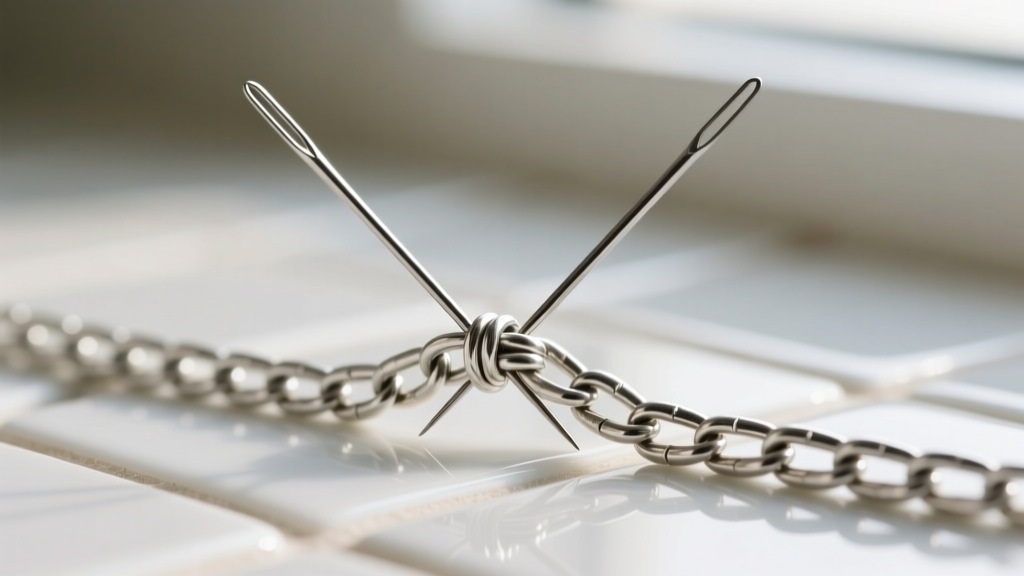
When your Singapore chain forms a tight knot, the natural instinct is to pull the ends to loosen it. Do not do this. Pulling tightens the braided links and increases the risk of snapping the solder joints. Instead, use the friction-reduction method.
Step 1: Apply the Friction Reducer
Lay the necklace flat on a hard, non-porous surface like a glass or ceramic tile. Generously dust the knot with cornstarch. Gently massage the powder into the knot using your fingertips. The cornstarch coats the microscopic facets of the diamond-cut links, eliminating the metal-on-metal friction that is keeping the knot locked.
Step 2: The Two-Needle Technique
Take your two beading needles. Insert the tip of the first needle into the absolute center of the knot and gently wiggle it to create a micro-gap. Insert the second needle into the same gap. Slowly pull the needles apart in opposite directions to expand the center of the knot. Work from the inside out, gently coaxing the twisted links loose.
Step 3: Flush the Powder
Once the knot is resolved, do not attempt to brush the cornstarch out, as this can push it deeper into the crevices. Instead, proceed immediately to the cleaning phase to wash the powder away.
How to Properly Clean Your Singapore Chain Necklace
The braided structure of the Singapore chain traps skin oils, lotions, and environmental dust, which dulls its signature sparkle. According to the Gemological Institute of America (GIA), regular gentle cleaning is essential for maintaining the luster of gold and silver jewelry, but harsh chemicals must be avoided.
The Manual Soak and Agitation Method
- Prepare the Bath: Mix a few drops of ammonia-free dish soap into a bowl of lukewarm distilled water. Avoid hot water, which can cause thermal shock to certain soldered joints.
- Soak: Submerge the chain for 10 to 15 minutes. This allows the surfactants to break down the sebum and cornstarch trapped in the twisted links.
- Agitate: Using the ultra-soft baby toothbrush, gently stroke the chain in the direction of the links. Never scrub against the grain of the twist, as this can catch and bend the delicate facets.
- Rinse: Rinse thoroughly under a gentle stream of lukewarm distilled water. Ensure your drain is securely plugged or use a strainer.
- Dry: Pat the chain flat with a microfiber cloth. Use a hair dryer on the 'cool' or 'low' setting to blow out any remaining moisture trapped inside the braided core. Leaving moisture inside the chain can lead to rapid tarnishing in sterling silver or oxidation in lower-karat gold alloys.
Material-Specific Cleaning Protocols
| Material | Safe Cleaners | Ultrasonic Safe? | Polishing Method |
|---|---|---|---|
| 14k / 18k Solid Gold | Mild dish soap, specialized gold dips | No (Vibrations fatigue solder) | Microfiber cloth only |
| Sterling Silver (925) | Dish soap, silver-specific foam | No | Silver polishing cloth (use lightly) |
| Gold-Plated / Vermeil | Dish soap only (no dips) | Absolutely Not | Damp microfiber, no abrasives |
Note: While Jewelers of America notes that ultrasonic cleaners are excellent for many jewelry types, they are highly dangerous for Singapore chains. The high-frequency vibrations can easily fatigue and shatter the microscopic solder points holding the twisted links together.
Professional Repair: When to See a Jeweler
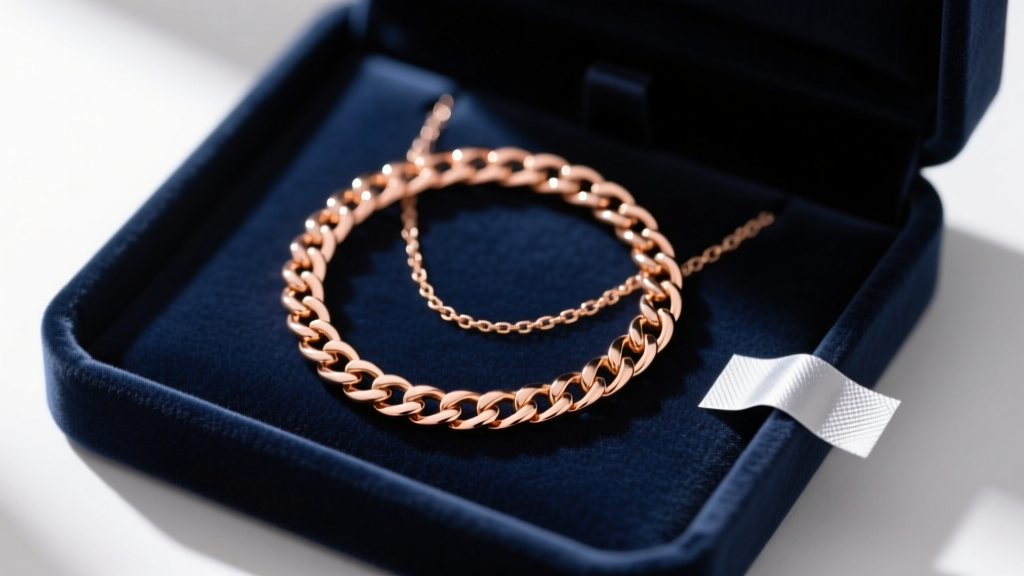
Despite your best efforts, accidents happen. If your Singapore chain develops a kink or a broken link, professional intervention is required. Do not attempt to bend a kinked link back into shape with pliers; the metal has already undergone work-hardening and will snap.
For broken links, seek a jeweler who specializes in laser welding. Traditional torch soldering requires heating a wide area of the chain, which can melt the diamond-cut facets and leave a visible, discolored scar on the gold or silver. Laser welding uses a highly focused beam of light to fuse the metal at the exact point of the break without transferring heat to the surrounding twisted links. Expect to pay between $45 and $90 for a laser soldering repair on a delicate Singapore chain, depending on the metal type and the complexity of the break.
Storage Hacks to Prevent Future Kinks
Proper storage is the ultimate defense against the inherent tangling nature of the Singapore chain. Never toss this chain style loosely into a jewelry box.
- The Straw Method: For chains under 20 inches, thread one end of the necklace through a plastic or silicone drinking straw and clasp it. This forces the chain to remain rigid and completely eliminates the possibility of tangling during travel.
- Vertical Hanging: Store the chain hanging vertically on a jewelry stand with a felt-lined hook. Gravity naturally aligns the twisted links and prevents torsional stress.
- Anti-Tarnish Environments: If storing in a box, lay the chain perfectly flat in a single layer. Place a 3M anti-tarnish strip in the compartment to absorb sulfur compounds in the air, which is especially critical if your Singapore chain is made of sterling silver.
By respecting the unique geometry of the Singapore chain and following these meticulous care steps, you will ensure that your necklace remains a fluid, sparkling staple in your collection for decades to come.


