How to Untangle a Necklace Chain: Material & Weave Guide
Learn how to untangle a necklace chain safely by understanding metal malleability, chain weaves, and the best lubricants for each alloy.

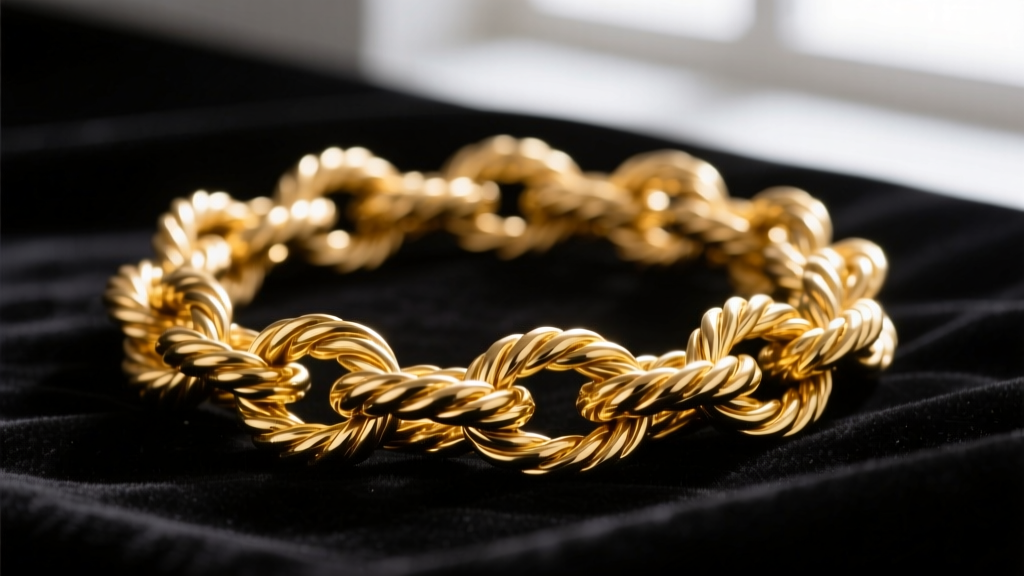
The Physics of Chain Tangles: Friction and Malleability
When figuring out how to untangle a necklace chain, most people resort to pulling, picking, and ultimately causing permanent damage. The reality is that a tangle is a physics problem governed by friction coefficients, kinetic movement, and the metallurgical properties of the chain itself. A 1.2mm 24-karat gold cable chain will behave entirely differently under tension than a 2.5mm 316L stainless steel box chain. Understanding the Vickers hardness (HV) and yield strength of your specific metal is the first step in safely rescuing your jewelry without causing plastic deformation or link failure.
According to the Gemological Institute of America (GIA), precious metals possess distinct malleability and ductility ratings. When a chain tangles, the links act as microscopic pulleys. If the friction between the links exceeds the metal's yield strength, pulling the chain will result in stretching, thinning, or snapping. Therefore, the golden rule of jewelry rescue is to reduce the coefficient of friction before applying any tensile force.
Metal-Specific Untangling Protocols
Different alloys react to stress and lubricants in unique ways. Here is how to approach the most common necklace materials.
High-Karat Gold (18k - 24k)
Pure 24k gold is exceptionally soft (roughly 25-30 HV) and highly malleable. Even 18k gold (75% gold alloyed with copper or silver) sits around 120-150 HV. Because these metals are soft, pulling a tangle will easily cause the links to warp into ovals, permanently weakening the structural integrity of the chain. Never use liquid oils on high-karat gold if the chain features porous gemstones like opals or pearls, as the oil will seep into the stones and cause irreversible clouding. Instead, use a dry lubricant like talcum powder to coat the links and reduce metal-on-metal friction.
Sterling Silver (925)
Sterling silver is an alloy of 92.5% silver and 7.5% copper. While beautiful, it is highly susceptible to work-hardening. As detailed in manufacturing guides by Rio Grande, repeatedly bending or flexing sterling silver increases its brittleness. If you aggressively pick at a silver tangle, the links will work-harden and eventually snap at the stress points. To safely untangle sterling silver, apply a micro-drop of mineral oil to the center of the knot to provide deep slip, and use needles to gently push the links apart rather than pulling the ends of the chain.
Platinum and Stainless Steel
Platinum (approx. 110-130 HV) and surgical stainless steel possess incredibly high tensile strength and density. They are highly resistant to stretching and snapping, making them the most forgiving metals when dealing with severe, multi-layered knots. However, their stiffness means the knots can lock up tightly. A warm water bath with a few drops of mild dish soap acts as an excellent surfactant, breaking down the surface tension and allowing the rigid links to slide past one another.
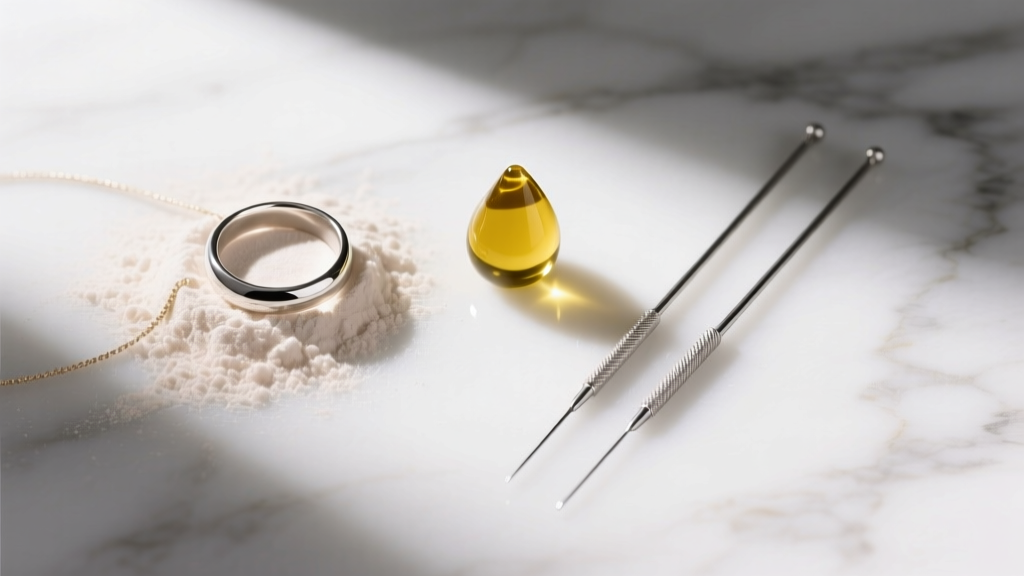
The Lubricant Matrix: What to Use on Which Metal
Choosing the wrong lubricant can ruin a chain's finish or damage attached pendants. Below is a decision matrix for selecting the right friction-reducer based on your chain's material properties.
| Lubricant | Best Used On | Avoid On | Cleanup Method |
|---|---|---|---|
| Baby Powder (Talc) | High-karat gold, delicate cable chains | Oxidized silver (will ruin the dark patina) | Soft bristle brush and compressed air |
| Mineral Oil | Sterling silver, platinum, thick box chains | Porous gems (opal, turquoise, pearl) | Warm water and mild dish soap |
| Dish Soap (Surfactant) | Stainless steel, titanium, diamond-set chains | Unsealed wood or leather cord accents | Rinse with distilled water, pat dry |
| Graphite Powder | Stubborn stainless steel and titanium knots | Any light-colored or porous gemstones | Ultrasonic cleaner or jewelry steamer |
How Chain Weaves Dictate Snag Behavior
The geometry of the chain weave is just as critical as the metal itself. Understanding the architecture of your chain helps predict where the snag points are located.
- Snake Chains: These are essentially continuous, smooth tubes made of tightly joined rings. They are notorious for catching on body hair and micro-textiles. When a snake chain kinks, the kink acts as a barb, making it nearly impossible to pull through a loop. You must use a needle to gently unroll the kink before attempting to untangle the broader knot.
- Box Chains: Composed of square, interlocking links that fold into one another at 90-degree angles. Box chains rarely tangle into tight, microscopic knots, but when they do, the rigid geometry causes them to lock. A liquid surfactant is required to allow the square edges to glide.
- Rope Chains: The twisted, helical structure of a rope chain creates thousands of microscopic snag points. While they drape beautifully, they are a nightmare to untangle. The 'Pin-and-Slide' method (detailed below) is mandatory here to avoid pulling the twisted links out of alignment.
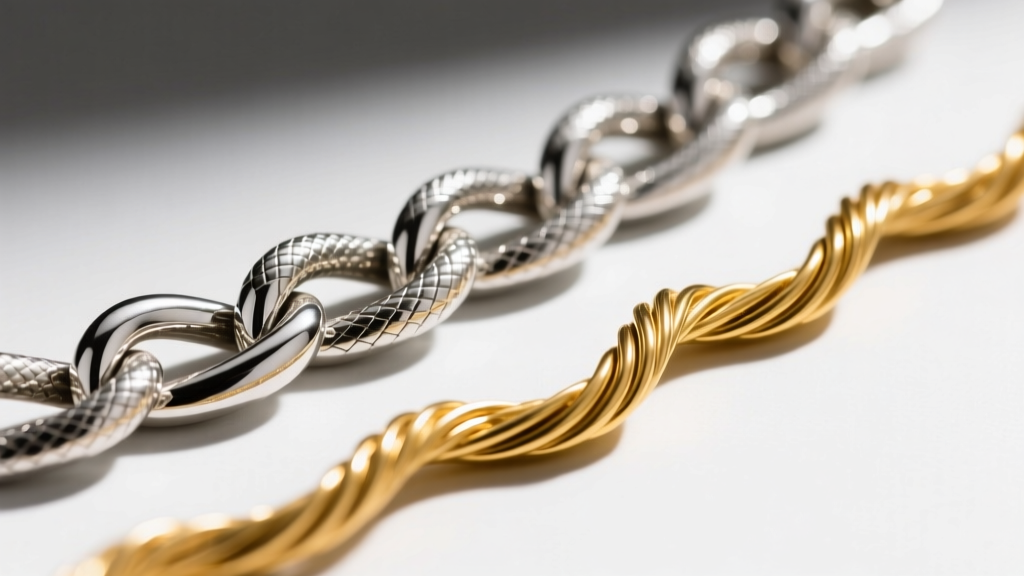
The Professional 'Pin-and-Slide' Untangling Framework
Master jewelers do not pull chains; they isolate and slide. Follow this exact framework recommended by Jewelers of America for severe tangles to preserve the structural integrity of your necklace.
The Golden Rule of Untangling: Never suspend the chain in the air while working on it. Gravity will pull the links tighter, increasing the friction and locking the knot further. Always work on a flat, hard surface.
- Prepare the Workspace: Lay the necklace flat on a piece of glass or a smooth ceramic tile. Avoid fabric surfaces like towels or velvet pads, as the fibers will catch on the links and introduce new snags.
- Apply the Lubricant: Based on the matrix above, apply your chosen friction-reducer directly to the center of the knot. If using powder, tap it gently into the links. If using oil, use a toothpick to place a single micro-drop exactly where the links intersect.
- Isolate the Core: Using two fine-tipped sewing needles (0.5mm to 0.8mm gauge), insert the tips into the absolute center of the knot. Do not pull the outer loops; instead, gently wiggle the needles to create a tiny void in the center.
- Work Outward: Once the center is loosened, use the needles to push the inner links outward through the loops. Think of it as reversing a maze. Always push the metal; never pull the ends of the chain.
- Post-Tangle Care: Once freed, clean the chain thoroughly to remove the lubricant. For gold and platinum, a quick bath in warm water with a drop of Dawn dish soap, followed by a gentle brush with a baby toothbrush, will restore the original luster.
Prevention: Storage and Material Care
While knowing how to untangle a necklace chain is a vital skill, prevention is rooted in material science. Chains tangle due to kinetic energy and the natural tendency of flexible links to seek a state of maximum entropy when jumbled together. To prevent this, store chains vertically by hanging them from a jewelry arbor, or lay them flat in individual anti-tarnish polyethylene bags. For highly malleable metals like 22k or 24k gold, always fasten the clasp before storage to prevent the sharp clasp edges from acting as a hook that catches the delicate links during transit.


