How Do I Get a Knot Out of a Necklace? Material-Specific Fixes
Learn how to get a knot out of a necklace based on its material. Discover expert untangling techniques for gold chains, silk cords, and leather.
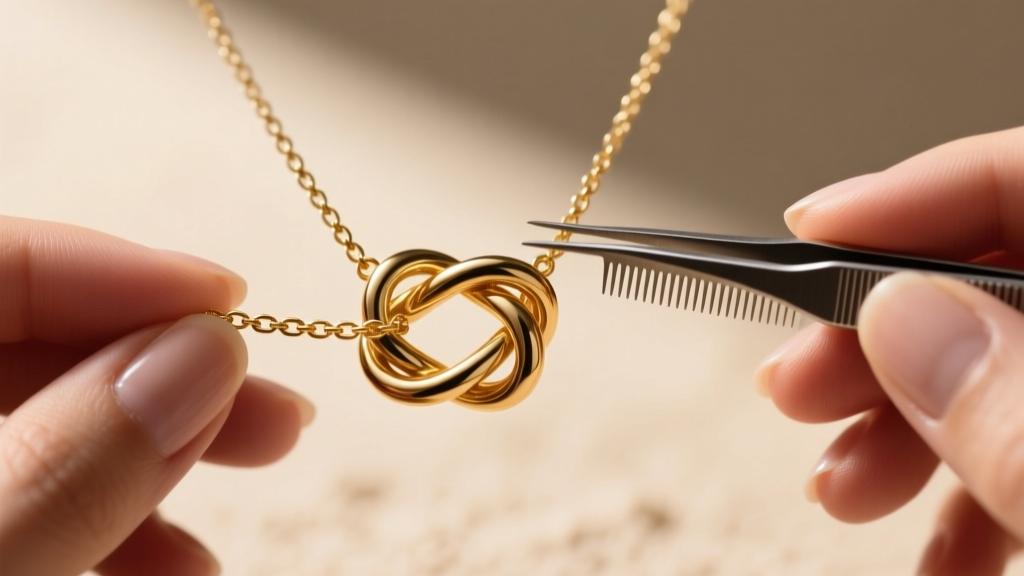
When you find yourself desperately searching for how do i get a knot out of a necklace, the solution is rarely as simple as just pulling harder. In fact, applying brute force is the fastest way to permanently deform a delicate chain or snap a vintage thread. As jewelry material science dictates, every necklace—whether it is an 18-karat gold cable chain, a porous leather cord, or a hand-knotted silk pearl strand—reacts differently to tension, friction, and lubrication.
To safely untangle your jewelry, you must first understand the metallurgical or fibrous properties of the piece. This comprehensive guide breaks down the physics of necklace knots and provides material-specific, professional-grade techniques to restore your jewelry without causing micro-fractures or structural damage.
The Physics of Necklace Knots: Why Materials Matter
A knot forms when a flexible linear structure crosses over itself and is pulled taut, increasing the friction coefficient between the surfaces. The tighter the knot, the higher the normal force, and consequently, the higher the static friction holding it in place. However, the type of friction varies wildly based on material composition:
- Metals (Gold, Silver, Platinum): Low surface friction but high malleability. They slide easily but deform permanently if crushed.
- Organic Fibers (Leather, Cotton, Suede): High surface friction and high porosity. They grip each other tightly and absorb moisture, which can cause fibers to swell and lock.
- Synthetic & Natural Threads (Silk, Nylon): High tensile strength but vulnerable to abrasion and chemical degradation from improper lubricants.
Understanding these baseline properties is the first step in formulating a safe extraction strategy for your tangled jewelry.
How to Get a Knot Out of a Fine Metal Chain
Fine metal chains, particularly those ranging from 0.8mm to 1.5mm in thickness, are notorious for forming tight, complex knots. According to the Gemological Institute of America (GIA), pure 24k gold is exceptionally soft (measuring roughly 25 on the Vickers hardness scale), while 14k and 18k gold alloys are harder but still highly susceptible to bending. Sterling silver (925) is similarly malleable. If you pull a knot tight in a silver rope chain, you risk permanently warping the individual links.
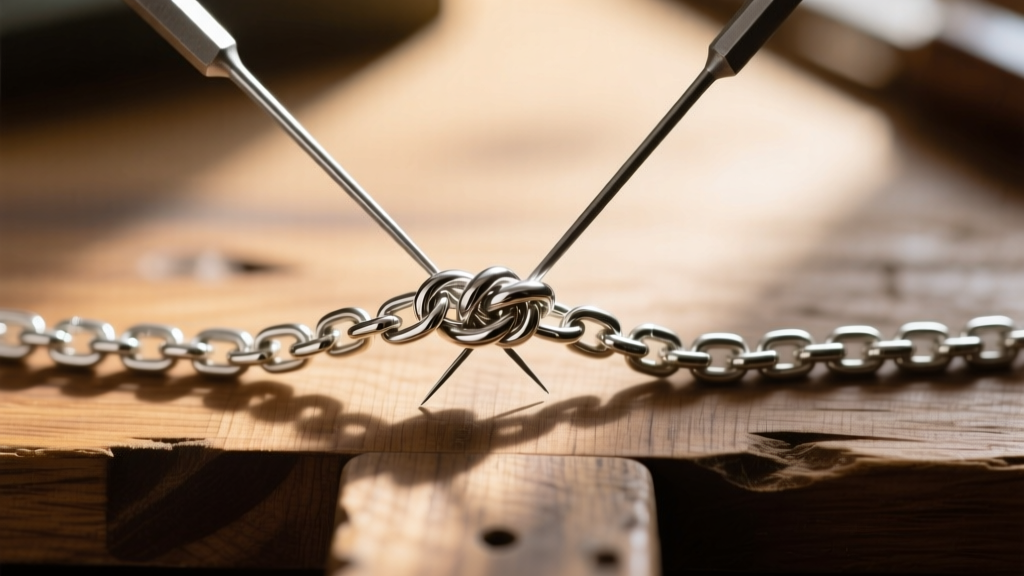
The Baby Powder and Needle Technique
To reduce the friction coefficient between metal links, you need a dry, micro-fine particulate lubricant. Baby powder (talc) or cornstarch is ideal because it coats the metal without leaving a sticky residue that attracts dirt later.
- Preparation: Lay the necklace flat on a hard, non-porous surface like a glass tabletop or a ceramic plate. Avoid fabric, which creates static and grips the metal.
- Application: Generously dust the knot with talcum powder. Tap the surface gently so the powder settles deep into the crevices of the knot.
- Tool Selection: Use two fine-tipped sewing needles or specialized jewelry prying tools (ideally 9-gauge or 10-gauge needles). Avoid toothpicks, which can splinter and wedge inside tiny chain links.
- Execution: Insert the needles into the center of the knot. Instead of pulling the chain ends, gently vibrate and wiggle the needles to loosen the powder-coated links. Work from the center outward until the loops are large enough to slip through one another.
Expert Warning: Never use liquid oils (like olive oil or WD-40) on unsealed porous metals or chains with gemstone settings. Oil can degrade the epoxy used in gemstone settings and leave a film that requires ultrasonic cleaning to remove.
Untangling Porous & Organic Materials (Leather, Suede, Cotton)
Leather and suede cords possess a high natural friction coefficient due to their microscopic surface scales. When a leather cord knots, pulling it tighter causes these scales to interlock, creating a bind similar to a Chinese finger trap. Furthermore, organic materials are highly sensitive to moisture; water causes the fibers to swell, making the knot virtually impossible to undo until it dries and potentially shrinks.
The Conditioning Oil Method
Instead of water or dry powders, organic cords require a lipid-based lubricant that conditions the material while relaxing the fibers.
- Step 1: Apply a single drop of high-grade mineral oil or a specialized leather conditioner directly to the center of the knot. Avoid vegetable oils, which can oxidize and turn rancid over time, staining the leather.
- Step 2: Allow the oil to penetrate the fibers for 3 to 5 minutes. You will physically see the leather relax and darken slightly as it absorbs the lipid.
- Step 3: Using your thumb and forefinger, gently roll the knot rather than pulling it. Rolling breaks the interlocking surface scales without applying tensile stress to the cord.
- Step 4: Once untangled, wipe the cord with a microfiber cloth to remove excess oil and prevent it from transferring to your clothing.
Delicate Threads: Silk, Nylon, and Beaded Strands
Pearl necklaces and high-end beaded jewelry are traditionally strung on silk or nylon threads. According to Jewelers of America, silk is prized for its beautiful drape but has a relatively low abrasion resistance. A tight knot in a silk thread can cause micro-tears that will inevitably lead to the strand snapping under the weight of the beads.
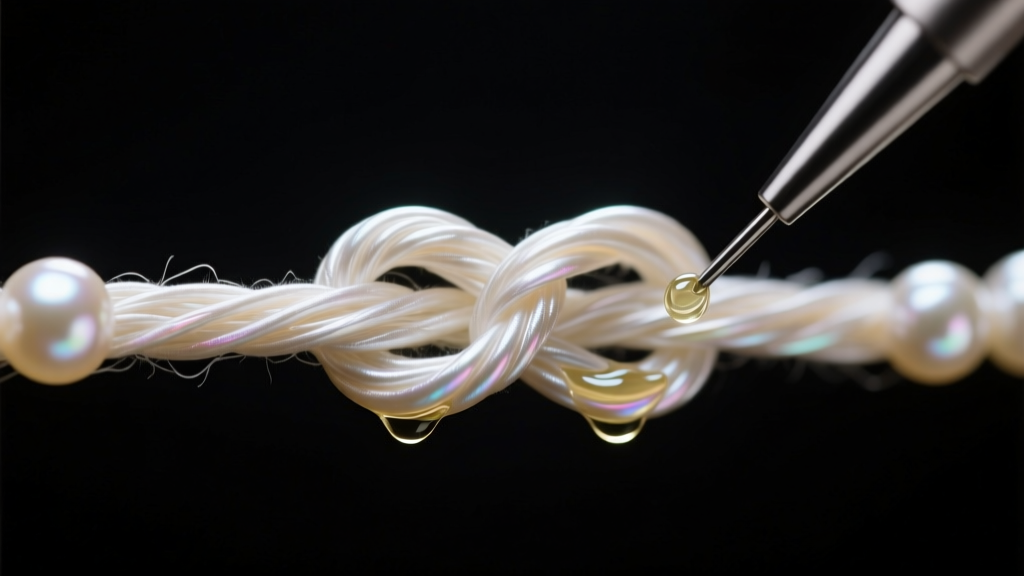
Tensile Strength and the Synthetic Lubrication Approach
When dealing with silk or nylon, your primary goal is to preserve the tensile integrity of the thread while eliminating friction.
- Isolate the Knot: Pin the thread on either side of the knot to a velvet jewelry pad using T-pins. This prevents the weight of the beads from pulling the knot tighter while you work.
- Micro-Lubrication: Use a precision micro-applicator or a single horsehair brush to apply a minuscule amount of synthetic watch oil or pure jojoba oil to the knot. Jojoba oil is technically a liquid wax ester, meaning it will not go rancid like organic seed oils.
- Gravity-Assisted Loosening: Use a single 0.3mm beading needle to gently push the loops apart. Let gravity help by holding the necklace vertically if the knot is near the clasp.
- Cleanup: Silk degrades if left oily. Once the knot is removed, you must gently dab the area with a cotton swab lightly dampened with isopropyl alcohol to extract the oil, then allow it to air dry.
Material Friction & Knot Severity Matrix
To help you quickly identify the correct approach, refer to this material-specific troubleshooting matrix. This data highlights the inherent properties that dictate how a knot behaves and the optimal extraction method.
| Material Type | Friction Coefficient | Knot Tendency | Best Lubricant | Primary Tool |
|---|---|---|---|---|
| 14k/18k Gold Chain | Low | High (due to weight & flexibility) | Talcum Powder / Cornstarch | Two 9-gauge sewing needles |
| Sterling Silver Rope | Medium | Very High (textured links interlock) | Graphite Powder | Jeweler's brass prying awl |
| Leather / Suede Cord | High | Medium (stiffness prevents tight knots) | Mineral Oil / Leather Conditioner | Fingers (rolling technique) |
| Silk Thread (Pearls) | Medium-High | High (flexible but lacks memory) | Jojoba Oil / Synthetic Watch Oil | 0.3mm Beading needle |
| Stainless Steel / Titanium | Low | Low (material rigidity resists knotting) | Dish Soap (if necessary) | Fingers or needle-nose pliers |
Preventative Storage Based on Material Science
The ultimate answer to "how do i get a knot out of a necklace" is to prevent the kinetic energy and friction that cause knots in the first place. Necklaces knot in storage due to the "spontaneous knotting" phenomenon, where random agitation causes flexible strings to form complex mathematical knots.
To combat this, tailor your storage to the material:
- Metal Chains: Store individually in anti-tarnish polyethylene bags. Leave the clasp fastened, and let one inch of the chain hang outside the sealed zip line to prevent the chain from balling up inside.
- Leather Cords: Hang them vertically on a padded jewelry hook. Leather has "memory"; if stored coiled, it will retain the curl and become more prone to self-tangling when worn.
- Silk Strands: Lay them perfectly flat in a lined jewelry box. Never hang pearl necklaces, as the constant gravitational pull will stretch the silk thread over time, creating gaps between the pearls and weakening the structural integrity of the strand.
By respecting the unique physical and chemical properties of your jewelry materials, you can safely dismantle even the most stubborn knots, ensuring your pieces remain pristine and ready to wear for years to come.


