USB Drive Necklace Guide: Merging Tech Data With Jewelry
Discover the technical specs, metallurgy, and security features of modern USB drive necklaces. A 2026 guide to wearable data storage.

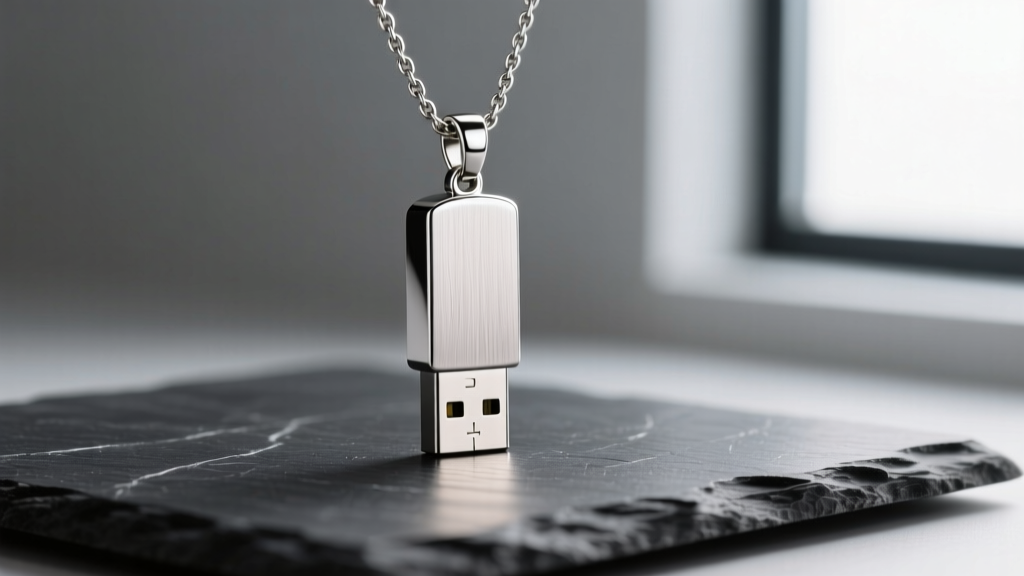
The concept of wearable technology has evolved far beyond the clunky smartwatches and corporate-branded lanyards of the early 2010s. Today, the modern USB drive necklace represents a sophisticated intersection of high-density data storage and minimalist jewelry design. For professionals, photographers, and privacy advocates who require immediate, physical access to encrypted portfolios or secure boot environments, a well-engineered tech pendant is an indispensable everyday carry (EDC) item. However, merging volatile NAND flash memory with human physiology and environmental exposure requires a rigorous approach to materials science, thermal management, and mechanical engineering.
In this expert deep dive, we dissect the anatomical and technical specifications that separate premium data jewelry from novelty trinkets, ensuring your critical files survive sweat, impacts, and the rigors of daily wear.
Metallurgy and Casing Architecture
The outer casing of a USB drive necklace serves two distinct masters: it must act as a Faraday cage and shock absorber for the delicate NAND controller inside, while simultaneously functioning as hypoallergenic jewelry resting against the sternum. The choice of alloy dictates the pendant's longevity, weight, and resistance to galvanic corrosion caused by human perspiration.
| Material Grade | Density & Weight | Corrosion Resistance | Ideal Use Case |
|---|---|---|---|
| 316L Stainless Steel | Heavy (8.0 g/cm³) | Exceptional (Molybdenum additive prevents chloride pitting) | Everyday wear, high-sweat environments, industrial settings. |
| Grade 5 Titanium (Ti-6Al-4V) | Lightweight (4.4 g/cm³) | Superior (Impervious to saltwater and acidic sweat) | Minimalist designs, users with severe nickel/metal allergies. |
| Zamak Alloy (Zinc base) | Moderate (6.6 g/cm³) | Poor (Prone to oxidation and skin-level degradation) | Avoid for EDC; suitable only for occasional, short-term use. |
| 925 Sterling Silver | Heavy (10.4 g/cm³) | Moderate (Tarnishes with sulfur exposure; requires rhodium plating) | High-end fashion tech-jewelry, formal environments. |
For serious data carriers, 316L surgical stainless steel remains the gold standard. The addition of molybdenum specifically prevents pitting from the chlorides found in human sweat. Conversely, cheap Zamak alloys will develop a porous, chalky white oxidation layer within months of skin contact, eventually compromising the structural integrity of the USB housing.
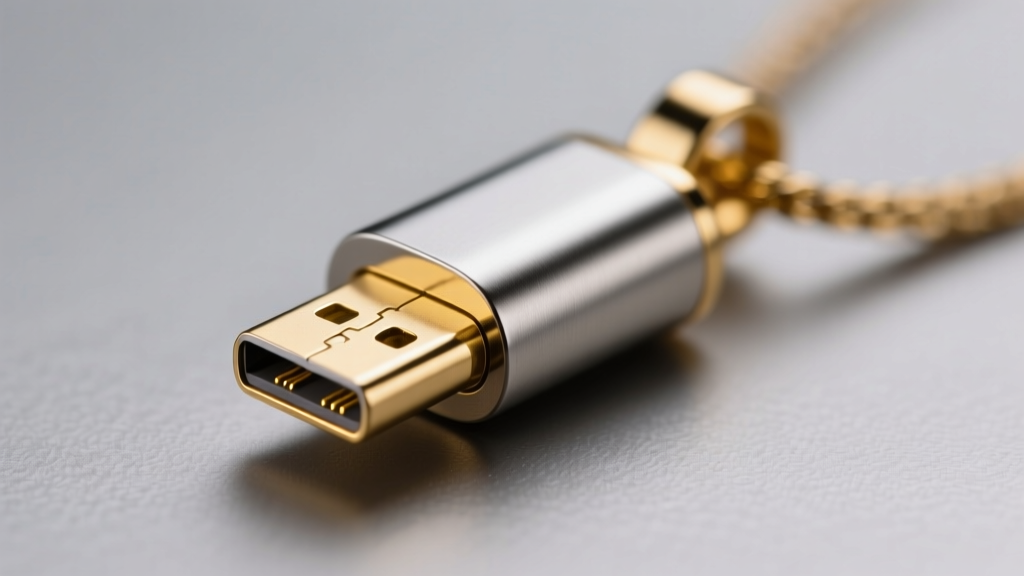
Internal Architecture and Transfer Protocols
A necklace pendant is a hostile environment for a flash drive. It is subjected to constant micro-vibrations, thermal cycling (from ambient room temperature to 98.6°F body heat), and frequent power-cycling. Therefore, the internal architecture must prioritize endurance over raw capacity.
NAND Flash Selection: SLC vs. TLC
Most consumer thumb drives utilize TLC (Triple-Level Cell) NAND, which stores three bits per cell. While cost-effective, TLC degrades after roughly 3,000 write cycles and is highly susceptible to data retention issues when exposed to elevated temperatures. For a wearable drive, you must seek out SLC (Single-Level Cell) or high-grade pSLC (Pseudo-SLC) configurations. SLC stores only one bit per cell, offering up to 100,000 write cycles and vastly superior thermal tolerance, ensuring your data does not suffer from 'bit rot' while resting against your chest.
The USB-C Advantage in Pendant Form Factors
As of 2026, the USB-C connector has entirely superseded USB-A in premium tech-jewelry. Beyond the USB Implementers Forum (USB-IF) mandated 10 Gbps transfer speeds of USB 3.2 Gen 2, the physical geometry of USB-C is crucial for pendants. Its reversible, oval symmetry allows for seamless, blind-insertion into laptops without fumbling to check the orientation of a dangling pendant. Furthermore, USB-C connectors feature superior internal retention springs, reducing the mechanical wear on the pendant's housing during insertion and removal.
Chain Mechanics and Ergonomic Load-Bearing
The pendant is only half the equation; the suspension system must handle the dynamic load of a heavy metal casing without kinking or snapping. A standard 50-gram steel USB pendant exerts localized stress on the chain, particularly at the clasp and the jump ring.
- Chain Style: The Box Chain (1.5mm to 2.0mm gauge) is the superior choice. Its interlocking square links distribute weight evenly and are highly resistant to the kinking that plagues cable or rope chains when worn under clothing.
- Clasp Mechanics: Avoid spring-ring clasps, which rely on a weak internal coil spring prone to fatigue. Opt for a solid-cast lobster clasp with a minimum tensile strength rating of 15 lbs. For users who struggle with small mechanical clasps, neodymium magnetic clasps with a secondary safety latch offer a modern, high-strength alternative.
- Jump Ring Integrity: The jump ring connecting the chain to the USB drive must be soldered shut or feature a split-ring design (like a miniature keyring). An open, unsoldered jump ring will inevitably pry apart under the pendulum motion of walking.
Environmental Sealing and Hardware Security
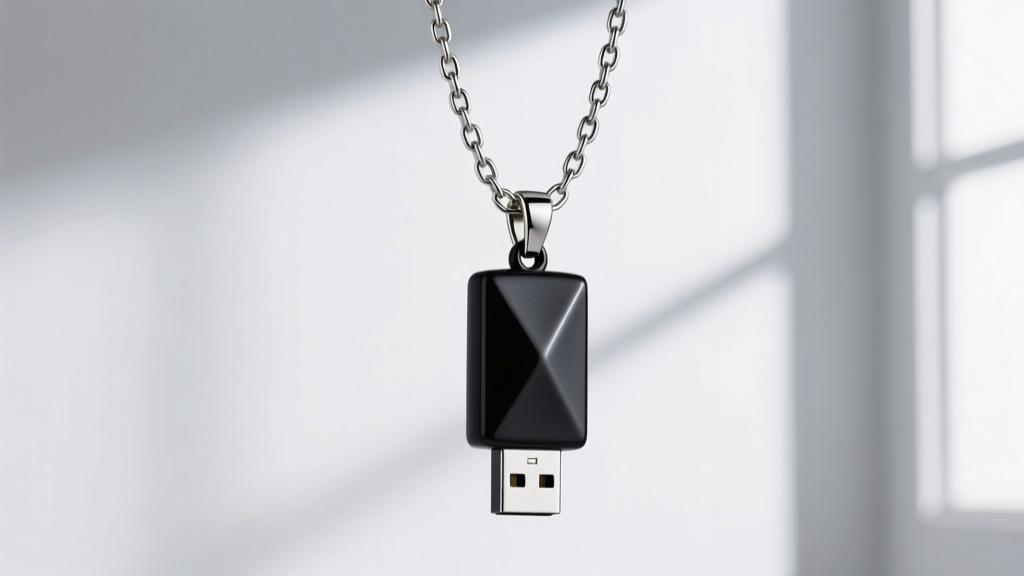
Wearing a storage device exposes it to rain, humidity, and accidental submersion. A premium USB drive necklace must carry an IP67 or IP68 ingress protection rating. This is achieved not through glue, but via precision-machined O-ring seals (typically made from Viton or silicone) compressed between the NAND housing and the outer metal shell.
AES-256 Hardware Encryption
Physical loss is the greatest risk of wearable data. Software encryption (like BitLocker) requires a host OS to decrypt, which is useless if you need to plug your necklace into a smart TV, a camera, or a secure kiosk. True tech-jewelry utilizes on-board hardware encryption. According to NIST FIPS 197 standards, a dedicated cryptographic microchip on the USB controller encrypts data in real-time using AES-256 bit encryption. High-end models, similar to those found in Kingston's encrypted solutions line, feature a physical keypad on the pendant casing or utilize NFC pairing with your smartphone to unlock the drive before insertion, rendering the data completely invisible to unauthorized hosts.
Maintenance Protocol for Tech-Jewelry
To maintain optimal transfer speeds and prevent connector corrosion, a strict maintenance protocol is required. Never use silver polish, ultrasonic jewelry cleaners, or abrasive cloths on a USB pendant, as these will destroy the O-ring seals and flood the NAND controller with conductive fluids.
Expert Cleaning Routine: Every 30 days, use a lint-free microfiber swab lightly dampened with 99% isopropyl alcohol to clean the gold-plated contact pins inside the USB-C port. Allow it to flash-dry for 60 seconds before wearing. This removes sebum and skin oils that cause voltage drops and thermal throttling during large file transfers.
By prioritizing surgical-grade metallurgy, SLC NAND architecture, and robust mechanical suspension, the modern USB drive necklace transcends novelty. It becomes a secure, high-speed vault for your digital life, seamlessly integrated into your personal style.


