Valknut Necklace Buying Guide: Metals, Meanings & Chain Pairings
Discover how to choose the perfect valknut necklace. Compare metals, chain styles, and craftsmanship details to find a durable Norse pendant.

The Valknut: Decoding the Knot of the Slain
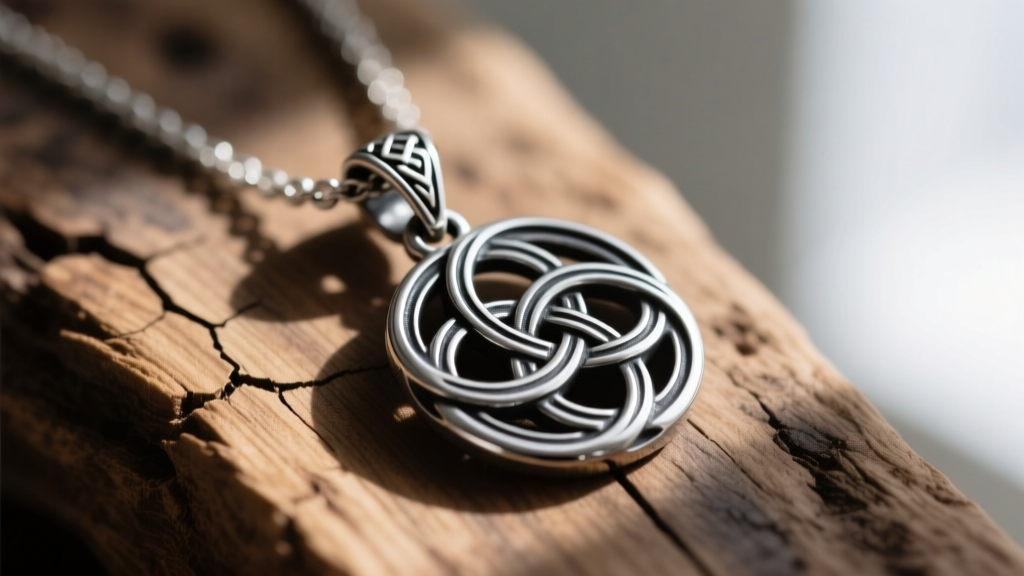
The Valknut, instantly recognizable by its three interlocking triangles, is one of the most striking and deeply symbolic motifs from the Norse world. Comprising nine distinct points, the symbol is widely interpreted by historians and modern practitioners of Asatru as a representation of the nine worlds of Yggdrasil, the cycle of life and death, and the protective power of Odin. When shopping for a valknut necklace, you are not merely buying a piece of geometric jewelry; you are investing in a talisman with deep historical roots, appearing on artifacts like the Gotland picture stones and the Oseberg ship burial tapestries. According to the National Museum of Denmark, Viking Age artifacts frequently utilized complex knotwork and geometric symbolism to convey spiritual protection and allegiance to the gods.
However, the modern jewelry market is flooded with mass-produced, poorly crafted Valknut pendants that lack structural integrity and historical respect. This comprehensive buying guide will walk you through the metallurgical realities, chain pairings, and craftsmanship red flags you must evaluate before purchasing a valknut necklace that will last a lifetime.
Metallurgical Breakdown: Choosing the Right Alloy
The geometric nature of the Valknut—featuring sharp angles, inner cutouts, and interlocking bands—demands a metal that can be cast with precision and worn daily without degrading. Your choice of metal dictates the pendant's weight, patina potential, and skin compatibility.
| Metal Alloy | Composition | Pros | Cons | Estimated Price |
|---|---|---|---|---|
| 925 Sterling Silver | 92.5% Ag, 7.5% Cu | Excellent for oxidized finishes, traditional Norse aesthetic | Prone to sulfur tarnish, relatively soft | $45 - $150 |
| 316L Surgical Steel | Iron, Chromium, Molybdenum | Hypoallergenic, highly scratch-resistant, affordable | Difficult to cast with ultra-fine detail | $15 - $45 |
| Silicon Bronze | Copper, Silicon, Zinc | Develops a rich, earthy patina; heavy, satisfying drape | Requires frequent polishing if a bright shine is desired | $30 - $80 |
| 14k Solid Gold | 58.5% Au, Alloy metals | Prestigious, zero tarnish, heirloom durability | Expensive, high theft risk for travel | $300 - $900+ |
The Case for Oxidized Sterling Silver
For a valknut necklace, 925 sterling silver remains the gold standard (ironically enough). The 7.5% copper content in sterling silver allows jewelers to apply an 'oxidized' or 'antiqued' finish. This process uses liver of sulfur to artificially darken the recessed areas of the interlocking triangles, creating a high-contrast, three-dimensional effect that makes the geometric knotwork pop. As noted by the Gemological Institute of America (GIA), copper alloys are essential for creating these durable surface treatments, though they require occasional polishing with a jeweler's cloth to maintain the contrast on the raised edges.
Bronze vs. Stainless Steel: Patina vs. Permanence
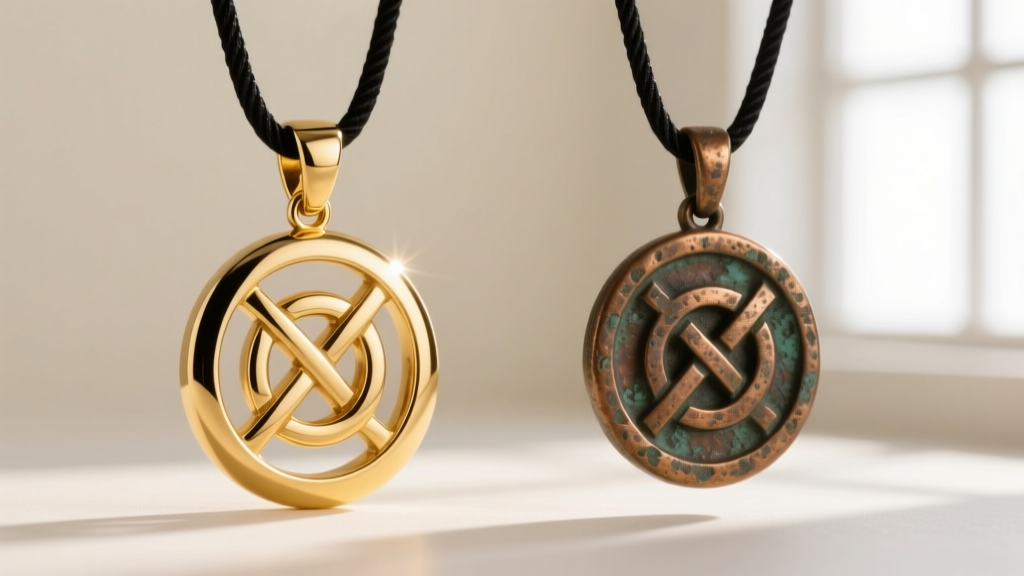
If you prefer a rugged, earthy aesthetic, silicon bronze is an exceptional choice. Bronze reacts with the natural oils and sweat of your skin, developing a unique, darkened patina over time that gives the Valknut an authentic, excavated look. Conversely, if you want a pendant that requires zero maintenance and will never tarnish, 316L surgical steel is ideal. The addition of molybdenum in 316L steel prevents pitting and corrosion, making it perfect for those who wear their necklace in the shower or at the gym. However, steel's high melting point means cast details may appear slightly softer or less defined than silver or bronze.
Chain Pairings: Matching the Norse Aesthetic
A Valknut pendant is inherently angular and visually dense. Pairing it with the wrong chain can ruin the aesthetic balance or lead to structural failure. Avoid delicate cables or thin box chains; they will snap under the weight of a solid metal pendant and look visually disconnected. Instead, opt for chains that echo the strength and history of the Norse aesthetic.
- Rope Chain (2.5mm - 4.0mm): The twisted links of a rope chain mimic the appearance of actual hemp or leather rope, providing a subtle Viking-era nod without resorting to costume jewelry. A 3.0mm sterling silver rope chain offers the perfect balance of flexibility and tensile strength.
- Wheat Chain (2.0mm - 3.5mm): Composed of woven, oval links, wheat chains are incredibly durable because the links are interlocked in four directions. They catch the light beautifully and provide a textured backdrop that complements the smooth or hammered surfaces of a Valknut pendant.
- Leather Cord (3mm - 5mm): For a rustic, minimalist look, a braided leather cord is a popular choice. However, be aware that leather degrades when exposed to sweat and water. If you choose leather, ensure the pendant bail is lined with a smooth metal sleeve to prevent the leather from fraying against sharp silver edges.
Craftsmanship Red Flags: What to Inspect Before Buying
Because the Valknut consists of three distinct triangles that must interlock or be cast as a single continuous plane, the manufacturing process is prone to specific defects. Most high-quality pendants are created using lost-wax casting. When evaluating a valknut necklace, either in person or via high-resolution macro photos online, look out for the following red flags:
1. Cast Porosity
Porosity occurs when tiny gas bubbles become trapped in the molten metal during the casting process. On a Valknut pendant, this manifests as tiny, sand-like pits on the flat surfaces of the triangles. While minor porosity on the back of the pendant is acceptable, pitting on the front surface compromises the structural integrity of the thin interlocking bands and indicates poor temperature control by the caster.
2. The Bail Soldering Joint
The bail is the loop at the top of the pendant through which the chain passes. On many mass-produced Valknut necklaces, the bail is a separate jump ring that is soldered onto the top triangle. Inspect this joint closely. If the solder joint looks uneven, grainy, or if there is visible flux residue, the bail is likely to snap under the pendulum motion of daily wear. A superior valknut necklace will feature an 'integral bail'—meaning the loop is cast as one continuous piece of metal with the top triangle, entirely eliminating the weak solder joint.
3. Sharp Inner Edges
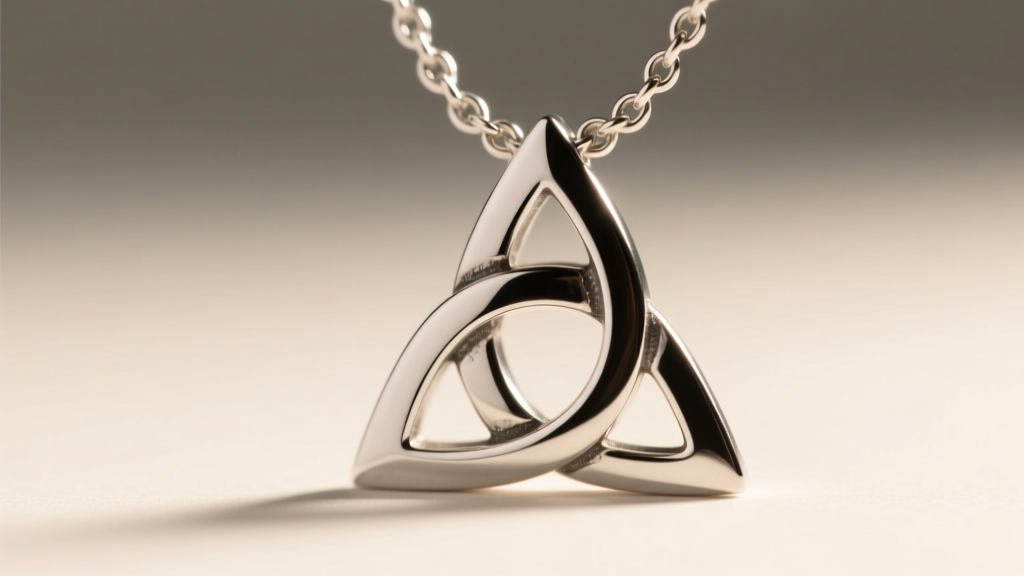
The negative space inside the interlocking triangles creates inner corners. In poorly finished castings, these corners are left sharp and unfinished, which can scratch your chest or catch on the links of your chain. High-end jewelers will spend extra time 'chasing' and filing these inner edges to a smooth, slightly rounded bevel.
Proportions and Sizing Guide
The visual weight of the Valknut requires careful sizing. The symbol's three triangles create a wide, horizontal profile compared to vertical pendants like Mjolnir (Thor's Hammer).
- Petite (0.5 to 0.75 inches): Best suited for women or men seeking a subtle, layered look. Pair with a 2.0mm wheat chain at a 16 or 18-inch length.
- Standard (1.0 to 1.5 inches): The most versatile size. It provides enough surface area for the jeweler to add secondary textures, such as a hammered finish or runic inscriptions along the outer bands. Pair with a 3.0mm rope chain at a 20 or 22-inch length.
- Oversized (2.0+ inches): A bold, statement piece. At this size, the pendant becomes quite heavy. You must use a chain with a robust clasp (like a lobster clasp or a toggle) rated for at least 50 lbs of tensile strength to prevent accidental loss.
Final Thoughts on Wearing the Knot of the Slain
When investing in a valknut necklace, prioritize structural integrity and metallurgical transparency over fleeting trends. The British Museum archives demonstrate that the original Norse artisans valued durability and symbolism equally, crafting items meant to survive both the wearer and the ages. By selecting a pendant cast in high-grade 925 silver or 316L steel, paired with a structurally sound rope or wheat chain, you ensure that your representation of the nine worlds remains a lasting, dignified piece of personal heritage.


