Van and Cleef Necklace Materials: Hardstone Properties Guide
Discover the gemological properties of stones in your van and cleef necklace. Compare onyx, malachite, and MOP durability, Mohs scale, and care.

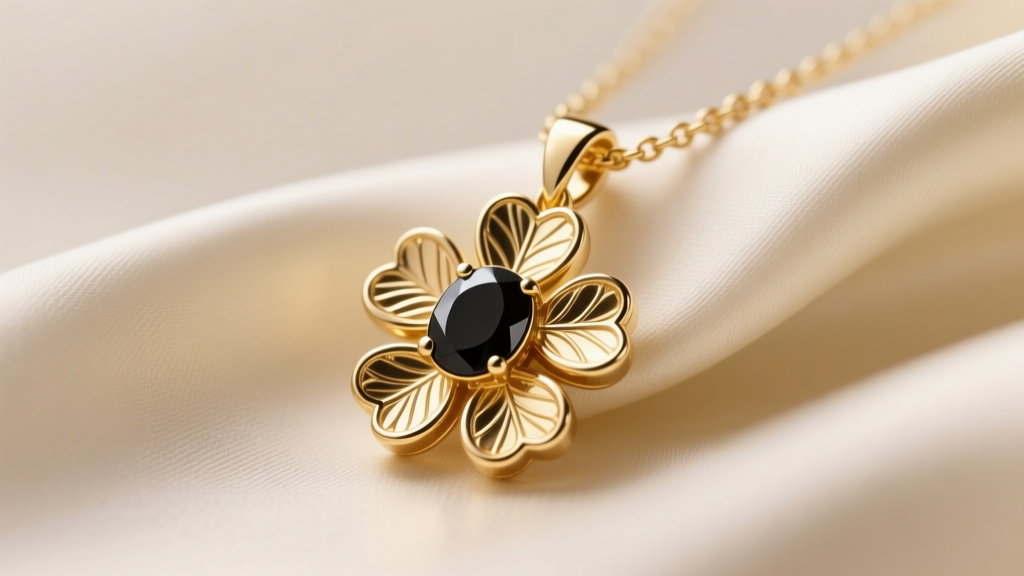
The Gemology Behind the Iconic Clover Motif
When collectors and enthusiasts search for a van and cleef necklace, they are almost exclusively referring to the legendary Vintage Alhambra collection by Van Cleef & Arpels. While the quatrefoil motif is instantly recognizable, the true mastery of this design lies in its material execution. The maison pairs 18-karat gold with a meticulously curated selection of hardstones and organic gems. However, not all stones possess the same structural integrity, porosity, or chemical stability. Understanding the gemological properties of these materials is critical for long-term wearability, maintenance, and preserving the asset value of your jewelry.
This guide deconstructs the exact material properties, Mohs hardness ratings, and metallurgical compositions used in these iconic necklaces, providing a data-driven framework for your next acquisition.
Hardstone Comparison: Mohs Hardness & Porosity
The durability of a pendant is governed by its Mohs hardness (resistance to scratching) and its porosity (susceptibility to chemical absorption). Below is a comparative analysis of the most prevalent stones used in the Alhambra collection.
| Material | Mineral Class | Mohs Hardness | Porosity / Sensitivity | Relative Price Tier |
|---|---|---|---|---|
| Black Onyx | Chalcedony (Quartz) | 6.5 - 7.0 | Low (Dyed) | Base Tier |
| Carnelian | Chalcedony (Quartz) | 6.5 - 7.0 | Low (Heat-Treated) | Base Tier |
| Tiger's Eye | Quartz Pseudomorph | 7.0 | Very Low | Mid Tier |
| Mother-of-Pearl | Organic (Nacre) | 2.5 - 4.5 | High (Acid/Chlorine) | Mid Tier |
| Malachite | Copper Carbonate | 3.5 - 4.0 | Extreme (Acid/Sweat) | Premium Tier |
| Lapis Lazuli | Silicate Rock | 5.0 - 6.0 | Moderate (Porous) | Premium Tier |
Black Onyx: The Treated Chalcedony
Black onyx is the most ubiquitous and durable stone in the collection. According to the Gemological Institute of America (GIA), natural black onyx is exceptionally rare. The deep, uniform black stones used in luxury jewelry are almost universally gray or white chalcedony that has been treated with a sugar solution and subsequently heated in sulfuric acid to carbonize the sugar. This process permanently alters the color without compromising the stone's 7.0 Mohs hardness. Onyx is highly resistant to scratching, making it the optimal choice for daily-wear pendants that may come into contact with zippers, keys, or other jewelry.
Malachite: The Copper-Rich Showstopper
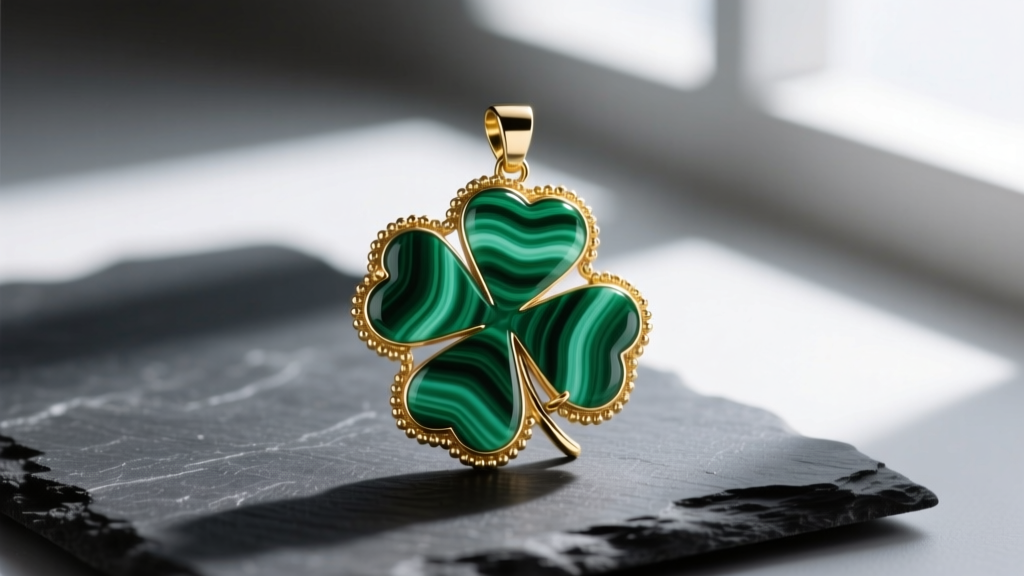
Malachite is prized for its striking, concentric green banding, but it is a gemological nightmare to maintain. Chemically known as copper carbonate hydroxide, malachite ranks a mere 3.5 to 4.0 on the Mohs scale. More importantly, it is highly reactive to acids. Human sweat, perfumes, and cosmetic lotions contain mild acids that can strip the polish from malachite, leaving dull, white, or chalky patches on the surface. The GIA's Malachite Profile explicitly warns against ultrasonic cleaning and steam, as the stone's natural cleavage planes and porosity can cause it to fracture or absorb damaging chemicals. If you live in a humid climate or plan to wear the necklace against bare skin daily, malachite requires rigorous maintenance.
Mother-of-Pearl: Organic Nacre Structures
Mother-of-pearl (MOP) offers an iridescent, luminous dial that shifts in the light due to the microscopic aragonite platelets in its nacre structure. However, as an organic gem composed primarily of calcium carbonate, it shares malachite's vulnerability to acidic environments. Furthermore, MOP is highly sensitive to chlorine and prolonged dehydration. Wearing a MOP pendant in a chlorinated pool or exposing it to harsh household cleaners will permanently etch the surface. The GIA Pearl and Nacre Care Guide recommends wiping organic gems with a damp, soft cloth immediately after wear to remove skin oils and environmental pollutants.
18K Gold Alloys: Yellow, Rose, and White Gold Properties
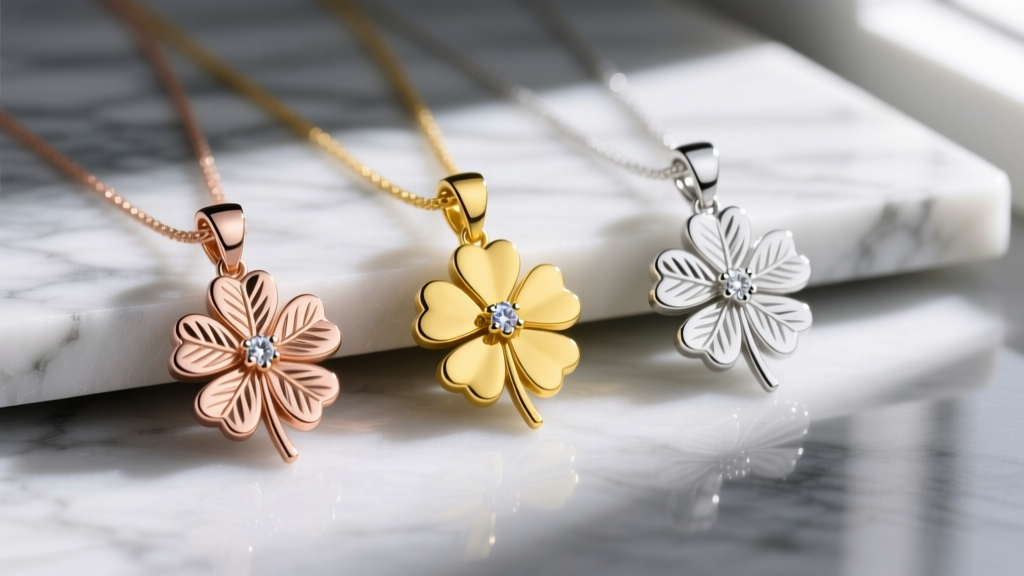
The metal framework of the necklace is as critical as the stone. Van Cleef & Arpels exclusively uses 18-karat gold, stamped with the 750 hallmark, indicating 75% pure gold and 25% alloy metals. The choice of alloy dictates the metal's color, tensile strength, and long-term wear characteristics.
- 18K Yellow Gold: Alloyed primarily with silver and copper. It offers the highest resistance to tarnishing and requires the least maintenance, as its color is uniform throughout the metal. Scratches on yellow gold can be polished out without losing material color.
- 18K Rose Gold: Contains a higher percentage of copper (up to 20-22%), which gives it the pinkish hue. Copper is a highly durable alloying metal, making rose gold slightly more resistant to denting and scratching than yellow gold. It does not require plating.
- 18K White Gold: Alloyed with palladium, nickel, or silver to achieve a silvery tone. However, 18K white gold naturally retains a faint yellowish-gray undertone. To achieve a brilliant white finish, the pendant is electroplated with rhodium. Over 3 to 5 years of daily wear, friction will wear away the rhodium layer, revealing the warmer alloy beneath and necessitating professional re-plating.
Long-Term Wearability and Care Framework
To preserve the structural integrity and optical brilliance of your hardstone pendant, implement the following material-specific care protocols:
- The 'Last On, First Off' Rule: Always put your necklace on after applying perfumes, hairsprays, and lotions. The alcohol and volatile organic compounds (VOCs) in cosmetics can degrade the epoxy resins sometimes used to stabilize porous stones like Lapis Lazuli and can dull the polish of MOP and Malachite.
- Avoid Ultrasonic Cleaners: While ultrasonic waves are safe for diamonds and solid gold, the high-frequency vibrations can cause micro-fractures in banded stones like malachite and can completely strip the nacre layers off thin mother-of-pearl inlays.
- Storage Isolation: Store the pendant in its original felt-lined box or a soft microfiber pouch. Because the gold beaded border (the grain d'or) is relatively soft, storing the necklace loosely in a jewelry box alongside diamond or sapphire pieces will result in severe scratching of the gold bezel.
Investment Value and Material Rarity
From a secondary market perspective, the material composition heavily influences the depreciation and appreciation curves of the necklace. Base-tier stones like Onyx and Carnelian are produced in higher volumes and experience standard retail depreciation when sold pre-owned. Conversely, limited-edition runs or naturally rarer stones like high-grade Afghan Lapis Lazuli, deep green Congolese Malachite, and Diamond-Paved variations command significant premiums on the secondary market. Collectors actively seek out discontinued stone combinations, such as the now-rare Chalcedony or Chrysoprase Alhambra pieces, which often sell at auction for 30% to 50% above their original retail price.
Final Verdict: Matching Stone to Lifestyle
Selecting the right material requires an honest assessment of your daily environment. If you require a robust, 'wear-and-forget' piece that can withstand the friction of office attire, gym sessions, and frequent travel, Black Onyx or Carnelian set in 18K Yellow or Rose Gold is the undisputed champion of durability. If, however, you view the necklace as an occasional statement piece for evening wear or climate-controlled environments, the unparalleled visual depth of Malachite or the ethereal glow of Mother-of-Pearl will offer a superior aesthetic return on investment, provided you adhere to strict gemological care protocols.


