A Beginner's Guide to Choosing an Ouija Board Necklace
Discover how to choose, style, and care for your first ouija board necklace. Learn about metals, chain pairings, and occult jewelry styling tips.

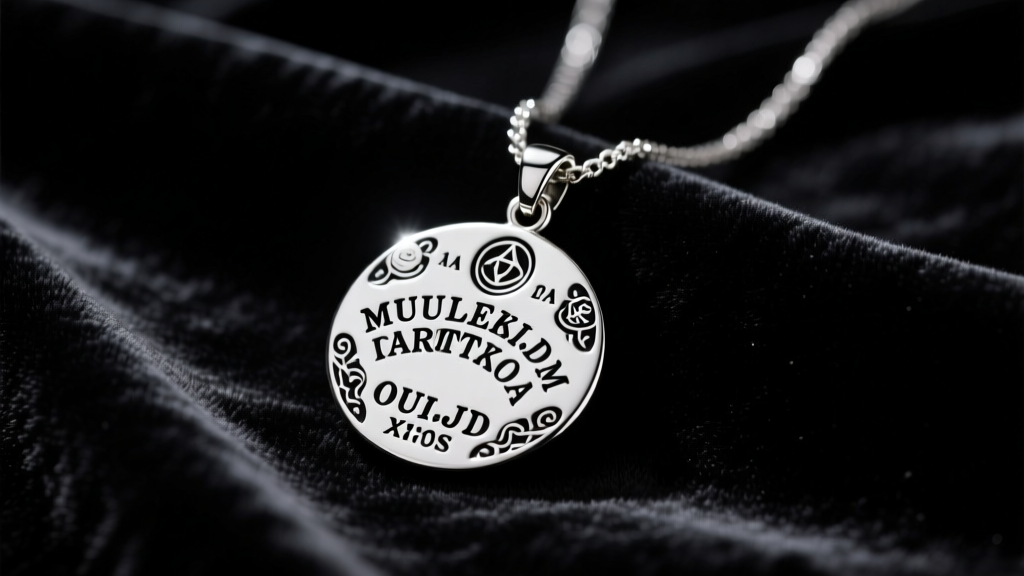
The Renaissance of Occult Jewelry
Welcome to the intersection of mysticism and metallurgy. In 2026, the ouija board necklace has firmly transcended its novelty-shop roots, evolving into a staple of dark academia, witchcore, and modern gothic wardrobes. However, as the trend has saturated the market, the gap between high-quality artisan jewelry and mass-produced, skin-irritating alloys has widened. For a beginner, navigating this niche requires an understanding of material grades, chain mechanics, and intentional styling. This guide will equip you with the exact specifications needed to invest in a piece that is both aesthetically haunting and structurally enduring.
Decoding Material Grades: What Touches Your Skin
The most critical mistake beginners make is prioritizing the visual motif over the base metal. An occult pendant is only as good as the alloy it is cast from. Here is the breakdown of what you should look for, and what you must avoid.
925 Sterling Silver (The Gold Standard)
Composed of 92.5% pure silver and 7.5% copper, sterling silver is hypoallergenic and carries a satisfying, heavy drape. For ouija board designs, jewelers often use oxidized sterling silver—a process where the copper alloy is intentionally exposed to sulfur to create a dark, antique patina that highlights the engraved letters and planchette details. Expect to pay between $65 and $180 for a solid 925 silver piece.
Jeweler's Brass (CuZn30)
If you prefer a warm, golden, vintage aesthetic, jeweler's brass is an excellent, budget-friendly alternative. It polishes beautifully and develops a unique patina over time. However, because it contains copper, it can oxidize and leave a harmless green tint on your skin if the pendant rests directly against your chest. Pricing typically ranges from $25 to $55.
Zinc Alloy and Pot Metal (The Danger Zone)
Often listed vaguely as "antique silver-plated alloy" on fast-fashion sites, zinc alloys are brittle, prone to snapping at the bail, and frequently contain nickel—a common contact allergen. Avoid these entirely, regardless of the low $8 price tag.
Design Elements: Enamel and Gemstone Inlays
A flat, stamped metal board is just the beginning. The best ouija board necklaces incorporate secondary materials to elevate the piece from a simple charm to a focal point of fine jewelry.
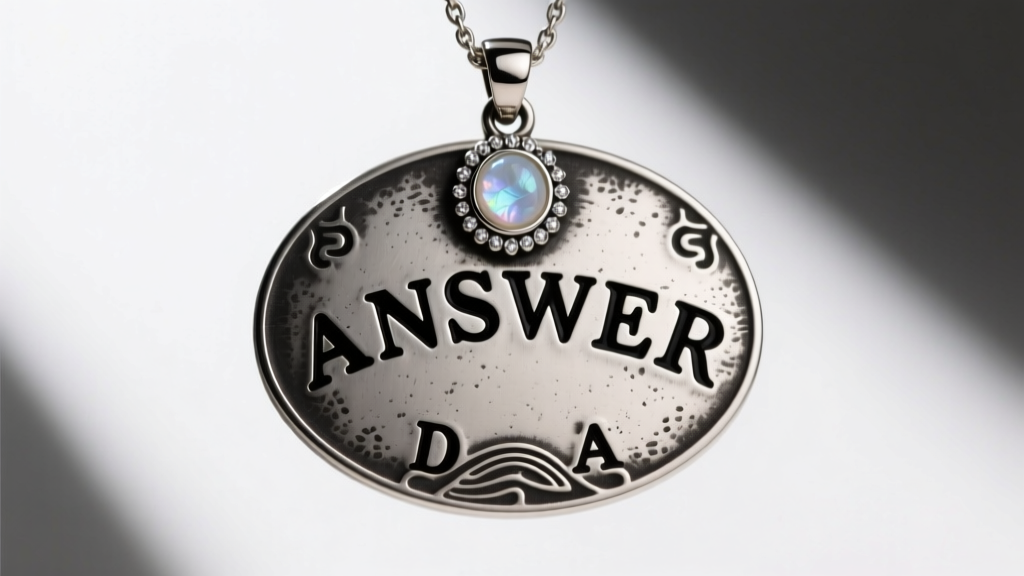
Cold Enamel vs. Vitreous Enamel
Many mid-tier pieces use cold enamel (an epoxy resin) to fill the letters and numbers of the board. While vibrant, it can scratch and yellow over time. High-end artisan pieces utilize vitreous enamel, which is powdered glass fused to the metal at extreme temperatures. It is virtually scratch-proof and retains a glass-like luster indefinitely.
Gemstone Accents
Incorporating gemstones into the planchette or the "sun and moon" motifs adds profound personalization. According to the Gemological Institute of America (GIA), stones like rainbow moonstone are prized for their adularescence—a billowy light effect that perfectly complements the mystical theme. Black onyx is another popular choice for grounding energy and providing a stark, high-contrast background for silver lettering.
Chain Selection: Matching the Occult Aesthetic
The chain you choose dictates the era and subculture your necklace references. A delicate chain reads as subtle and romantic, while a heavy chain leans into streetwear and traditional goth. Ensure the inner diameter of the pendant's bail (the loop it hangs from) is at least 1.5mm larger than the thickness of your chosen chain to prevent friction wear.
| Chain Style | Recommended Gauge | Aesthetic Vibe | Durability & Notes |
|---|---|---|---|
| Cable Chain | 1.2mm - 1.5mm | Dark Academia, Subtle Witchcore | Delicate; prone to kinking if slept in. Best for lightweight pendants under 10 grams. |
| Rope Chain | 2.0mm - 3.0mm | Victorian Gothic, Vintage Occult | Highly durable. The twisted links catch the light beautifully, mimicking the look of antique pocket watch chains. |
| Figaro Chain | 2.5mm - 4.0mm | Streetwear Goth, Grunge | Very strong. The alternating long and short links provide a masculine, structured contrast to intricate pendants. |
| Box Chain | 1.5mm - 2.0mm | Modern Minimalist, Clean Lines | Extremely durable and fluid. The geometric square links contrast nicely with the organic curves of a planchette. |
Neckline Pairings and Layering Frameworks
Styling an ouija board necklace requires balancing its heavy visual weight with your wardrobe's architecture. Here is a practical framework for different necklines.
The Turtleneck Canvas
A black or deep burgundy ribbed turtleneck is the ultimate backdrop for an oxidized silver ouija pendant. Opt for a 24-inch to 28-inch rope chain so the pendant rests on the sternum. The high collar frames the piece, drawing the eye directly to the intricate metalwork without competing with exposed skin.
The V-Neck Elongation
For V-necks and wrap dresses, utilize a 20-inch to 22-inch chain. The V-shape of the neckline naturally creates a leading line that points directly to the pendant, which should ideally rest just an inch below the apex of the fabric's V. This creates a cohesive, intentional silhouette.
Advanced Layering: The Rule of Three
To integrate your ouija necklace into a layered stack, follow the 4-inch spacing rule to prevent tangling:
- Layer 1 (14-16 inches): A simple, thin black velvet choker or a 1.0mm silver snake chain.
- Layer 2 (18-20 inches): Your ouija board pendant on a 2.0mm chain.
- Layer 3 (24-26 inches): A long, unadorned lariat chain or a simple bar pendant to anchor the bottom of the stack.
Maintenance: Caring for Dark and Oxidized Metals
Occult jewelry often relies on intentional tarnish (oxidation) to make the engraved letters pop. Improper cleaning can ruin this effect in seconds.
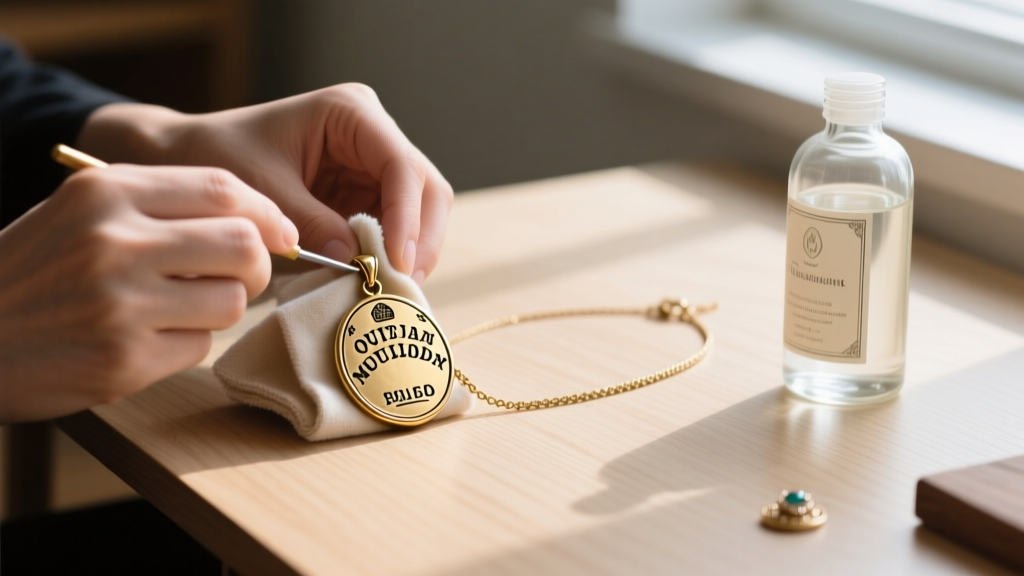
What to Avoid
Never use liquid silver dips or ultrasonic cleaners on an oxidized ouija board necklace. These harsh chemical baths will strip the intentional black patina from the crevices, leaving you with a flat, bright silver piece that loses its gothic depth. Furthermore, if your piece features cold enamel or porous gemstones like opal, liquid chemicals will cause irreversible clouding and cracking.
The Proper Polishing Technique
According to guidelines from The Silver Institute, the safest way to maintain your jewelry is through gentle mechanical polishing. Use a treated jeweler's cloth (like a Sunshine cloth) and gently buff only the raised surfaces of the pendant. Avoid rubbing deeply into the engraved letters. This removes the unwanted tarnish from the high points while preserving the dark, antique contrast in the recesses. Store the piece in an anti-tarnish flannel pouch with a silica gel packet to control ambient humidity, which is the primary catalyst for unwanted sulfur reactions.
Expert Tip: If your brass or silver pendant loses its intentional dark antiquing over years of wear, you can restore it at home using Liver of Sulfur. Dilute a tiny amount in warm water, dip the clean pendant for 10 seconds, rinse, and gently buff the high points with a polishing cloth to recreate the factory-oxidized contrast.
Choosing your first ouija board necklace is an exercise in personal expression. By prioritizing solid 925 silver or high-grade brass, selecting a chain that complements the pendant's weight, and maintaining the metal's patina with care, you ensure your piece remains a powerful, enduring artifact in your jewelry collection for decades to come.


