Choosing Your VCA 10 Motif Necklace: Material Guide
An expert metallurgical and gemological breakdown of the VCA 10 motif necklace, comparing gold alloys, stone durability, and care.

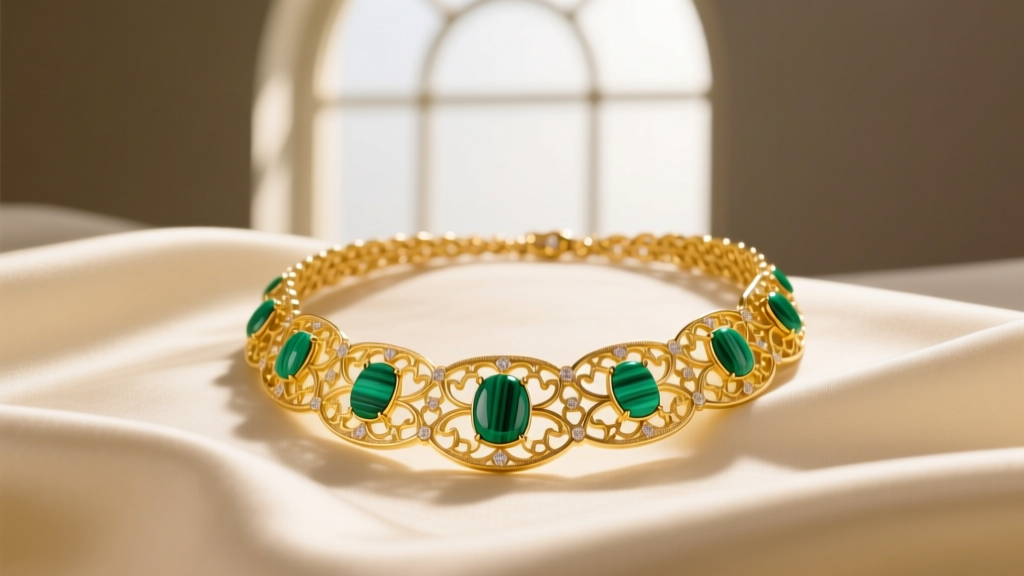
The Anatomy of an Icon: Beyond the Clover Silhouette
When investing in a VCA 10 motif necklace, buyers are often captivated by the iconic Vintage Alhambra silhouette. However, as a piece of fine jewelry that rests against the skin and moves dynamically, its longevity is entirely dictated by its material composition. The 10-motif necklace is not merely a chain with pendants; it is a complex assembly of 18-karat gold alloys, lapidary-cut hardstones, and organic gems, all held together by precise bezel settings and micro-soldered jump rings.
Understanding the metallurgical and gemological properties of these materials is critical. A choice between malachite and onyx is not just an aesthetic one—it is a decision between high-maintenance fragility and everyday durability. This guide dissects the exact material properties, failure modes, and 2026 market realities of the VCA 10 motif necklace to help you align your purchase with your lifestyle.
Metallurgy: 18k Gold Alloys and Chain Dynamics
Van Cleef & Arpels exclusively utilizes 18k gold (stamped 750), meaning the alloy consists of 75% pure gold and 25% trace metals. These trace metals dictate the color, tensile strength, and scratch resistance of the chain and motif bezels.
Yellow and Rose Gold: The Stable Alloys
Yellow gold is typically alloyed with equal parts silver and copper (12.5% each). This creates a highly stable, non-reactive metal that will not tarnish or require replating. Rose gold contains a higher copper content (often around 20% copper, 5% silver), giving it its pink hue and slightly higher tensile strength. Both alloys are excellent for the 10-motif chain, as the constant friction of the heavy stone motifs sliding against the links will slowly polish the gold rather than degrade it.
White Gold and the Rhodium Factor
White gold is alloyed with palladium or silver to achieve a white hue, but it naturally retains a faint yellowish-gray undertone. To achieve a brilliant white finish, VCA applies a micro-layer of rhodium plating.
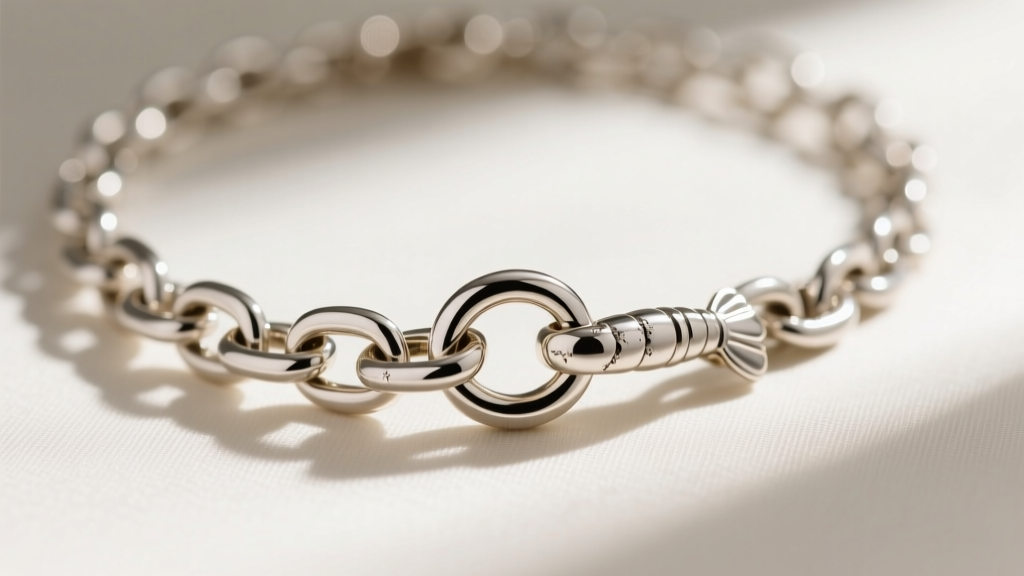
The Friction Problem: On a 10-motif necklace, the sliding pendants create continuous kinetic friction against the chain. Over 3 to 5 years of regular wear, this friction will inevitably wear away the rhodium plating on the lower links and near the clasp, revealing the warmer alloy beneath. Unlike a static ring, a long necklace requires more frequent rhodium 'dips' to maintain a uniform color, a factor often overlooked by first-time buyers.
Gemstone & Organic Material Matrix
The true variable in the durability of your VCA 10 motif necklace lies in the motif stones. Hardstones and organic materials react wildly differently to human sweat, cosmetics, and environmental humidity. Below is a comparative matrix of the most common materials used in the Vintage Alhambra collection.
| Material | Mohs Hardness | Porosity | Primary Vulnerability | Durability Rating |
|---|---|---|---|---|
| Onyx (Dyed Agate) | 6.5 - 7.0 | None | Hard impacts | Excellent |
| Carnelian | 6.5 - 7.0 | Very Low | Thermal shock | Excellent |
| Tiger Eye | 7.0 | None | Hard impacts | Excellent |
| Mother-of-Pearl | 2.5 - 4.5 | High | Acids, perfumes, sweat | Poor |
| Lapis Lazuli | 5.0 - 6.0 | Moderate | Water, chemicals | Fair |
| Malachite | 3.5 - 4.0 | High | Acids, heat, moisture | Very Poor |
The Fragility of Malachite and Mother-of-Pearl
According to the GIA Gem Encyclopedia, malachite is a copper carbonate hydroxide. It is notoriously sensitive to acidic environments. Human sweat, which has a pH ranging from 4.5 to 7.0, can slowly dissolve the polished surface of a malachite motif, leaving it dull and pitted. Similarly, mother-of-pearl (calcium carbonate) will lose its luster and develop a chalky texture if repeatedly exposed to the alcohol and acidic compounds found in fine perfumes and hairsprays.
The Durability of Onyx and Carnelian
If you intend to wear your VCA 10 motif necklace daily, onyx and carnelian are the superior choices. Both are forms of cryptocrystalline quartz (chalcedony). They are non-porous, highly resistant to chemical corrosion, and hard enough to resist micro-scratches from daily environmental dust (which typically contains quartz particles at a Mohs 7).
Construction and Failure Modes: What Breaks First?
Through extensive bench experience and repair analysis, specific failure modes emerge in long, multi-motif necklaces. Understanding these will help you inspect vintage or pre-owned pieces and protect new ones.
- Stone Delamination (Lifting): VCA secures the hardstones within the gold bezel using a specialized jeweler's epoxy. Exposure to hot water (showers, saunas) or ultrasonic cleaners will degrade this adhesive, causing the stone to 'rattle' or lift out of the bezel entirely.
- Bezel Snagging: The gold rim (bezel) holding the stone is incredibly thin to maximize the visible surface area of the clover. Catching the necklace on heavy knitwear or lace can bend the bezel outward, compromising the stone's security.
- Chain Stretching: The 10-motif necklace is heavy. Storing it by hanging it on a jewelry tree hook causes gravitational stress on the top three inches of the chain, eventually elongating the oval links and weakening the solder points.
- Clasp Spring Failure: The lobster clasp relies on a microscopic internal steel spring. Over time, sweat and lotion build up inside the clasp mechanism, causing the spring to stick or fail to close completely.
2026 Market Pricing & Investment Value by Material
The luxury hardstone market has seen significant price stratification. As of 2026, boutique pricing for a standard 10-motif Vintage Alhambra necklace ranges from $24,500 to $32,000 USD, depending heavily on the rarity and sourcing of the stone. According to insights from the Bain & Company Luxury Market Study, pieces featuring increasingly scarce, high-grade malachite with deep, symmetrical banding command a premium on the secondary market, often retaining value better than mass-produced onyx variants, despite malachite's fragility.
Expert Care Protocol for Long-Term Preservation
Proper maintenance of a VCA 10 motif necklace requires abandoning standard jewelry cleaning habits. Never use commercial liquid dips, steam cleaners, or ultrasonic machines.
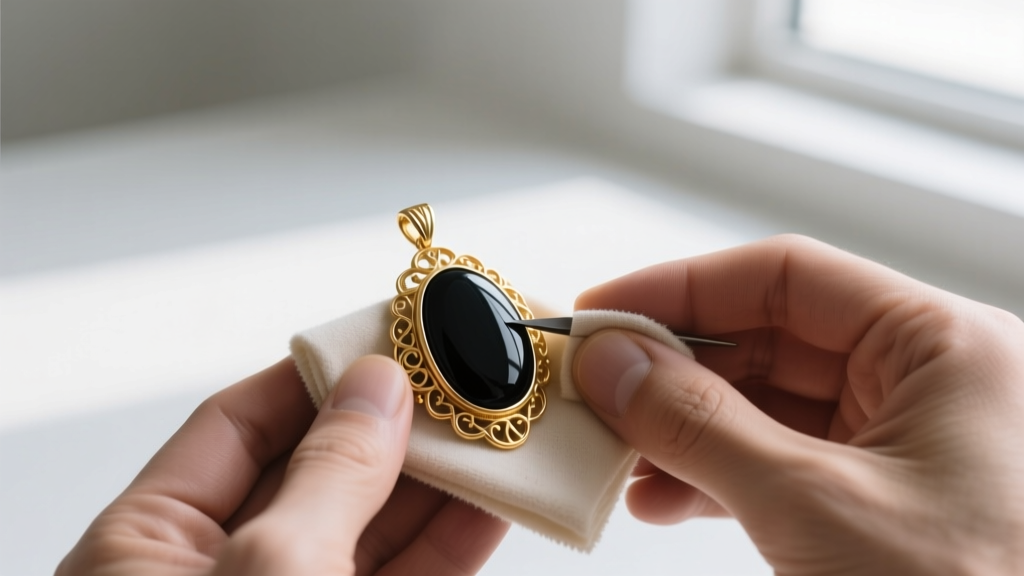
The Golden Rule of Hardstone Care: Always apply your perfumes, lotions, and hairsprays at least 15 minutes before putting on your necklace. The alcohol and volatile organic compounds (VOCs) in cosmetics are the primary culprits behind the 'clouding' of porous stones like lapis and mother-of-pearl.
For routine cleaning, use a dry, ultra-soft makeup brush to dust the crevices between the gold bezel and the stone. To polish the gold links, use a dry, untreated microfiber cloth. For deep cleaning or if a stone becomes loose, consult the official Van Cleef & Arpels care and repair guidelines and send the piece to an authorized boutique for professional bezel tightening and adhesive reapplication.
Final Verdict: Matching Material to Lifestyle
The VCA 10 motif necklace is a masterclass in lapidary and goldsmithing, but it is not a monolith. If your lifestyle is active, and you prefer a 'put it on and never take it off' approach, onyx, carnelian, or tiger eye set in yellow gold are your most resilient options. Conversely, if you are a collector who views jewelry as an occasional, high-impact statement piece and is willing to adhere to strict cosmetic and storage protocols, the breathtaking visual depth of banded malachite or grey mother-of-pearl offers an unmatched aesthetic payoff.


