How to Choose and Care for a Hypoallergenic Stainless Steel Necklace
Learn how to verify, clean, and maintain your hypoallergenic stainless steel necklace. Expert guide on 316L surgical steel grades and rash prevention.

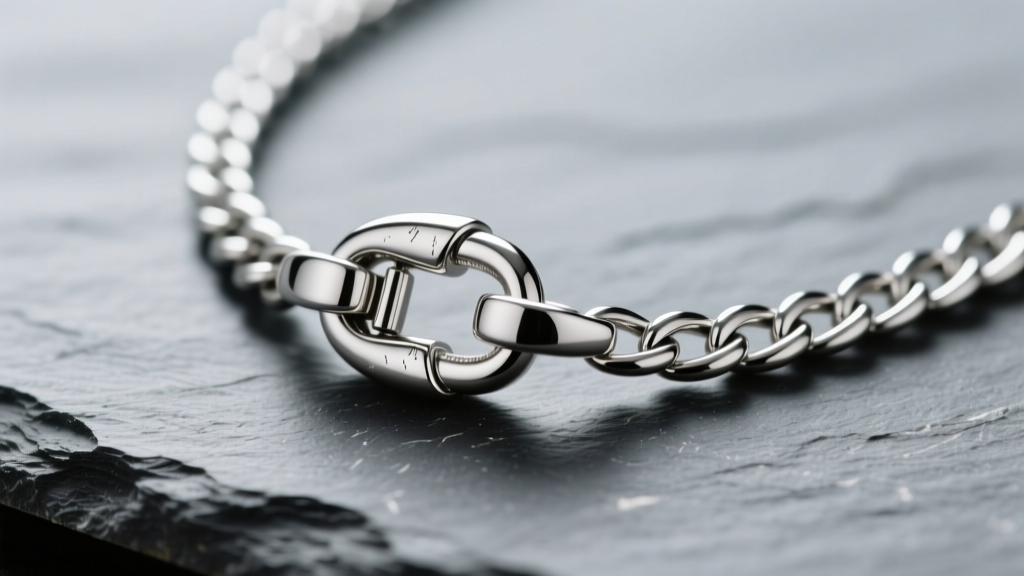
For millions of jewelry enthusiasts, finding the perfect accessory is often overshadowed by the dreaded red, itchy rash of contact dermatitis. If you have sensitive skin, upgrading to a hypoallergenic stainless steel necklace is one of the most effective decisions you can make. However, not all stainless steel is created equal, and improper care can compromise even the highest-grade metals. In this comprehensive guide, we break down the exact metallurgy of surgical steel, how to verify your jewelry's authenticity, and the step-by-step maintenance protocols required to keep your necklace pristine and your skin irritation-free.
The Metallurgy of Safe Jewelry: 316L vs. 304 Stainless Steel
To understand why a hypoallergenic stainless steel necklace works, we must look at its elemental composition. Standard stainless steel (Grade 304) contains iron, chromium, and a significant amount of nickel to prevent rust. While durable, 304 steel can leach nickel when exposed to the acidic pH of human sweat, triggering allergic reactions.
True hypoallergenic jewelry relies on Grade 316L surgical stainless steel. The 'L' stands for low carbon, which prevents carbide precipitation during welding. More importantly, 316L contains 2-3% molybdenum. This specific alloy addition dramatically increases resistance to pitting and crevice corrosion, particularly in chloride environments (like salty sweat). Furthermore, the nickel in 316L is tightly bound within the austenitic crystalline structure, keeping nickel release well below the 0.5 µg/cm²/week threshold mandated by the European Chemicals Agency (ECHA) Nickel Directive.
- Grade 304 (Standard): 8-10.5% Nickel. High risk of leaching over time. Avoid for sensitive skin.
- Grade 316L (Surgical): 10-14% Nickel, but bound with Molybdenum. Extremely low leach rate. Ideal for daily wear.
- Grade 430 (Ferritic): Nickel-free but highly prone to rust and corrosion. Rarely used in fine chains.
Step-by-Step: Verifying Your Necklace's Authenticity
Many fast-fashion brands deceptively market standard alloys as 'surgical steel.' Before wearing your new piece against your skin, run it through this three-step verification process to ensure it is a genuine hypoallergenic stainless steel necklace.
- Check for Micro-Hallmarks: Inspect the back of the pendant and the base of the lobster clasp using a 10x jeweler's loupe. Authentic 316L pieces are often stamped with '316L', 'S.S.', or 'Surgical'. Note that delicate chains (under 1.5mm gauge) may lack stamps due to space constraints, so rely on the clasp stamp.
- The Magnet Test (With Caveats): Austenitic 316L steel is generally non-magnetic. Hold a strong neodymium magnet to the chain. If it snaps to the metal aggressively, it is likely a ferritic alloy or cheap plated brass. However, be aware that the cold-working process used to draw wire and form chain links can induce slight magnetism in genuine 316L. A weak pull is acceptable; a strong pull is a red flag.
- The Ice Test for Thermal Conductivity: Stainless steel has a distinct thermal conductivity. Place the pendant on an ice cube. It should melt the ice noticeably faster than glass or plastic, but slightly slower than pure silver or copper.
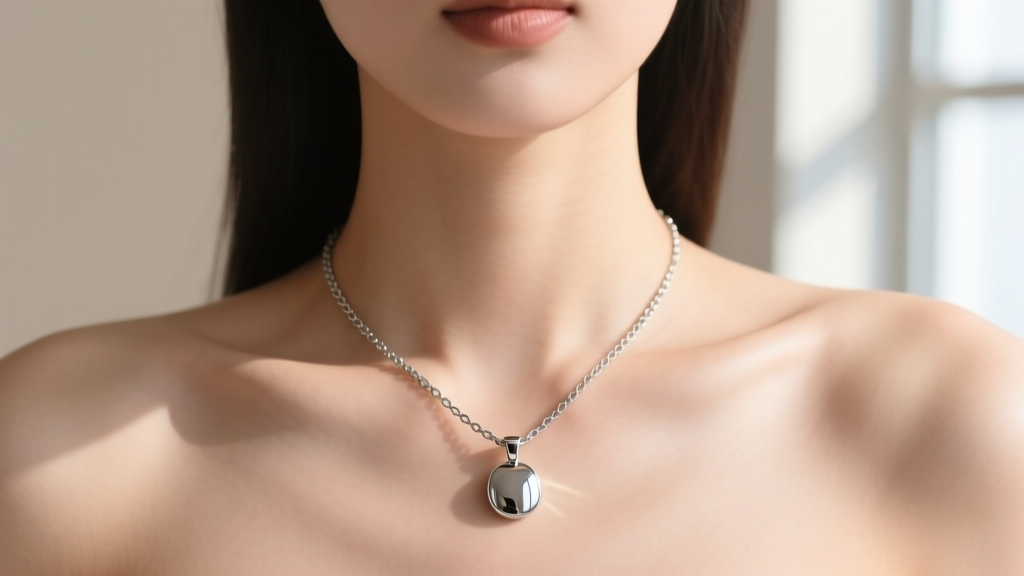
The 2026 Maintenance Protocol: Cleaning Without Corrosion
Even the best hypoallergenic stainless steel necklace will fail if the passive chromium-oxide layer on its surface is compromised. This layer is what makes the metal 'stainless.' When this layer is stripped, the underlying iron can oxidize, and trapped nickel can become exposed to your skin.
What to Avoid: The Pitting Threat
Never clean your stainless steel jewelry with bleach, chlorine-based cleaners, or harsh iodine solutions. Chlorides aggressively attack the passive oxide layer, leading to microscopic pitting. Once pitted, the crevices trap sebum and bacteria, which can cause localized skin irritation that mimics a metal allergy. Similarly, avoid abrasive polishing pastes containing silica, which will scratch the mirror finish and create micro-abrasions where dirt accumulates.
The 4-Step Deep Cleaning Method
For routine maintenance of a 316L chain and pendant, follow this safe, non-destructive protocol:
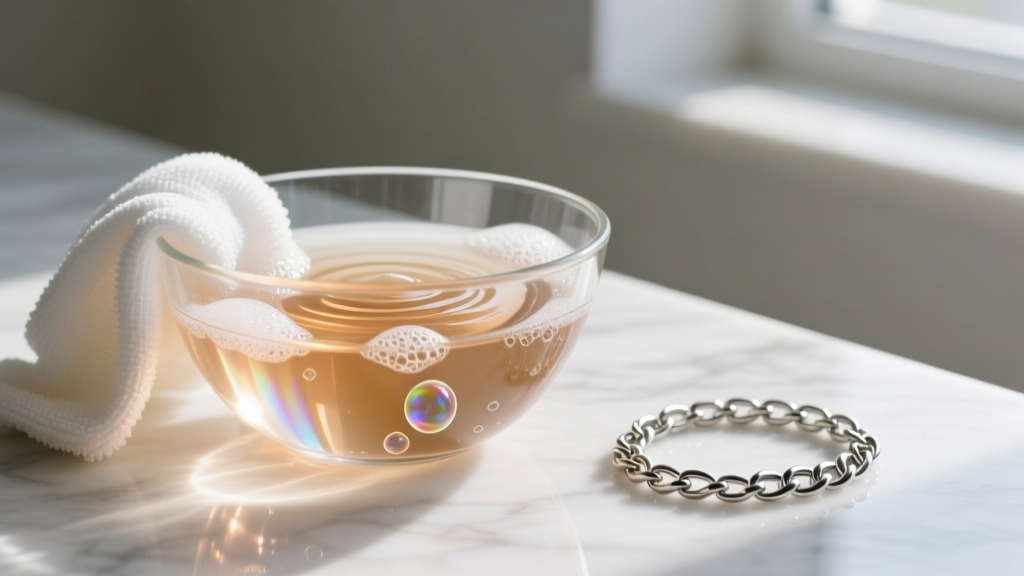
- Prepare the Solution: Mix three drops of mild, phosphate-free dish soap (like Dawn) into a bowl of warm distilled water. Avoid tap water if you live in a hard-water area, as calcium deposits can leave a cloudy film.
- Soak and Agitate: Submerge the necklace for 5 to 10 minutes. Gently agitate the water to force the solution through the tiny gaps in the chain links.
- Soft Brushing: Use an extra-soft baby toothbrush to gently sweep the clasp mechanism and the bail of the pendant. Never use stiff bristles.
- Dry Thoroughly: Rinse under distilled water and pat completely dry with a lint-free microfiber cloth. Ensure no moisture is trapped inside the spring mechanism of the clasp.
| Cleaning Agent | Effect on 316L Steel | Effect on Skin Safety |
|---|---|---|
| Mild Dish Soap | Safe; removes sebum and oils | Maintains hypoallergenic properties |
| Baking Soda Paste | Mildly abrasive; dulls mirror finish | Can create micro-scratches that trap bacteria |
| Bleach / Chlorine | Highly destructive; causes pitting | Exposes underlying alloys, risking dermatitis |
| Ultrasonic Cleaner | Excellent for deep crevice cleaning | Safe, provided no harsh chemical solvents are used |
| Rubbing Alcohol | Safe for sanitizing; removes sticky residue | Evaporates quickly; leaves no skin irritants |
Troubleshooting Common Allergic Breakouts
What happens if you are wearing a verified 316L hypoallergenic stainless steel necklace and still experience a rash? According to the Mayo Clinic's guidelines on contact dermatitis, a reaction is not always caused by the metal itself.
'Irritant contact dermatitis can occur when moisture, soap, or debris becomes trapped between the jewelry and the skin, breaking down the skin barrier without an actual allergic immune response.'
If you experience redness, check for crevice irritation. Thick cable chains (e.g., 4mm to 6mm widths) worn tightly against the neck can trap sweat and dead skin cells. Switch to a smoother, denser chain style like a box chain or a snake chain, which offer fewer gaps for debris accumulation. Additionally, ensure you are removing your necklace before showering; the combination of hot water, shower gels, and friction can strip the skin's natural lipid barrier, making it hyper-reactive to any foreign object resting against it.
Choosing the Right Gauge and Length for Comfort
Physical comfort is just as important as metallurgical safety. When selecting your necklace, consider the wire gauge (thickness) and overall length. A heavier chain can cause mechanical friction against the delicate skin of the decolletage.
- Delicate Layering (22 to 24 Gauge): Ideal for 16-inch chokers or 18-inch princess lengths. These thin wires are lightweight and minimize physical friction, though they are more prone to kinking.
- Everyday Pendants (18 to 20 Gauge): The sweet spot for durability and comfort. Excellent for holding 5g to 15g pendants without stretching the links.
- Statement Pieces (14 to 16 Gauge): Best for longer 24-inch matinee or 30-inch opera lengths where the chain rests over clothing, preventing direct skin friction.
Final Thoughts on Long-Term Wear
Investing in a genuine hypoallergenic stainless steel necklace is a masterclass in practical, long-term style. By understanding the vital role of molybdenum in 316L steel, rigorously verifying your purchases, and adhering to a chloride-free cleaning regimen, you can enjoy the brilliant, untarnished luster of surgical steel for decades. Treat your jewelry with the metallurgical respect it deserves, and it will reward you with a lifetime of safe, irritation-free wear.


