Beginner's Guide to Buying a Vintage Baltic Amber Necklace
Learn how to authenticate, price, and care for a vintage Baltic amber necklace. Expert tips on UV testing, restringing, and spotting fakes.

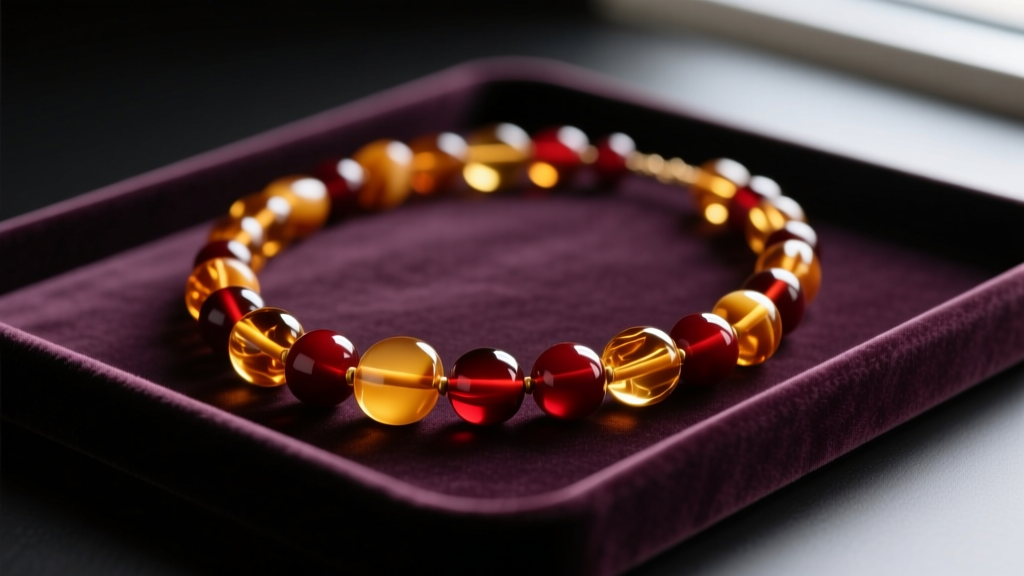
The Magic of Fossilized Resin: What is Baltic Amber?
When you acquire a vintage Baltic amber necklace, you are not just buying a piece of jewelry; you are holding a fragment of the Eocene epoch. Baltic amber, scientifically known as succinite, originates from the extinct Pinus succinifera forests that covered Northern Europe over 44 million years ago. Today, the majority of the world's supply is harvested from the Samland Peninsula in the Kaliningrad Oblast, as well as the coastal regions of Lithuania and Poland.
Unlike gemstones formed by intense heat and pressure, amber is an organic gem. According to the Gemological Institute of America (GIA), true Baltic amber is uniquely characterized by its succinic acid content, which typically ranges between 3% and 8%. This specific chemical signature is what separates authentic Baltic succinite from other global deposits, such as Dominican or Mexican amber, which lack significant succinic acid levels and possess entirely different botanical origins.
The Chemistry of Color: Cognac, Cherry, and Butterscotch
Beginners often assume that amber is naturally available in a wide spectrum of colors. In reality, the color variations in a vintage Baltic amber necklace are the result of oxidation, trapped air bubbles, and the specific conditions of the sedimentary environment over millions of years.
- Cognac (Honey): The most common and classic hue. It ranges from a pale, translucent yellow to a deep, rich brown. These beads are highly prized for their clarity and the way they catch the light.
- Cherry (Dark Red): Extremely rare in its natural, untreated form. Most 'cherry' amber on the market has been heated in an autoclave to deepen its color and create internal 'sun spangles' (glittering stress fractures). True, unheated vintage cherry amber commands a massive premium.
- Butterscotch (Opaque Yellow/White): Also known as 'bone' or 'royal' amber. The opaque, creamy appearance is caused by millions of microscopic air bubbles trapped within the resin, which scatter light. It is highly sought after by collectors.
How to Authenticate Vintage Amber at Home
The vintage jewelry market is flooded with imitations. Before investing in a vintage Baltic amber necklace, you must perform non-destructive testing to verify its authenticity. Avoid the 'hot needle test' often recommended online; while it works (amber smells like pine, plastic smells chemical), it will permanently melt and scar your vintage beads.
1. The Saltwater Float Test
Baltic amber has a specific gravity of 1.05 to 1.10, meaning it is just slightly denser than fresh water but less dense than saltwater. Mix one part table salt to four parts warm water in a glass. Stir until the salt is completely dissolved. Drop your necklace in. Genuine amber will float effortlessly, while glass, Bakelite, and most modern plastics will sink to the bottom. Note: Remove any heavy sterling silver or gold clasps before testing, as the metal will drag the beads down.
2. UV Fluorescence (Blacklight) Testing
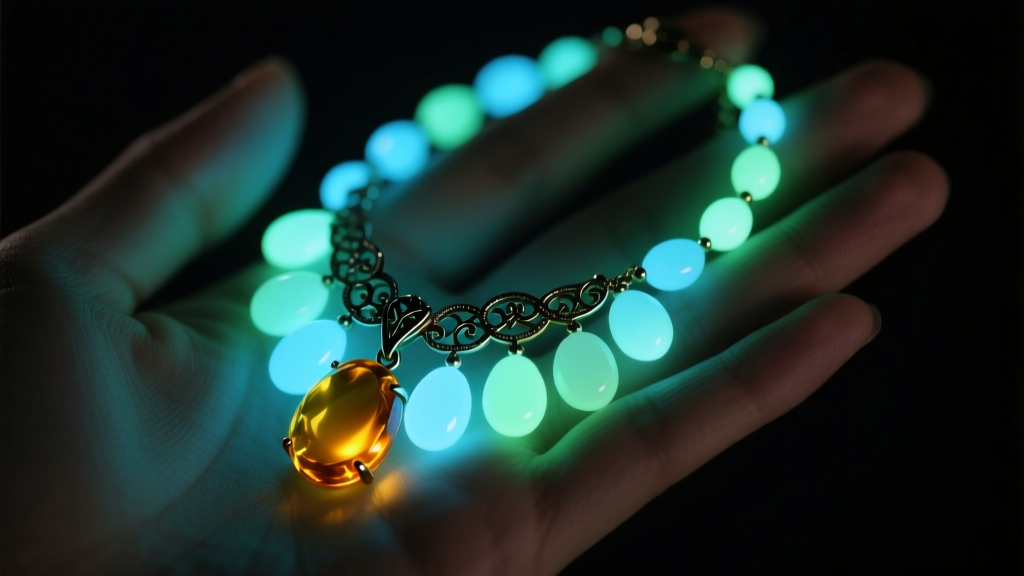
This is the most reliable non-destructive test for succinite. Shine a standard 365nm UV blacklight on the beads in a dark room. Genuine Baltic amber will fluoresce with a pale, milky blue or soft yellowish-green glow. Copal (immature resin) will glow a harsh, chalky white, while synthetic plastics will remain completely dark or reflect the purple light of the bulb.
Spotting the Imitations: A Material Comparison
Understanding the physical properties of common amber substitutes is crucial for any collector. Below is a diagnostic comparison chart used by gemologists to differentiate materials.
| Material | Float Test (Saltwater) | UV Light Reaction | Acetone (Nail Polish Remover) | Mohs Hardness |
|---|---|---|---|---|
| Baltic Amber | Floats | Pale Blue / Milky Green | No Reaction | 2.0 - 2.5 |
| Copal (Immature Resin) | Floats | Chalky White | Surface becomes sticky/tacky | 1.5 - 2.0 |
| Bakelite (Phenolic Resin) | Sinks | No Glow | No Reaction | 3.0 - 4.0 |
| Glass | Sinks | No Glow | No Reaction | 5.5 - 7.0 |
| Celluloid (Early Plastic) | Sinks | No Glow | No Reaction | 2.0 - 2.5 |
Market Valuation and Pricing Tiers
Pricing a vintage Baltic amber necklace depends heavily on bead size, graduation, color, and the condition of the original stringing. Based on current market data and guidelines from the International Amber Association, here is what you can expect to pay in the vintage sector:
- Entry-Level ($40 - $120): Uniform, small beads (4mm - 8mm) in standard cognac colors. Often featuring heavy oxidation or minor surface crazing (tiny cracks). Usually strung on modern nylon.
- Mid-Tier Collector ($150 - $450): Graduated necklaces (where the center bead is significantly larger than the clasp beads, e.g., 15mm center tapering to 6mm). Rich butterscotch or highly clear 'gem grade' cognac. May feature original antique barrel clasps.
- Museum / Investment Grade ($600 - $2,000+): Large, baroque (free-form) unpolished chunks, or exceptionally rare, unheated natural cherry amber. Pieces with verified provenance, such as early 20th-century Art Deco settings or traditional Lithuanian folk designs.
Restringing and Preservation Techniques
Amber is remarkably soft, ranking only 2.0 to 2.5 on the Mohs hardness scale. For context, a copper penny is a 3.5. This means that if the beads in your vintage necklace rub against each other without knots in between, they will slowly grind away, enlarging the drill holes and destroying the bead's shape over time.
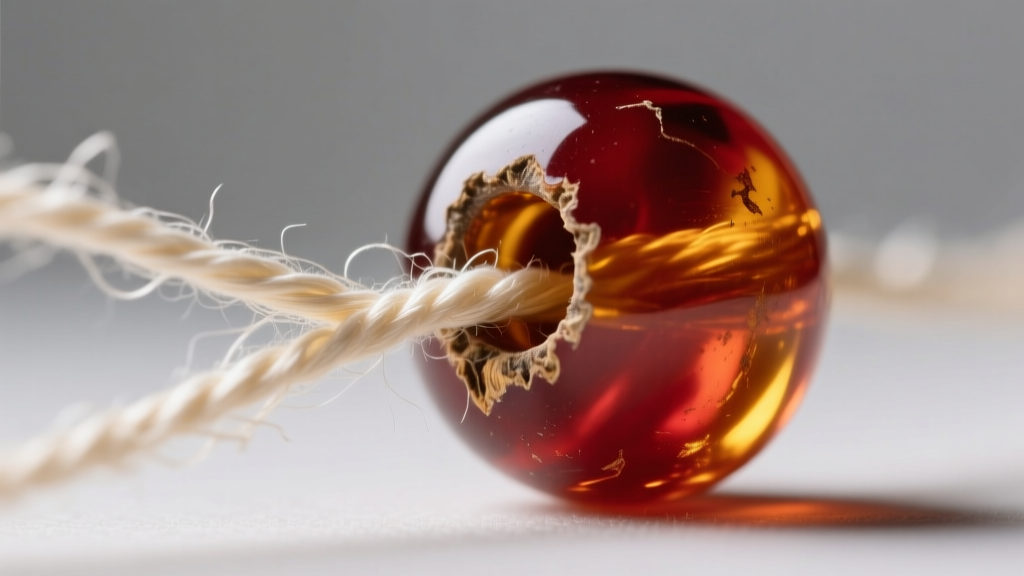
Never wear a vintage piece straight from an estate sale without inspecting the cord. Antique cotton or early nylon degrades, stretches, and becomes brittle. Have the piece professionally restrung using Griffin 100% natural silk cord. For standard 6mm-10mm beads, a Size No. 2 (0.45mm) or No. 3 (0.50mm) silk thread is ideal. The necklace must be 'knotted between every bead' to prevent friction and to ensure that if the cord snaps, you only lose one bead rather than the entire strand.
Furthermore, pay attention to the clasp. Vintage amber often features threaded barrel clasps made of amber or early plastics. These threads strip easily. A master jeweler will upgrade the piece to a sterling silver lobster clasp using 'French wire' (gimp) to protect the silk from fraying against the metal jump ring, while safely storing the original barrel clasp in the jewelry box to maintain the piece's historical provenance.
Styling Vintage Amber for the Modern Wardrobe
The key to styling a vintage Baltic amber necklace is contrast. Because amber is inherently warm, organic, and slightly rustic, it pairs beautifully with structured, modern, or metallic elements. Avoid pairing it with other bohemian or organic materials like wood or turquoise, which can make the overall look feel like a costume.
Instead, layer a graduated cognac amber strand (typically 18 to 20 inches in length) with a delicate, 14k or 18k yellow gold satellite chain at 24 inches. The sharp, reflective sparkle of the gold chain perfectly offsets the deep, resinous glow of the amber. For evening wear, a single strand of opaque butterscotch amber serves as a striking, unexpected alternative to traditional pearls, offering a rich, creamy contrast against black silk or deep emerald velvet.
Daily Care and Chemical Warnings
As an organic gem, amber is highly susceptible to chemical damage. Succinite will permanently cloud and develop a 'crazed' micro-fracture network if exposed to alcohol, perfumes, hairspray, or household cleaning agents. Always apply your cosmetics and fragrances at least 15 minutes before putting on your necklace. When cleaning is required, use only a soft, lint-free microfiber cloth slightly dampened with warm water. Never use ultrasonic jewelry cleaners or steamers, as the intense vibrations and heat will shatter the fossilized resin instantly.


