Expert Care Guide: Cleaning Your Vintage Beaded Necklace
Learn expert techniques to clean, restring, and preserve your vintage beaded necklace without damaging fragile glass, Bakelite, or silk threads.

Owning a vintage beaded necklace is like holding a piece of wearable history. Whether it is an Art Deco Czech glass collar, a Victorian jet mourning piece, or a 1950s Dior pearl strand, these accessories carry immense aesthetic and historical value. However, the very age that gives them their charm also makes them incredibly fragile. Unlike modern mass-produced jewelry, vintage pieces require specialized care. A single mistake—like submerging a silk-strung necklace in soapy water—can lead to irreversible thread rot, bead discoloration, or a catastrophic snap.
In this comprehensive conservation guide, we explore museum-grade techniques to clean, maintain, and preserve your vintage beaded necklace, ensuring it survives for another century.
The Hidden Dangers of Improper Cleaning
The most critical vulnerability of any vintage beaded necklace is not the beads themselves, but the stringing material. Necklaces crafted between the 1910s and 1970s were predominantly strung on natural silk or cotton threads. Over decades, these organic fibers absorb skin oils, perfume residues, and ambient humidity, causing them to degrade, stretch, and eventually turn to brittle dust.
When you expose this aged silk to water or harsh chemical cleaners, the fibers swell and weaken rapidly. Furthermore, many vintage beads are porous or feature delicate surface treatments. Dyed seed beads can bleed their color when wet, while early plastics like celluloid can melt or warp upon contact with modern solvents. According to the Victoria and Albert Museum's conservation guidelines, preventive care and minimal intervention are the golden rules of preserving historical jewelry.
Identifying Your Vintage Bead Material
Before applying any cleaning method, you must accurately identify the bead material. What works for durable Czech glass will destroy early synthetic plastics. Below is a quick reference chart for common vintage bead materials and their sensitivities.
| Material | Common Era | Water Safe? | Chemical Sensitivity | Conservation Notes |
|---|---|---|---|---|
| Czech / Art Glass | 1920s–1950s | Yes (Briefly) | Low | Avoid abrasive scrubbing to protect painted foiling or lustre coatings. |
| Bakelite | 1930s–1940s | No (Wipe only) | High | Never use alcohol or ammonia, which causes micro-crazing and clouding. |
| Celluloid | 1910s–1920s | No | Extreme | Highly flammable and reactive. Wipe only with a dry, soft cloth. |
| Dyed Seed Beads | 1920s–1980s | No | Moderate | Water will cause aniline dyes to bleed, ruining adjacent beads and fabric. |
| Jet / French Jet | 1880s–1910s | No | Moderate | True jet is fossilized wood; French jet is glass. Keep both away from heat. |
Step-by-Step Dry Cleaning Methods (Museum Standard)
For 90% of vintage beaded necklaces, dry cleaning is the safest and most effective method. This approach removes decades of dust, skin cells, and environmental grime without risking moisture damage to the internal thread.
The Soft Brush Technique
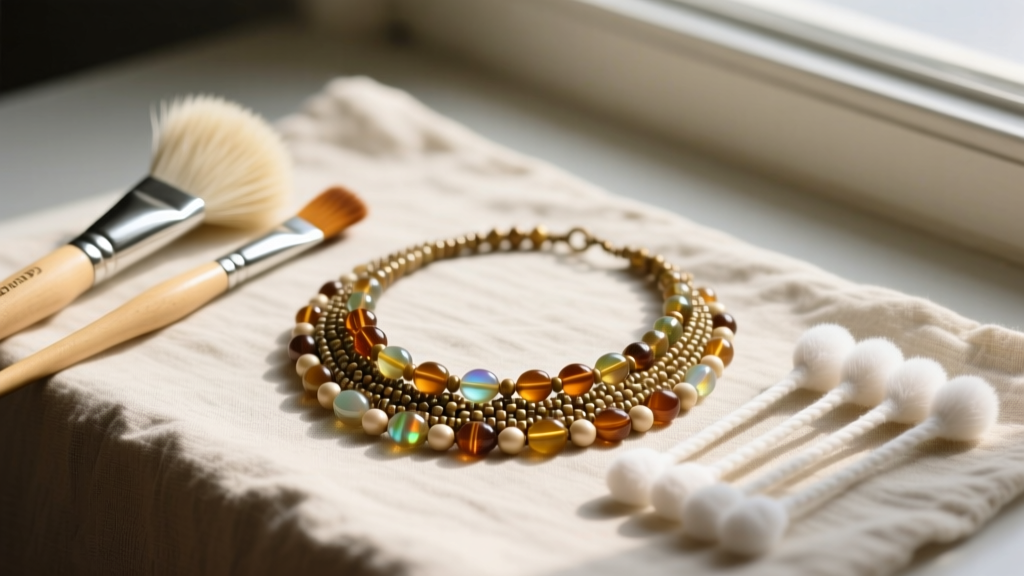
Invest in a soft goat-hair brush or a dedicated, ultra-soft makeup blending brush. Lay the necklace flat on a clean, acid-free surface. Gently brush the beads in a circular motion, paying special attention to the crevices around the drill holes where grime accumulates. Do not pull or stretch the necklace while brushing, as this puts stress on the aged knots.
Microfiber and Cotton Swab Detailing
For stubborn spots on non-porous glass or stone beads, use a dry microfiber cloth. If a bead requires slightly more friction, lightly dampen a cotton swab with distilled water (never tap water, as the minerals can leave deposits). Wipe the surface of the bead carefully, strictly avoiding the drill holes where the thread is exposed. Immediately follow up with a dry swab to remove any residual moisture.
When and How to Use Wet Cleaning Safely
Wet cleaning should only be attempted on solid, non-porous beads (like glass, agate, or quartz) when dry methods fail, and only if you are certain the internal thread is a modern synthetic or in pristine condition. If you suspect the necklace is strung on vintage silk, skip wet cleaning entirely.
When wet cleaning is appropriate, use an archival-grade, pH-neutral detergent like Orvus WA Paste, which is widely used by textile conservators. Mix a tiny drop into a bowl of distilled water. Dip a soft cloth into the solution, wring it out until it is barely damp, and gently wipe each bead individually. Rinse the cloth with pure distilled water and wipe the beads again to remove any soap residue.
The Bakelite and Celluloid Exception
Early plastics require extreme caution. Bakelite, a popular 1930s material, can develop a white, cloudy haze when exposed to environmental pollutants. To clean and restore Bakelite, conservators often use a tiny amount of Simichrome polish or a specialized plastic polish applied with a soft cloth. Never soak Bakelite, and never use alcohol-based cleaners, which will strip the patina and cause irreversible cracking. The Canadian Conservation Institute strongly advises against the use of commercial jewelry dips on historical plastics and organic gems.
Restringing: The Ultimate Preservation Step
The hard truth about vintage jewelry is that if the original silk thread is more than 30 years old, it needs to be replaced. No amount of careful cleaning will save a rotted thread. Restringing is not just a repair; it is the ultimate preservation step for a vintage beaded necklace.
Choosing the Right Thread
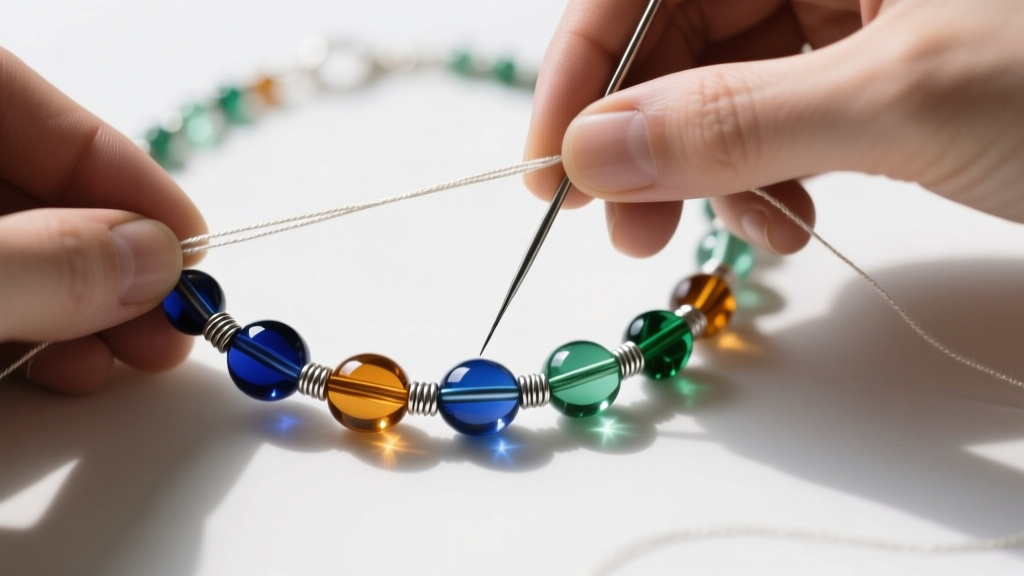
For authentic restoration, many purists prefer natural silk threads, such as Griffin Silk in Size D or E, which offers the correct drape and historical accuracy. However, for heavy glass or stone beads, modern conservators often opt for gel-spun polyethylene braided lines (like PowerPro) or high-quality nylon, which offer superior tensile strength and resistance to moisture and skin oils.
French Wire and Knotting
When restringing, always use French wire (also known as bullion or gimp) at the clasp ends. This delicate, coiled metal wire protects the thread from fraying against the metal clasp ring. Additionally, hand-knotting between every single bead is mandatory for high-value vintage pieces. Knots prevent the beads from grinding against one another and ensure that if the thread ever snaps, you only lose one bead rather than the entire necklace.
Proper Storage to Prevent Future Degradation
How you store your vintage beaded necklace is just as important as how you clean it. Never hang a heavy, vintage beaded necklace on a jewelry stand; the constant gravitational pull will stretch the thread and distort the neckline over time. Always store them flat.
- Avoid Plastic Bags: Storing early plastics like Bakelite or celluloid in polyethylene or PVC zip-lock bags traps acidic off-gassing, leading to a destructive chemical reaction known as 'crazing' (micro-cracks on the surface).
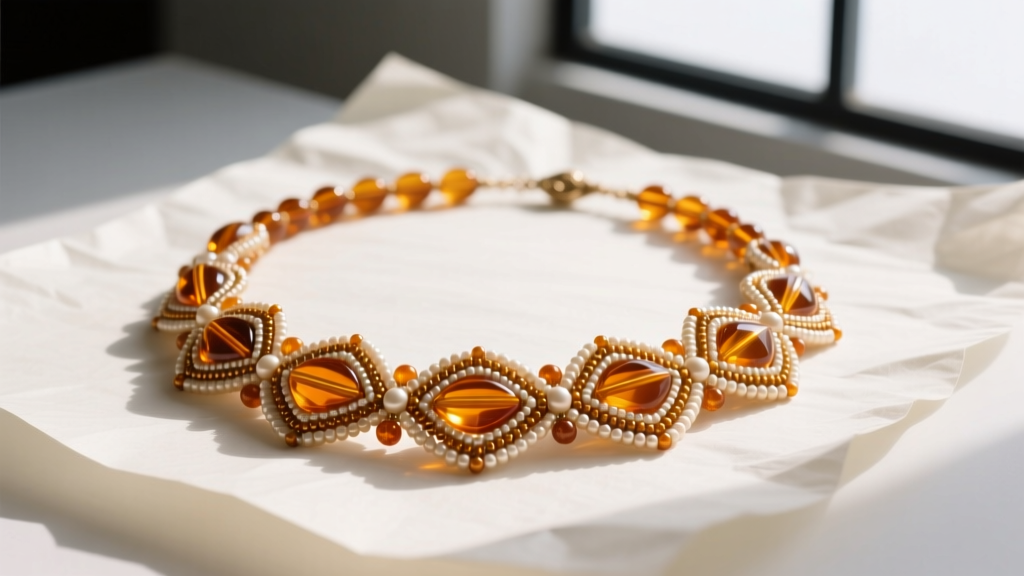
- Use Archival Materials: Wrap the necklace in acid-free, unbuffered tissue paper. Buffered tissue contains alkaline reserves that can damage organic beads like pearls, coral, or amber.
- Climate Control: Store the piece in a cool, dark, and dry environment. UV light will fade dyed seed beads and amber, while high humidity accelerates silk thread rot and tarnishes metal findings.
By adopting these meticulous, museum-standard care routines, you protect the structural integrity and historical provenance of your vintage beaded necklace. For more insights on specific gemstone materials, the Gemological Institute of America (GIA) provides excellent resources on the long-term care of organic and porous gems. Treat your vintage pieces with the respect they deserve, and they will continue to tell their stories for generations to come.