The Beginner’s Guide to Styling a Vintage Black Crystal Necklace
Discover how to identify, style, and care for a vintage black crystal necklace. Learn the differences between jet, onyx, and French jet.

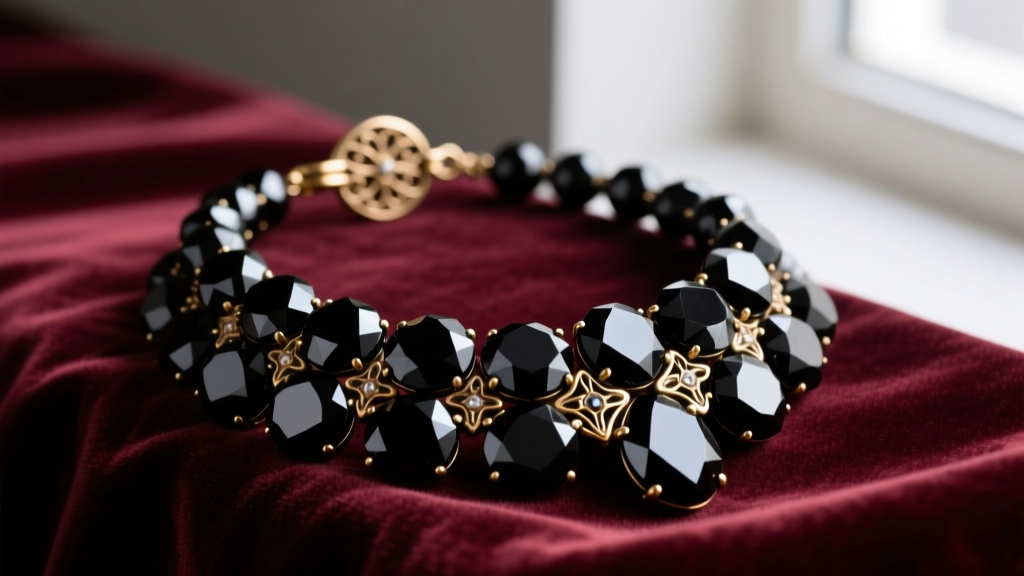
The allure of a vintage black crystal necklace lies in its moody elegance, historical weight, and unparalleled versatility. Whether inherited from a relative or discovered in a dusty antique shop, these dark, shimmering strands are staples of both Victorian mourning jewelry and modern dark academia fashion. However, the term 'black crystal' is often a misnomer used by novice sellers. True lead crystal is rarely opaque black; instead, these vintage pieces are typically crafted from Whitby jet, black onyx, French jet (black glass), or early plastics like Bakelite.
For beginners, navigating the antique jewelry market can be daunting. Misidentified materials, degraded stringing, and improper cleaning can turn a valuable heirloom into a damaged trinket. This guide will decode the materials, provide actionable authentication tests, and offer structural restoration advice to ensure your vintage black crystal necklace remains a cornerstone of your wardrobe for decades to come.
Decoding the 'Black Crystal' Misnomer: What Are You Actually Wearing?
Before you can properly care for or style your necklace, you must identify its core material. The Victorians popularized dark jewelry during the extended mourning period of Queen Victoria (1861-1901), leading to a massive surge in black bead production. According to the Victoria and Albert Museum, the demand for black jewelry outpaced the supply of natural gems, resulting in a diverse market of organic and synthetic alternatives.
Whitby Jet
Jet is not a stone, but a fossilized wood (a type of lignite coal). Mined primarily in Whitby, England, it is incredibly lightweight, warm to the touch, and can be carved into intricate, deep-relief cameos or faceted beads. It possesses a matte or semi-gloss luster that deepens with skin contact over time.
Black Onyx
Onyx is a banded variety of chalcedony (quartz). Natural black onyx is exceedingly rare; most vintage 'onyx' is actually gray or white agate that has been dyed and heated with carbon and sugar solutions. It is heavy, cold to the touch, and possesses a high, glassy polish. The GIA Gem Encyclopedia notes that dyed black chalcedony is stable, but the material's density makes it prone to shattering if dropped on hard surfaces.
French Jet (Black Glass)
Despite the name, French jet is neither French nor jet. It is highly faceted, leaded black glass, primarily manufactured in Bohemia (modern-day Czech Republic) during the late 19th and early 20th centuries. It mimics the sparkle of faceted gemstones but is heavier than true jet and warmer than onyx.
The Material Identification Matrix
Use this quick-reference table to hypothesize the material of your vintage black crystal necklace based on physical properties.
| Material | Weight | Temperature | Luster & Faceting | Estimated Vintage Value |
|---|---|---|---|---|
| Whitby Jet | Very Light | Warm | Matte to Semi-Gloss; intricate carvings | $150 - $600+ |
| Black Onyx | Heavy | Cold | High Polish; smooth cabochons or simple facets | $80 - $250 |
| French Jet | Medium-Heavy | Cool | Highly Faceted; brilliant sparkle | $40 - $120 |
| Bakelite | Light-Medium | Warm | Molded; chunky, geometric shapes | $100 - $400 |
Field Tests for Authenticating Vintage Black Beads
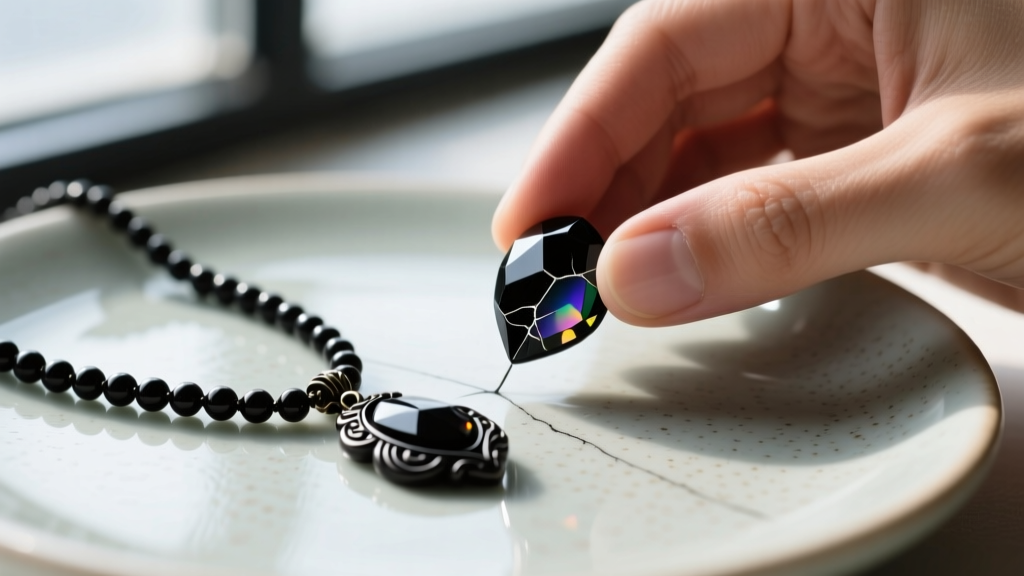
Relying on visual inspection alone is insufficient when shopping for a vintage black crystal necklace. Estate sales and online marketplaces are rife with modern plastic replicas masquerading as Victorian antiques. Here are three non-destructive (and one cautious) field tests you can perform.
1. The Thermal Conductivity Test
Hold the beads against your cheek or the inside of your wrist. Glass (French jet) and stone (onyx) will feel distinctly cold and take several seconds to absorb your body heat. Jet and Bakelite will feel room-temperature or slightly warm almost immediately due to their low thermal conductivity.
2. The Unglazed Porcelain Streak Test
Find an inconspicuous bead, preferably near the clasp. Gently rub it against the unglazed bottom of a ceramic mug or a porcelain streak plate. Warning: This is a micro-destructive test.
- Jet: Leaves a distinct ginger-brown streak.
- Onyx/Glass: Leaves no streak, or a faint white/gray scratch mark.
- Bakelite: Leaves no streak, but may emit a faint chemical odor from the friction.
3. The UV Light Reaction
Shine a standard 365nm UV flashlight on the beads in a dark room. Many early 20th-century glass beads and certain plastics will fluoresce. French jet often glows a dull, muddy green or purple, while some Bakelite pieces will fluoresce a vibrant orange or yellow. True jet and onyx will remain completely inert (dark).
Structural Integrity: The Hidden Dangers of Vintage Stringing
The most common failure mode in antique necklaces is not the beads themselves, but the stringing material. A vintage black crystal necklace from the 1920s was likely strung on natural silk thread or early cotton cord. Over a century, these organic fibers dry out, become brittle, and suffer from microscopic rot, especially if exposed to perfume, skin oils, or humidity.
When to Restring
Gently pull the necklace taut. If you see gaps of thread between the beads, or if the thread appears gray and frayed near the clasp, the piece is in imminent danger of snapping. Do not wear it until it has been professionally restored.
Modern Restoration Specifications
When taking your piece to a jeweler (or restringing it yourself), avoid traditional silk for heavy materials like onyx or French jet. Instead, request a 49-strand nylon-coated stainless steel beading wire in a 0.018-inch or 0.024-inch gauge. This provides the drape of silk with the tensile strength of steel, capable of supporting the high density of glass and stone beads without stretching or snapping. For lightweight jet, a bonded nylon thread like S-Lon or Amiet is preferable to maintain the necklace's fluid movement.
Styling Frameworks: Beyond the Gothic Trope

While a vintage black crystal necklace is a staple of gothic and alternative fashion, its true power lies in its ability to anchor contemporary, minimalist, and dark academia wardrobes. The high contrast of black beads against specific fabrics creates a striking visual focal point.
The Neckline Matching Framework
- The Scoop Neck: Pair a 16-inch (choker-length) French jet necklace with a wide scoop neck. The faceted glass will catch the light against the collarbone, mimicking the look of black diamonds.
- The V-Neck & Wrap Dress: Opt for an 18-to-20-inch Y-drop or lariat style featuring black onyx. The elongated silhouette draws the eye downward, complementing the geometry of the V-neck without overcrowding the chest.
- The High Collar / Turtleneck: Layer a long, 28-inch opera-length jet strand over a cream or charcoal turtleneck. The matte texture of the jet provides a sophisticated, scholarly aesthetic perfect for the dark academia trend.
Metal Pairing Rules
Vintage black beads were historically set in pinchbeck, brass, or low-karat gold. When mixing metals, lean into warm, muted tones like antique brass or oxidized silver. Avoid pairing vintage black jewelry with high-polish, modern rhodium-plated white gold, as the stark contrast can make the vintage piece look costume-like rather than intentional.
Cleaning and Maintenance Protocols
Never use ultrasonic cleaners, steamers, or commercial jewelry dips on a vintage black crystal necklace. The high-frequency vibrations of an ultrasonic cleaner can easily shatter internally fractured onyx or chip the edges of antique French jet.
- For Jet: Wipe gently with a soft, slightly damp microfiber cloth. Once a year, rub a microscopic drop of mineral oil into the beads to prevent them from drying out and cracking.
- For Onyx and Glass: Clean with a drop of mild, phosphate-free dish soap diluted in lukewarm water. Use a soft baby toothbrush to gently agitate dirt from the facets. Dry immediately with a lint-free cloth to prevent water spots.
- Storage: Store the necklace flat in a lined jewelry box. Hanging heavy glass or stone beads for long periods will cause permanent stretching, even on modern steel wire.
Final Thoughts on Sourcing
As we navigate the vintage market in 2026, the surge in 'cottagecore' and 'dark academia' aesthetics has driven up the prices of authentic Victorian mourning jewelry. When sourcing a vintage black crystal necklace, prioritize reputable estate jewelers or specialized online antique dealers who provide clear macro-photography of the clasps, thread condition, and bead facets. By understanding the distinct differences between jet, onyx, and glass, you can confidently build a collection that honors the craftsmanship of the past while seamlessly integrating into your modern personal style.


