Vintage Clear Glass Bead Necklace: 2026 Occasion Gift Guide
Discover how to choose, style, and gift a vintage clear glass bead necklace for any occasion in 2026. Expert tips on provenance, clasps, and pricing.

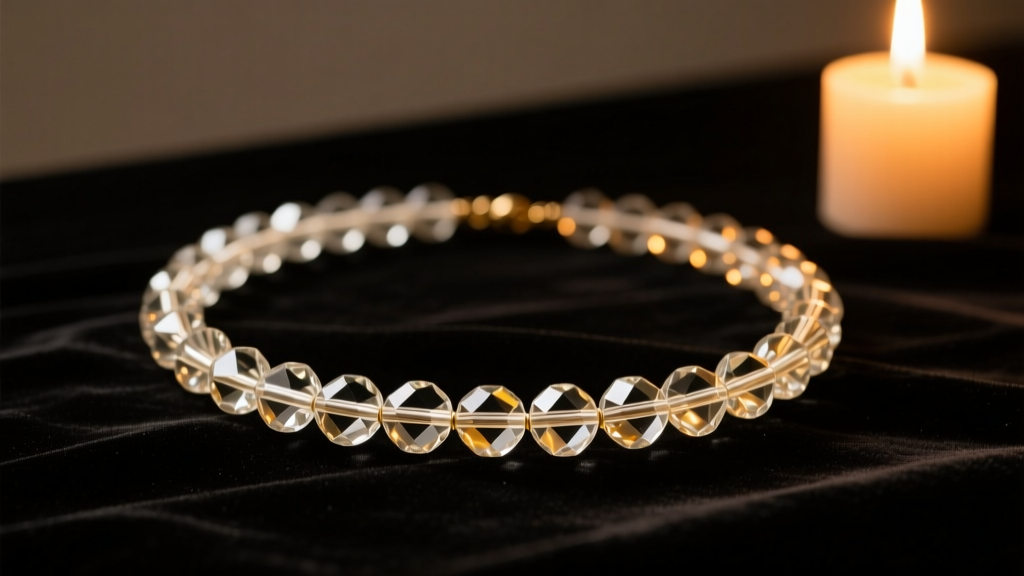
The Enduring Allure of Vintage Clear Glass
When curating a meaningful jewelry gift, few pieces carry the historical weight and optical brilliance of a vintage clear glass bead necklace. Unlike modern mass-produced acrylics or synthetic crystals, antique and vintage glass beads were crafted using centuries-old lapidary techniques, resulting in a depth and refraction that modern manufacturing rarely replicates. In 2026, as sustainable and historically conscious gifting continues to dominate the luxury market, presenting a piece of wearable history is both a sophisticated and deeply personal gesture.
The appeal of clear glass lies in its versatility and its deceptive simplicity. While colored glass often shouts for attention, clear glass—particularly lead crystal or high-grade soda-lime glass—manipulates light. It acts as a prism, catching the ambient environment and reflecting it back with a subtle, icy fire. According to the Gemological Institute of America (GIA), vintage glass with a high lead oxide content (often 24% or more) boasts a refractive index of up to 1.70, giving it a diamond-like sparkle that modern lead-free alternatives struggle to achieve.
Decoding Provenance: Types of Vintage Clear Glass
To gift a vintage piece with confidence, you must understand its origins. The term 'vintage' generally applies to pieces between 20 and 100 years old, but the geographic origin of the glass dramatically affects its value, cut quality, and historical significance.
- Czechoslovakian Faceted Glass (1920s–1940s): The Bohemian region was the epicenter of glass bead production. Vintage Czech clear beads are renowned for their precise hand-cut facets and high lead content. They often feature intricate star-cuts or hexagonal shapes that maximize light return.
- French Baccarat Crystal (1920s–1950s): Baccarat beads are the pinnacle of Art Deco and Mid-Century glass jewelry. Often featuring geometric emerald, marquise, or baguette cuts, these beads were frequently used in high-end couture jewelry. They are heavier, flawlessly clear, and command a premium on the secondary market.
- Italian Murano Cristallo (1950s–1970s): While Murano is famous for colored latticino and sommerso techniques, their 'cristallo' (clear glass) is legendary for its purity. Murano clear beads are often larger, featuring smooth, organic cabochon shapes or hand-carved floral motifs, offering a softer, more romantic light diffusion.
Occasion Matching: When to Gift Glass Beads
Matching the era and style of the necklace to the recipient's milestone ensures the gift resonates on a personal level. Below is a strategic framework for selecting the right vintage clear glass bead necklace based on the occasion.
| Occasion | Era & Style | Bead Cut & Material | Est. 2026 Price | Hardware |
|---|---|---|---|---|
| Anniversary | Art Deco (1920s) | Emerald/French cut, Baccarat | $350 - $850 | Trombone clasp |
| Graduation | Mid-Century (1950s) | Round faceted, Czech crystal | $90 - $220 | Early spring ring |
| Wedding (Something Old) | Edwardian/Victorian | Teardrop/Briolette, hand-cut | $500 - $1,500 | Silk knotted, hook |
| Milestone Birthday | 1980s Designer | Oversized geometric, signed | $250 - $600 | Logo barrel clasp |
Hardware & Anatomy: Spotting Authentic Vintage
The true mark of a jewelry expert is the ability to authenticate a piece not just by the beads, but by the hardware and stringing materials. Modern reproductions often use authentic-looking glass beads but pair them with contemporary, mass-produced findings. Here is how to inspect the anatomy of a vintage necklace.
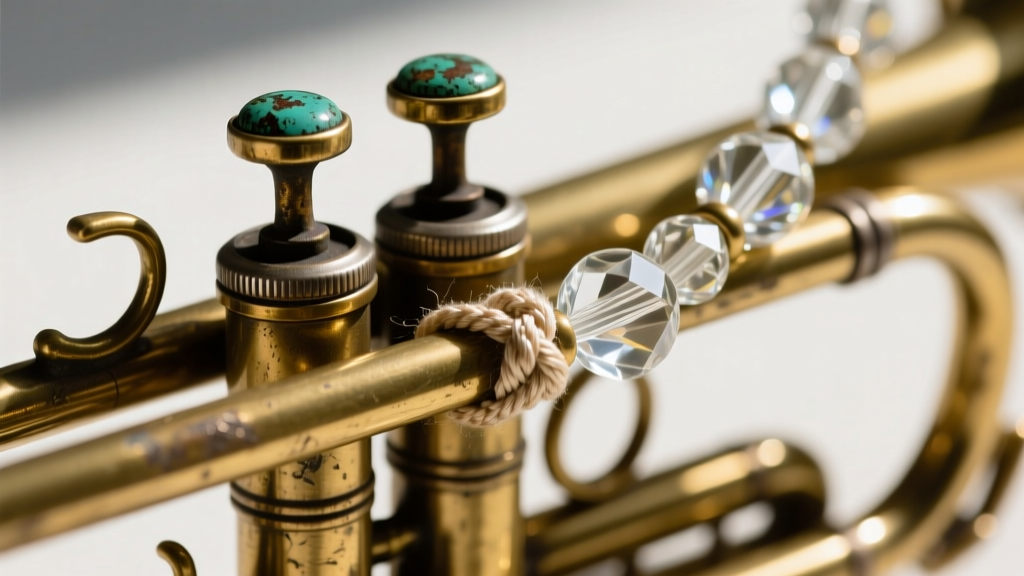
The Clasp Mechanism
If you are purchasing a piece advertised as pre-1930s, it should not have a modern lobster clasp. Instead, look for a trombone clasp (a push-pull tube mechanism) or a simple barrel clasp that screws together. Early spring ring clasps (which lack the modern thumb-soldered tab and feature a simple notch) are indicative of the 1940s and 1950s. The presence of a modern lobster claw on a supposedly 1920s necklace is an immediate red flag indicating either a reproduction or a modern restringing that severely devalues the antique provenance.
Stringing and Knotting
Authentic vintage glass necklaces were predominantly strung on silk thread. To protect the silk from fraying against the metal clasp, jewelers used French wire (also known as gimp wire)—a tiny, coiled metal spring that acts as a protective sleeve. Furthermore, high-quality vintage strands will feature hand-tied knots between each glass bead. This not only prevents the beads from grinding against one another but also ensures that if the strand breaks, only one bead is lost. Modern replicas are almost exclusively strung on unknotted tiger-tail wire or nylon-coated steel.
Pricing Guide & Market Valuations in 2026
The market for vintage jewelry has seen a steady appreciation, driven by a cultural shift away from fast fashion and toward sustainable, investment-grade accessories. A standard, unsigned Czech clear glass bead necklace from the 1950s in good condition typically retails between $80 and $180. However, provenance and signatures alter the landscape dramatically.
According to historical jewelry archives maintained by the Victoria and Albert Museum, pieces that can be attributed to specific couture houses or feature documented Baccarat beads can easily fetch between $400 and $1,200. When evaluating price, deduct 20-30% if the necklace requires professional restringing, as the cost of sourcing period-accurate French wire and silk, combined with the labor of a master stringer, can exceed $150.
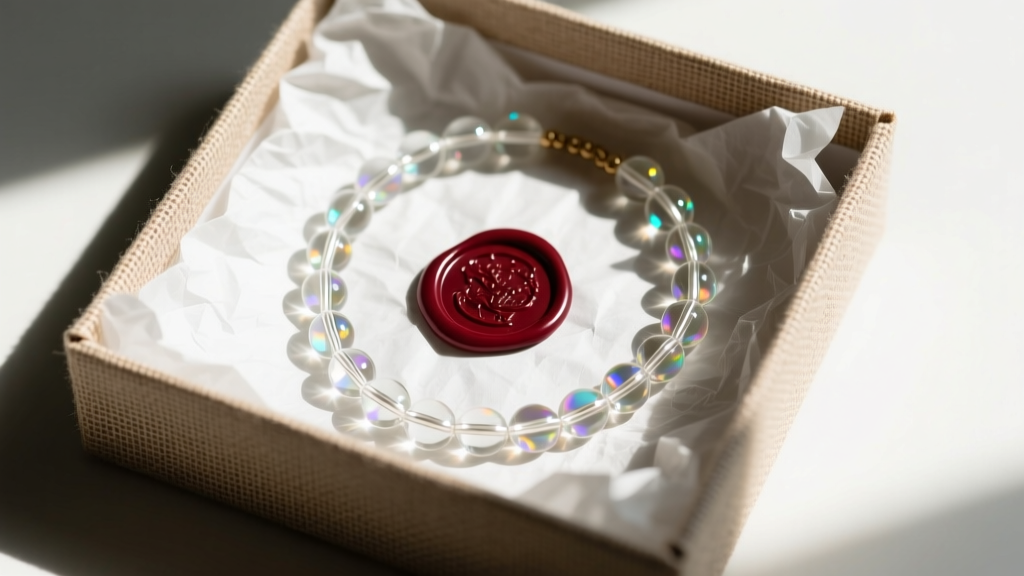
Care and Maintenance for Heirloom Glass
Gifting a vintage piece also means gifting the responsibility of its preservation. Clear glass is relatively durable, but the materials holding it together are not. Advise your recipient to follow these strict preservation protocols:
- Avoid Ultrasonic Cleaners: While solid clear glass can withstand ultrasonic vibrations, the vintage silk thread, oxidized metal bead caps, and any residual foil-backing (common in early 20th-century beads) will be destroyed.
- Surface Cleaning Only: Use a lint-free microfiber cloth slightly dampened with distilled water and a drop of mild, pH-neutral dish soap. Dry immediately to prevent water spots, which can etch into the surface of softer, antique soda-lime glass over time.
- Storage: Glass beads can scratch one another if stored in a tangled pile. Store the necklace flat in an acid-free tissue-lined box, away from direct sunlight, which can degrade the silk thread and cause it to become brittle.
"A vintage glass bead necklace is not merely an accessory; it is a captured moment of light from a bygone era. Treating it with modern respect ensures its brilliance outlasts us all." — Archival Jewelry Conservation Guidelines, 2024
By understanding the intricate details of provenance, hardware, and care, you elevate the act of gifting. A vintage clear glass bead necklace is more than a beautiful object; it is a tangible connection to the artisans of the past, making it an unforgettable gift for the style-conscious recipient in 2026.


