Vintage Glass Bead Necklace Value & Pricing Guide 2026
Discover how to appraise a vintage glass bead necklace in 2026. Learn pricing tiers, authentication tips for Murano and Czech glass, and restringing costs.

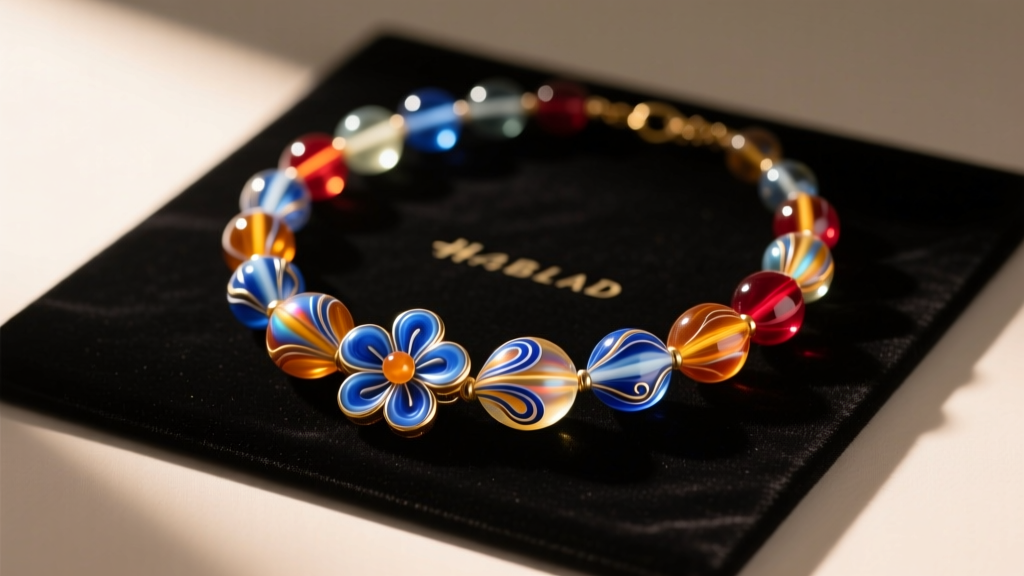
The 2026 Market Landscape for Vintage Glass Beads
As the archival fashion market matures in 2026, collectors and stylists are increasingly turning away from mass-produced contemporary resins and toward the enduring craftsmanship of a vintage glass bead necklace. Unlike modern acrylics that degrade, yellow, or crack within a decade, high-quality vintage glass—whether Bohemian, Venetian, or African trade beads—offers generational durability. However, the secondary market is flooded with modern reproductions masquerading as mid-century treasures. Understanding the true value of these pieces requires a granular approach to authentication, material grading, and structural assessment.
Authentication: Spotting True Vintage vs. Modern Reproductions
Evaluating a vintage glass bead necklace begins with material verification. The secondary market is currently saturated with modern glass beads artificially tumbled or chemically treated to mimic age. Here is how to separate genuine historical pieces from modern fakes:
1. The Thermal and Acoustic Tests
Glass is denser and more thermally conductive than plastic or resin. When you press a genuine glass bead against your cheek or the inside of your wrist, it will feel distinctly cool and take several seconds to absorb your body heat. Resin and acrylic warm up almost instantly. Acoustically, gently tapping two glass beads together produces a sharp, high-pitched 'clink,' whereas plastic yields a dull, muted thud.
2. Identifying Origins: Czech vs. Murano vs. Trade
Czech/Bohemian Glass (1920s–1980s): Often molded, these beads may feature a faint vertical seam line. Pre-1970s Czech glass frequently contains a high lead content, giving it a heavier hand-feel and a higher refractive index (more sparkle) than modern lead-free equivalents.
Murano/Venetian Glass (1950s–1990s): Authentic lampwork or sommerso (submerged color layers) beads are handmade on a mandrel. They will never have a mold seam. Look for a small, rough pontil mark or a polished, slightly indented base where the bead was detached from the metal rod. According to the Corning Museum of Glass, the complex layering of millefiori canes is a hallmark of authentic Venetian production that is rarely replicated with precision in modern mass-market jewelry.
African Trade Beads (1800s–1960s): Krobo powder glass and Venetian chevron beads traded in West Africa often feature irregular, asymmetrical shapes and rough, unpolished perforation holes. Modern 'trade-style' beads are uniformly perfectly round with laser-drilled, smooth holes.
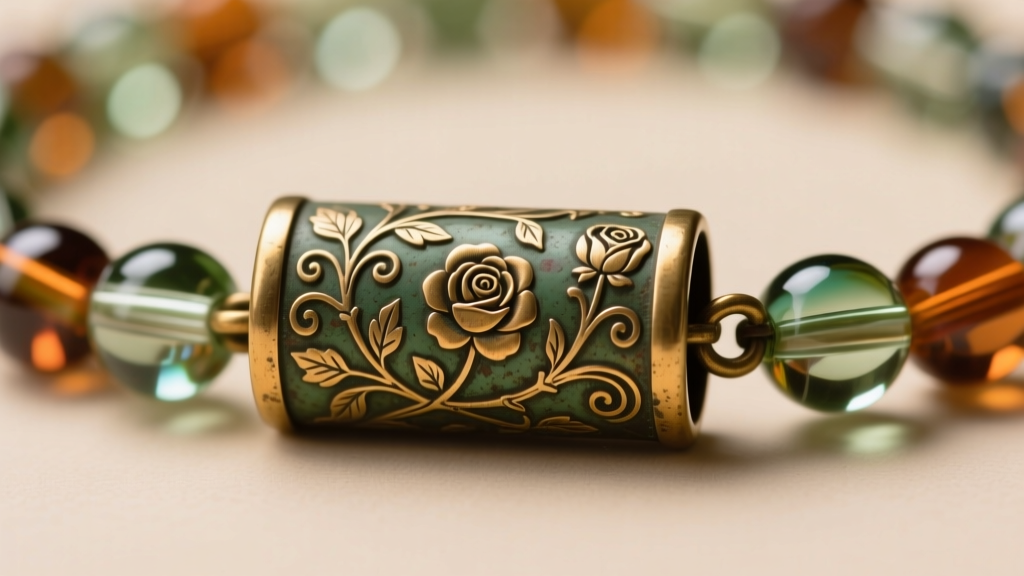
3. Decoding the Hardware and Clasps
The clasp is often the most reliable dating tool for a vintage glass bead necklace. As noted by the jewelry historians at Lang Antiques, hardware evolved distinctly through the decades:
- Barrel Clasps (1920s–1940s): Common on Art Deco and early mid-century pieces. They screw together and often feature hand-engraved filigree.
- Spring Ring Clasps (1900s–Present): Early vintage spring rings (pre-1950s) often lack the small protruding 'lip' on the pull-back tab, making them harder to open. Modern reproductions always have the lip.
- Lobster Claw Clasps (1980s–Present): If a piece features a standard lobster claw, it is almost certainly post-1980s, or the original clasp has been replaced.
Color and Material Rarity: The Premium Modifiers
Not all vintage glass is created equal. Certain colors and inclusions command significant premiums in the 2026 collector's market:
- Uranium Glass (Vaseline Glass): Popular in the 1930s-1950s, these beads contain trace amounts of uranium, giving them a vibrant yellow-green hue that glows fiercely under UV blacklight. Authentic pieces command a 20-30% premium over standard colored glass.
- Aventurine Glass: A hallmark of Murano artisans, this technique involves suspending microscopic copper crystals in the glass matrix, creating a glittering, metallic goldstone effect. True vintage aventurine has a deep, rich copper sparkle, whereas modern imitations often look flat or overly uniform.
- Pink & Red Cranberry Glass: Historically, achieving a true red or deep pink hue required the addition of pure gold chloride to the glass melt. Because of the raw material costs, vintage cranberry glass beads are inherently rarer and more valuable than their blue or green counterparts.
Pricing Tiers: What You Should Actually Pay in 2026
Valuing a vintage glass bead necklace is not a one-size-fits-all equation. Pricing is heavily dictated by origin, complexity of the glasswork, and the condition of the stringing material. Below is a realistic market assessment for the current year.
| Tier & Origin | Typical Era | 2026 Price Range | Key Value Drivers |
|---|---|---|---|
| Mass-Produced Czech/Bohemian | 1950s–1980s | $35 – $95 | Color rarity (e.g., uranium yellow), condition of original stringing. |
| Venetian Sommerso & Millefiori | 1960s–1990s | $140 – $450 | Number of color layers, presence of gold/silver leaf inclusions, maker marks. |
| Antique Chevron & Powder Glass Trade Beads | 1800s–1940s | $600 – $2,500+ | Number of chevron star points (4, 6, or 7), provenance, size of beads. |
| Art Deco Pâte de Verre (Molded Glass) | 1920s–1930s | $800 – $3,200 | Designer attribution (e.g., Boucher, Trifari), intricate cameo or figural molds. |
Note: Pieces with broken or heavily frayed silk cord should be discounted by at least $50–$100 from the above ranges, as they require immediate professional intervention.
Hidden Costs: Restringing and Hardware Upgrades
When budgeting for a vintage glass bead necklace, the purchase price is only the beginning. Vintage silk degrades, stretches, and rots over time. Wearing a piece with compromised stringing risks a catastrophic break, resulting in the loss of irreplaceable beads.
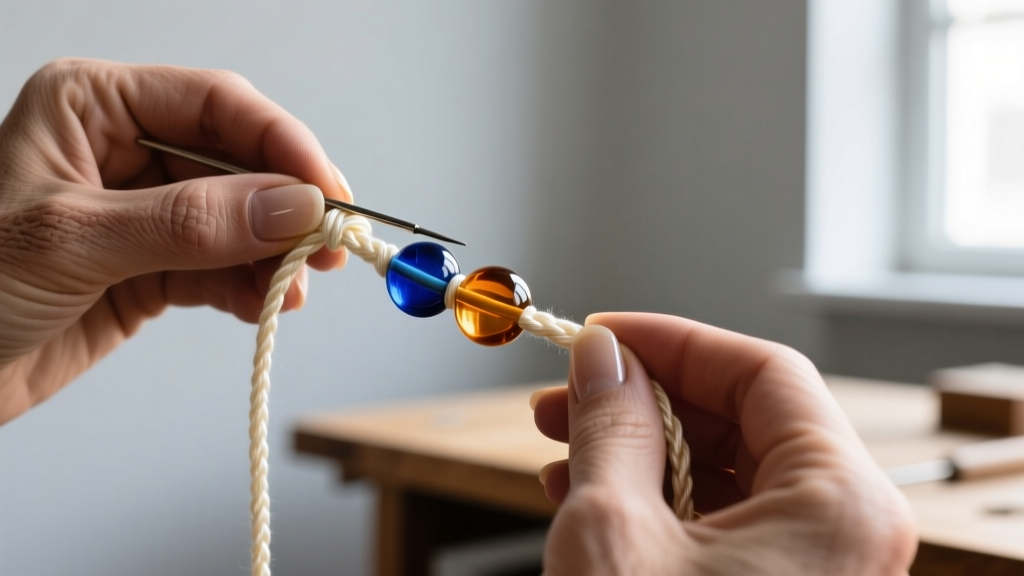
The True Cost of Professional Restringing
Do not attempt to restring valuable vintage glass on cheap nylon or wire. Wire will saw through the glass perforation holes over time, while nylon lacks the elegant drape required for heavy vintage beads. Professional restringing requires specific materials:
- Griffin Silk Cord: Size #2 or #3 (0.45mm - 0.50mm) is standard for most Czech and Murano beads. Heavy African trade beads require Size #6 or #8 (0.80mm - 1.00mm).
- French Wire (Gimp): A microscopic coiled metal wire placed at the ends of the silk where it meets the metal clasp. This prevents the metal from cutting the silk. Replacing this is a hallmark of high-end restoration.
- Beading Awl & Knotting: A master stringer will tie an individual overhand knot between every single bead. This prevents bead-on-bead friction and ensures that if the necklace breaks, you only lose one bead, not the entire strand.
Labor Costs: Expect to pay between $65 and $125 for professional hand-knotting on silk, depending on the bead count and hole diameter. If the original vintage clasp is damaged, sourcing a period-accurate New Old Stock (NOS) barrel or box clasp can add another $30 to $80 to your restoration budget.
Investment Checklist: Before You Buy
To ensure you are making a sound financial and stylistic investment, run through this rapid assessment framework before purchasing any vintage glass bead necklace:
- Inspect the Perforations: Use a jeweler's loupe (10x magnification) to check the edges of the bead holes. Chipped, 'flea-bitten' glass around the hole indicates heavy wear or improper historical stringing with wire.
- Check for 'Sick' Glass: Glass disease (crizzling) appears as a network of fine, cloudy white cracks inside the bead. This is caused by an unstable chemical mixture (too much alkali) and is progressive. Avoid pieces with crizzling, as the glass will eventually shatter.
- Evaluate the Drape: Hold the necklace up by the clasp. If the beads gap widely on the curve of the strand, the silk has stretched and the piece requires immediate restringing before wear.
- Verify the Clasp Alignment: If the clasp is a modern lobster claw but the beads are clearly 1930s Art Deco, the piece has been altered, which reduces its archival value by up to 40%.
Expert Insight: When buying online, always request a macro photo of the bead holes and the clasp in natural daylight. Studio lighting often masks the cloudy degradation of unstable vintage glass and hides the fraying of aged silk threads.
Final Thoughts on Archival Value
A genuine vintage glass bead necklace is more than an accessory; it is a wearable artifact of 20th-century design and global trade. By understanding the nuances of glass composition, historical hardware, and the true costs of archival maintenance, you can confidently navigate the 2026 market. Whether you are securing a $40 Bohemian garnet-glass strand for daily wear or investing $1,500 in a rare 7-layer Venetian chevron, the value lies in the details.


