Beginner's Guide to Collecting a Vintage Lisner Necklace
Discover how to identify, price, and style a vintage Lisner necklace. Our beginner-friendly guide covers hallmarks, eras, and rare design motifs.

The Allure of Vintage Lisner Jewelry
Entering the world of vintage costume jewelry can feel overwhelming, but few brands offer a more accessible and rewarding starting point than Lisner. Founded in 1904, the company that eventually became Lisner-Louisa-Dickson-Houston transitioned from importing European pieces to manufacturing iconic American designs. For collectors in 2026, a vintage Lisner necklace represents a perfect intersection of mid-century artistry, innovative materials, and surprising affordability. Whether you are hunting for a textured oak leaf pendant or a sparkling aurora borealis choker, understanding the nuances of this legendary brand is essential for building a meaningful collection.
Decoding Lisner Hallmarks and Eras
Authenticating a vintage Lisner necklace begins with examining the hallmark. Unlike fine jewelers who used consistent stamps for decades, Lisner evolved its markings to reflect changes in copyright law and manufacturing techniques. The addition of the copyright symbol (©) in 1955, following the Universal Copyright Convention, is a critical dating tool for collectors. According to the Costume Jewelry Collectors International Club (CJCIC), tracking these subtle shifts in typography and stamping depth can help you pinpoint the exact decade a piece was produced.
| Era | Hallmark Style | Key Characteristics |
|---|---|---|
| Pre-1955 | 'LISNER' (Block Letters) | No copyright symbol, heavier base metals, Art Deco and Retro influences |
| 1955 to 1960s | 'LISNER ©' (Block Letters) | Addition of ©, introduction of Aurora Borealis stones, oak leaf motifs |
| 1970s and Later | 'Lisner' (Script/Cursive) | Cursive font, lighter weight, shift toward modern geometric and enamel designs |
Always inspect the reverse of the pendant or the clasp area with a jeweler's loupe. A genuine 1960s block-letter stamp will show clean, deep striations, whereas modern reproductions often feature shallow, blurred lettering.
Signature Materials and Design Motifs
Lisner was a master of utilizing base metals and transforming them into high-fashion statements. The company heavily utilized pot metal and white metal alloys, electroplating them with rich gold-tone or rhodium finishes. However, it is their integration of glass and synthetic stones that truly defines their mid-century appeal.
The Iconic Oak Leaf Motif
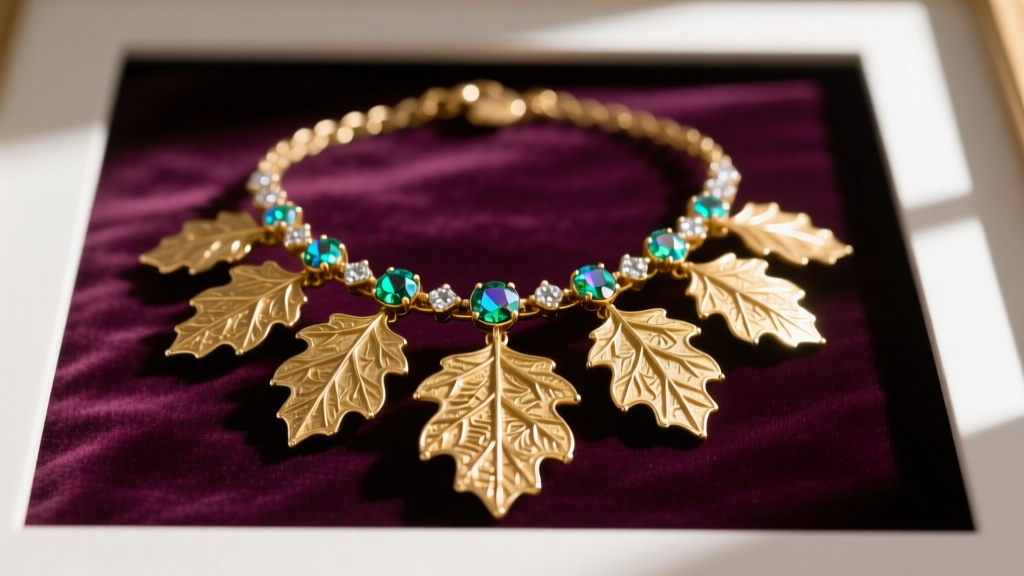
If there is one design that defines the brand's legacy, it is the oak leaf. Introduced in the late 1950s and heavily patented throughout the 1960s, these necklaces feature highly textured, realistic metal leaves. Many of these designs, such as those protected under US Patent D185,493, incorporate tiny aurora borealis (AB) rhinestones nestled into the leaf veins. The oak leaf necklace remains highly sought after, with Morning Glory Jewelry noting it as a cornerstone piece for any serious vintage costume jewelry archive.

Aurora Borealis and Molded Glass
When Swarovski introduced the aurora borealis finish in 1955, Lisner was among the first American manufacturers to capitalize on the iridescent coating. A vintage Lisner necklace from this era will often feature AB stones that flash vibrant blues, pinks, and golds under direct light. Additionally, Lisner experimented with molded Lucite and poured glass, creating chunky, translucent pendants that mimicked precious carved gemstones like jade and amber at a fraction of the cost.
Pricing Guide: What Should You Pay in 2026?
Understanding the market value of a vintage Lisner necklace prevents overpaying and helps you identify hidden gems. Prices fluctuate based on rarity, condition, and the presence of original components.
- Tier 1: Basic Chains and Simple Pendants ($25 - $60) - Standard gold-tone chains, simple floral motifs, and pieces with missing stones or heavy plating wear fall into this entry-level category.
- Tier 2: Classic Rhinestone and Enamel Designs ($75 - $180) - Well-preserved 1960s chokers, intact AB rhinestone collars, and vibrant enamel pendant necklaces command solid mid-tier prices.
- Tier 3: Rare Oak Leaf and Parure Sets ($250 - $600+) - The holy grail for collectors. Intricate, multi-strand oak leaf necklaces, especially those accompanied by matching clip-back earrings and bracelets (a complete parure), fetch premium prices at auction.
Authentication and Care: Preserving Your Investment
The greatest enemy of vintage costume jewelry is moisture. The rhinestones used in a vintage Lisner necklace are typically foil-backed to enhance their sparkle. If water seeps beneath the stone setting, the foil will oxidize, turning black and permanently killing the stone's brilliance. Never use liquid jewelry cleaners, ultrasonic machines, or even a damp cloth on these pieces.
Expert Tip: To clean your vintage Lisner necklace, use a dry, soft-bristled makeup brush to gently sweep away dust and skin oils from the crevices. Store the piece in a sealed bag with an anti-tarnish strip to protect the gold and silver electroplating from sulfur in the air.

Styling Vintage Lisner Today
Integrating mid-century costume jewelry into a modern 2026 wardrobe requires a balanced approach. The chunky, textured nature of a vintage Lisner necklace makes it an ideal statement piece. Pair a heavy gold-tone oak leaf pendant with a minimalist black silk blouse or a structured blazer to let the metalwork stand out. For a more contemporary layered look, combine a delicate 1970s script-hallmarked Lisner chain with modern, ethically sourced gold vermeil pieces. The contrast between vintage patina and modern high-polish metals creates a sophisticated, curated aesthetic that bridges decades of style.


