A Beginner's Guide to Vintage Squash Blossom Necklace Value
Discover the key factors that determine vintage squash blossom necklace value, from silver types and turquoise grades to hallmarks and condition.

The Origins and Anatomy of a Masterpiece
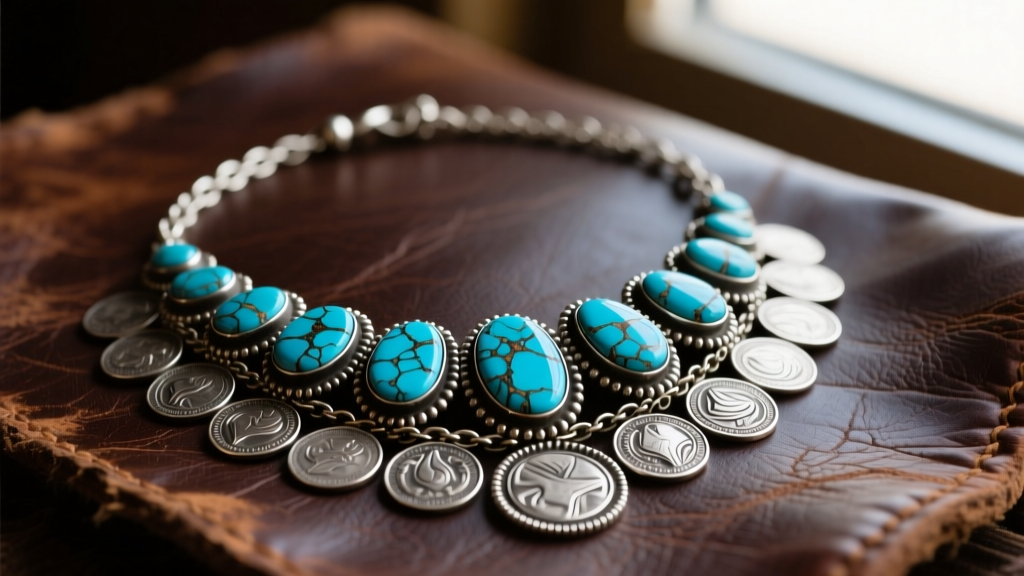
When collectors and enthusiasts begin researching vintage squash blossom necklace value, they are often stunned by the sheer range in pricing—from a few hundred dollars for tourist-trade replicas to over $50,000 for museum-quality Navajo masterworks. To understand this massive valuation gap, you must first understand what you are looking at. Despite the name, the iconic "blossom" beads were not originally modeled after squash. The design traces back to Moorish Spain, where the pomegranate blossom motif was used as a protective talisman. Spanish conquistadors brought these designs to the Americas, and by the late 1800s, Navajo silversmiths had adopted and adapted the motif, pairing it with the crescent-shaped Naja pendant (another Moorish symbol originally used on horse bridles to ward off the evil eye).
A true vintage piece consists of three distinct elements: the hollow or solid round silver beads, the fluted pomegranate-blossom beads, and the central Naja pendant. The craftsmanship required to hand-forge, solder, and set stones into these components without modern machinery is the first major driver of a necklace's market value.
The Metal Matrix: Coin Silver vs. Sterling
The most critical factor in appraising early Native American jewelry is the silver content. Beginners often assume "sterling" is always best, but in the realm of vintage squash blossom necklaces, coin silver is the holy grail.
Coin Silver (Pre-1930s)
Before the widespread availability of commercial sterling silver sheets, Navajo and Zuni smiths melted down circulating US silver coins (primarily Morgan dollars and half dollars). Because US coins were minted at a 90% silver and 10% copper alloy, the resulting metal was slightly softer and more malleable than sterling. This required the smith to cast thicker, heavier beads—often using 14- to 16-gauge silver—to maintain structural integrity. Coin silver develops a distinct, dark, velvety patina that cannot be artificially replicated. A verified pre-1930s coin silver necklace commands a massive premium, frequently starting at $8,000 and climbing well into the tens of thousands.
Sterling Silver (1930s–Present)
By the mid-1930s, commercial sterling silver (92.5% pure) became accessible via trading posts. Sterling is harder, allowing for thinner gauge wire (18- to 20-gauge) and more intricate stamp-work. While mid-century sterling pieces are highly collectible, they are more abundant than coin silver, placing them in a slightly lower, though still lucrative, valuation tier.
Turquoise Provenance: Natural vs. Stabilized
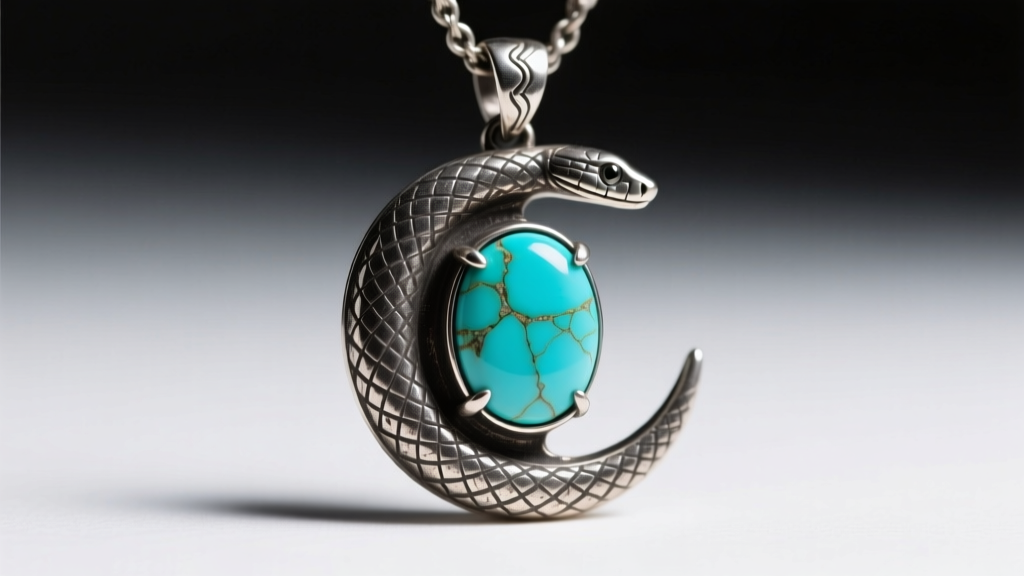
The stones set into the Naja and blossoms dictate up to 60% of the necklace's total appraisal value. According to the Gemological Institute of America (GIA), turquoise is a porous phosphate mineral that is frequently treated to enhance its color and durability. Understanding these treatments is non-negotiable for accurate valuation.
- Natural, Untreated Turquoise: The gold standard. Stones that have not been altered since mining. High-grade natural turquoise from depleted mines like Bisbee (known for its deep blue color and chocolate-brown matrix) or Lander Blue (famous for its intricate spiderweb matrix) can be worth more per carat than diamonds. A vintage necklace featuring verified, untreated Bisbee turquoise will easily fetch $15,000 to $40,000+ at auction.
- Stabilized Turquoise: A clear epoxy or resin is forced into the stone under pressure to harden it. While stabilization has been practiced since the 1950s and is accepted in many mid-century vintage pieces, it significantly lowers the value compared to natural stones. Expect stabilized vintage necklaces to appraise between $1,500 and $4,000.
- Dyed or Reconstituted Turquoise: Chalk turquoise or howlite dyed to mimic high-grade stones. Common in the 1970s "tourist trade" boom. These pieces hold minimal collector value, usually capping out at $300 to $600.
The 2026 Market Shift: Mine Depletions and Auction Trends
If you are evaluating a piece today, you must account for recent market shifts. As of 2026, the complete depletion of legendary Arizona and Nevada turquoise mines has created a supply shock in the vintage jewelry market. Collectors are no longer just buying the silverwork; they are hoarding the stones. Necklaces featuring large, uncracked, natural "sky blue" Sleeping Beauty turquoise or heavily webbed Kingman stones have seen a 15% to 22% appreciation in auction hammer prices over the last 36 months. Conversely, pieces with heavily treated or synthetic stones have stagnated in value.
Condition and Failure Modes: What Kills the Value?
When inspecting a potential purchase, look closely at the structural integrity. Vintage jewelry was worn daily, often in harsh environments, leading to specific failure modes that impact value:
- Solder Repairs on the Naja: The Naja pendant is heavy. If the bail (the loop connecting it to the beads) has broken and been re-soldered, the heat often leaves a visible, discolored scar on the silver. Poor solder jobs can reduce value by 20% to 30%.
- Restringing Materials: Originally, these necklaces were strung on braided sinew or heavy cotton cord. If a modern owner has restrung the piece on synthetic nylon or wire to "make it stronger," it detracts from the historical authenticity. Purists pay top dollar for original, albeit fragile, sinew stringing.
- Replaced Stones: Look closely at the bezel settings (the silver rims holding the stones). If one stone is a vibrant, unblemished blue while the others show age-appropriate crazing (fine cracks) or slight color shifts, a stone has likely been replaced. Mismatched bezel tool marks are a dead giveaway.
- Cracked Matrix: Turquoise with heavy matrix (the host rock running through the stone) is prone to splitting along those natural fault lines. A cracked stone in the central Naja can halve the necklace's value.
Vintage Squash Blossom Necklace Value Chart
To help you benchmark your finds, refer to this valuation matrix based on current auction data, private sales, and gallery appraisals. Note that provenance (documented history of ownership) can push a piece to the absolute top of its tier.
| Valuation Tier | Era & Materials | Identifying Features | Estimated Market Value (USD) |
|---|---|---|---|
| Tier 1: Museum / Master | 1880s–1930s; Coin Silver; Natural, high-grade turquoise (Bisbee, Lander Blue). | Heavy gauge silver, dark patina, unmarked or extremely rare early hallmarks, original sinew stringing. | $15,000 – $60,000+ |
| Tier 2: Mid-Century Vintage | 1940s–1970s; Sterling Silver; Natural or lightly stabilized turquoise. | Clear maker's hallmarks, intricate stamp-work, good condition, original cotton cord. | $3,500 – $12,000 |
| Tier 3: Late 20th Century | 1980s–1990s; Sterling Silver; Stabilized or dyed turquoise. | Thinner gauge silver, machine-cut stones, modern nylon stringing, generic or shop stamps. | $600 – $2,500 |
| Tier 4: Tourist / Replica | 1970s–Present; Silver-plated or low-grade alloy; Dyed howlite or plastic. | Lightweight, cast (not forged) blossoms, glued-in stones, "Indian Style" import marks. | $30 – $250 |
Authentication and Hallmark Decoding
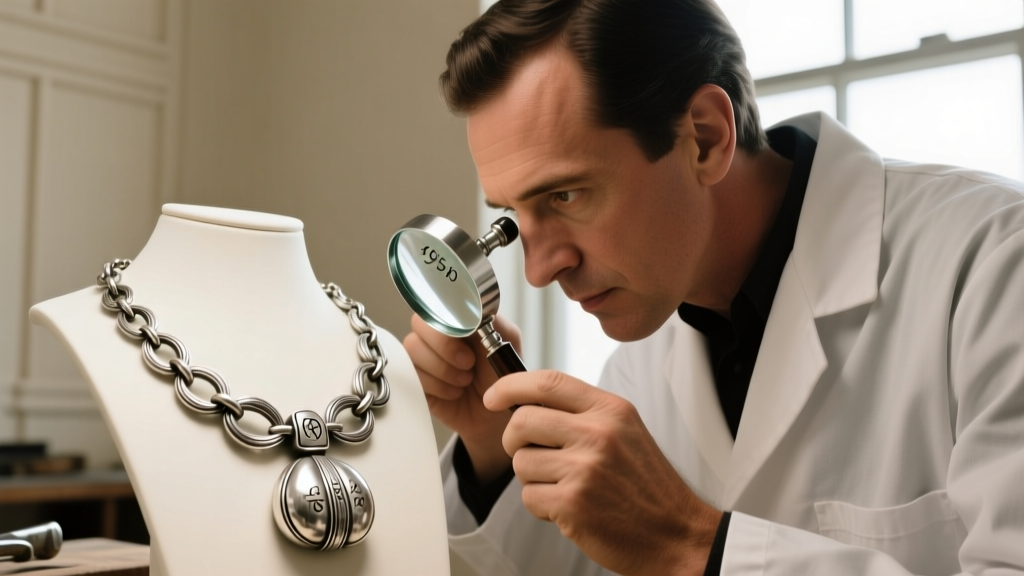
Before the 1950s, most Native American silversmiths did not hallmark their work. If you find a piece claiming to be from the 1910s with a crisp, stamped hallmark on the Naja, proceed with extreme caution—it is likely a later reproduction or a frankenstein piece (an old Naja attached to newer beads). The Smithsonian National Museum of the American Indian notes that the widespread adoption of hallmarks was largely driven by the Indian Arts and Crafts Board in the mid-20th century to protect consumers and promote individual artists.
When evaluating hallmarks, look for the "shop stamps" of famous trading posts like the Bell Trading Post or Maisel's. While these are not individual artist marks, they provide solid mid-century provenance and guarantee a baseline of sterling authenticity. For individual artist marks, cross-reference the stamp with Gregory Schaaf’s definitive encyclopedia, American Indian Jewelry, which remains the industry standard for identifying Navajo, Zuni, and Hopi makers.
Final Advice for the Aspiring Collector
Understanding vintage squash blossom necklace value requires a shift in perspective. You are not just buying jewelry; you are acquiring a piece of cross-cultural history forged in the American Southwest. Always buy the silver first, the stones second, and the condition third. Carry a jeweler's loupe, examine the bezels for modern tool marks, and never be afraid to walk away from a piece that feels too light or features stones that look unnaturally perfect. In the world of vintage Native American jewelry, imperfections, heavy patina, and historical wear are not flaws—they are the very signatures of authenticity that drive immense collector value.


