Vulva Necklace Troubleshooting: Fix Tangles, Allergies & Styling
Fix common vulva necklace issues. Learn how to prevent chain tangles, solve metal allergies, and style feminine pendants for any occasion.


Vulva necklaces—often celebrated as yoni pendants or symbols of feminine empowerment—have surged in popularity as bold statements of body positivity. However, from a jewelry engineering perspective, these anatomical pendants present a unique set of mechanical and dermatological challenges. Unlike flat, geometric charms, a 3D-cast vulva necklace features asymmetrical weight distribution, deep textural crevices, and protruding folds that catch on clothing and hair. Furthermore, the sensitive nature of the skin on the décolletage means that subpar metal alloys can quickly lead to severe contact dermatitis. If your favorite piece is constantly flipping upside down, tangling in your sweaters, or leaving a green, itchy rash on your chest, this comprehensive troubleshooting guide will help you engineer a permanent fix.
The Physics of Pendant Balance: Why It Keeps Flipping
The most frequent complaint among wearers of anatomical jewelry is the 'flip.' You clasp the chain, and within minutes, the pendant rotates 180 degrees, showing the flat back instead of the detailed front. This is not a defect in the chain; it is a center-of-gravity issue. Vulva pendants are typically wider at the top and feature dense, protruding 3D elements (like the labia and clitoral hood) at the bottom. When suspended from a standard, flat pinch-bail, the pendant's center of mass sits too far forward, causing gravity to pull the bottom outward and flip the piece.
Engineering Solutions for Asymmetrical Pendants
To stop the flipping, you must alter the suspension mechanics. Avoid necklaces that use a simple loop cast directly into the top of the pendant. Instead, look for or request the following modifications:
- The Counterweight Bail: A skilled jeweler can solder a small, dense metal bead or a secondary, heavier jump ring to the top rear of the pendant. This shifts the center of gravity backward, forcing the pendant to lay flush against the sternum.
- The V-Bail or Tapered Bail: A V-shaped bail creates a wider fulcrum point on the chain, restricting the pendant's ability to rotate freely on its axis.
- Chain Stiffness: A flimsy 0.8mm cable chain acts like a hinge, encouraging rotation. Upgrading to a 1.2mm to 1.5mm wheat chain or box chain provides lateral stiffness, resisting the twisting motion caused by the pendant's uneven weight.
The Tangle Trap: Navigating Intricate Textures
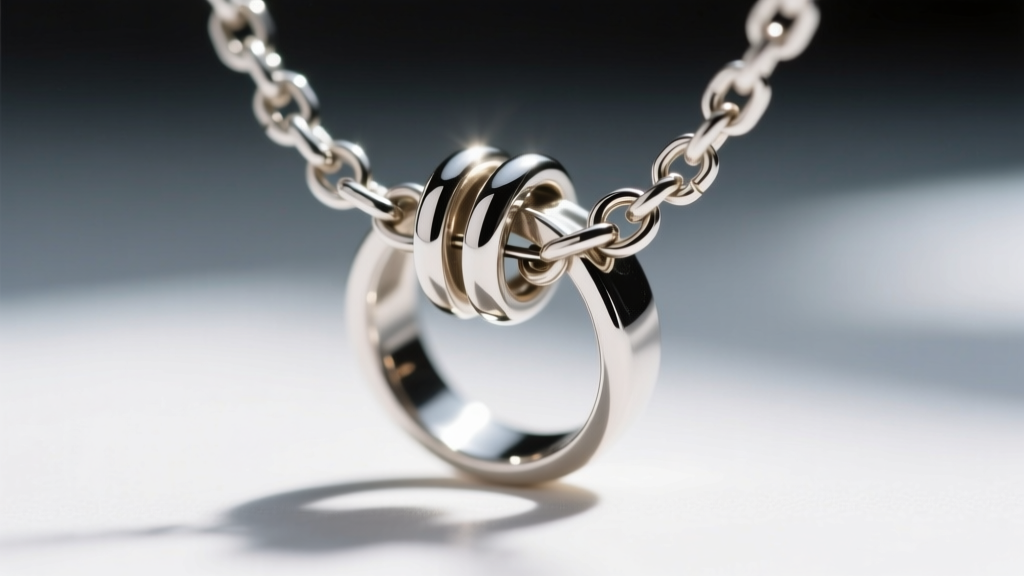
The very details that make a vulva necklace beautiful—delicate folds, ridges, and organic curves—are prime culprits for snagging. These micro-crevices easily catch loose threads from knitwear or individual strands of hair, leading to frustrating tangles and potential damage to the casting.
Preventative Chain and Bail Pairings
Tangles usually occur when the pendant slides down the chain and the bail gets wedged against a textured part of the casting. To solve this, ensure your chain features smooth, soldered links. A 1.5mm rolo chain or a smooth herringbone chain glides over clothing and prevents the pendant from catching on the chain itself. Additionally, inspect the bail. If the pendant uses a 'pinch bail' (a bail with two sharp prongs that squeeze into a pre-drilled hole in the pendant), those prongs are likely catching on your hair. Have a jeweler replace the pinch bail with a soldered ring bail, which offers a completely smooth, closed profile.
Metal Allergies and Skin Irritation Fixes
The skin on the chest is highly susceptible to sweat-induced metal leaching. Many mass-produced, novelty anatomical pendants are cast from 'pot metal' or zinc alloys that contain high levels of nickel as a deoxidizer. When sweat breaks down the cheap rhodium plating, the nickel is exposed, leading to allergic contact dermatitis. According to the Mayo Clinic, nickel allergy is one of the most common causes of allergic contact dermatitis, resulting in severe itching, redness, and blistering.
Material Grades and Allergy Risks
To troubleshoot skin irritation, you must verify the exact metallurgy of your necklace. The American Academy of Dermatology recommends avoiding jewelry with unknown base metals if you have a history of sensitivity. Below is a breakdown of common materials used in feminine empowerment jewelry and their dermatological safety profiles.
| Metal Grade | Nickel Risk | Tarnish Profile | Avg. Price Range |
|---|---|---|---|
| ASTM F138 Titanium | None (Hypoallergenic) | Highly Resistant | $120 - $250 |
| 316L Surgical Steel | Very Low (Safe for most) | Highly Resistant | $45 - $85 |
| 925 Sterling Silver | Low (Check master alloys) | Moderate (Oxidizes) | $90 - $180 |
| 14k Gold-Filled | None (Brass core sealed) | Very Low | $110 - $220 |
| Zinc Alloy (Pot Metal) | High (Severe Risk) | Extreme (Corrodes) | $15 - $35 |
The Clear Coat Hack vs. Re-plating
If you own a sentimental zinc-alloy pendant that causes a rash, you have two troubleshooting options. The temporary fix is applying a thin layer of clear, hypoallergenic nail polish or a specialized jewelry barrier coating (like JewelSkin) to the back of the pendant. This must be reapplied every few weeks as friction wears it away. The permanent fix is taking the piece to a professional jeweler to have the base metal stripped and re-plated with a thick layer of 18k gold or rhodium over a nickel-free palladium barrier.
Cleaning Deep Crevices Without Ruining the Finish
Anatomical pendants trap sebum, body lotion, and dead skin cells deep within their textured folds. Standard polishing cloths cannot reach these areas, leaving the crevices looking dull and grey. However, you must be extremely cautious with cleaning methods.
Why Ultrasonic Cleaners Are a Risk
Many jewelers use ultrasonic cleaners to blast dirt out of intricate castings using high-frequency sound waves. However, if your vulva necklace features an 'antiqued' or 'oxidized' finish—where the crevices are intentionally blackened to highlight the 3D details—an ultrasonic cleaner will strip that oxidation right out, leaving the piece looking flat and overly bright. Furthermore, if the pendant includes any resin inlays or glued gemstones, the ultrasonic vibrations will shatter the resin or dissolve the adhesive.
The Safe Manual Cleaning Protocol
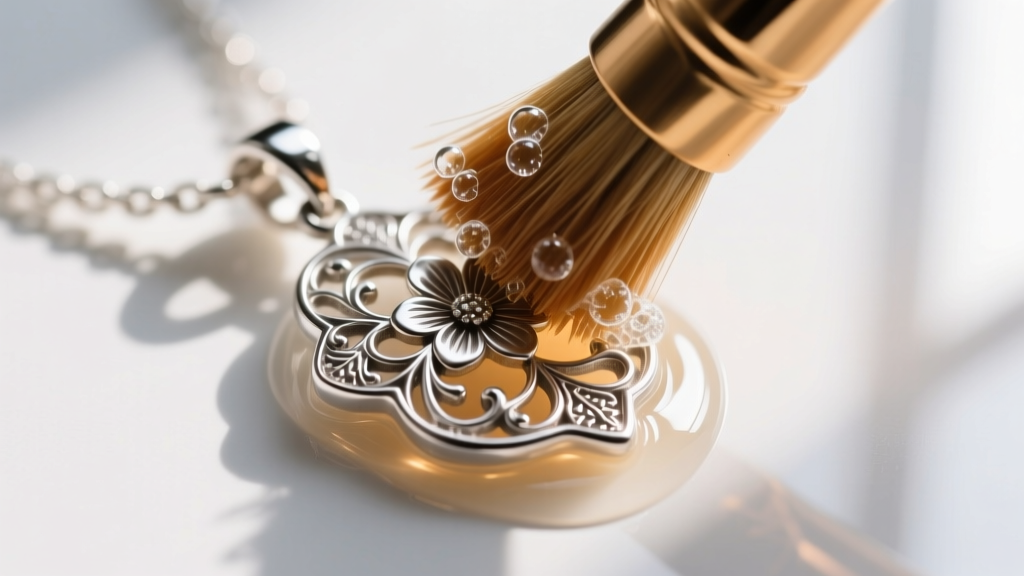
- Soak: Submerge the pendant in a bowl of warm water mixed with a few drops of phosphate-free dish soap for 10 minutes to soften oils.
- Agitate: Use a soft-bristled brass brush or an extra-soft baby toothbrush to gently sweep the crevices. Avoid hard nylon brushes, which can leave micro-scratches on high-polish sterling silver.
- Rinse and Dry: Rinse thoroughly under distilled water to prevent hard water spots, and use a hairdryer on a cool setting to blow water out of the deep folds. Air-drying often leaves trapped moisture that accelerates tarnishing.
Styling Troubleshooting: Discreet vs. Statement Wear
A common styling dilemma is how to wear a vulva necklace in professional or conservative environments without feeling exposed. The key to troubleshooting this lies in chain length and layering mechanics.
For a discreet, hidden empowerment approach, swap the standard 18-inch chain for a 14-inch or 15-inch choker-length chain. This positions the pendant high on the clavicle, allowing it to be easily concealed beneath a crewneck sweater or a buttoned collar, while remaining visible to you in the mirror. For a bold, statement look, utilize the 'cascade layering' technique. Pair your anatomical pendant on a 20-inch chain with a simple, 16-inch 1.5mm gold-filled herringbone choker. The solid choker draws the eye first, framing the face, while the vulva pendant rests lower on the sternum, acting as an artistic, sculptural focal point rather than a purely literal one.
Summary Checklist for Long-Term Wear
- Balance: Upgrade to a 1.2mm+ wheat chain and consider a counterweight bail to stop flipping.
- Skin Safety: Verify the metal is 316L steel, titanium, or solid gold; avoid unmarked zinc alloys.
- Maintenance: Clean manually with a soft brush and soapy water; never use ultrasonic machines on oxidized finishes.
- Styling: Use a 14-inch choker length for discreet, professional environments.
By addressing the mechanical physics of the bail, verifying the metallurgical safety of the casting, and employing proper micro-cleaning techniques, your vulva necklace can remain a comfortable, tarnish-free, and perfectly balanced symbol of empowerment for years to come.


