Water Droplet Necklace Trends 2026: Styling & Material Guide
Discover 2026 water droplet necklace trends. Explore material grades, chain gauges, and expert styling tips for this fluid jewelry motif.

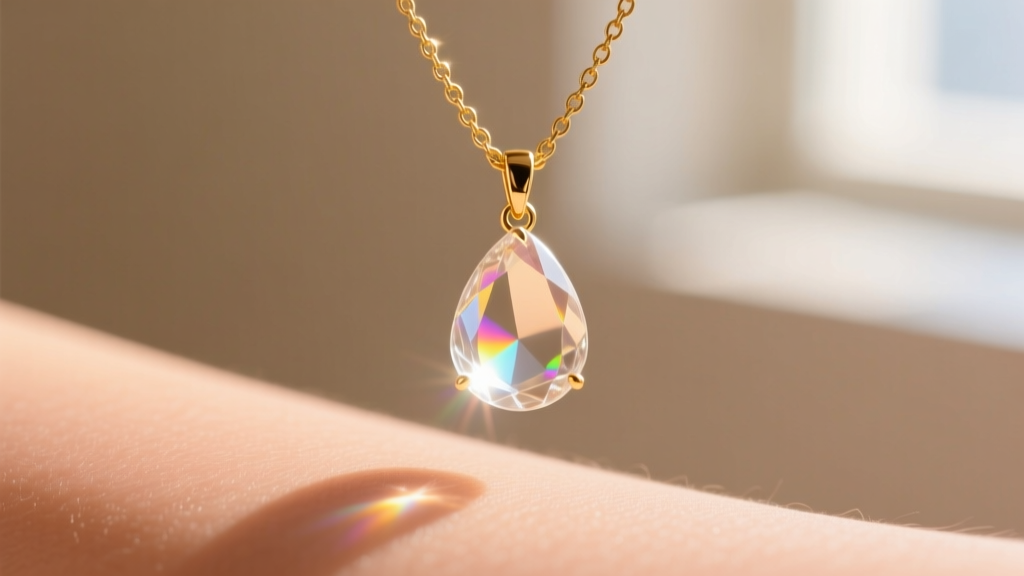
The Fluidity Movement: Why Water Droplet Necklaces Dominate 2026
The water droplet necklace has transcended its status as a fleeting seasonal motif to become a cornerstone of contemporary jewelry design. In 2026, the broader jewelry market is experiencing a massive shift toward "fluid organicism"—a design philosophy that rejects the rigid, geometric minimalism of the early 2020s in favor of kinetic, nature-inspired silhouettes. The droplet pendant perfectly encapsulates this movement. It implies motion, purity, and a delicate sense of gravity, making it a versatile staple for both demi-fine and high jewelry collections.
Unlike traditional teardrop cuts which often feature a sharply defined point, the modern 2026 water droplet is characterized by a softer, asymmetrical taper that mimics the exact surface tension of a falling liquid. This subtle distinction requires advanced lapidary techniques or precision glass-blowing, elevating the piece from a simple charm to a study in optical physics. According to trend forecasts from the GIA Gem Encyclopedia, consumers are increasingly prioritizing light return and optical clarity over sheer carat weight, making the droplet shape an ideal vessel for showcasing high-refraction materials.
Material Matrix: What Makes the Perfect "Drop"?
The illusion of a suspended drop of water relies entirely on the material's Refractive Index (RI) and its dispersion properties. A poorly chosen stone will look flat and glassy, while a high-RI material will bend light to create the illusion of internal liquidity. Below is a technical breakdown of the most prominent materials used in 2026 water droplet necklaces.
| Material | Refractive Index (RI) | Mohs Hardness | 2026 Price Tier (1ct equiv) | Best Use Case |
|---|---|---|---|---|
| Lab-Grown Diamond | 2.42 | 10 | $$ - $$$ | High-impact evening wear; maximum brilliance. |
| White Sapphire | 1.76 - 1.77 | 9 | $$ | Everyday luxury; excellent scratch resistance. |
| Aquamarine | 1.57 - 1.58 | 7.5 - 8 | $ - $$ | Subtle, icy-blue tint; vintage-inspired settings. |
| Fused Silica / Art Glass | 1.46 | 5.5 - 6 | $ | Oversized, sculptural avant-garde pieces. |
While lab-grown diamonds offer the highest brilliance, white sapphire has emerged as the 2026 favorite for demi-fine designers. Its slightly lower RI actually mimics the subtle, understated refraction of real water more accurately than the aggressive "fire" of a diamond. For those seeking a hint of color, untreated aquamarine provides a natural, icy-blue depth that synthetic stones struggle to replicate without looking artificial.
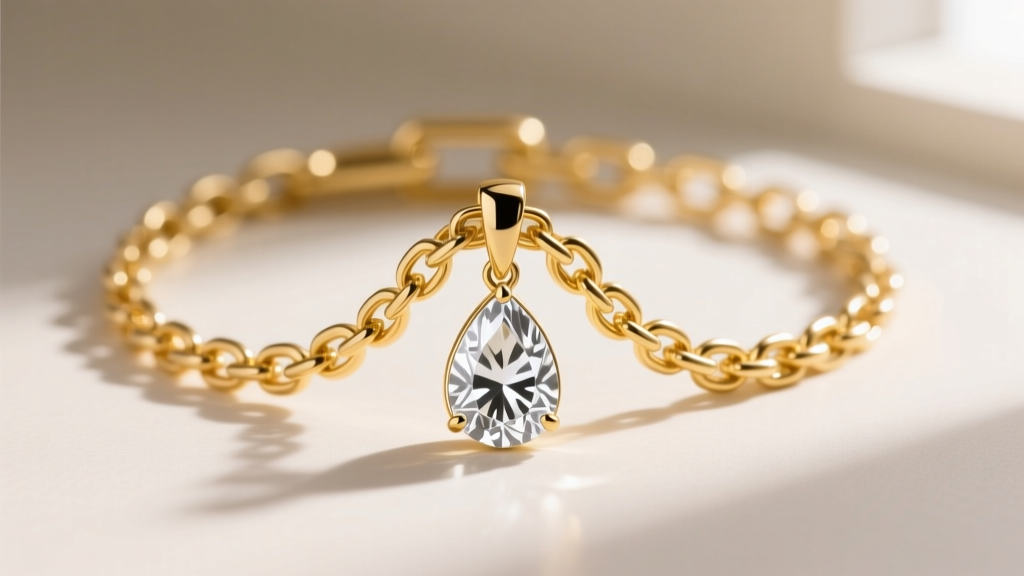
Chain Architecture: Gauges and Clasp Mechanics
A common failure point in droplet necklaces is an improperly scaled chain. The chain must be robust enough to support the pendant's weight without stretching, yet delicate enough to maintain the illusion that the "drop" is floating on the skin.
The Sweet Spot: 0.8mm to 1.1mm Gauges
For standard 1-carat to 3-carat equivalent droplets (weighing between 0.2g and 0.8g), a 0.9mm cable chain or a 1.0mm box chain is the industry standard. Box chains are generally preferred in 2026 because their square links reflect light in a way that complements the faceting of the pendant, whereas round cable chains can sometimes look too utilitarian. Avoid rope or figaro chains; their complex link patterns distract from the fluid silhouette of the drop.
The Bail Connection
The "bail" is the loop that connects the chain to the stone. In traditional jewelry, a standard soldered loop bail sits on top of the stone, visually interrupting the droplet's shape. The 2026 standard is the hidden bail or the horizontal drill-through. A hidden bail is tucked behind the top taper of the stone, allowing the chain to appear as though it passes directly through the gem. This engineering feat requires precise CNC drilling and ensures the pendant lays perfectly flat against the sternum without flipping over.
Neckline Pairings: A Stylist's Framework
Styling a water droplet necklace requires an understanding of negative space. The pendant should act as a visual anchor, drawing the eye along the lines of the garment.
- The Plunging V-Neck: Opt for an 18-inch to 22-inch Y-drop or lariat configuration. The chain should follow the seam of the V-neck, with the droplet resting exactly one inch above the hemline's apex. This elongates the torso and creates a continuous vertical line.
- The Crew Neck / High Collar: Avoid long chains that tangle with the fabric. Instead, choose a 14-inch to 15-inch choker-length chain featuring a "micro-drop" (under 4mm in diameter). The contrast between the structured, high neckline and the tiny, fluid gemstone creates a striking, modern tension.
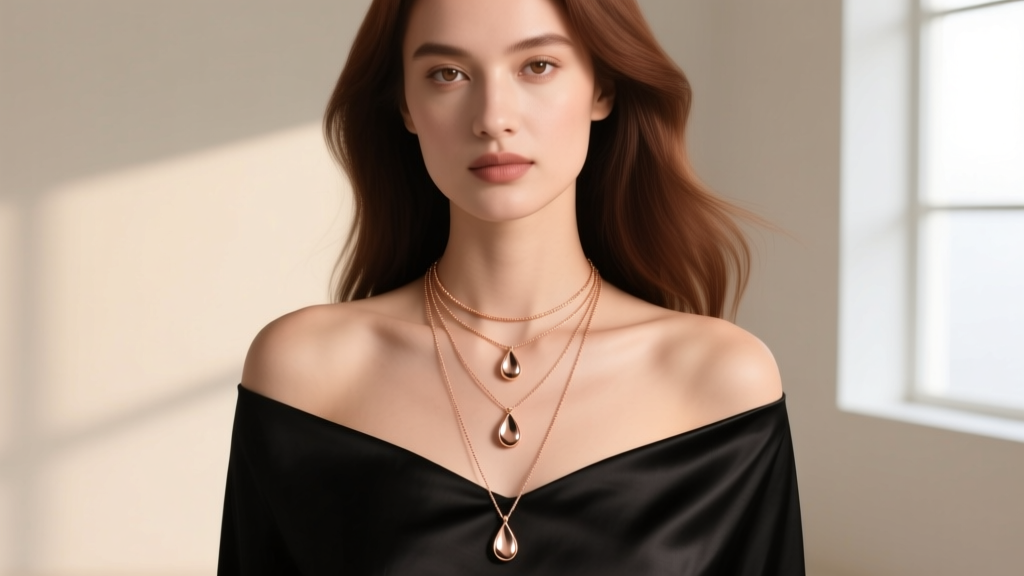
- The Off-The-Shoulder / Bateau: This neckline exposes the entire clavicle area, making it the perfect canvas for layering. Utilize the "cascade" technique: layer three chains (14", 16", and 18") featuring progressively larger droplets. Ensure all chains are the same metal and link style to maintain cohesion.
Care and Maintenance for High-Refraction Stones
Because the aesthetic value of a water droplet necklace hinges entirely on optical clarity, surface oils, lotions, and hard water spots will instantly ruin the illusion, making the stone look cloudy and dull. Maintenance must be rigorous and specific to the material.
For lab-grown diamonds and white sapphires, a weekly soak in a solution of warm water and a few drops of mild, ammonia-free dish soap is sufficient. Use a soft-bristled baby toothbrush to gently clean the pavilion (the bottom facets) where skin oils accumulate. However, if your droplet is made of art glass or features fracture-filled aquamarine, you must avoid ultrasonic cleaners at all costs. The high-frequency vibrations can shatter glass or strip the fillers from treated stones. As recommended by Jewelers of America, always dry high-refraction stones with a lint-free microfiber cloth rather than air-drying, which leaves mineral deposits from tap water.
Final Verdict: Investing in the Droplet Motif
The water droplet necklace in 2026 is not merely a trend; it is a fundamental shift toward organic elegance in jewelry design. By prioritizing high-RI materials like white sapphire, insisting on hidden-bail engineering, and matching the chain gauge to the pendant's exact weight, you secure a piece that is both technically superior and timelessly evocative. Whether worn as a solitary micro-drop against a high collar or cascaded over an evening gown, the droplet remains the ultimate symbol of fluid luxury.


