Expert Guide: How to Choose a Waterproof Pill Necklace
Discover the technical details of a waterproof pill necklace. Learn about O-ring seals, 316L steel, titanium grades, and threading for secure daily wear.

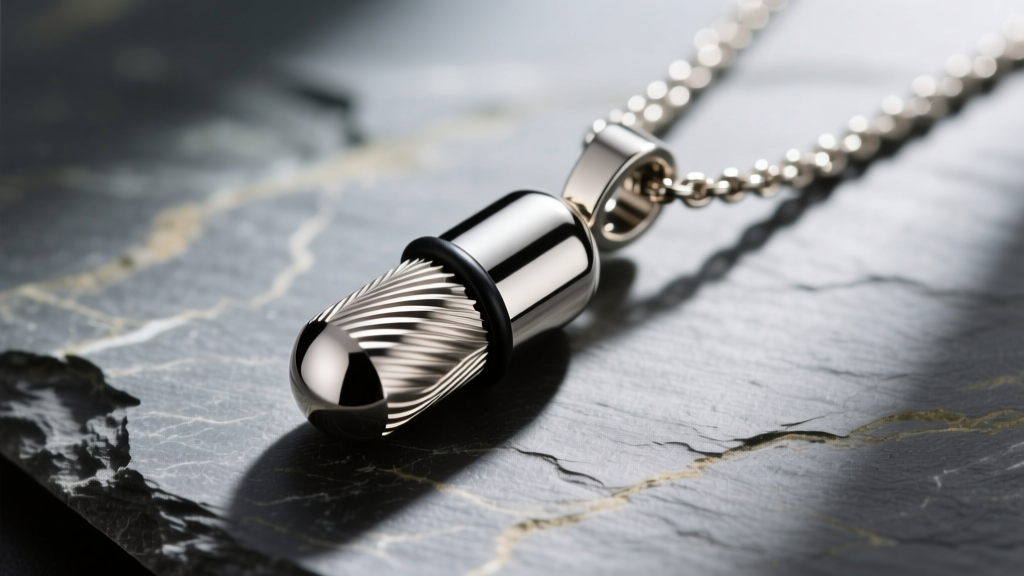
The term "pill necklace" often conjures images of cheap, friction-fit novelty pendants that leak, tarnish, and fail within weeks. However, in the realm of functional, memorial, and medical alert jewelry, a high-quality pill necklace (technically known as a capsule locket) is a precision-machined tool. Whether you are storing emergency medication, precious cremation ashes, or concentrated essential oils, the structural integrity of the capsule is paramount. This expert deep dive bypasses generic fashion advice to explore the metallurgy, mechanical engineering, and seal dynamics that separate a secure, waterproof pill necklace from a disposable trinket.
The Anatomy of a Secure Pill Necklace
A functional capsule locket relies on three critical components to maintain a waterproof and airtight seal: the capsule body, the threaded cap, and the elastomeric gasket. Understanding how these elements interact under thermal and mechanical stress is the first step in selecting a reliable piece.
Threading vs. Friction Fit: The Mechanical Advantage
Never purchase a friction-fit (push-in) pill necklace for daily wear or water exposure. Friction fits rely entirely on interference fit and tolerance stacking. Because metals expand and contract with temperature fluctuations (e.g., moving from an air-conditioned room to a hot, humid outdoor environment), the microscopic gap between the cap and the body will inevitably shift, breaking the seal.
High-end capsules utilize CNC-machined metric micro-threads. The most common thread pitches for jewelry-grade capsules are M3x0.5 and M4x0.7. The mechanical advantage of the thread allows the user to apply significant axial compression to the O-ring without over-stressing the metal. When evaluating a pill necklace, inspect the threads: they should be sharp, clean, and free of burrs. Cross-threading is the most common failure mode in cheaper cast capsules, which often use soft, easily stripped zinc alloys.
The O-Ring Gasket: Your First Line of Defense
The O-ring is the true hero of a waterproof pill necklace. According to engineering standards outlined by McMaster-Carr, the material and durometer (hardness) of the O-ring dictate its chemical resistance and compression set.
- Nitrile (Buna-N): The industry standard for general water resistance and skin oils. Typically rated at a 70A durometer, providing an optimal balance between squeeze and sealing force.
- Silicone: Superior for extreme temperature variations and UV resistance, but highly susceptible to degradation from essential oils and solvents.
- Fluorocarbon (Viton): Absolutely mandatory if your pill necklace will store concentrated essential oils (especially citrus oils, which rapidly dissolve nitrile and silicone).
Pro Tip: Most micro-pendants use an AS568 standard Dash 006 or Dash 008 O-ring. If your seal fails, you can easily source replacement fluorocarbon O-rings from industrial suppliers rather than replacing the entire pendant.
Material Science: What Should Your Capsule Be Made Of?
The external environment of a pill necklace is highly corrosive. Human sweat has a pH ranging from 4.5 to 7.0 and contains chlorides that aggressively attack inferior metals. Below is a technical comparison of common capsule materials.
| Material | Corrosion Resistance | Weight | Machinability | Best Use Case |
|---|---|---|---|---|
| 316L Stainless Steel | Excellent (Molybdenum alloyed) | Heavy | High | Daily wear, water exposure, ashes |
| Grade 2 Titanium | Superior (ASTM F67 Implant Grade) | Ultra-Light | Difficult | Hypoallergenic needs, extreme sports |
| 925 Sterling Silver | Poor (Tarnishes, reacts to sulfur) | Medium | High | Occasional wear, dry environments |
| 14k Solid Gold | Very Good (Depending on alloy mix) | Heavy | Medium | High-end memorial jewelry |
The Problem with Sterling Silver and Mixed Metals
While sterling silver is a staple in traditional jewelry, it is a poor choice for a functional pill necklace. Silver reacts with sulfur compounds, which are often present in medications, supplements, and even the environment. Furthermore, if a manufacturer uses a 316L steel cap on a sterling silver body, the introduction of sweat creates an electrolyte bridge, resulting in galvanic corrosion. The less noble metal (silver) will rapidly degrade at the thread junction. For authoritative data on metal biocompatibility and corrosion, refer to the metallurgical charts provided by Rio Grande.
Chain Pairing and Bail Mechanics
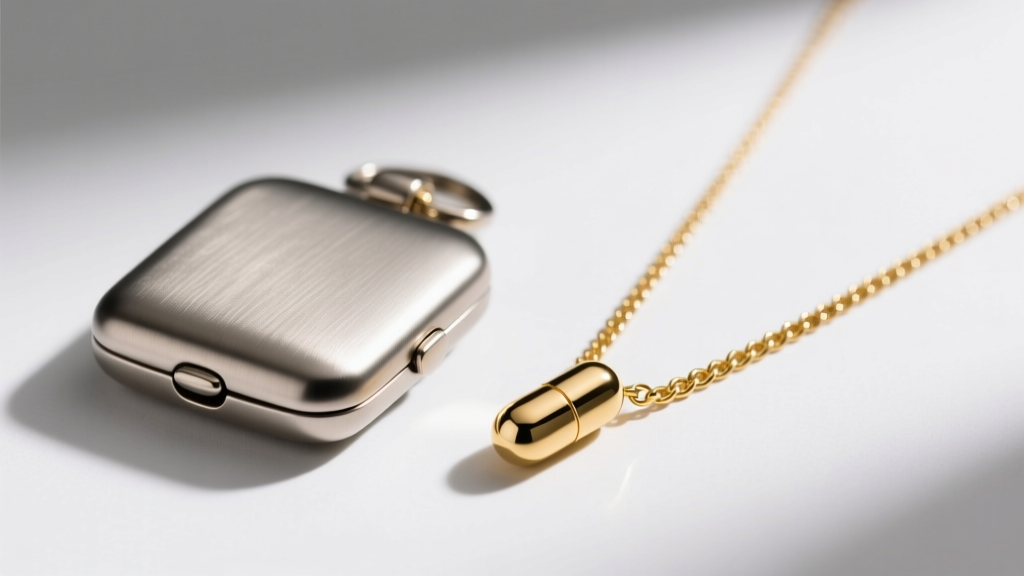
A heavy, solid steel capsule requires a chain with adequate tensile strength. A common failure point in poorly designed pill necklaces is the bail (the loop that connects the pendant to the chain).
Hidden Bails vs. Direct Drilling
Avoid capsules where the manufacturer has simply drilled a hole directly through the top of the cap or body. Drilling compromises the structural integrity of the metal and creates a stress concentrator where the chain rubs. Over time, a 2.0mm steel chain will act like a saw, cutting through a 1.5mm silver or gold bail loop. Instead, look for capsules featuring a welded jump ring or a CNC-milled hidden bail integrated into the cap's architecture.
Recommended Chain Gauges and Weights
The weight of a standard 14mm x 35mm solid steel capsule is approximately 18-22 grams. To support this safely without the chain stretching or the clasp failing, adhere to these minimum specifications:
- Chain Style: Rope, Wheat, or Figaro (avoid delicate cable or snake chains, which kink and snap under pendulum stress).
- Wire Gauge: Minimum 18-gauge (1.0mm), though 16-gauge (1.3mm) to 14-gauge (1.6mm) is highly recommended for heavy titanium or steel capsules.
- Clasp: A lobster clasp with a stainless steel internal spring. Avoid magnetic clasps, which lack the sheer strength to hold a heavy capsule during sudden movements.
Functional Use Cases and Loading Best Practices
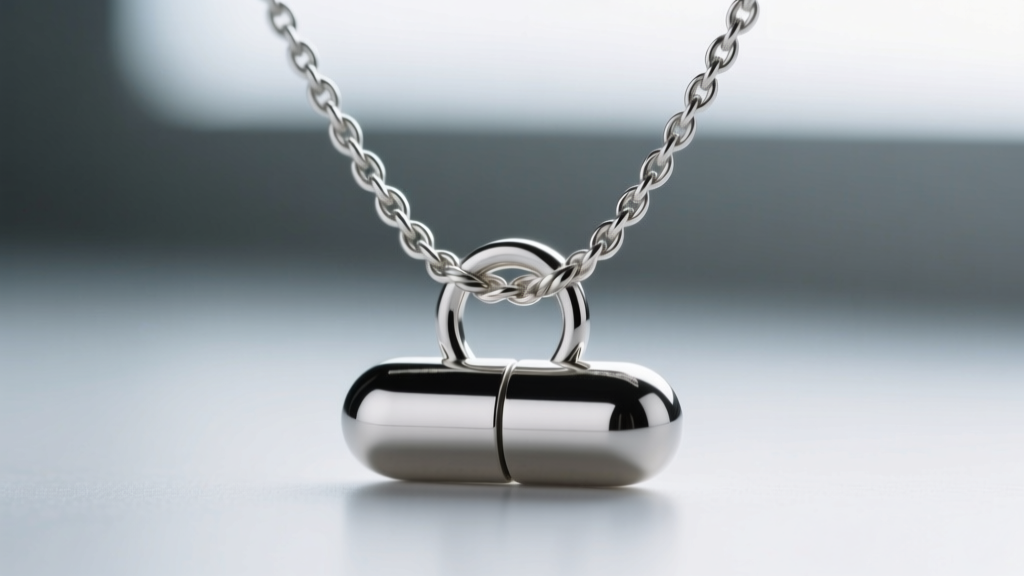
How you load your pill necklace directly impacts the longevity of the O-ring seal. Overfilling the capsule prevents the cap from seating fully, placing lateral shear stress on the O-ring rather than the intended axial compression.
"When loading a capsule locket with powdered substances or ashes, always leave a minimum of 2.5mm of negative space at the top of the chamber. This allows the O-ring to compress into its gland without the contents acting as a hydraulic lock, which will blow out the gasket."
Moisture Control and Desiccants
If you are storing hygroscopic medications (like nitroglycerin or certain blood pressure medications) inside your pill necklace, ambient humidity trapped inside the chamber during loading can degrade the pills. Cut a tiny 2mm square of silica gel desiccant packet and place it inside the capsule before sealing. For liquid essential oils, use a micro-cotton wick rather than pouring the liquid directly into the chamber, which risks degrading the internal metal finish if the capsule is not passivated.
Maintenance and Troubleshooting Seal Failure
Even the most precision-machined pill necklace requires routine maintenance to remain waterproof. Follow this troubleshooting framework if you suspect your seal is compromised:
- Inspect the O-Ring Gland: Unscrew the cap and examine the groove (gland) where the O-ring sits. Use a wooden toothpick to clear out lint, skin cells, or crystallized essential oils. Never use a steel needle, as scratching the gland will create a permanent leak path.
- Check for Compression Set: If the O-ring appears flattened or squarish rather than perfectly round, it has suffered from "compression set" and lost its elastic memory. Replace it immediately.
- Lubricate the Threads: Apply a microscopic amount of synthetic grease (like Super Lube PTFE) to the threads. This prevents galling (cold welding) between titanium components and ensures smooth axial compression.
- The PTFE Field Fix: If you are traveling and your threads become slightly stripped or loose, wrap a single layer of PTFE (plumber's tape) around the cap threads. This provides a temporary, waterproof friction barrier until you can have the pendant re-tapped by a jeweler.
Conclusion
A premium pill necklace is an intersection of horology-level machining and materials science. By prioritizing CNC-machined metric threads, selecting the correct elastomeric gasket for your specific contents, and choosing corrosion-resistant alloys like 316L steel or Grade 2 titanium, you ensure that your functional jewelry remains secure, waterproof, and reliable for decades. Stop settling for friction-fit novelties; demand precision engineering for the things you carry closest to your heart.


