Can I Wear a Rosary as a Necklace? Respect & Styling Tips
Wondering "can I wear a rosary as a necklace"? Discover troubleshooting tips for durability, respectful styling, and material upgrades for daily wear.

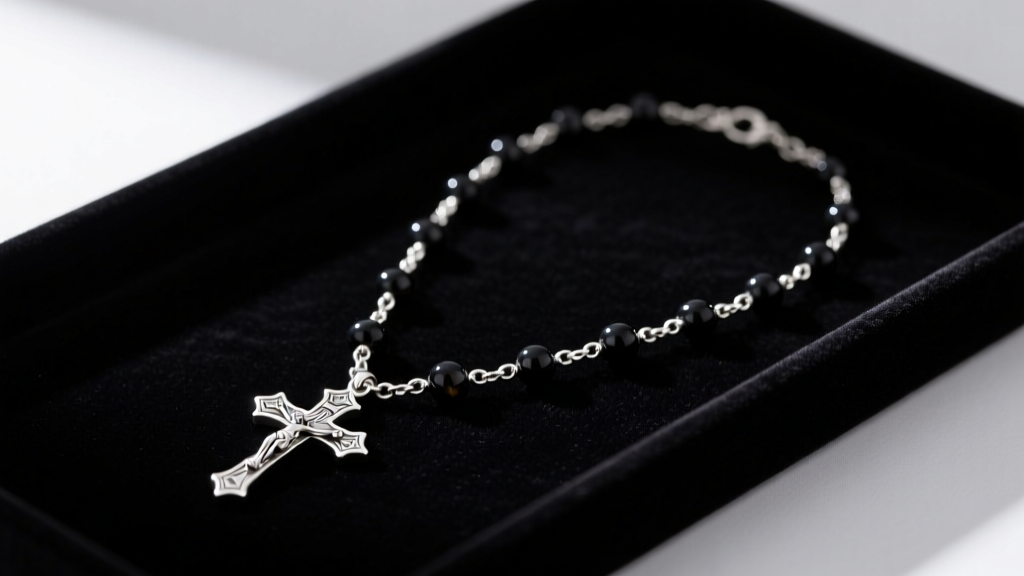
The Short Answer: Respect, Religion, and Fashion
The question "can I wear a rosary as a necklace" is one of the most frequently debated topics at the intersection of faith, fashion, and jewelry design. While the aesthetic of beaded chains and crucifix drops has permeated streetwear and high fashion, treating a traditional devotional tool as an everyday accessory introduces a unique set of structural and cultural challenges. This guide troubleshoots the physical failure points of wearing a rosary and provides actionable frameworks for styling, material selection, and respectful wear in 2026.
Before addressing the hardware, we must address the cultural and religious implications. In the Catholic tradition, a rosary is a sacramental—a sacred object meant to facilitate prayer, not a piece of decorative jewelry. According to theologians and guidelines discussed by platforms like Catholic Answers, wearing a rosary around the neck purely as a fashion statement can be viewed as disrespectful or trivializing of the faith. However, wearing it discreetly under a shirt as a personal reminder of faith is generally accepted. If you are not Catholic and are drawn to the aesthetic, the most respectful troubleshooting step is to opt for "rosary-style" or "decade" necklaces. These are designed by jewelers specifically as fashion pieces, utilizing the visual motif of beaded intervals without appropriating a consecrated 5-decade devotional tool.
Troubleshooting Durability: Why Traditional Rosaries Break
If you inherit a genuine rosary or purchase one from a religious goods store and attempt to wear it daily, you will likely experience catastrophic hardware failure within weeks. Traditional rosaries are engineered for the low-impact friction of being held in the hands, not the high-stress environment of the human neck.
Wire-Wrapped vs. Chain-Linked Construction
Most authentic, handcrafted rosaries use wire-wrapping techniques to connect the beads. Artisans typically use 20-gauge or 22-gauge dead-soft wire (often copper, brass, or sterling silver) because it is malleable enough to form tight loops without specialized tools. However, dead-soft wire lacks the tensile strength to support the weight of a pendant drop when subjected to the dynamic movement of walking. According to jewelry fabrication standards outlined by suppliers like Rio Grande, a necklace meant for daily wear requires at least 18-gauge half-hard wire, or ideally, soldered chain links. When a 22-gauge dead-soft wire loop catches on a sweater, it will unspool or snap under just 2 to 3 pounds of tension, scattering beads and damaging the piece.
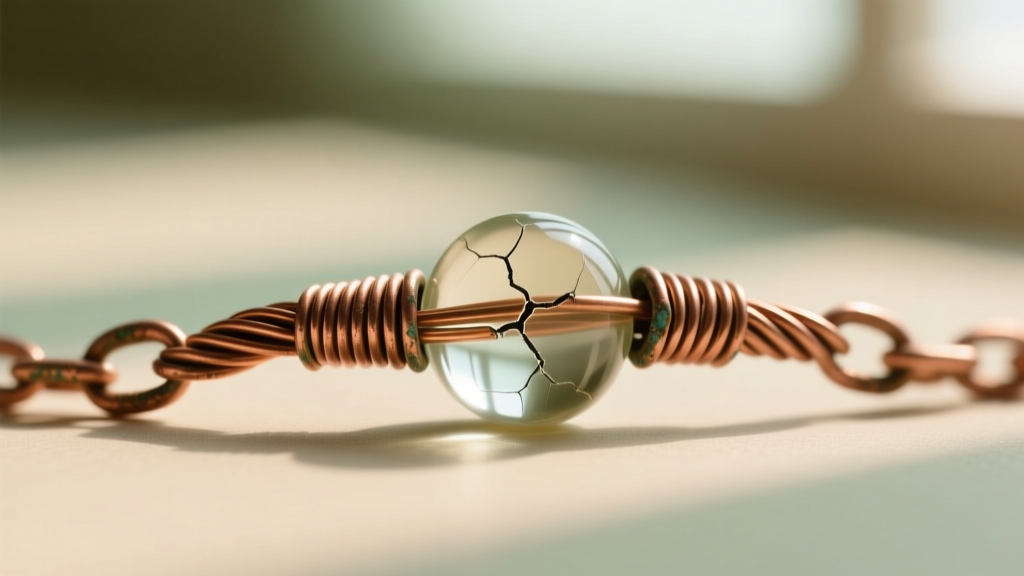
Material Breakdown: What Survives Daily Wear?
The beads themselves are another major troubleshooting point. Human sweat has a pH ranging from 4.5 to 7.0, which is highly corrosive to porous organic materials and reactive base metals. When evaluating beads for a rosary-style necklace, we must look at both chemical stability and physical hardness. The Gemological Institute of America (GIA) emphasizes that understanding the Mohs scale of mineral hardness is critical for predicting how gemstones will withstand daily abrasion against the collarbone and clothing.
| Bead Material | Hardness / Durability | Sweat & Chemical Resistance | Verdict for Daily Wear |
|---|---|---|---|
| Olive Wood | Janka ~2,700 lbf | Poor (Absorbs sebum and darkens) | Avoid for daily wear |
| Freshwater Pearl | Mohs 2.5 - 4.5 | Very Poor (Dissolves in acidic sweat) | Strictly occasional wear |
| Black Onyx | Mohs 7.0 | Excellent (Non-porous chalcedony) | Highly recommended |
| Hematite | Mohs 5.5 - 6.5 | Good (But heavy, stresses wire) | Moderate wear |
| 316L Stainless Steel | N/A (Metal alloy) | Excellent (Surgical grade) | Highly recommended |
Expert Tip: If you are restringing a broken rosary to wear as a necklace, discard the original dead-soft wire. Instead, string the beads on 0.018-inch diameter 49-strand micro-fused stainless steel beading wire, finishing the ends with crimp beads and a soldered lobster clasp. This increases the tensile strength from roughly 3 lbs to over 15 lbs.
Sizing and Proportion Issues (And How to Fix Them)
A standard 5-decade rosary measures roughly 16 to 18 inches in circumference. However, unlike a standard necklace that clasps at the nape, a rosary features a "drop" or "tail"—the section containing the centerpiece, three Hail Mary beads, and the crucifix. This drop adds an additional 4 to 6 inches of length. When worn, the crucifix will hang at a 22- to 24-inch matinee length, while the back of the neck sits at a 16-inch choker or princess length.
This creates a severe proportion issue: the beads will bunch up tightly around the sides of your neck, while the heavy metal or stone crucifix swings freely, acting as a pendulum that catches on door handles, scarves, and seatbelts. To troubleshoot this, avoid wearing traditional rosaries over bulky clothing. Instead, wear them under a tailored button-down or a V-neck sweater where the fabric can dampen the pendulum effect of the crucifix drop, keeping the piece anchored and safe from snagging.
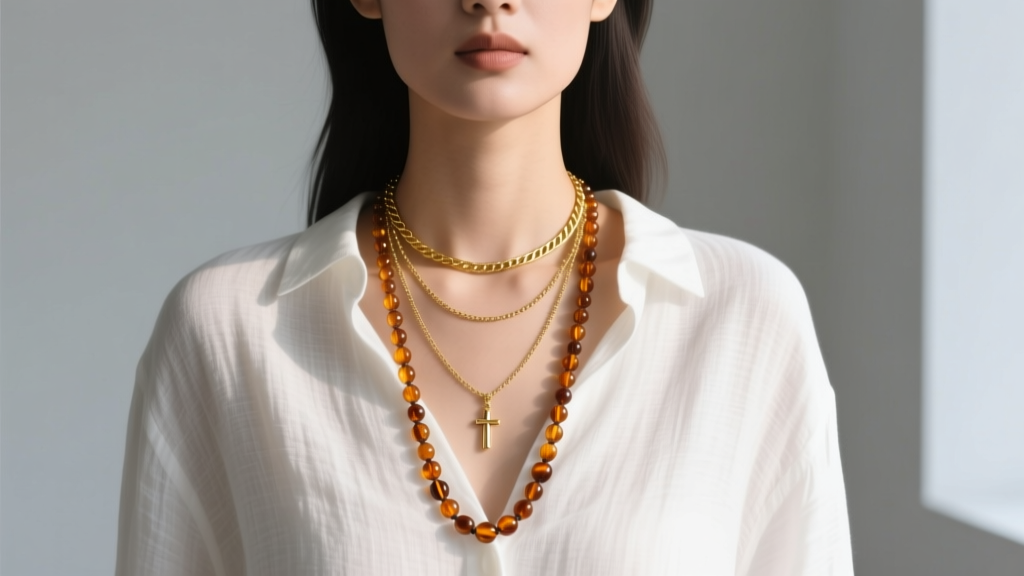
The Alternative: Rosary-Style Necklaces
For those seeking the aesthetic without the structural or cultural liabilities, the modern jewelry market offers "decade necklaces" or "rosary-style chains." These pieces feature a continuous soldered chain (like a 1.5mm cable or box chain) with single beads stationed at regular intervals using bead-setting or silicone O-rings. This eliminates the wire-wrapping failure points entirely.
When shopping for these alternatives, look for brands utilizing 14k gold-filled components or 316L surgical stainless steel. Gold-filled materials feature a thick outer layer of 14k gold mechanically bonded to a brass core, offering the visual weight and tarnish resistance of solid gold at a fraction of the cost, while vastly outperforming cheap gold-plated fashion jewelry that will flake and turn your skin green within a month.
Final Verdict and Care Routine
If you choose to wear a genuine, blessed rosary as a necklace for personal devotional reasons, you must adopt a rigorous maintenance routine to prevent degradation. Treat it with the same care you would afford a delicate antique.
- Wipe Down Daily: Use a dry, lint-free microfiber cloth to remove sweat, sunscreen, and body oils from both the metal findings and the beads immediately after taking it off.
- Avoid Ultrasonic Cleaners: Never place a rosary with organic beads (wood, pearl, coral, or turquoise) in an ultrasonic jewelry cleaner. The high-frequency vibrations will shatter porous stones and strip the natural oils from wood, causing it to crack.
- Proper Storage: Store the rosary flat in a lined jewelry box. Hanging a wire-wrapped rosary on a necklace tree puts constant static tension on the top loops, accelerating metal fatigue and eventual snapping.
- Remove Before Activity: Always remove the piece before showering, swimming (chlorine and saltwater are highly destructive to silver and copper alloys), or exercising.
Ultimately, whether you are wearing a sacred sacramental or a fashion-forward decade necklace, understanding the mechanics of jewelry construction ensures your piece remains intact, respectful, and beautifully styled for years to come.


