Wearing a Rosary Necklace: 2026 Style & Trend Guide
Explore the 2026 trends for wearing a rosary necklace. Discover layering techniques, material guides, and respectful styling tips for this iconic piece.

The Evolution of the Rosary in Secular Fashion
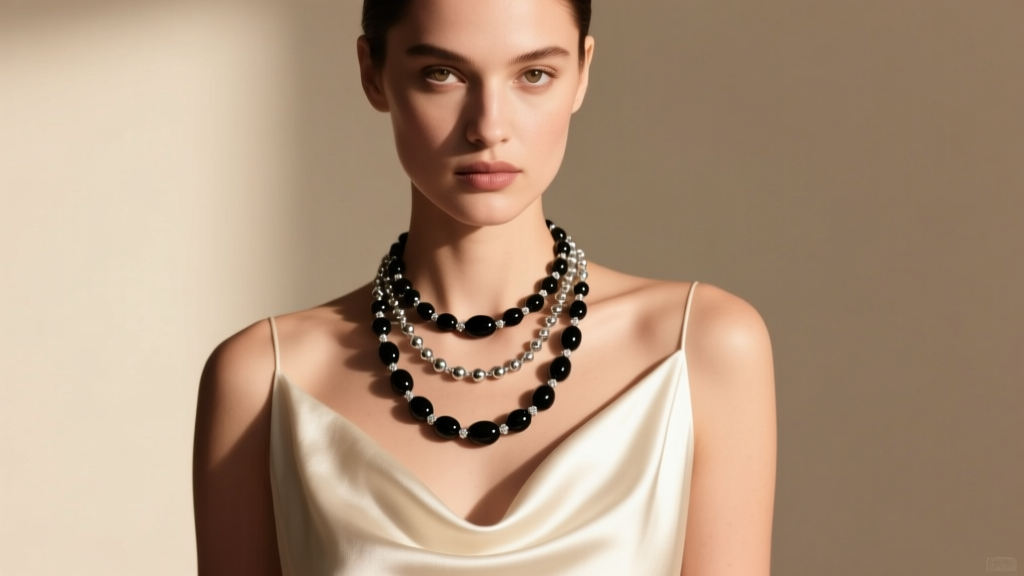
The intersection of devotion and decoration has long fascinated the fashion world. In 2026, wearing a rosary necklace has transcended its historical boundaries, evolving from a subcultural punk staple into a sophisticated element of modern jewelry layering. While the 1980s saw the rosary used as a provocative pop-culture prop, today's approach is far more nuanced. Modern style enthusiasts and high-fashion houses alike are treating the rosary with a blend of aesthetic appreciation and cultural respect, focusing on artisanal craftsmanship, premium gemstone beads, and intentional styling.
According to historical archives from The Metropolitan Museum of Art, the physical structure of the rosary has adapted to regional and temporal aesthetics for centuries. Today, the fashion-forward rosary maintains the traditional five-decade structure but often plays with scale, metallurgy, and bead composition to suit contemporary wardrobes.
Anatomy and Gauge Specifications of a Fashion Rosary
To master the art of wearing a rosary necklace, one must first understand its structural anatomy. Unlike standard pendant necklaces, a rosary is a complex, multi-component piece of jewelry. A traditional fashion rosary consists of the crucifix, the introductory beads (often three or four), the centerpiece (or nexus), and the five decades (sets of ten beads) that form the main loop.
Chain Gauges and Link Styles
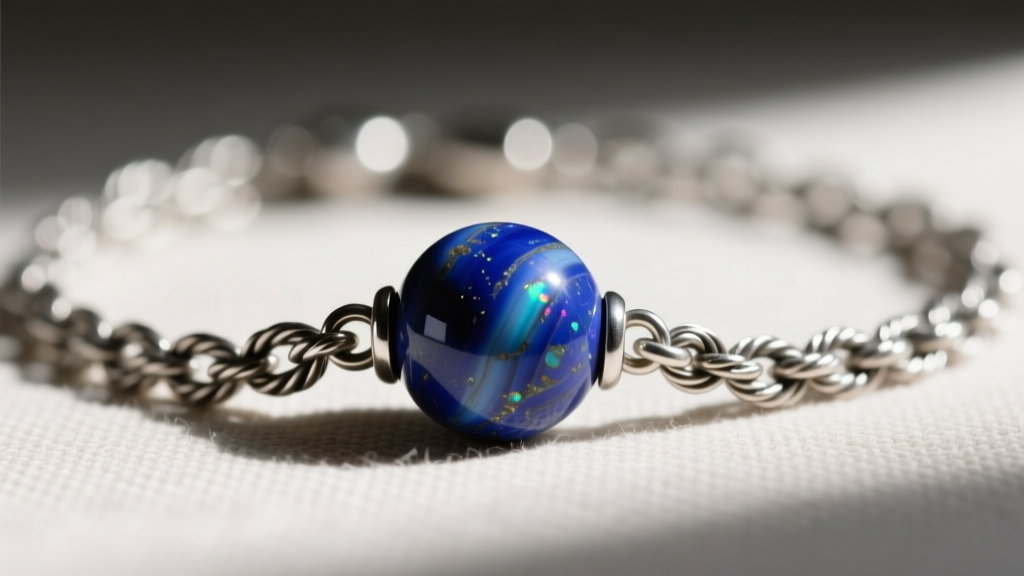
The chain linking the beads is just as critical as the beads themselves. In 2026, the most durable and aesthetically pleasing fashion rosaries utilize 1.2mm to 1.5mm cable or rope chains. Thinner chains (under 1.0mm) are prone to snapping under the weight of stone beads, while thicker chains (over 2.0mm) can make the piece look overly bulky and detract from the delicate rhythm of the beads.
- Cable Chain: The classic choice. Uniform oval links that provide a traditional, timeless look.
- Rope Chain: Twisted links that catch the light, adding a subtle sparkle that complements matte stone beads.
- Figaro Chain: Often used in streetwear adaptations, featuring alternating long and short links for a bolder, masculine-leaning aesthetic.
Bead Sizing
Proportion is everything. The main decade beads typically range from 6mm to 8mm in diameter, providing enough visual weight to anchor the piece. The introductory beads and centerpiece beads are usually scaled down to 4mm or 5mm to create a visual hierarchy that draws the eye toward the crucifix and the nexus.
Material Matrix: Choosing Your Beads
The material of the beads dictates not only the price and weight of the necklace but also its care requirements and stylistic vibe. When selecting a rosary for your collection, consider the Mohs hardness scale to ensure longevity, especially if you plan to layer it with harder metals. The Gemological Institute of America (GIA) provides extensive data on how these materials react to daily wear and environmental exposure.
| Bead Material | Mohs Hardness | Price Range (USD) | Best Style Application |
|---|---|---|---|
| Black Onyx | 7.0 | $45 - $120 | Edgy streetwear, evening layering, monochromatic outfits |
| Freshwater Pearl | 2.5 - 4.5 | $85 - $250 | Bridal, elegant daytime, soft aesthetics, silk pairings |
| Olive Wood | N/A (Organic) | $20 - $60 | Bohemian, traditional, casual linen or cotton wear |
| Lapis Lazuli | 5.0 - 6.0 | $60 - $150 | Artisanal, boho-chic, rich color-blocking |
| Enamel / Resin | N/A (Synthetic) | $30 - $90 | Y2K revival, pop-color accents, playful layering |
2026 Layering Frameworks: The Sandwich Method
Wearing a rosary necklace in isolation is a bold statement, but the prevailing trend in 2026 is intentional layering. Because a standard rosary loop falls between 24 and 28 inches (often resting at the sternum or navel), it requires strategic pairing to avoid looking like an afterthought.
"The secret to layering religious iconography in secular fashion is contrast. Mix the sacred rhythm of the beads with the industrial geometry of modern chain styles."
The Sandwich Technique
This method involves placing the rosary between two secular chains of varying lengths and textures to integrate it seamlessly into your neckline.
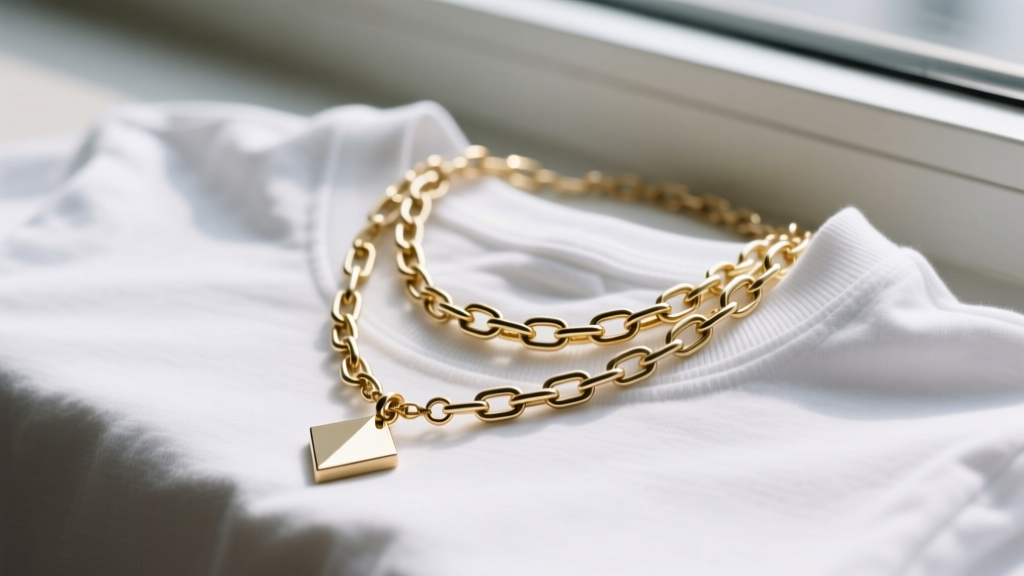
- Top Layer (16-18 inches): A delicate 1.5mm box chain or a small-hoop paperclip chain resting on the collarbone.
- Middle Layer (20-22 inches): Your fashion rosary. If the rosary is too long, wrap it twice around the neck to create a 16-inch choker effect and a 24-inch drop.
- Bottom Layer (26-30 inches): A heavy, minimalist pendant on a 2.5mm Cuban link chain that sits below the crucifix, anchoring the entire arrangement.
Neckline Pairing Guide
The garment you wear dictates how the beads interact with your skin and fabric.
- Deep V-Neck: The ideal canvas. The V-shape naturally follows the geometry of the rosary, leading the eye directly to the crucifix. Opt for 6mm onyx or dark wood beads for high contrast against bare skin.
- Crew Neck / T-Shirt: Wear the rosary over the fabric. Choose metallic beads or bright enamel to ensure the piece doesn't get lost in the texture of cotton.
- Boatneck / Off-the-Shoulder: Avoid long, swinging rosaries that will tangle or hit the skin awkwardly. Instead, double-wrap a pearl or freshwater coral rosary to sit snugly as a multi-strand choker.
Navigating the Cultural Conversation
When wearing a rosary necklace, addressing the cultural and religious weight of the object is mandatory for the mindful consumer. The line between appreciation and appropriation is defined by intent and respect. In 2026, fashion commentators and cultural critics agree that wearing a rosary as a mere "costume" or treating it with irony is outdated and offensive.
To wear it respectfully:
- Avoid placing it on the lower body: Never tie a rosary around a wrist, ankle, or belt loop. It is designed to be worn near the heart or the head.
- Purchase from artisans: Support jewelers who craft these pieces with an understanding of their heritage, rather than buying mass-produced, poorly constructed novelty items from fast-fashion bins.
- Handle with care: Do not toss a rosary into a chaotic jewelry box where it can become tangled and bent. Store it draped or in a dedicated velvet pouch.
Maintenance and Care Protocols
Because rosaries combine organic or porous stones with metal chains, they require specialized care. Never use an ultrasonic cleaner on a rosary featuring freshwater pearls, olive wood, or lapis lazuli. The high-frequency vibrations can fracture organic materials and strip the natural oils from wood, causing it to crack.
Instead, clean your gemstone and wood rosaries by gently wiping each bead with a microfiber cloth slightly dampened with distilled water. For the sterling silver or gold vermeil chain links, use a dedicated jewelry polishing cloth to remove oxidation and skin oils. If your rosary features a spring-ring clasp (common in vintage pieces), consider having a jeweler upgrade it to a lobster clasp for superior security, ensuring that the heavy bead loop never accidentally detaches and falls.
Final Thoughts on Personal Expression
Wearing a rosary necklace in 2026 is an exercise in balancing historical reverence with contemporary self-expression. Whether you are drawn to the moody elegance of black onyx, the organic warmth of olive wood, or the luminous grace of freshwater pearls, the key lies in intentional styling. By respecting the anatomy of the piece, understanding material durability, and mastering the art of the layered neckline, you can integrate this profoundly historic silhouette into your modern wardrobe with both sophistication and grace.


