What Does Pearl Necklace Mean? A Gemological Guide
Explore what a pearl necklace truly means in gemology. We break down technical grading, silk knotting anatomy, length charts, and market pricing.

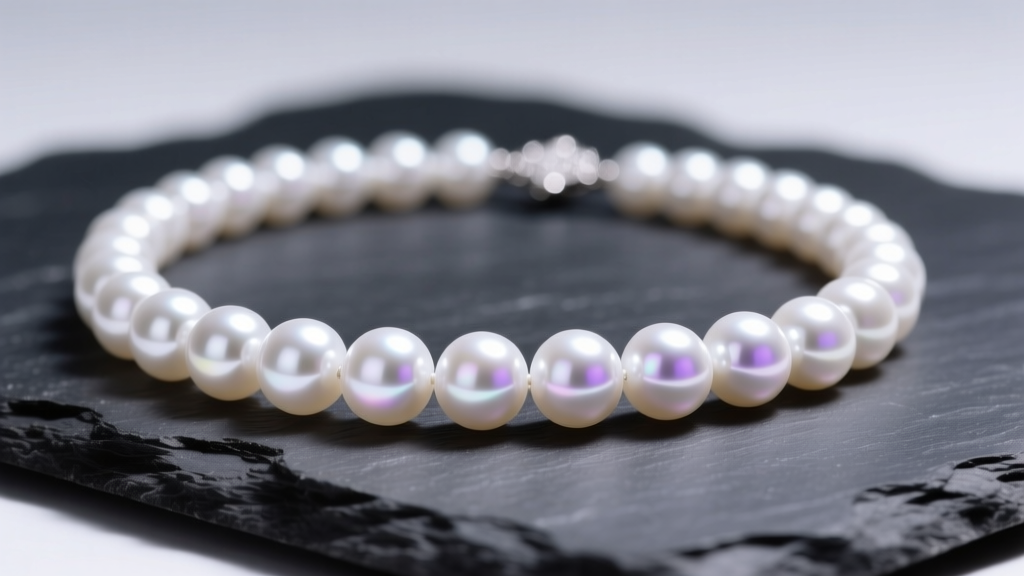
When querying the internet, the phrase 'what does pearl necklace mean' often yields colloquial or slang definitions. However, in the upper echelons of fine jewelry and gemology, a pearl necklace represents a triumph of biological engineering, meticulous craftsmanship, and centuries of cultural currency. To truly understand what a pearl necklace means to a jeweler, we must strip away the slang and examine the technical anatomy, grading metrics, and structural integrity that define high-end pearl strands today.
This expert deep dive explores the gemological reality of pearl necklaces, detailing the exact materials, grading systems recognized by the Gemological Institute of America (GIA), and the structural nuances that separate a $200 fashion accessory from a $20,000 investment-grade heirloom.
Decoding the Query: Cultural Symbolism vs. Gemological Reality
Historically, the meaning of a pearl necklace was intrinsically tied to wealth, purity, and royal status. Before Kokichi Mikimoto perfected the cultured pearl process in the early 20th century, natural pearls were so rare that a single matched strand could finance a war or purchase a mansion. Today, the 'meaning' of a pearl necklace in the jewelry trade is defined by its provenance, nacre quality, and structural assembly.
While natural pearls still exist in auction houses, 99.9% of the modern market consists of cultured pearls. This means human intervention initiated the pearl-forming process, but the oyster or mussel still secretes the nacre. Understanding this biological reality is the first step in grasping the technical value of the necklace.
The Technical Anatomy of a Pearl Necklace
A high-quality pearl necklace is not merely a string of beads; it is a highly engineered tension system designed to protect both the pearls and the wearer. The construction requires specific materials and techniques that mass-market manufacturers often bypass.
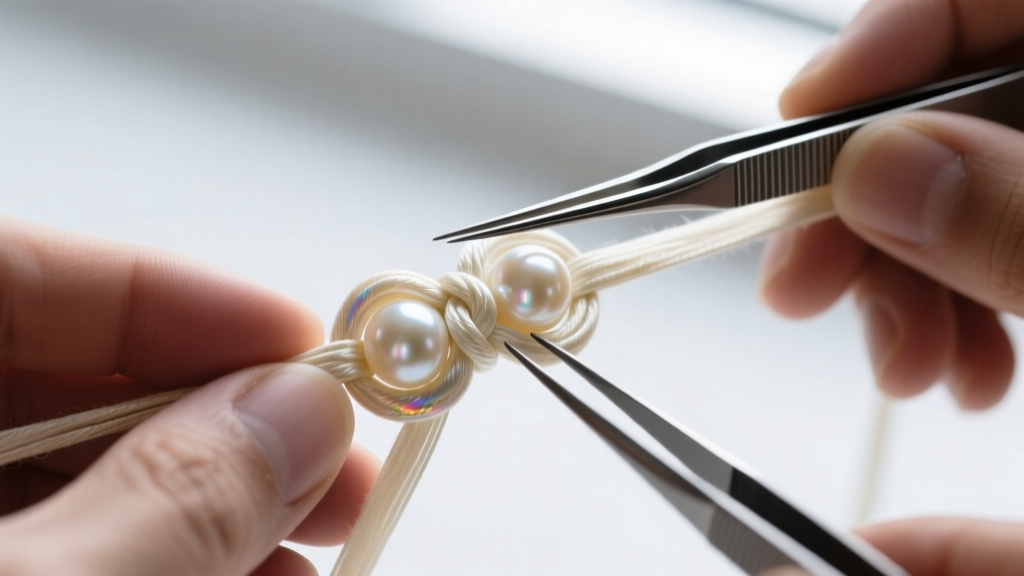
Silk Thread and Knotting Mechanics
Authentic pearl necklaces are strung on 100% natural silk thread, typically sourced from specialized suppliers like Gütermann or Griffin. The silk is chosen for its tensile strength and its ability to stretch slightly, allowing the knots to tighten securely against the pearl. The thickness of the silk must perfectly match the drill hole of the pearl, which is usually between 0.7mm and 0.9mm for standard Akoya pearls.
- Size 0 to 2 (0.30mm - 0.45mm): Used for tiny seed pearls (2mm - 4mm).
- Size 4 to 6 (0.55mm - 0.70mm): The industry standard for 6mm to 8mm Akoya and freshwater pearls.
- Size E to FF (Heavy Duty): Reserved for large South Sea or Tahitian pearls (11mm+) where the weight of the nacre requires maximum tensile support.
French Wire (Gimp) and Clasp Integration
If you examine the terminal ends of a fine pearl necklace near the clasp, you will notice a microscopic coiled wire wrapping the silk. This is called French wire or gimp. Because the metal clasp has sharp internal edges, it will eventually slice through silk thread through friction. French wire acts as a sacrificial metal shield, ensuring the structural integrity of the necklace. Furthermore, premium necklaces utilize a 'figure-8' safety latch on the box clasp to prevent catastrophic loss if the primary mechanism fails.
Pearl Grading Systems: The True Meaning of Quality
Unlike diamonds, which are graded on the universal 4Cs, pearls lack a single globally mandated grading scale. However, the GIA Pearl Description System is the authoritative standard used by elite appraisers. It evaluates seven distinct value factors. Below is a technical breakdown of how different pearl types perform across these metrics, alongside current 2026 wholesale pricing estimates for an 18-inch, AAA-graded strand.
| Pearl Type | Nucleation Method | Avg Nacre Thickness | Luster Profile | 18-Inch Strand Price (AAA) |
|---|---|---|---|---|
| Akoya | Bead | 0.3mm - 0.5mm | Mirror-like, sharp | $3,500 - $8,000 |
| Tahitian | Bead | 2.0mm - 4.0mm | Satin to metallic, dark | $5,000 - $15,000 |
| South Sea | Bead | 3.0mm - 6.0mm | Soft, satiny, deep | $10,000 - $35,000+ |
| Freshwater | Tissue | Solid nacre | High, slightly softer | $800 - $3,000 |
The Criticality of Nacre Thickness
When asking what a pearl necklace means in terms of longevity, nacre thickness is the ultimate metric. In bead-nucleated pearls (Akoya, Tahitian, South Sea), a round shell bead is inserted into the gonad of the oyster. If the pearl is harvested too early, the nacre layer will be paper-thin (under 0.15mm). Over time, thin-nacre pearls will peel, crack, or reveal the dull shell bead underneath. High-grade Akoya pearls must possess a minimum of 0.3mm of nacre, while South Sea pearls routinely boast 3mm to 6mm of solid nacre over the nucleus.
Length Classifications and Sartorial Meanings
The 'meaning' of a pearl necklace also shifts based on its length, which dictates how it interacts with the wearer's neckline and formal attire. Jewelers adhere to strict industry nomenclature for strand lengths:
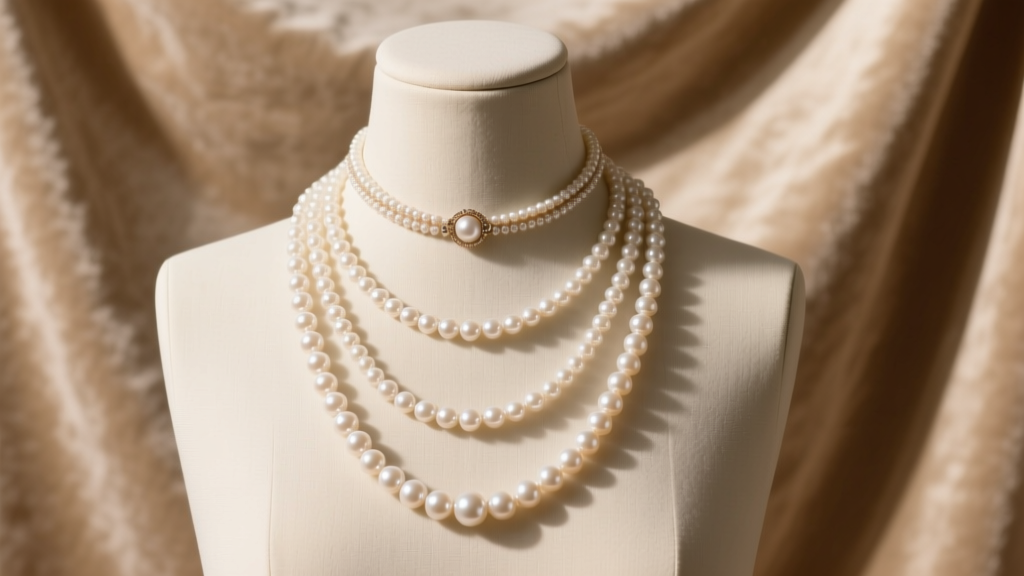
- Collar (10-13 inches): Sits tightly against the base of the neck. Requires perfectly matched, smaller pearls (often 5-6mm) to lay flat without buckling.
- Choker (14-16 inches): Rests at the hollow of the neck. The most versatile and traditional length for Akoya strands.
- Princess (17-19 inches): Falls just below the collarbone. Ideal for modern business attire and open-neck blouses.
- Matinee (20-24 inches): Drops to the top of the cleavage. Often used for Tahitian or larger freshwater pearls to create a bold, statement-making drape.
- Opera (28-36 inches): Falls below the bust. Traditionally worn as a single long strand or doubled up (knotted) for a layered choker effect.
- Rope / Lariat (37+ inches): Endless strands that can be wrapped multiple times or tied. Famous in the 1920s flapper era, these require heavy-duty silk and frequent re-stringing due to the immense weight and swing tension.
Treatments and Enhancements: What You Must Know
A vital part of understanding pearl necklaces is recognizing post-harvest treatments. Almost all white Akoya pearls undergo a process called Maeshori (pre-treatment), where they are soaked in a mild chemical solution to tighten the nacre and enhance luster, followed by light bleaching to remove organic brown spots, and sometimes 'pinking' (a subtle dye) to give the pearls a rosé overtone preferred in Western markets. While Maeshori is an accepted industry standard and does not inherently destroy value, heavy bleaching or irradiation (used to turn freshwater pearls dark to mimic Tahitians) must be disclosed and significantly lowers the gemological value of the strand.
Conclusion: Redefining the Pearl
So, what does pearl necklace mean? Beyond the noise of internet culture, it means a masterclass in organic gemology. It represents the precise calibration of nacre secretion, the meticulous hand-knotting of silk by master stringers, and a grading system that demands perfection in luster, surface cleanliness, and spherical symmetry. When you invest in a properly graded, structurally sound pearl necklace, you are acquiring a piece of biological art that, with proper care and annual re-stringing, will outlast the wearer.


