Whats a Hand Necklace? The Ultimate Cleaning Guide
Discover what's a hand necklace, from Hamsa to anatomical charms, and master expert cleaning, polishing, and storage tips to protect intricate details.

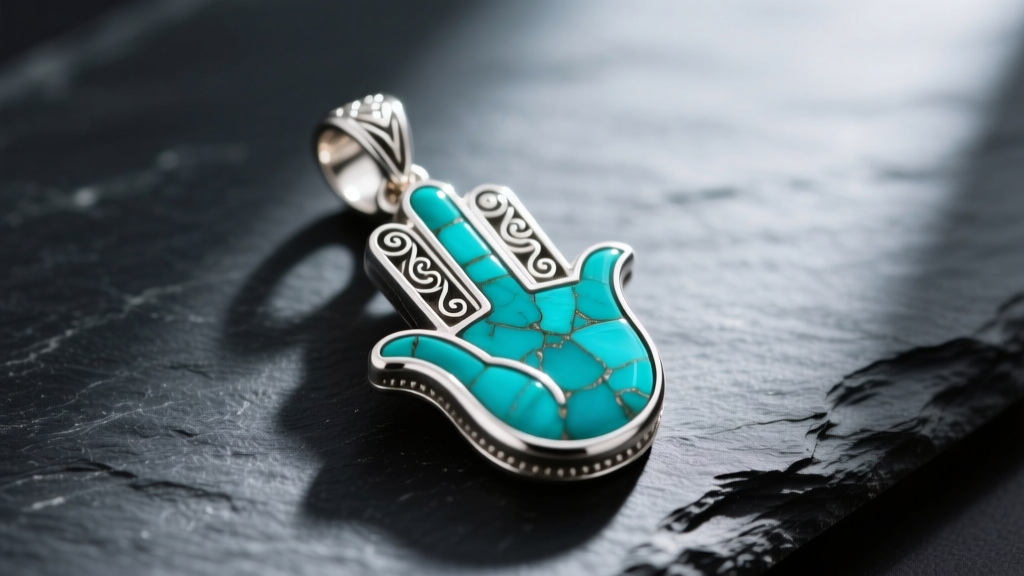
When users type whats a hand necklace into search engines, they are typically encountering one of jewelry’s oldest, most symbolically rich, and structurally complex motifs. A "hand necklace" generally refers to pendants shaped like human hands—most notably the Hamsa (Hand of Fatima or Miriam), the Italian Mano Fico (Figa), or modern gothic anatomical hand charms. While these pieces are stunning conversation starters, their intricate topography makes them notorious traps for sebum, cosmetic residue, and environmental tarnish.
As a senior jewelry stylist, I see hand pendants returned for "defects" that are actually just severe grime buildup in the interdigital webs or clouded gemstone inlays. In this comprehensive 2026 care guide, we will break down the exact protocols required to clean, maintain, and store your hand necklaces without stripping their finishes or damaging delicate palm-set gemstones.
Defining the Motif: What Exactly Are Hand Necklaces?
Before applying any cleaning solution, you must identify the specific style and material of your hand necklace, as this dictates the chemical and mechanical limits of the piece.
- The Hamsa Hand: An open-palm amulet, often featuring a central eye or gemstone (like turquoise or lapis lazuli) in the palm. Usually cast in 925 sterling silver or 14k gold.
- The Mano Fico (Figa):strong> A closed-fist charm with the thumb protruding between the index and middle fingers. Originating in Roman and Italian traditions, these are often carved from coral, jet, or cast in gold, featuring deep, narrow crevices between the fingers.
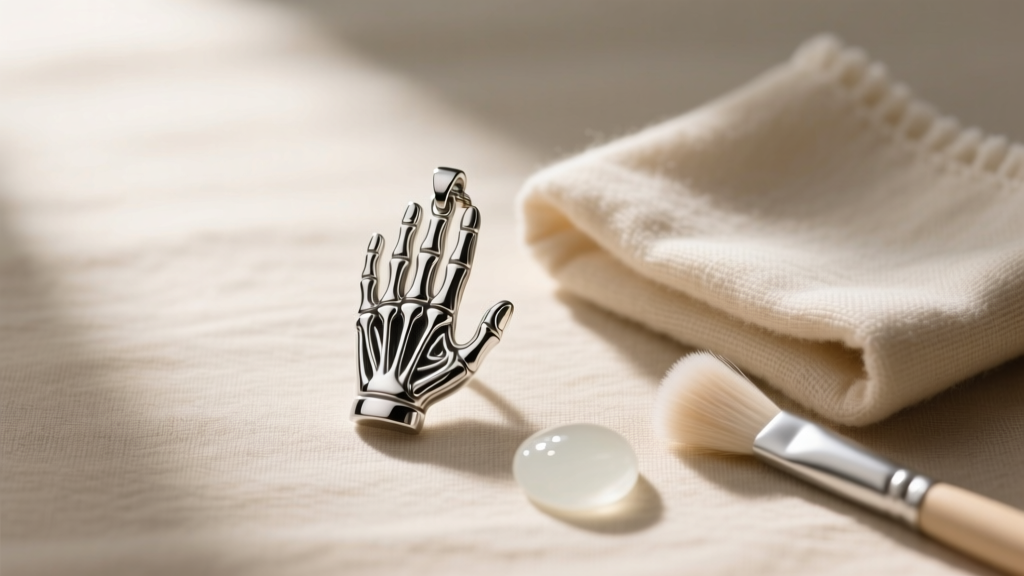
- Anatomical & Gothic Hands: Highly detailed, realistic skeletal or muscular hand pendants. These frequently utilize intentional oxidation (blackened silver) to highlight the tendons and knuckles, requiring specialized non-abrasive cleaning.
The Micro-Topology of Hand Pendants: Why They Trap Grime
Unlike a simple geometric disc pendant, a hand necklace possesses a high surface-area-to-volume ratio with multiple "micro-traps." The spaces between the cast fingers (interdigital webs) are prime locations for dead skin cells, lotion buildup, and soap scum. Furthermore, many Hamsa pendants feature bezel-set cabochons in the center of the palm. Over time, skin oils seep under the bezel wire, creating a cloudy film that dulls the stone's chatoyancy or matrix patterns.
Material-Specific Cleaning Protocols
Never use a one-size-fits-all approach. The Gemological Institute of America (GIA) consistently warns that cleaning agents safe for metals can be catastrophic for porous gemstones often found in hand charms.
1. 925 Sterling Silver & Intentional Oxidation
Many anatomical and Hamsa hand necklaces use "antiqued" or oxidized silver—where sulfur compounds are intentionally applied to recessed areas to create contrast. Never use liquid silver dips (like Tarn-X) on these pieces. Liquid dips utilize thiourea, which will instantly strip the intentional black patina, leaving the pendant looking flat and unnaturally white.
The Protocol:
- Mix warm distilled water with a few drops of pH-neutral dish soap (like Dawn Ultra).
- Submerge the silver hand pendant for exactly 3 minutes.
- Use an extra-soft baby toothbrush to gently agitate the crevices between the fingers. Do not scrub the raised, high-polish areas aggressively.
- Rinse under distilled water and pat dry with a microfiber cloth.
- Use a treated polishing cloth (such as a Sunshine Cloth) only on the raised knuckles and fingertips, avoiding the darkened recesses.
2. 14k/18k Solid Gold & Vermeil Mano Fico
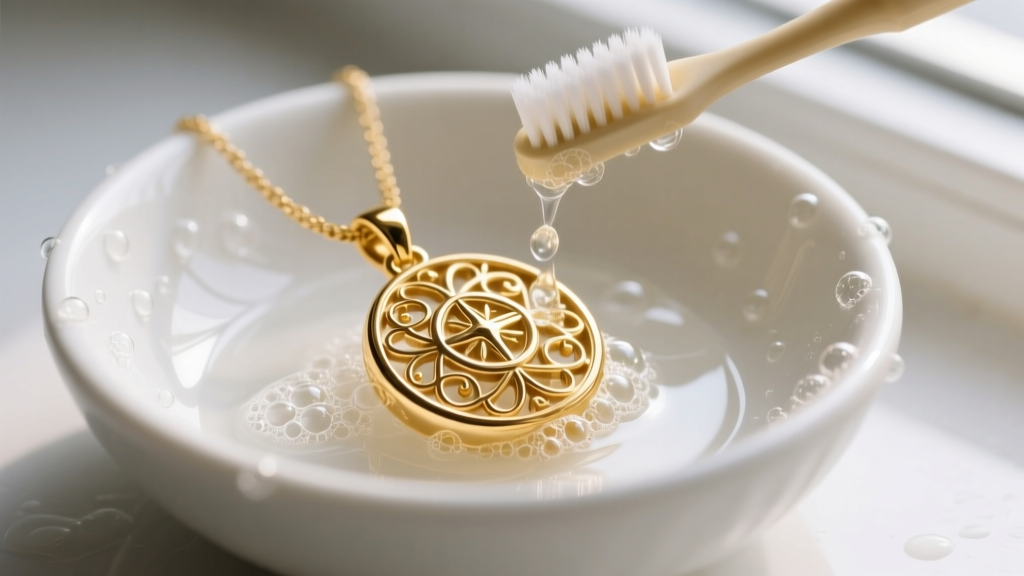
Gold hand charms, particularly the closed-fist Figa, accumulate heavy cosmetic buildup (foundation, self-tanner) in the thumb crevice. While solid gold is impervious to water, heavy gold vermeil (a thick layer of gold over sterling silver) can wear down to the base metal if subjected to abrasive brushing.
The Protocol:
- Create a mild sudsy solution using lukewarm water and castile soap.
- Apply the suds to a cotton swab rather than submerging the piece, especially if it is vermeil.
- Trace the cotton swab along the finger separations and the thumb joint to lift out trapped oils.
- Buff dry with a 100% cotton flannel cloth to restore the high-polish luster.
3. Porous Gemstone Inlays (Turquoise, Malachite, Lapis Lazuli)
Hamsa hands frequently feature a "palm eye" made of turquoise or malachite. According to Rio Grande's metallurgical and lapidary guidelines, these stones are highly porous and chemically sensitive. Turquoise (Mohs 5-6) can absorb chemicals and change color, while malachite (Mohs 3.5-4) contains copper and will react violently to acids, ammonia, or even prolonged water exposure.
The Protocol:
- Never submerge a hand necklace with porous stone inlays.
- Dampen a microfiber cloth with plain water and gently wipe the metal areas.
- Clean around the bezel setting using a dry, soft-bristled makeup brush to sweep out dust from the seam where the metal meets the stone.
- If the turquoise looks chalky or dry, apply a microscopic drop of mineral oil to a Q-tip and rub it into the stone to restore its waxy luster, then buff off the excess.
The 2026 Maintenance & Storage Matrix
Proactive maintenance prevents the need for deep cleaning. Because hand pendants are often top-heavy, they require specific chain pairings (like a 1.5mm - 2.0mm rope or wheat chain) and proper storage to prevent the delicate fingers from bending or snapping off.
| Pendant Type | Primary Material | Cleaning Frequency | Storage Requirement | Avoid At All Costs |
|---|---|---|---|---|
| Hamsa (No Gems) | 925 Silver / 14k Gold | Monthly wash | Anti-tarnish zip bag | Chlorine pools, hot tubs |
| Hamsa (Turquoise Eye) | Silver + Porous Stone | Weekly dry dusting | Individual soft pouch | Ultrasonic cleaners, liquid dips |
| Mano Fico (Figa) | 18k Gold / Coral | Bi-weekly swab | Flat lay jewelry box | Perfume sprays, acidic cleaners |
| Anatomical Hand | Oxidized Sterling | As needed (Spot clean) | Suspended on a T-bar | Silver polishing dips, toothpaste |
Catastrophic Cleaning Mistakes to Avoid
To preserve the structural integrity and historical finish of your hand necklace, avoid these common amateur mistakes:
The Ultrasonic Cleaner Trap
Ultrasonic cleaners use high-frequency sound waves to create microscopic cavitation bubbles that blast dirt away. While excellent for diamond solitaires, this violent vibration will easily shatter a bezel-set turquoise eye in a Hamsa pendant or shake loose the delicate prongs holding an anatomical hand's gemstone accents. Furthermore, if your silver hand has an epoxy-resin enamel fill (common in modern evil-eye hands), the heat and vibration will cause the resin to crack and pop out.
The Toothpaste Myth
Internet hacks frequently suggest using baking soda or toothpaste to polish silver. Toothpaste contains hydrated silica, an abrasive with a Mohs hardness of around 7. Scrubbing a sterling silver hand pendant (Mohs 2.5-3) with toothpaste will result in thousands of microscopic scratches, turning a mirror finish into a permanent, dull matte haze. Always stick to non-abrasive liquid soaps and specialized jeweler's cloths.
Final Thoughts on Hand Necklace Care
Understanding the unique geometry and material composition of your hand necklace is the key to keeping it vibrant for decades. Whether you are wearing a Hamsa for protection, a Mano Fico for luck, or an anatomical piece for avant-garde styling, treating the micro-crevices with gentle, targeted cleaning will ensure the piece remains as striking as the day you acquired it. Store your pendants flat or suspended to protect the protruding fingers, and always remove them before swimming or applying heavy cosmetics.


