Whats a Pearl Necklace? Nacre Types, Grades, and Properties
Discover whats a pearl necklace by exploring nacre properties, grading systems, and material differences between Akoya, Tahitian, and South Sea pearls.

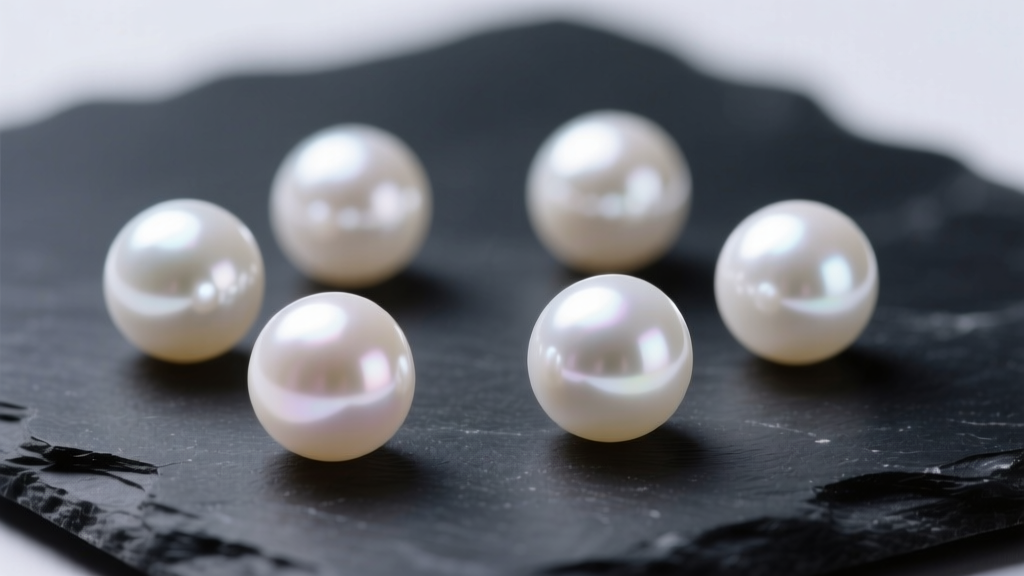
When consumers ask, "Whats a pearl necklace?" they are often looking for a simple definition: a strand of spherical gems worn around the neck. However, from a gemological and material science perspective, a pearl necklace is an intricate assembly of organic-inorganic composite structures. Unlike mined minerals that are cut and polished, pearls are biogenic gems created by living mollusks. Understanding the material properties of these gems—specifically the nacre, its crystalline structure, and its thickness—is essential for evaluating quality, durability, and long-term value in 2026's fine jewelry market.
The Core Question: What's a Pearl Necklace Made Of?
At the heart of every pearl necklace is nacre, also known as mother-of-pearl. Nacre is not a single solid substance but a complex biomineral composite. It consists of two primary components:
- Aragonite Platelets: Microscopic, hexagonal crystals of calcium carbonate (CaCO3) that make up about 90-95% of the nacre's volume. These platelets are responsible for the gem's light-refracting properties and luster.
- Conchiolin: An organic, flexible protein matrix that acts as the "mortar" between the aragonite "bricks." It accounts for 5-10% of the structure and provides the pearl with its surprising resilience despite its low surface hardness.
The way these layers are deposited dictates the optical and physical properties of the pearls used in your necklace. According to the Gemological Institute of America (GIA), the thickness, translucency, and alignment of these nacre layers are the primary drivers of a pearl's visual appeal and structural integrity.
The Optical Phenomenon of Luster
Luster is the most critical value factor for any pearl necklace. It is not merely surface reflection; it is the result of light penetrating the translucent nacre layers, reflecting off the inner boundaries, and returning to the eye. Tighter, more uniform aragonite platelets (common in cooler water environments) produce a sharper, mirror-like luster. Conversely, larger, looser platelets create a softer, satiny glow.
Material Comparison: Saltwater vs. Freshwater Nacre
Not all pearl necklaces are created equal. The material properties vary drastically depending on the mollusk species, the water temperature, and the nucleation technique used by pearl farmers. Here is a breakdown of the four primary pearl types you will encounter in the market.
Bead-Nucleated vs. Tissue-Nucleated
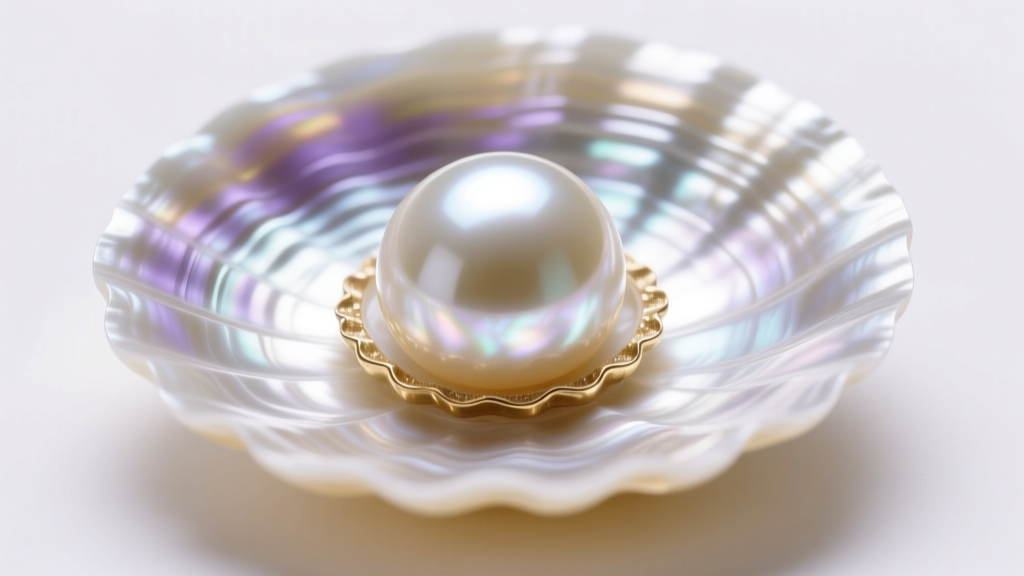
The fundamental difference in pearl material structure lies in how the pearl is initiated. Saltwater pearls (Akoya, Tahitian, South Sea) are bead-nucleated. A perfectly round shell bead is implanted into the mollusk's gonad, and the oyster secretes nacre over this core. Freshwater pearls, predominantly grown in China, are typically tissue-nucleated. A small piece of mantle tissue is implanted without a hard bead, resulting in a pearl that is solid nacre all the way through.
| Pearl Type | Nucleation | Average Nacre Thickness | Luster Profile | 2026 Price Range (18" Strand) |
|---|---|---|---|---|
| Akoya | Bead | 0.2mm - 0.5mm | Mirror-like, high contrast | $800 - $4,500 |
| Tahitian | Bead | 0.8mm - 2.0mm | Medium to high, metallic | $1,200 - $8,000 |
| South Sea | Bead | 2.0mm - 6.0mm | Soft, satiny, glowing | $3,000 - $25,000+ |
| Freshwater | Tissue | Solid Nacre (100%) | Soft to medium, chalky if low grade | $150 - $1,500 |
Decoding Pearl Grading: Luster, Surface, and Nacre Quality
Because there is no single, universally mandated grading system for pearls like the 4Cs for diamonds, reputable jewelers rely on the GIA Pearl Description System. When evaluating what makes a high-quality pearl necklace, gemologists assess seven distinct value factors:
- Size: Measured in millimeters. Larger pearls require longer cultivation, increasing the risk of blemishes.
- Shape: Perfectly round pearls are the rarest and most valuable in saltwater varieties.
- Color: Comprises bodycolor, overtone, and orient (iridescence).
- Luster: Graded from Excellent to Poor based on the sharpness of reflections.
- Surface Quality: The absence or presence of blemishes, spots, and abrasions.
- Nacre Quality: Evaluated by thickness and the visibility of the bead nucleus.
- Matching: How uniformly the pearls in a strand align in all the above factors.
Expert Insight: "A pearl with excellent luster but minor surface blemishes is inherently more valuable and durable than a perfectly clean pearl with poor, chalky luster. Luster indicates a dense, well-formed aragonite structure, which directly correlates to the gem's longevity." — GIA Pearl Quality Factors Guide
Durability and Mohs Hardness: Caring for Organic Gems
Understanding the material limitations of a pearl necklace is crucial for everyday wear. Pearls rank between 2.5 and 3.0 on the Mohs scale of mineral hardness. For context, a copper penny is about a 3.5, meaning pearls can be easily scratched by everyday metals, dust (which contains quartz particles at a 7.0), and even other jewelry.
Chemical Vulnerability
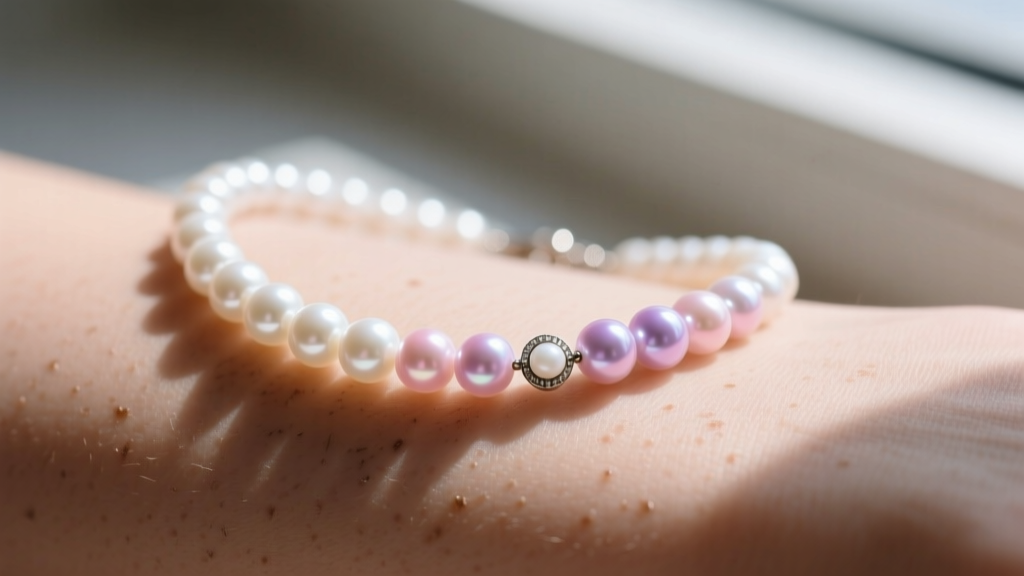
Beyond physical scratching, pearls are highly susceptible to chemical degradation. The calcium carbonate structure is alkaline and will readily dissolve or etch when exposed to acids. This includes common household and cosmetic substances:
- Perspiration: Human sweat is mildly acidic and can degrade the luster over time if not wiped away.
- Perfumes and Hairsprays: The alcohols and chemical solvents in cosmetics can dry out the conchiolin, leading to micro-cracking and a chalky appearance.
- Chlorine: Swimming pools and harsh tap water can severely damage the nacre's surface and weaken the silk thread used for stringing.
To preserve the material integrity of your necklace, always follow the "last on, first off" rule. Put your pearls on after applying cosmetics, and wipe them gently with a soft, damp microfiber cloth before storing them in a soft pouch—never in an airtight plastic bag, as pearls require ambient moisture to prevent the conchiolin from becoming brittle.
Real-World Pricing Tiers Based on Material Properties
In 2026, the pricing of pearl necklaces is heavily stratified by nacre quality and origin. A strand of commercial-grade, thin-nacred Akoya pearls (where the bead nucleus is visibly blinking through the surface) might retail for under $500. However, a strand of Hanadama-certified Akoya pearls—guaranteed to have a minimum nacre thickness of 0.4mm and exceptional luster—will command $2,000 or more.
Similarly, while freshwater pearls offer the ultimate durability due to their solid nacre composition, their historical lack of perfectly round shapes kept prices low. Today, advanced Edison pearl farming techniques have produced large, round, bead-nucleated freshwater pearls with metallic lusters, bridging the gap between freshwater durability and saltwater aesthetics, typically pricing between $800 and $2,500 for high-quality strands. Ultimately, knowing the material science behind the gems ensures you invest in a necklace that will retain its beauty for generations.


