White Gold Diamond Cross Pendant Necklace: Material Guide
Explore the metallurgy, diamond grading, and rhodium plating properties to consider when buying a white gold diamond cross pendant necklace.

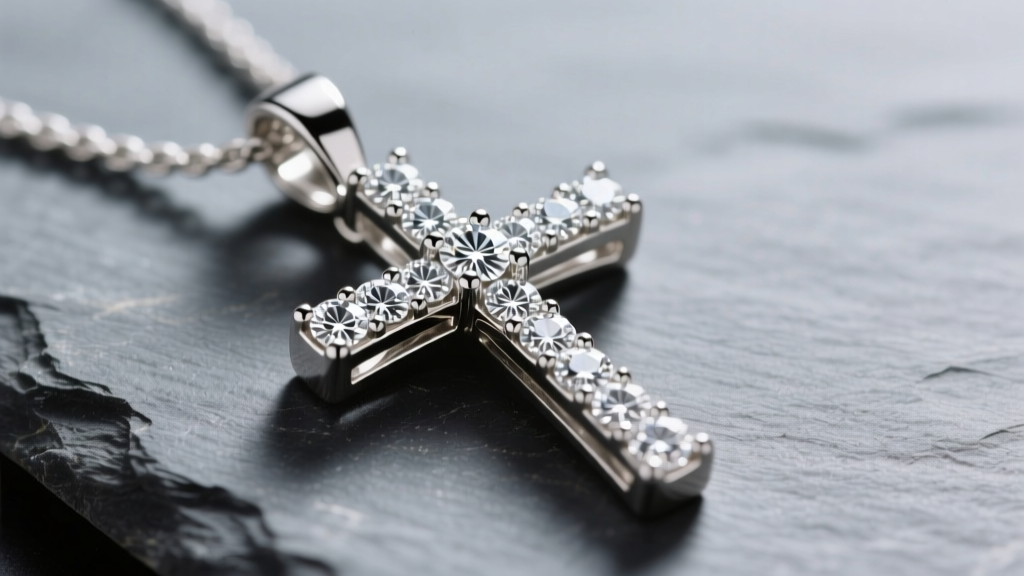
When investing in a white gold diamond cross pendant necklace, the aesthetic appeal is only half the equation. Beneath the brilliant sparkle and stark white finish lies a complex interplay of metallurgy, gemology, and structural engineering. A cross pendant is a high-friction, high-visibility piece of jewelry that endures daily wear, making material selection critical for longevity.
This comprehensive guide breaks down the exact material properties, alloy compositions, and diamond grading metrics you need to evaluate before purchasing. By understanding the science behind the jewelry, you can avoid common failure modes and ensure your pendant remains pristine for decades.
The Metallurgy of White Gold: 14K vs. 18K for Pendants
Pure gold (24K) is naturally yellow and far too soft for jewelry. To create white gold, pure gold is alloyed with white metals such as palladium, nickel, silver, or zinc. The karatage dictates the ratio of pure gold to alloy, fundamentally changing the metal's physical properties.
14K White Gold (58.5% Pure Gold)
14K white gold is the industry standard for diamond settings. Because it contains a higher percentage of alloy metals (41.5%), it possesses superior tensile strength and stiffness. For a diamond cross pendant, where tiny prongs must securely hold melee diamonds in place, this rigidity is essential. 14K prongs are highly resistant to bending and snagging, reducing the risk of stone loss.
18K White Gold (75% Pure Gold)
18K white gold offers a richer, heavier feel and is less likely to cause allergic reactions if alloyed with palladium instead of nickel. However, its higher gold content makes it noticeably softer. Over years of daily wear, 18K prongs are more susceptible to wear-down and deformation, requiring more frequent maintenance.

Rhodium Plating: The Hidden Variable in White Gold
A common misconception is that white gold is naturally stark white. In reality, unpolished white gold has a warm, grayish-yellow undertone. To achieve the mirror-like, icy white finish consumers expect, the metal is electroplated with rhodium—a rare, incredibly hard platinum group metal.
The thickness of this rhodium layer dictates the pendant's lifespan before it requires re-plating. According to the Jewelers of America, standard high-quality rhodium plating should measure between 0.75 and 1.0 microns.
- Flash Plating (0.1 - 0.3 microns): Often found in mass-produced, low-cost jewelry. This ultra-thin layer will wear off within months, exposing the yellowish alloy beneath.
- Standard Plating (0.75 - 1.0 microns): The benchmark for fine jewelry. With proper care, this thickness will last 1 to 3 years on a pendant before requiring a touch-up.
Failure Mode Insight: The highest friction point on any pendant is the bail (the loop connecting the pendant to the chain). The rhodium on the top interior of the bail will wear away first due to the constant micro-abrasion from the chain. When shopping, inspect the bail for even, thick plating.
Diamond Selection: Melee vs. Solitaire Cross Designs
The material properties of the diamonds themselves must be matched to the design of the cross. Most diamond cross pendants utilize "melee" diamonds—small stones typically ranging from 0.01 to 0.15 carats each. Grading melee requires a different value framework than grading a large solitaire.
| Property | Ideal Grade for Melee Cross | Why It Matters |
|---|---|---|
| Clarity | SI1 - SI2 | Inclusions are invisible to the naked eye at sub-0.15ct sizes. Paying for VS1 clarity is a waste of budget. |
| Color | G - H | Near-colorless. Diamonds in this range face up perfectly white against rhodium-plated white gold. |
| Cut | Very Good / Excellent | Crucial for light return. Poorly cut melee will look like dull glass, regardless of the metal setting. |
According to the Gemological Institute of America (GIA), color grade is particularly vital when setting stones in white gold. If you use J or K color diamonds, the faint yellow tint of the stones will be magnified by the stark white contrast of the rhodium plating. Sticking to the G-H range ensures a seamless, icy aesthetic without the premium cost of D-F colorless stones.
Chain Pairing: Matching Metallurgy and Gauge
A white gold diamond cross pendant necklace is only as strong as its weakest link—literally. The chain must be matched to the pendant's weight and the metallurgy of the setting to prevent galvanic corrosion and mechanical failure.
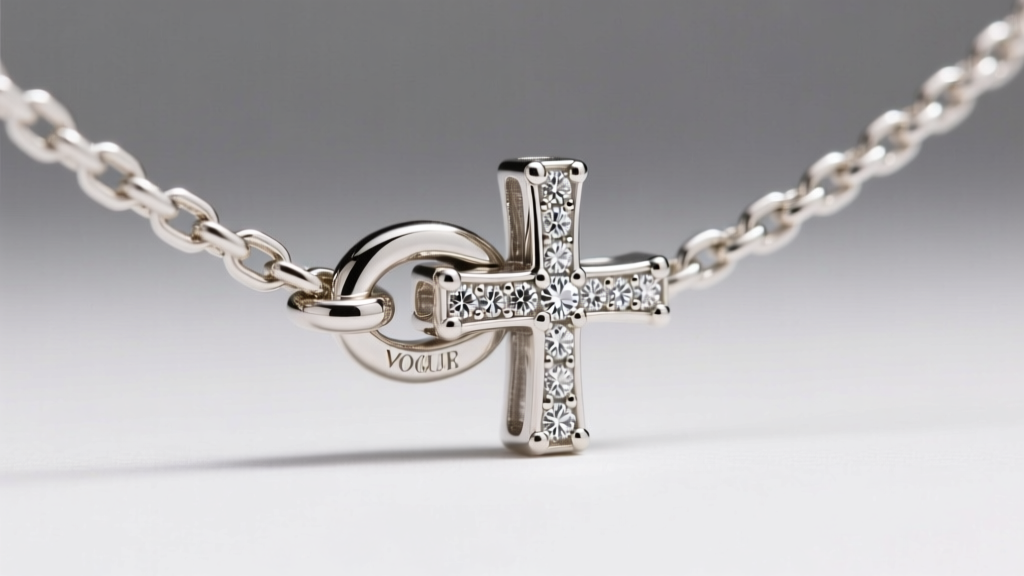
Chain Styles and Gauge Thickness
For a standard diamond cross pendant weighing between 2 and 5 grams, a chain gauge of 0.9mm to 1.2mm is optimal.
- Box Chains: Constructed from square, interlocking links, box chains offer the highest tensile strength and are highly resistant to kinking. They are the premier choice for heavier, pave-set diamond crosses.
- Cable Chains: Classic round or oval links. While elegant, they are more prone to stretching and kinking if subjected to sudden tension.
Clasp Mechanics
Never pair a valuable diamond pendant with a spring-ring clasp. Spring rings rely on a tiny internal spring that frequently fails or gets stuck open. Always opt for a lobster clasp, which features a robust, solid-metal trigger mechanism that securely locks the chain in place.
Long-Term Wear & Maintenance Framework
To maximize the lifespan of your white gold diamond cross pendant necklace, implement a proactive maintenance schedule based on the material properties discussed above.
The 12-Month Prong Check: Because white gold prongs (especially in 18K) can wear down from friction against clothing, have a jeweler inspect the prongs under 10x magnification annually. They can "tip" or re-tighten the prongs before a diamond is lost.
Furthermore, avoid ultrasonic cleaners if your pendant features fracture-filled diamonds or if the prongs show signs of wear. The high-frequency vibrations can shake loose melee diamonds that are no longer securely seated. Instead, clean your pendant weekly using a soft-bristled brush, warm water, and a few drops of mild dish soap to maintain the diamond's light performance and the rhodium's mirror finish.
By prioritizing 14K white gold for structural integrity, demanding 0.75-micron rhodium plating, and selecting G-H color melee diamonds, you ensure your cross pendant remains a flawless, enduring symbol of faith and style.


