A Beginner's Guide to Standard Necklace Lengths and Necklines
Discover the standard necklace lengths and learn how to choose the perfect choker, princess, or matinee chain for your neckline and pendant style.


Why Standard Necklace Lengths Matter More Than You Think
Choosing a necklace online can feel like a gamble. You select a beautiful pendant, pair it with a chain, and wait for it to arrive—only to find it sits awkwardly high on your collarbone or drowns in the fabric of your favorite sweater. The culprit is almost always a misunderstanding of standard necklace lengths and how they interact with individual body proportions and clothing necklines.
In the jewelry industry, chain lengths are not arbitrary. They are meticulously categorized to frame the face, complement specific garments, and support varying pendant weights. According to the Gemological Institute of America (GIA), understanding the interplay between chain length, metal gauge, and neckline is the foundational step in curating a versatile, everyday jewelry collection. This guide breaks down the exact measurements, structural considerations, and styling frameworks you need to make confident, return-free purchases.
The Anatomy of Standard Necklace Lengths
While custom sizing is always an option, the vast majority of fine and fashion jewelry is manufactured around six industry-standard length categories. These measurements assume an average neck circumference of 14 inches and a height of roughly 5'4".
| Length (Inches) | Category Name | Drop Location | Best Pendant Style |
|---|---|---|---|
| 14" - 16" | Collar | Tightly wraps the base of the neck | None, or very small flush charms |
| 16" - 18" | Choker | Rests just below the Adam's apple | Lightweight solitaires (under 5g) |
| 18" - 20" | Princess | Sits on the collarbone (industry default) | Medium drops, lockets, gemstones |
| 20" - 24" | Matinee | Falls at the top of the bust | Large statement pendants, pearls |
| 28" - 36" | Opera | Drops below the bust line | Lariats, long beads, knotted pearls |
| 36"+ | Rope / Lariat | Falls to the navel or lower | Layered wraps, tassels, Y-drops |
The Princess length (18 inches) is the most ubiquitous standard necklace length on the market. It is designed to rest gracefully on the collarbone, providing a universally flattering frame for the face without interfering with most standard shirt collars.
Matching Length to Neckline: A Visual Framework
A necklace should never compete with the seam of your clothing; it should either trace it or intentionally contrast it. Here is how to map standard necklace lengths to your most worn necklines:
- Crew Neck: The high, rounded collar of a crew neck shirt creates a visual barrier. Avoid 16-inch or 18-inch chains, as they will tangle with the fabric seam. Opt for a 20-inch to 24-inch Matinee chain that rests below the collar, or a tight 14-inch Collar that sits entirely above it.
- V-Neck: The goal is to echo the garment's geometry. An 18-inch Princess chain paired with a Y-drop or a V-shaped bail pendant perfectly mirrors the plunging neckline, elongating the torso.
- Scoop Neck: This wide, curved neckline exposes the collarbone and upper chest. A 20-inch to 22-inch Matinee necklace beautifully traces the curve of the fabric, filling the negative space without overcrowding.
- Strapless & Off-the-Shoulder: These styles leave the entire neck and shoulder area bare. A multi-strand 14-inch Collar or a bold 16-inch Choker provides necessary visual weight and anchors the outfit.
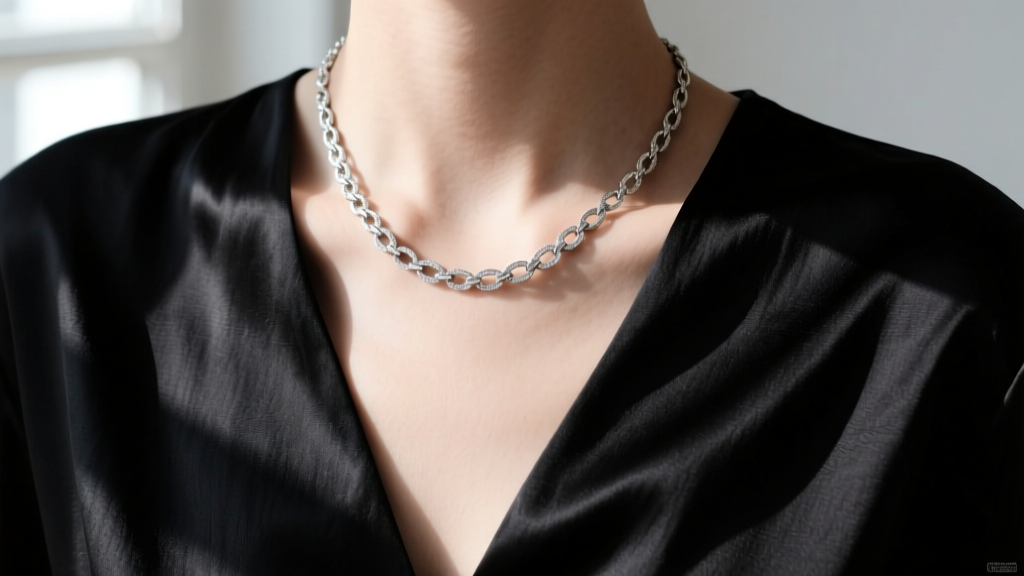
Pendant Weight and Chain Gauge: The Hidden Variables
Beginners often focus solely on length, ignoring the structural relationship between the chain's gauge (thickness) and the pendant's weight. A delicate 0.8mm cable chain might look beautiful on a mannequin, but it will quickly warp, kink, or snap under the kinetic stress of a heavy 15-gram gemstone pendant.
The Bail-to-Chain Ratio
The bail is the loop that connects the pendant to the chain. For a pendant to drape correctly—facing forward rather than flipping backward—the chain must slide freely through the bail. According to James Allen Jewelry Education guidelines, the chain's width should be no more than one-third the width of the bail's inner diameter. If a bail has a 4mm opening, the chain should be 1.5mm or thinner to prevent friction and metal wear.
Chain Styles and Tensile Strength
Not all standard necklace lengths are created equal in terms of durability. If you are buying a 24-inch Matinee chain for a heavy locket, the chain style matters immensely:
- Box Chains: High tensile strength. The interlocking square links distribute weight evenly, making them ideal for heavy pendants in the 18" to 24" range.
- Wheat Chains: Excellent flexibility and strength. The woven, braided structure resists pulling and tangling, perfect for everyday wear.
- Snake Chains: Sleek and modern, but notoriously fragile. The tightly joined rings create a smooth tube, but they are prone to kinking if bent sharply or burdened with heavy pendants. Best reserved for lightweight, 16" to 18" chokers.
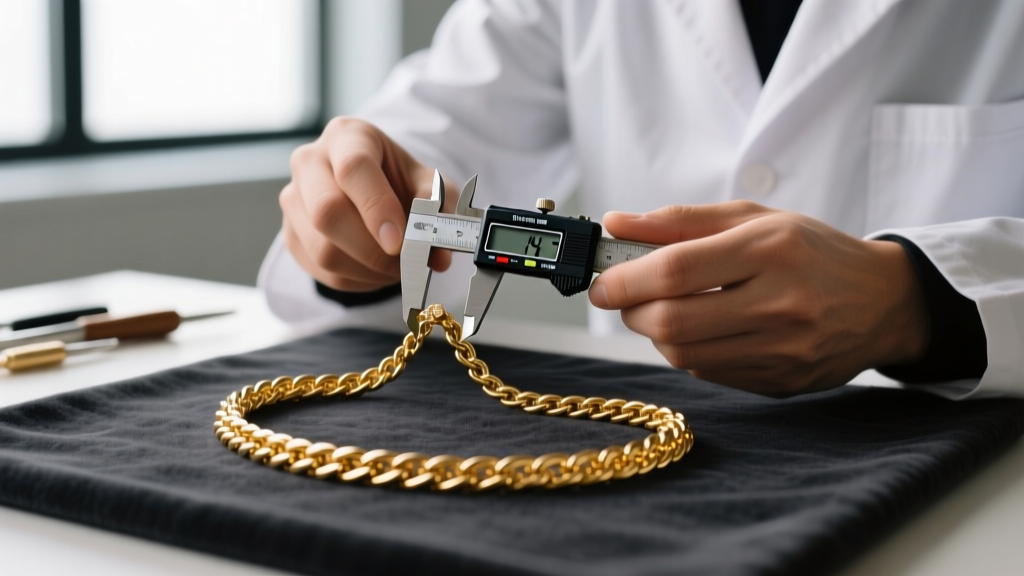
Body Proportions and Custom Sizing
The "standard" lengths listed above are based on a 14-inch neck circumference and a petite-to-average torso. If you fall outside these baseline metrics, an 18-inch Princess chain might not sit on your collarbone at all.
The Height Rule of Thumb: For every 3 to 4 inches of height above 5'4", add roughly 1 inch to your target necklace length. A woman who is 5'9" will find that a standard 18-inch chain sits closer to the base of her neck, mimicking a 16-inch choker. To achieve the true Princess drop, she should size up to 20 inches.
Similarly, neck circumference plays a vital role. If you have a larger neck circumference or prefer a looser fit, always add 1 to 2 inches to the standard categories. A 16-inch choker will feel restrictive on a 15-inch neck; an 18-inch chain will provide the intended breathing room.
Pro Tips for Measuring at Home
Never guess your ideal length based on a photo. Use these two foolproof methods to determine your exact measurement before ordering:
- The String Method: Cut a piece of non-stretchable string (avoid yarn, which stretches). Wrap it around your neck at the exact drop point you desire. Mark the meeting point with a pen, lay it flat against a ruler, and record the measurement in inches.
- The Existing Chain Method: Take a necklace you already own that fits perfectly. Lay it completely flat on a table, unclasped, in a straight line. Measure from the very end of the jump ring to the very end of the clasp. Do not include the pendant in your measurement.
By understanding the nuances of standard necklace lengths, chain gauges, and neckline geometry, you transform jewelry shopping from a game of chance into a precise, confident science. Whether you are layering delicate 16-inch gold chokers or anchoring a winter sweater with a 24-inch matinee pendant, the right proportions will ensure your pieces are worn, not just stored.


