Wire Choker Necklace Value Guide: 2026 Pricing & Quality
Discover the true cost of a wire choker necklace in 2026. Compare metal grades, gauge thicknesses, and hardware to find the best value.

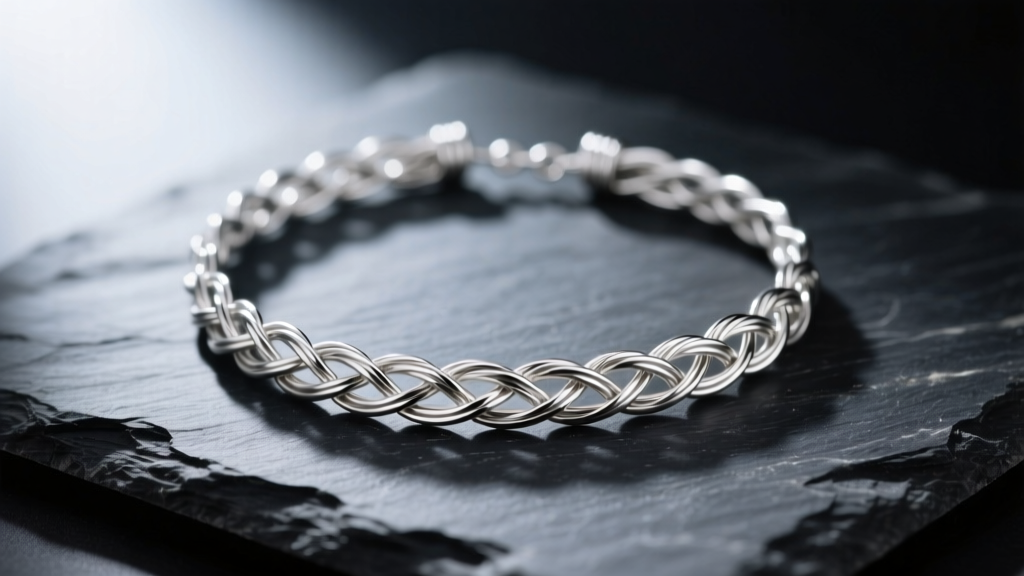
The minimalist jewelry market has seen a massive shift in 2026, with the rigid wire choker necklace cementing its status as a permanent wardrobe staple. Unlike flexible chains that drape and conform, a wire choker relies on structural tension and precise metallurgy to sit perfectly on the collarbone. However, this structural demand creates a massive discrepancy in quality and pricing across the market. A piece that looks identical in a product photo might be a $15 coated brass hazard or a $400 masterfully tempered solid gold arc.
As a buyer, assessing the true value of a wire choker necklace requires looking past the aesthetic and evaluating the metallurgical grade, the American Wire Gauge (AWG) thickness, and the structural integrity of the hardware. This comprehensive value assessment will break down exactly what you should be paying in 2026, and more importantly, what you are actually getting for your money.
Material Grades & True Cost Breakdown
The base metal dictates not only the price but the longevity of a rigid choker. Because wire chokers are constantly subjected to bending forces when being put on and taken off, the metal must possess the right balance of malleability and tensile strength. According to the Gemological Institute of America (GIA), understanding alloy compositions is critical to avoiding premature metal fatigue and skin reactions.
| Material Grade | 2026 Fair Price Range | Durability & Failure Modes | Best For |
|---|---|---|---|
| 316L Surgical Stainless Steel | $18 - $35 | Highly durable, resists tarnish. Failure mode: Clasp loop fatigue over time. | Daily wear, sensitive skin, strict budgets. |
| 925 Sterling Silver | $45 - $95 | Beautiful luster but prone to work-hardening. Failure mode: Snapping at the clasp if bent repeatedly. | Occasional wear, classic minimalist styling. |
| 14k Gold-Filled (1/20) | $65 - $130 | Thick gold layer mechanically bonded to brass. Failure mode: End-caps exposing brass core to moisture. | Gold lovers wanting longevity without solid gold pricing. |
| Solid 14k Gold | $280 - $650+ | Exceptional longevity, can be annealed and reshaped. Failure mode: Scratching and deformation if gauge is too thin. | Lifetime investment pieces, heirloom quality. |
When shopping for gold-toned wire chokers, always verify the FTC standards. The Federal Trade Commission Jewelry Guides strictly mandate that "gold-filled" items must contain at least 1/20th (5%) of 14k gold by weight. Anything less is merely gold-plated, which will rapidly wear off on a rigid wire piece due to the friction of putting it on and taking it off.
Gauge Thickness and Structural Integrity
The most overlooked metric in jewelry valuation is the wire gauge. The American Wire Gauge (AWG) system is inverse: a lower number means a thicker, heavier, and more expensive wire. For a wire choker necklace, the gauge determines whether the piece will elegantly hold its shape or kink, warp, and eventually snap.
- 14-Gauge (1.63mm): The premium standard for high-end solid gold chokers. It provides substantial weight, resists kinking, and feels luxurious on the neck. Expect to pay a premium for the raw metal weight.
- 16-Gauge (1.29mm): The absolute sweet spot for value and durability. It is thick enough to withstand daily bending without work-hardening too quickly, but light enough to remain comfortable. Most high-quality sterling silver and gold-filled chokers should be 16-gauge.
- 18-Gauge (1.02mm): Acceptable for delicate, secondary layering pieces. However, at this thickness, sterling silver will work-harden and become brittle within a year of daily use.
- 20-Gauge (0.81mm) and below: Avoid for rigid chokers. Wire this thin acts like a paperclip; bend it back and forth a few dozen times, and the molecular structure fractures. It is a hallmark of cheap, mass-produced fast fashion.
The Clasp & Hardware Tax
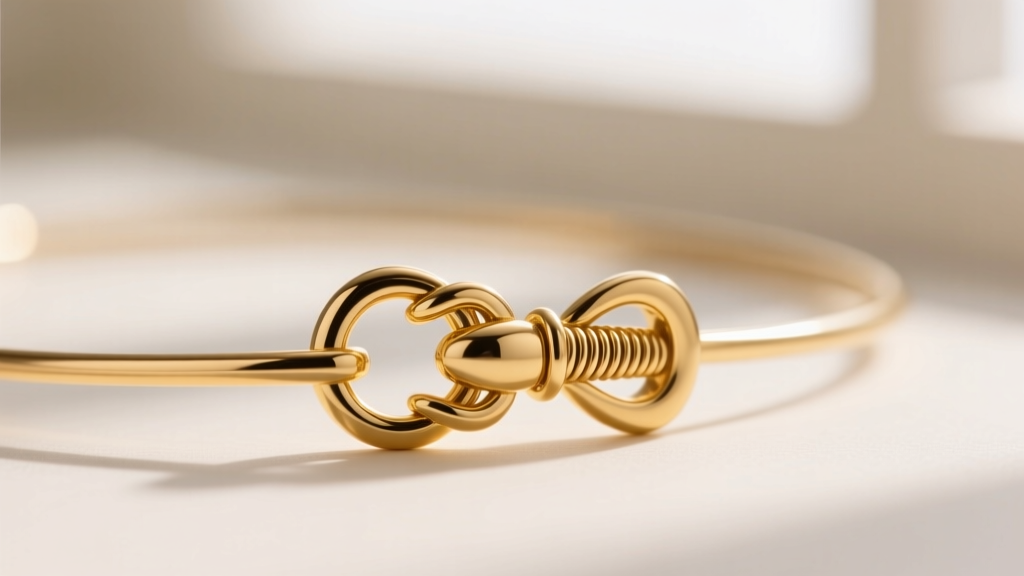
A wire choker necklace is only as strong as its weakest connection point. The rigid nature of the wire creates a lever-action effect on the clasp every time you fasten or unfasten it. Budget brands cut costs by using flimsy hardware that inevitably fails.
Soldered vs. Open Jump Rings
The jump ring is the tiny circular loop that connects the wire to the clasp. In premium jewelry, this ring is soldered shut, meaning the gap is fused with precious metal. In cheap jewelry, it is merely an open ring bent into a circle. The lever-action of a rigid wire choker will easily pull an open jump ring apart, resulting in a lost necklace. Always inspect product macro-photos or ask the jeweler if the jump rings are soldered.
Clasp Mechanisms
Standard lobster clasps are reliable, provided the internal spring is high-quality. However, for thicker 14-gauge wire chokers, a custom-machined barrel clasp or a heavy-duty magnetic neodymium clasp integrated directly into the wire ends offers superior longevity and a seamless aesthetic. If a brand is charging over $100 for a gold-filled choker but using a lightweight, hollow lobster clasp, they are inflating their margins at the expense of your user experience.
Red Flags: Spotting Overpriced & Underbuilt Chokers
The 2026 market is flooded with deceptive marketing terms designed to obscure poor material quality. Protect your budget by immediately walking away from wire chokers featuring these red flags:
- "Tibetan Silver" or "Alpaca Silver": These are not silver at all. They are typically nickel, zinc, and copper alloys that can cause severe contact dermatitis and turn your skin green due to galvanic corrosion.
- Gold Vermeil on Rigid Wire: Vermeil is a thick gold plating over sterling silver. While excellent for chains, the rigid friction of bending a wire choker on and off will wear the plating down at the stress points (near the clasp) much faster than on a flexible chain.
- Unmarked "Gold Plated" Brass: Brass is a cheap, highly reactive core metal. Once the microscopic layer of gold plating wears through, the brass will rapidly oxidize and stain your collarbone.
- Memory Wire Mislabeling: Some brands sell cheap, hardened stainless steel "memory wire" (essentially craft wire) and market it as high-end jewelry. While durable, it lacks the precious metal value and often has sharp, unfiled ends that scratch the skin.
2026 Buying Framework: Allocating Your Budget
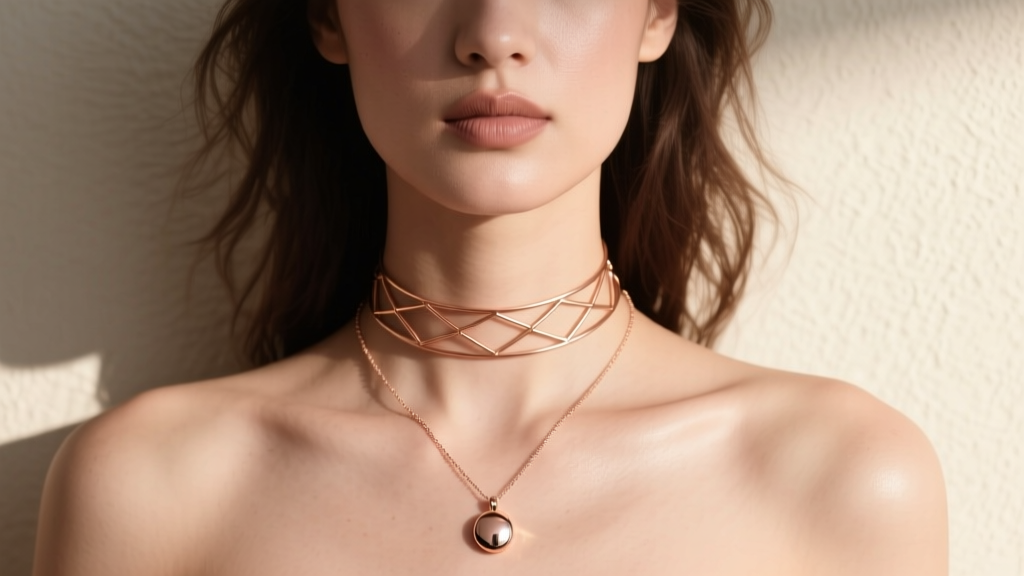
To maximize the value of your purchase, align your budget with your intended use case. Here is a practical decision framework for buying a wire choker necklace this year.
The $20 - $40 Tier (Everyday Beaters)
Target Material: 316L Surgical Stainless Steel or PVD-coated titanium.
What to expect: Excellent waterproof durability, zero tarnishing, and high tensile strength. You are paying for the machining and the brand, not the raw material value. Ideal for gym-goers, swimmers, or those who never want to take their jewelry off.
The $50 - $130 Tier (The Value Sweet Spot)
Target Material: 14/20 Gold-Filled or heavy 925 Sterling Silver (16-gauge).
What to expect: This is where you find the best intersection of precious metal aesthetics and reasonable pricing. Ensure the piece features soldered jump rings and a protective clear-coat on the ends of gold-filled wires to prevent brass exposure. Treat silver pieces with care to avoid work-hardening.
The $250+ Tier (Lifetime Investments)
Target Material: Solid 14k or 18k Gold (14 or 16-gauge).
What to expect: You are paying for the intrinsic melt value of the gold plus the artisan's labor in tempering and shaping the wire. A solid gold wire choker can be bent, reshaped, and polished indefinitely by a jeweler. It is an heirloom piece that retains residual value.
Final Verdict on Wire Choker Value
The true value of a wire choker necklace in 2026 is not determined by the brand name stamped on the tag, but by the transparency of its metallurgy and construction. By demanding 16-gauge thicknesses, soldered hardware, and FTC-compliant gold-filled or solid precious metals, you can confidently navigate the market. Stop paying premium prices for plated brass and thin-gauge silver, and invest in structural integrity that will elegantly frame your neckline for years to come.


