The Ultimate Guide to the Wire Wrap Shark Tooth Necklace
Discover how to choose, style, and care for a wire wrap shark tooth necklace. Expert tips on wire gauges, tooth types, and layering techniques.

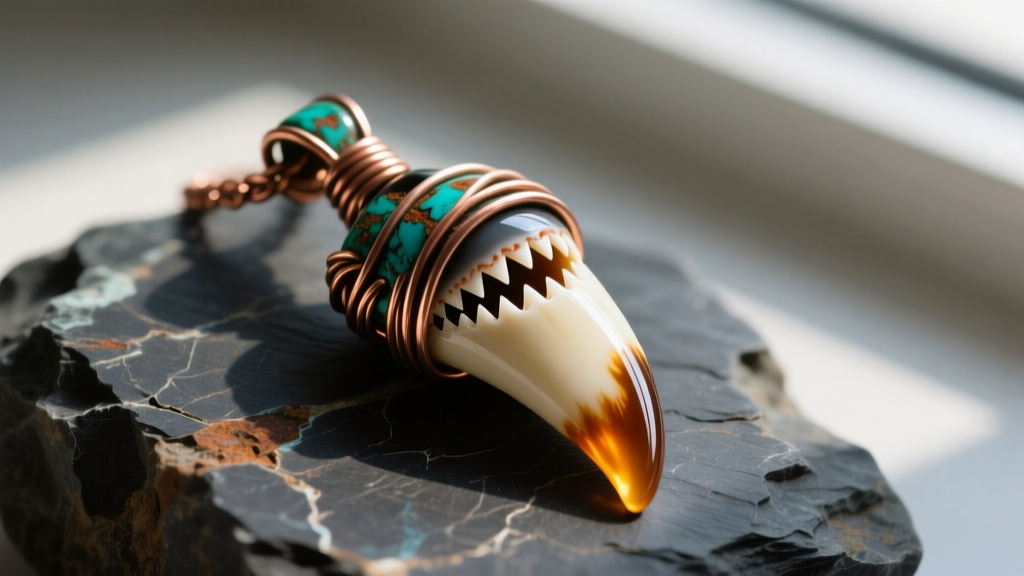
The Enduring Appeal of the Wire Wrap Shark Tooth Necklace
The wire wrap shark tooth necklace is far more than a fleeting surf-culture trend; it is a masterclass in organic jewelry design. By marrying the raw, prehistoric geometry of a shark tooth with the precise, metallic tension of hand-wrapped wire, artisans create pendants that are both deeply personal and visually striking. Whether you are drawn to the massive, fossilized weight of a Megalodon or the sleek, enameled perfection of a modern Mako, understanding the anatomy of these pieces is crucial for making an informed purchase or embarking on your own wire-wrapping journey.
In this comprehensive guide, we break down the exact metallurgy, structural requirements, and styling techniques that define a high-quality wire wrap shark tooth necklace in 2026. We will move past generic advice and dive into the specific wire gauges, tempers, and craftsmanship hallmarks that separate a durable heirloom from a fragile tourist-shop trinket.
Decoding the Anatomy: Fossil vs. Modern Teeth
The foundation of any shark tooth pendant dictates the structural demands of the wire wrap. Teeth generally fall into two categories, each requiring a vastly different approach to jewelry making.
Fossilized Teeth (Megalodon and Otodus)
Fossilized teeth, primarily sourced from the Otodus megalodon species, are millions of years old. During the fossilization process, the organic dentin and enamel are replaced by minerals like quartz, iron phosphate, and calcite. This makes them incredibly dense and heavy. A standard 3-inch Megalodon tooth can weigh anywhere from 40 to over 100 grams. Because of this sheer mass, the wire wrap must act as a heavy-duty structural exoskeleton. The root (the bulbous base of the tooth) is often fragile and porous, requiring a wrap that cradles the weight without relying on the fragile edges for support.
Modern Teeth (Mako, Great White, and Tiger)
Modern teeth are typically shed naturally and collected by divers. They retain their original vitreous dentin and, in high-grade specimens, their pristine, glass-like enamel. These teeth are significantly lighter, usually weighing between 10 and 30 grams. The primary challenge with modern teeth is not weight, but preservation. The enamel can chip if subjected to hard metal impacts, meaning the wire wrap must include protective buffering or precise tension control to avoid cracking the tooth during the wrapping process.
The Metallurgy of the Wrap: Gauges, Tempers, and Materials
A common beginner mistake is using a single gauge of wire for the entire pendant. Professional wire artists utilize a combination of thick structural wire and thin weaving wire. According to jewelry supply standards outlined by Rio Grande, wire temper (hardness) is just as critical as gauge (thickness).
| Wire Gauge | Temper | Primary Use in Shark Tooth Wraps |
|---|---|---|
| 16-Gauge / 18-Gauge | Half-Hard | Base frame, structural bail, and heavy load-bearing anchors for Megalodon teeth. |
| 20-Gauge | Half-Hard / Dead Soft | Standard frame wire for modern teeth; creating rigid prongs and structural loops. |
| 24-Gauge / 26-Gauge | Dead Soft | Weaving, coiling, and binding the structural frame to the tooth root. |
| 28-Gauge / 30-Gauge | Dead Soft | Micro-weaving, intricate ornamental details, and securing small accent gemstones. |
Material Selection: While copper and brass are excellent for beginners due to their low cost and high malleability, they oxidize quickly against the skin. For a premium wire wrap shark tooth necklace, Argentium sterling silver is the gold standard. Argentium contains germanium, which makes it highly resistant to tarnish and significantly more durable than traditional 925 sterling silver. Titanium wire is also emerging in 2026 for ultra-lightweight, hypoallergenic wraps, though its high spring-back makes it notoriously difficult for beginners to manipulate.
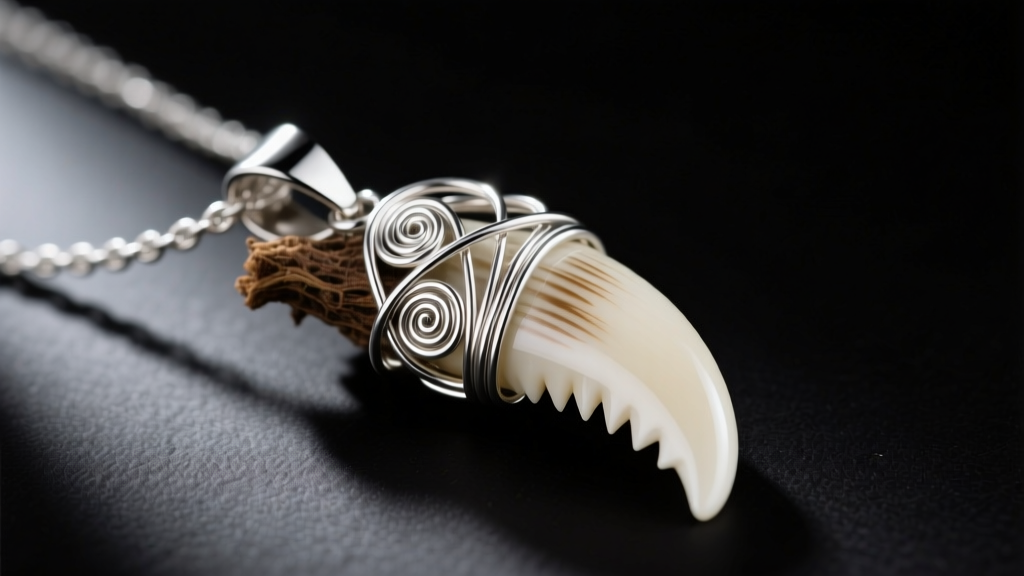
Evaluating Craftsmanship: How to Spot a Quality Wrap
When shopping for a wire wrap shark tooth necklace, you must scrutinize the structural integrity of the piece. The jewelry market is flooded with mass-produced pendants that use deceptive shortcuts. Here is your E-E-A-T framework for evaluating quality:
- The 'No-Glue' Rule: Authentic wire wrapping relies entirely on mechanical tension and friction. If you see cloudy residue near the root or the bail, the artisan has used cyanoacrylate (Super Glue) or E6000 to secure the wire. Skin oils, sweat, and temperature fluctuations will degrade these adhesives within months, resulting in a lost tooth. Always demand a 100% glue-free mechanical wrap.
- Root Cradling vs. Edge Pinching: A poor wrap simply pinches the thin, serrated edges of the tooth with wire prongs. This creates stress fractures. A master-level wrap features a 'basket' or 'cradle' that supports the heavy, bulbous root of the tooth, transferring the weight directly to the bail.
- Bail Construction: The bail (the loop the chain passes through) must be formed from half-hard or hard wire. If the bail is made from dead-soft weaving wire, the friction of a metal chain will eventually saw through the silver or copper, snapping the pendant off your neck.
- Flush Cuts: Run your finger over the back of the pendant. Every single wire end must be filed flush and burnished smooth. Snagged wire ends will ruin your clothing and scratch your skin.
Pro Tip: When commissioning a custom wrap from an artisan on platforms like Etsy or Instagram, explicitly ask: 'Do you use any adhesives in your structural wraps, and what gauge wire is used for the bail?' A true professional will proudly explain their mechanical locking techniques. For more advanced wrapping techniques, resources like Jewelry Making Daily offer excellent tutorials on friction-locked bails.
Styling and Chain Pairings for 2026
The visual weight of a shark tooth pendant requires careful chain selection. A delicate cable chain will look disproportionate and may snap under the weight of a fossilized piece. Here is how to style your wire wrap shark tooth necklace based on the tooth's profile:
For Heavy Fossilized Pendants (Megalodon)
Opt for a 5mm to 7mm Cuban Link or a thick Rope Chain in a 22-inch or 24-inch length. The heavy links complement the prehistoric, rugged aesthetic of the fossil. A 24-inch drop places the heavy pendant squarely on the sternum, preventing it from flipping upside down—a common issue with top-heavy wire wraps.
For Sleek Modern Pendants (Mako / Great White)
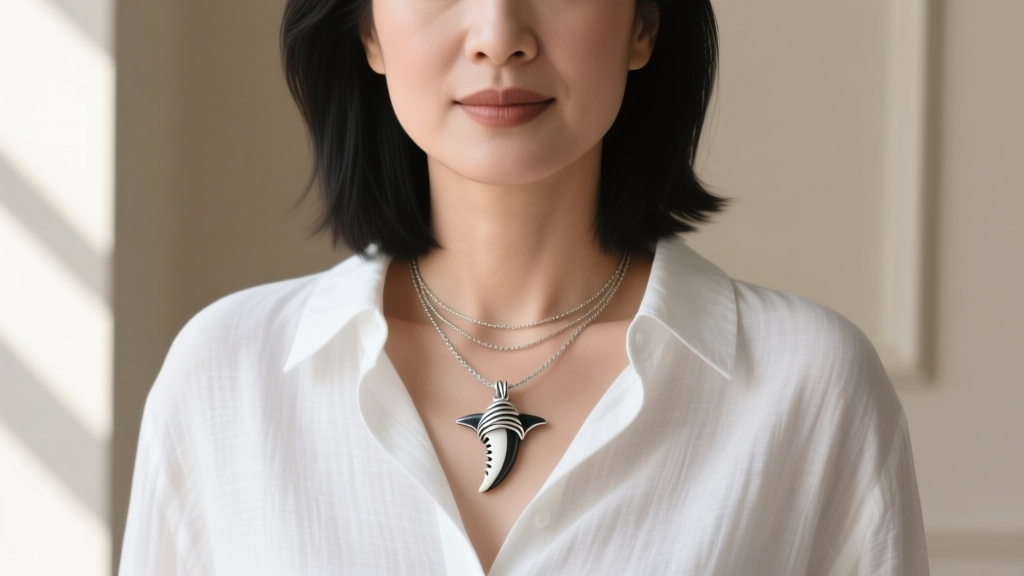
Modern teeth with bright white or grey enamel pair beautifully with a 3mm Box Chain or a Figaro Chain in an 18-inch or 20-inch length. The geometric, square links of a box chain echo the sharp, clean lines of the modern tooth. For a contemporary layered look, pair the 20-inch shark tooth pendant with a simple 16-inch sterling silver herringbone chain and a small, minimalist signet ring pendant.
Long-Term Care and Maintenance
Maintaining a wire wrap shark tooth necklace requires addressing both the organic/mineral tooth and the metallic wire.
Cleaning the Wire: If your wrap is made of copper or traditional sterling silver, it will inevitably tarnish. Use a mild jewelry polishing cloth infused with anti-tarnish compounds. Avoid liquid silver dips, as these harsh chemicals can seep into the porous root of a fossilized tooth, causing permanent discoloration or weakening the mineral structure.
Protecting the Tooth: Fossilized teeth are surprisingly brittle. While they can survive a drop onto a hard surface, they can chip if struck against a granite countertop or caught in a car door. Modern teeth with intact enamel should be kept away from prolonged exposure to chlorinated pool water or salt water, which can dull the glass-like finish over time. When not wearing your necklace, store it in a soft microfiber pouch to prevent the wire from scratching the tooth's enamel during transit.
By understanding the intricate balance of wire temper, gauge selection, and structural engineering, you can confidently select, wear, and preserve a wire wrap shark tooth necklace that serves as a true wearable artifact.


