The Wooden Cross Necklace: A Beginner's Style Guide
Learn how to choose, style, and maintain a wooden cross necklace. Discover wood types, cord sizes, and sealing techniques for daily wear.

Introduction to the Wooden Cross Necklace
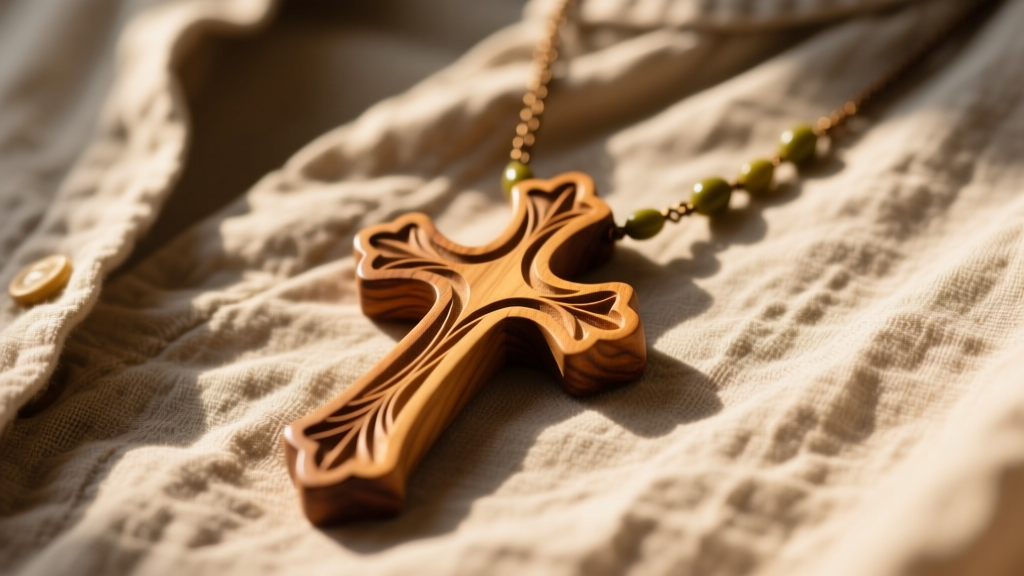
The wooden cross necklace has transcended its traditional roots to become a staple of modern, earthy, and minimalist jewelry styling. Unlike heavy metals or reflective gemstones, wood offers a tactile warmth, lightweight comfort, and an organic aesthetic that pairs effortlessly with casual and smart-casual wardrobes. For beginners entering the world of organic jewelry, understanding the nuances of wood density, grain structure, and proper sealing is critical. A poorly finished wooden pendant will crack, warp, or degrade from skin oils and humidity within months. Conversely, a properly selected and sealed piece can last a lifetime, developing a rich patina over the years. This guide breaks down the exact specifications, material grades, and styling frameworks you need to choose the perfect piece.
Understanding Wood Types and Durability
Not all woods are created equal when it comes to jewelry making. The durability of a wooden cross pendant is measured by its Janka hardness rating, which indicates its resistance to denting, scratching, and everyday wear. Softwoods like pine or cedar are entirely unsuitable for pendants due to their low density and high porosity. Instead, you want to look for tight-grained hardwoods.
| Wood Species | Janka Hardness (lbf) | Grain Profile | Best For | Avg. Price Range |
|---|---|---|---|---|
| Olive Wood | 2,700 | Tight, swirling, highly figured | Everyday wear, water resistance | $25 - $60 |
| Ebony | 3,220 | Very fine, uniform, dark | High-end, minimalist aesthetics | $80 - $150+ |
| Black Walnut | 1,010 | Open, straight, rich brown | Budget-friendly, rustic styles | $15 - $35 |
| Rosewood | 1,780 | Interlocked, dark streaks | Intricate carvings, durability | $40 - $90 |
Olive wood is widely considered the gold standard for religious and organic pendants. According to The Wood Database, olive wood's high natural oil content and exceptional Janka hardness make it naturally resistant to moisture absorption, which is vital for a necklace resting against the skin. Ebony offers a striking, near-black appearance that mimics dark metals, while walnut provides a classic, warm brown tone at a highly accessible price point.
The Importance of Wood Sealing and Finishes
Raw wood is a sponge. It will absorb sweat, sebum, and ambient humidity, leading to swelling, warping, and eventually cracking as it dries. The finish applied to your wooden cross necklace dictates its lifespan.
- Pure Tung Oil: The premier choice for skin-contact jewelry. Tung oil penetrates the wood fibers and polymerizes (hardens) upon exposure to air, creating a flexible, water-resistant barrier from the inside out. It requires 3-5 coats for a proper cure but remains hypoallergenic.
- Polyurethane/Lacquer: Creates a hard plastic shell on the surface. While highly waterproof, it can chip or peel over time when exposed to the friction of clothing and skin oils, leaving the wood underneath vulnerable.
- Beeswax/Mineral Oil Blends: Often used on cheap, mass-produced pendants. These never truly cure and will wash off within a few weeks of daily wear, requiring constant reapplication.
Cord vs. Chain: Pairing the Right Hardware
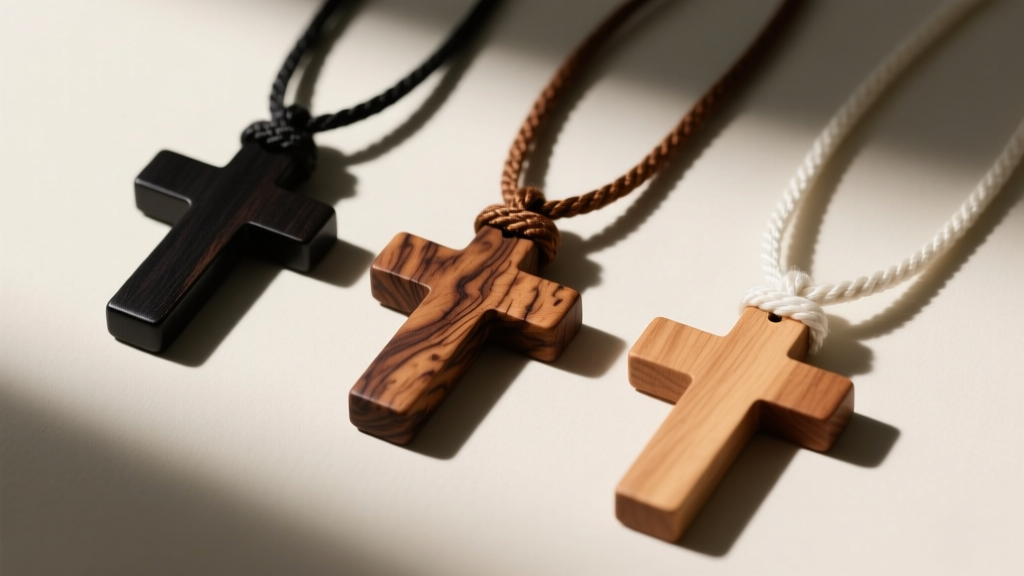
The suspension method drastically alters the visual weight and durability of your necklace. Because wood is lightweight, pairing it with a heavy, thick metal chain often creates an unbalanced look. Furthermore, the bail hole (the drilled hole at the top of the cross) on wooden pendants is typically between 2.0mm and 4.0mm, limiting your hardware options.
Waxed Cotton and Leather Cords
For a traditional or rugged look, cords are the optimal choice. A 2.0mm waxed cotton cord is the industry standard for wooden crosses. The wax coating prevents fraying and adds a subtle water-resistant barrier. Leather cords (typically 1.5mm to 2.0mm braided) offer a premium feel but can degrade if exposed to heavy perspiration. When purchasing a cord, ensure the clasp is a simple barrel screw or a macrame sliding knot, as heavy lobster clasps can pull awkwardly on the lightweight wood.
Metal Chains
If you prefer metal, opt for a 1.2mm to 1.5mm stainless steel box chain or rope chain. Stainless steel is crucial here; silver and gold are too soft and malleable, and their delicate links can easily snap under the friction of the wooden bail hole. A thin steel chain provides a modern, contrasting aesthetic without overpowering the pendant.
Sizing and Proportions for Different Necklines
Wooden crosses tend to have more visual volume than their metal counterparts due to the thickness required for structural integrity. A standard metal cross might be 1.5mm thick, while a wooden cross is usually 4.0mm to 6.0mm thick to prevent snapping at the crossarms.
- The Subtle Minimalist (0.75 x 0.5 inches): Best worn on a 16 to 18-inch chain or cord. This size sits perfectly above the collarbone and pairs flawlessly with crew neck t-shirts, button-down shirts (worn tucked or untucked), and smart-casual blazers.
- The Standard Classic (1.5 x 1.0 inches): The most versatile size. Hang it on a 20 to 22-inch cord so it rests on the sternum. This length works beautifully over V-neck sweaters, henleys, and open flannel shirts.
- The Statement Piece (2.5+ inches): Thick, heavily carved olive wood or ebony crosses. These require a 24-inch heavy braided leather cord and are meant to be worn over plain, solid-colored garments like heavyweight cotton tees or turtlenecks to let the wood grain stand out.
Care and Maintenance: Preventing Cracks and Fading
Organic jewelry requires a different maintenance protocol than metals. The primary enemy of a wooden cross necklace is rapid fluctuations in humidity and prolonged exposure to water. Wood expands when it absorbs moisture and contracts when it dries; if this happens too quickly, the cellular structure fractures.
Expert Rule of Thumb: Never wear your wooden cross necklace in the shower, swimming pool, or sauna. The combination of hot water, chlorine, and steam will strip the tung oil finish and cause the wood fibers to raise and splinter.
To maintain the luster and structural integrity of your pendant, follow this biannual maintenance routine recommended by jewelry care specialists at Jewelers Mutual:
- Clean: Wipe the pendant gently with a dry, lint-free microfiber cloth to remove accumulated skin oils and dust. Do not use jewelry polishing liquids or alcohol-based cleaners.
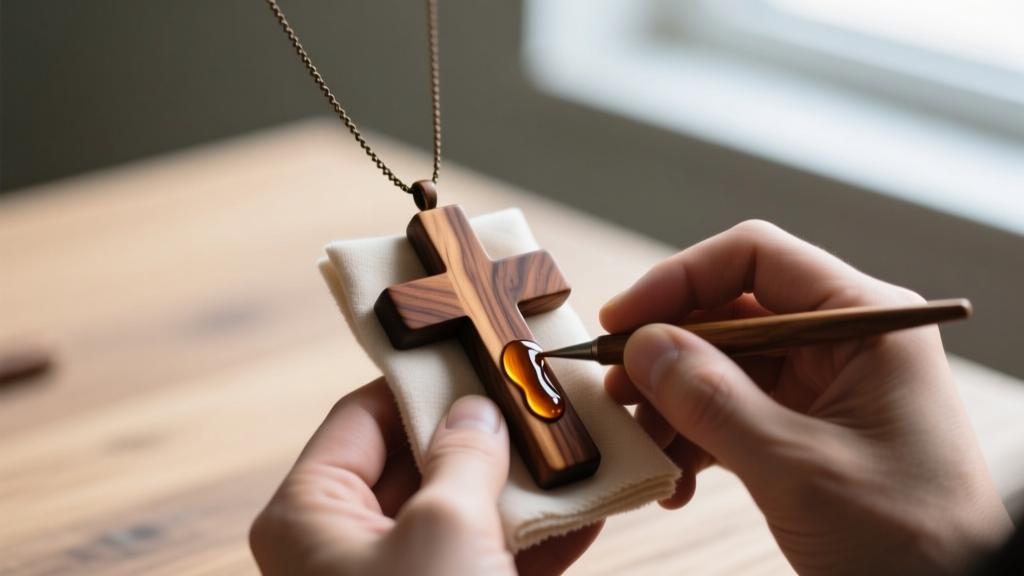
- Condition: Apply a single drop of pure tung oil or food-grade mineral oil to your fingertips and rub it thoroughly into the wood grain, ensuring you coat the edges and the inside of the bail hole.
- Cure: Let the pendant sit on a paper towel in a dry, room-temperature environment for 12 to 24 hours. The oil needs time to oxidize and harden within the wood pores.
- Buff: Use a clean cloth to buff away any tacky residue, leaving a smooth, matte-to-satin finish.
Final Thoughts on Choosing Your Piece
A wooden cross necklace is more than just an accessory; it is a tactile, grounding piece of jewelry that ages alongside its wearer. By prioritizing high-density hardwoods like olive or ebony, insisting on penetrating oil finishes rather than surface lacquers, and pairing the pendant with an appropriately scaled waxed cotton or thin steel cord, you ensure your piece remains a durable and stylish staple in your wardrobe. Treat the wood with respect, keep it dry, and it will reward you with a deep, rich patina that no metal or gemstone can replicate.


