Y Shaped Necklace Gold: Technical Guide to Chains & Clasps
Discover the technical details of a y shaped necklace gold. Learn about karat durability, chain link stress points, and Y-junction soldering.

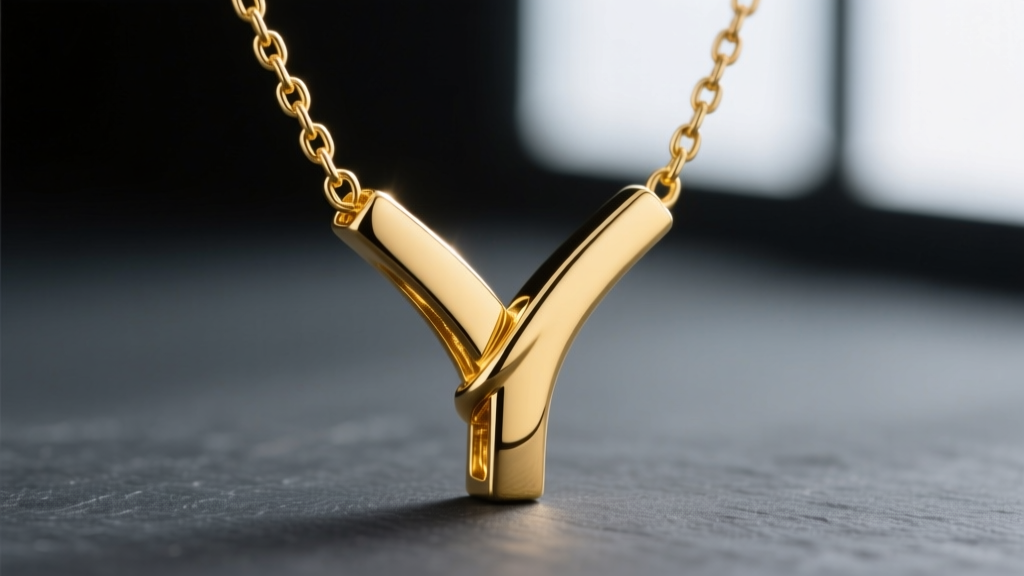
The Y-shaped necklace—frequently referred to as a lariat, drop chain, or Y-chain—is a masterclass in minimalist jewelry geometry. However, from a structural engineering perspective, the 'Y' intersection represents a critical vulnerability. When evaluating a y shaped necklace gold design, consumers often focus solely on karat weight and aesthetic drape, ignoring the kinetic physics at play. The vertical drop acts as a continuous pendulum, subjecting the intersection to tensile, shear, and torsional stress. This expert deep dive dissects the metallurgy, chain link architecture, and junction engineering required to manufacture a durable, high-performance gold Y-necklace.
Gold Alloy Metallurgy: Hardness vs. Purity
The most common failure mode in gold lariat necklaces is the deformation of the jump ring or the stretching of the links immediately adjacent to the Y-junction. This is directly tied to the Vickers Hardness (HV) of the chosen gold alloy. Pure 24k gold (99.9% purity) possesses an HV of roughly 25, making it entirely unsuitable for the kinetic stress of a drop chain. According to the Gemological Institute of America (GIA), alloying gold with metals like copper, silver, and zinc fundamentally alters its crystalline lattice, increasing tensile strength.
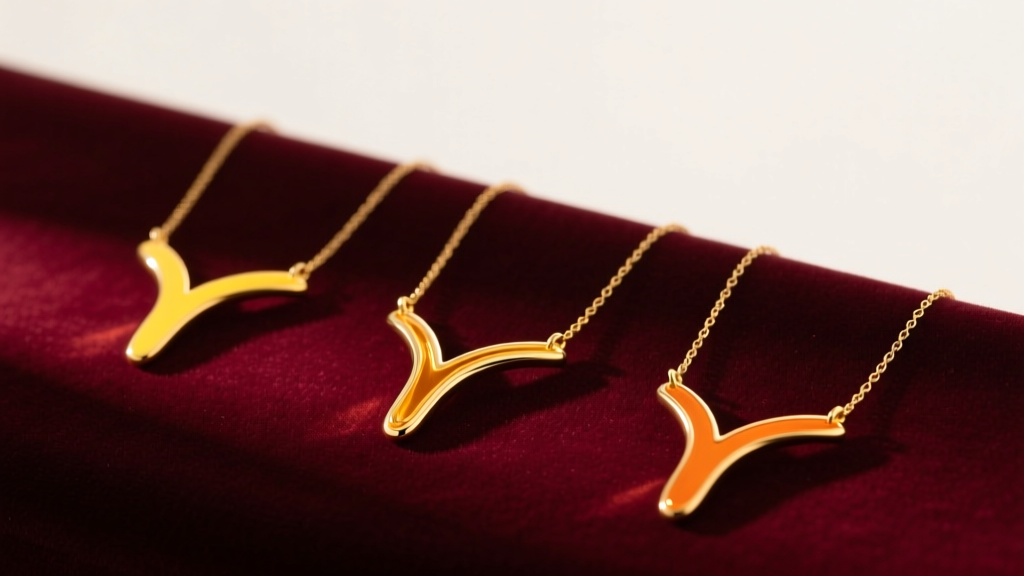
- 22k Gold (91.6% purity, ~45 HV): Too soft for Y-chains. The drop weight will cause the main chain links to elongate and eventually pull open at the junction.
- 18k Gold (75% purity, ~125 HV): The optimal balance of luxury, rich color, and structural integrity. Highly recommended for Y-necklaces, provided the junction is laser-welded.
- 14k Gold (58.3% purity, ~140-160 HV): The most durable option for daily wear. The higher copper/zinc content provides exceptional resistance to the torsional twisting that occurs when the Y-drop swings.
The Y-Junction: Soldering vs. Laser Welding
The exact point where the vertical drop meets the horizontal collarbone chain is the nexus of all mechanical stress. How this junction is fused dictates the lifespan of the necklace.
Torch Soldering and the Heat-Affected Zone (HAZ)
Traditionally, jewelers use a torch and gold solder to fuse the Y-ring. However, applying a flame to a delicate 1.0mm cable chain creates a Heat-Affected Zone (HAZ). The extreme heat anneals (softens) the surrounding links, stripping away the work-hardening achieved during the chain-drawing process. This leaves the adjacent links brittle and prone to micro-fractures.
Laser welding is the mandatory industry standard for high-end Y-chains. A Nd:YAG laser focuses a microscopic beam of light to fuse the metal locally in milliseconds, leaving the surrounding links completely unaffected by thermal transfer.
Chain Link Architecture: Structural Analysis
Not all chain links distribute kinetic energy equally. The geometry of the link dictates how it handles the pendulum effect of the vertical drop.
| Chain Type | Tensile Strength | Lateral Flexibility | Y-Junction Risk Factor | Best Application |
|---|---|---|---|---|
| Cable | Moderate | High | High (Oval links stretch at the Y-ring) | Lightweight drops (< 2 inches) |
| Box | Very High | Very Low | Severe (Kinks and snaps if twisted) | Fixed geometric pendants only |
| Rolo | High | Moderate | Low (Round links distribute stress evenly) | Ideal for all Y-drop lengths |
| Wheat | Exceptional | Low | Moderate (Too rigid for the drop section) | Main collarbone chain only |
For a technically sound y shaped necklace gold piece, a hybrid approach is often utilized by master jewelers: a flexible wheat or box chain for the horizontal section to prevent tangling, transitioning into a rolo chain for the vertical drop to allow fluid, stress-free pendulum motion.
Proportional Drop Lengths and Neckline Physics
The functional success of a Y-necklace relies on the ratio between the horizontal chain length and the vertical drop. If the drop is too long relative to the chain, it will catch on clothing and exert violent shear force on the Y-ring. The Jewelers of America notes that proper proportioning also ensures the necklace sits correctly against various necklines without flipping.
- 16-inch chain + 2-inch drop: Sits at the upper sternum. Ideal for high crew necks and boat necks. Minimal pendulum swing, lowest structural risk.
- 18-inch chain + 3-inch drop: The industry standard. The drop terminates at the mid-sternum, perfectly framing a V-neck or scoop neck. Requires a robust laser-welded Y-ring.
- 20-inch chain + 5-inch drop: Dramatic and high-risk. The extended drop acts as a heavy lever. This configuration demands a 14k gold alloy and a thickened Y-junction ring (minimum 1.2mm gauge) to prevent failure.
Clasp Mechanics and Counterweight Systems
A persistent issue with Y-necklaces is lateral migration—the horizontal chain slides through the Y-ring, causing the drop to sit off-center. This is a physics problem, not a design flaw. To counteract this, expert manufacturers employ a counterweight system. By terminating the vertical drop with a slightly heavier gold bead or a dense gemstone (like a 4mm lapis lazuli or solid gold teardrop), the drop acts as a plumb bob. Gravity anchors the Y-junction at the center of the sternum, preventing the chain from sliding laterally and reducing friction wear on the Y-ring.
Furthermore, the clasp must be proportionate. A standard 5mm spring ring is insufficient for the torque generated by a Y-chain. A 7mm or 9mm lobster clasp, paired with a heavy-duty, soldered-closed jump ring at the terminal end, is required to maintain structural continuity.
Maintenance: Inspecting for Micro-Fractures
Even with optimal metallurgy and laser welding, a y shaped necklace gold chain requires bi-annual structural audits. Using a 10x jeweler's loupe, inspect the inside curve of the Y-junction ring. Look for 'step fractures'—tiny, stair-like fissures that indicate metal fatigue. Additionally, check the two links on the horizontal chain immediately flanking the Y-ring. If these links appear elongated or oval-shaped rather than perfectly round, the alloy is undergoing plastic deformation, and the necklace requires immediate professional reinforcement before a catastrophic snap occurs.


