Yamamoto Dodgers Necklace: Technical Deep Dive & Authentication
An expert technical deep dive into the Yamamoto Dodgers necklace, covering metallurgy, chain specs, authentication markers, and archive market pricing.

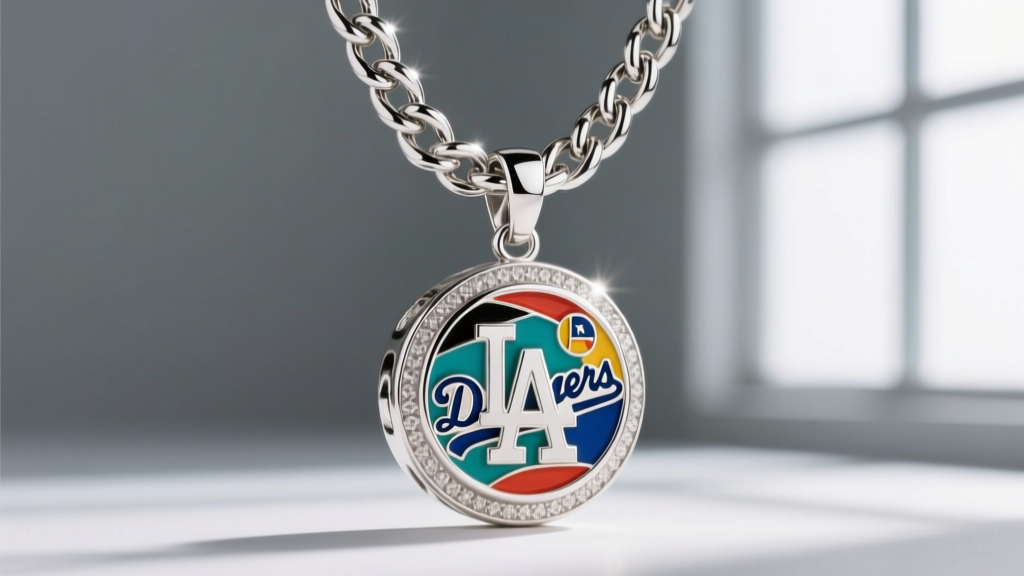
The intersection of avant-garde high fashion and American sports heritage has produced some of the most highly sought-after archive accessories of the 21st century. Among these, the Yamamoto Dodgers necklace stands out as a masterclass in subcultural jewelry design. Blending Yohji Yamamoto’s signature dark, deconstructivist ethos with the iconic interlocking 'LA' insignia of the Los Angeles Dodgers, this piece is not merely a pendant; it is a heavily engineered artifact of streetwear-luxury crossover. For collectors, archivists, and jewelry technicians, understanding the precise metallurgical composition, hardware specifications, and authentication markers of this necklace is critical. In this expert deep dive, we dissect the technical anatomy of the Yamamoto Dodgers necklace, providing a definitive framework for valuation, preservation, and authentication in the modern secondary market.
The Intersection of Avant-Garde Fashion and Sports Heritage
Yohji Yamamoto’s forays into sports-inspired apparel and accessories—most notably through his Y-3 collaboration with Adidas and various standalone archive drops—have always relied on a tension between utilitarian sportswear and high-concept tailoring. The Yamamoto Dodgers necklace translates this philosophy into hard goods. Unlike standard sports memorabilia, which often relies on cheap base metals and mass-produced casting, archive high-fashion sports pendants are manufactured using fine jewelry techniques. The result is a piece that carries the cultural weight of a sports franchise but is constructed with the tensile strength and material purity of luxury jewelry. This duality is exactly what drives the intense collector demand and the proliferation of high-tier replicas in the current market.
Technical Anatomy of the Pendant
Metallurgy and Base Alloys
Authentic archive iterations of the Yamamoto Dodgers pendant are predominantly cast in 925 sterling silver. According to the Gemological Institute of America (GIA), 925 sterling silver consists of 92.5% pure silver and 7.5% alloying metals, typically copper. The copper is essential; pure silver is too malleable to hold the crisp, sharp edges required for the interlocking Dodgers logo and the intricate beveling characteristic of Yamamoto’s hardware. However, copper introduces a vulnerability: oxidation and tarnishing.
To combat this, authentic pieces undergo a rhodium flash plating process. Rhodium, a platinum-group metal, is electroplated onto the sterling silver base at a thickness typically ranging from 0.75 to 1.5 microns. This not only creates an impermeable barrier against sulfur-induced tarnishing but also imparts a hyper-reflective, white-gold-like finish that aligns with Yamamoto’s monochromatic aesthetic. Replicas often skip this expensive electroplating step, opting instead for a cheap nickel undercoat and a thin chrome wash, which can be identified by a slightly bluish, artificial tint under direct UV or LED light.
Enamel Application and Dimensional Milling
The signature blue and white accents on the Dodgers logo are achieved through cold enamel application (an epoxy-based resin), rather than traditional vitreous enamel. While vitreous enamel requires firing at temperatures exceeding 1,400°F—which would compromise the structural integrity of the silver solder joints on the bail—cold enamel cures at room temperature. Authentic pieces feature enamel that is perfectly flush with the sterling silver bezel walls, polished to a glass-like finish with a Mohs hardness of approximately 2.5 to 3.0. The dimensional milling on the reverse side of the pendant often features a matte, sandblasted texture to reduce skin friction and prevent the piece from flipping during wear.
Chain Specifications and Hardware Integration
A pendant of this caliber requires a chain with commensurate tensile strength and aesthetic weight. The Yamamoto Dodgers necklace is typically paired with a 4mm to 6mm diamond-cut Cuban link or a heavy Figaro chain. The links are solid-core, not hollow-tubed, giving the chain a substantial drape and a weight that typically ranges between 45 and 70 grams for a standard 20-inch length.
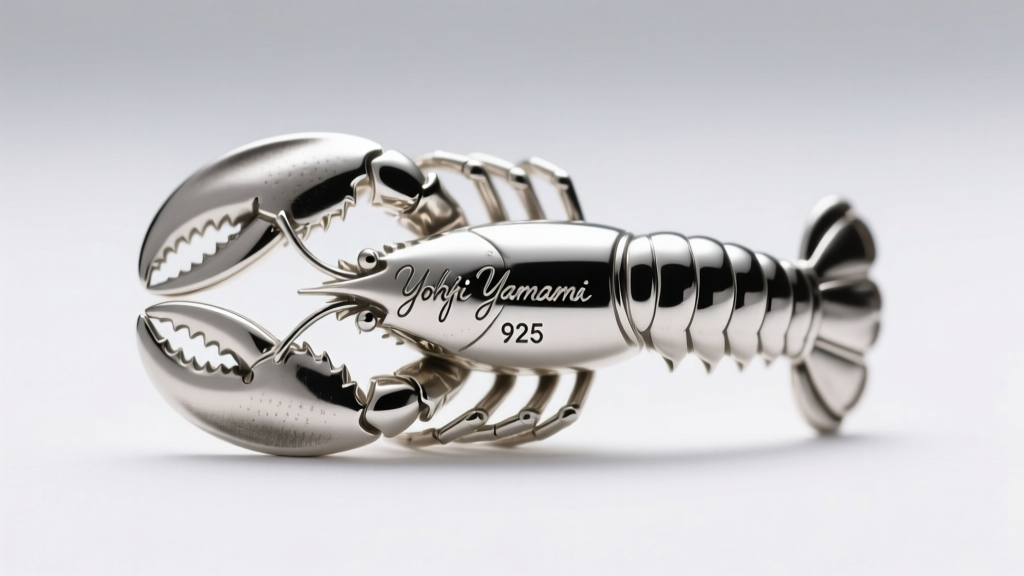
The hardware integration is where many replicas fail. Authentic chains utilize a reinforced, oversized lobster clasp machined from solid brass and plated in matching rhodium. The internal spring mechanism is calibrated for high tension, ensuring the clasp does not accidentally depress when caught on heavy fabrics. Furthermore, the jump ring connecting the clasp to the chain is soldered completely shut, rather than merely butted together, preventing the chain from pulling apart under the heavy load of the pendant.
Authentication Framework: Spotting the Fakes
As the archive fashion market has matured, counterfeiters have moved beyond simple visual copying to attempting to replicate weight and hallmarks. However, they consistently fail in the micro-details of jewelry manufacturing. According to the Federal Trade Commission (FTC) Jewelry Guides, precise hallmarking is a legal requirement for precious metals, and authenticators use these microscopic stamps as the first line of defense.
| Feature | Authentic Archive Piece | Replica / Counterfeit |
|---|---|---|
| Hallmark Engraving | Deep, crisp laser engraving; 'Y-3' or 'Yohji' font features sharp kerning and precise depth. | Shallow mechanical stamping; blurred edges, uneven font spacing, or cast-in marks. |
| Total Gram Weight | 80g - 115g (pendant + solid chain) | 35g - 55g (hollow links, zinc alloy pendant base) |
| Bail Solder Joint | Clean silver solder joint, flush with the bail, no overflow or pitting. | Messy lead/tin solder, visible oxidation, or glued bail connections. |
| Enamel Finish | Perfectly flush with the metal bezel; polished smooth with no micro-bubbles. | Raised above the bezel walls; visible pooling, uneven curing, or trapped air bubbles. |
| Magnetism Test | Non-magnetic (silver, copper, rhodium, brass). | Slight magnetic pull (indicates iron or steel core in chain links). |
When authenticating the Yamamoto Dodgers necklace, always use a 10x jeweler's loupe to inspect the bail (the loop connecting the pendant to the chain). Authentic bails are cast as a single unit or seamlessly TIG-soldered to the pendant body. Replicas often exhibit a 'cold joint' where the bail was attached post-casting using low-temperature solder, leaving a visible seam line that is highly prone to snapping under stress.
Market Valuation and Archive Pricing
The secondary market for archive high-fashion jewelry operates differently than traditional fine jewelry, which is valued primarily on melt weight and gemstone clarity. Archive pieces are valued on provenance, condition, and cultural relevance. As of the current market cycle, the Yamamoto Dodgers necklace commands a premium due to its crossover appeal between streetwear archivists and sports memorabilia collectors.
- Deadstock / Mint Condition (with original packaging): $1,800 – $2,800 USD. Packaging, including the specific Yamamoto-branded microfiber pouch and authenticity cards, adds up to 25% to the final realized price.
- Excellent Condition (minor wear, rhodium intact): $1,200 – $1,700 USD. The enamel is unchipped, and the chain shows no signs of stretching or link deformation.
- Good / Fair Condition (rhodium wear, enamel chips): $600 – $1,000 USD. Pieces in this tier often require professional re-plating and enamel restoration by a specialized jewelry conservator to regain their structural and aesthetic integrity.

Preservation and Maintenance Protocols
Maintaining a rhodium-plated sterling silver piece with cold enamel requires strict adherence to specialized cleaning protocols. The most common mistake collectors make is using commercial silver dip solutions or ultrasonic cleaners. Silver dips contain thiourea, a highly toxic chemical that will strip the rhodium flash plating in seconds, exposing the raw sterling silver to rapid oxidation. Ultrasonic cleaners, which use high-frequency sound waves to cavitate dirt, will shatter cold enamel, causing it to flake away from the silver bezel.
For routine maintenance, use a neutral pH soap (such as a mild castile soap) mixed with distilled water. Gently agitate the chain and pendant using a soft-bristled baby toothbrush, ensuring you do not scrub the enamel directly. Rinse with distilled water—never tap water, as the chlorine and sulfur compounds can accelerate tarnishing on any exposed silver micro-fissures—and pat dry with a lint-free microfiber cloth. For long-term storage, the necklace must be kept in an airtight, anti-tarnish ziplock bag with a 3M anti-tarnish strip to absorb ambient sulfur compounds, preserving the rhodium finish and the structural integrity of the enamel for decades to come.
Ultimately, the Yamamoto Dodgers necklace is a triumph of material engineering and cultural synthesis. By understanding the precise technical specifications that define its construction, collectors can confidently navigate the archive market, ensuring they acquire and preserve a genuine piece of fashion history.


