Yoshinobu Yamamoto Sapphire Necklace: Material Properties
Analyze the Yoshinobu Yamamoto sapphire necklace trend. We compare Ceylon vs. Montana sapphires, chain alloys, and custom sports pendant durability.

The Anatomy of Elite Sports Jewelry
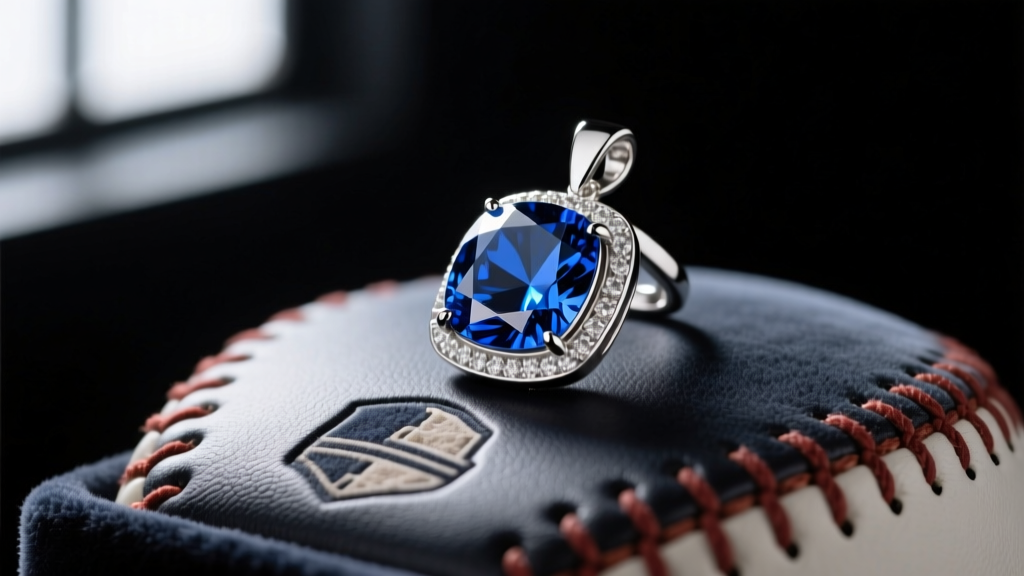
In the upper echelons of professional sports, jewelry has evolved far beyond the traditional diamond tennis chain. The bespoke Yoshinobu Yamamoto sapphire necklace represents a sophisticated shift in the 2026 athletic jewelry market, favoring meaningful, high-durability colored gemstones over ubiquitous white diamonds. For elite athletes, a custom pendant is not merely a fashion statement; it is a high-value asset subjected to extreme kinetic stress, sweat, and constant travel. Understanding the material properties of such a piece requires a deep dive into corundum gemology, advanced metallurgy, and precision setting engineering.
When jewelers are commissioned to create a centerpiece sapphire pendant for an active lifestyle, they must balance optical brilliance with structural integrity. A 15-carat sapphire weighs approximately 3 grams, but once encased in a heavy precious metal setting and suspended from a robust chain, the total dynamic load on the clasp and bail can exceed 25 grams. This guide deconstructs the material science behind these elite sports pendants.
Sapphire Gemology: Origin, Treatment, and Durability
Sapphire is a variety of the mineral corundum (aluminum oxide, Al₂O₃). With a Mohs hardness of 9, it is the second hardest natural gemstone, making it exceptionally resistant to surface scratching. However, hardness does not equate to toughness. Corundum exhibits no true cleavage, but it does possess rhombohedral parting, meaning it can fracture along specific crystallographic planes if struck with sharp, focused force—a critical consideration for athletes.
Comparing Sapphire Origins for Custom Pendants
The provenance of a sapphire dictates its trace element composition, which in turn influences its color stability and structural inclusions. According to the Gemological Institute of America (GIA), the presence of iron and titanium is responsible for the classic blue hue, but the ratios vary wildly by geographic origin.
| Origin | Typical Treatment | Color Profile | Inclusion Risks | 2026 Est. Price/Carat |
|---|---|---|---|---|
| Ceylon (Sri Lanka) | Low Heat / Unheated | Vivid, medium-light blue | Rutile silk (can weaken if heavily fractured) | $4,000 - $12,000+ |
| Montana (USA) | Unheated | Steel-blue, teal, greenish | High clarity, fewer structural flaws | $1,500 - $4,500 |
| Kashmir | Unheated | Velvety, cornflower blue | Microscopic silk (enhances toughness) | $50,000+ |
| Lab-Grown (Verneuil) | N/A | Highly saturated, uniform | Curved striae, gas bubbles (no natural fractures) | $50 - $200 |
For a high-impact piece like the Yoshinobu Yamamoto sapphire necklace, jewelers often recommend Montana sapphires or high-clarity Ceylon stones. Montana stones typically require no heat treatment, meaning their internal crystal lattice remains entirely unaltered by thermal shock, preserving maximum fracture toughness.
Chain Metallurgy: Supporting Heavy Carat Weights
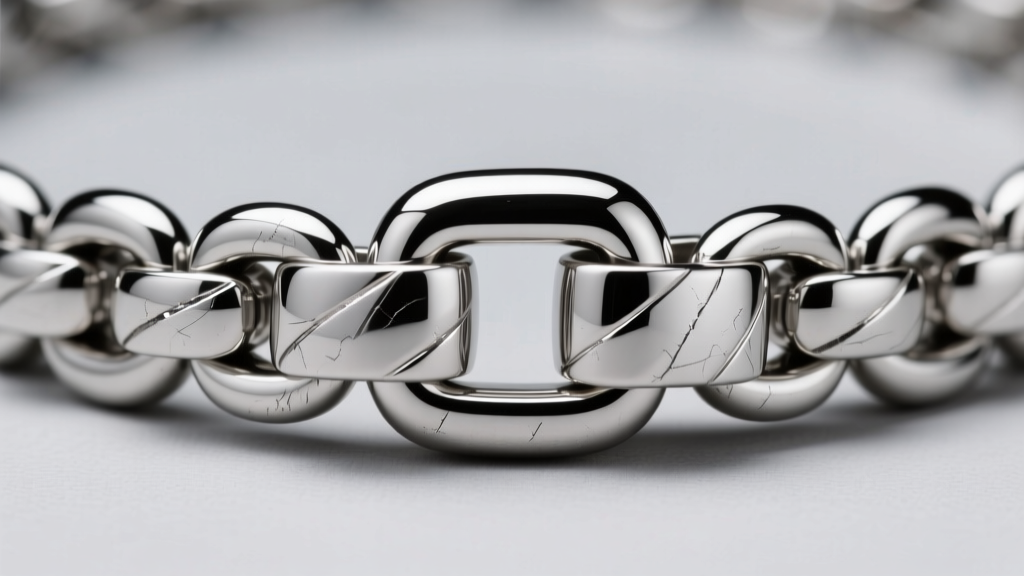
The chain is the structural backbone of any heavy pendant. A standard 18k gold rope chain will quickly succumb to metal fatigue when supporting a 20-carat sapphire pendant during athletic movement. In 2026, custom sports jewelers rely on specific alloy compositions to ensure tensile strength and resistance to galvanic corrosion from human sweat.
Platinum 950 vs. 18k White Gold vs. Grade 5 Titanium
- Platinum 950 (Ruthenium Alloy): Platinum is the gold standard for heavy pendants due to its density (21.45 g/cm³) and malleability. Unlike gold, which loses metal when scratched, platinum displaces. When alloyed with 5% Ruthenium rather than Iridium, the Vickers hardness increases from ~80 to ~135, providing superior resistance to the abrasive wear caused by a heavy bail rubbing against the chain links.
- 18k White Gold (Palladium Alloy): While 18k gold is harder out of the crucible (Vickers ~135-250), it is more brittle. Under sudden kinetic shock—such as an athlete stopping abruptly—a thin white gold link is more prone to snapping than platinum. Furthermore, white gold requires rhodium plating, which will wear off rapidly against the friction of a heavy pendant bail, exposing the yellowish underlying alloy.
- Grade 5 Titanium (Ti-6Al-4V): An emerging choice for ultra-lightweight sports chains. Titanium boasts an exceptional strength-to-weight ratio and is entirely impervious to sweat-induced oxidation. However, its extreme hardness makes it nearly impossible to resize or solder if a link breaks, making it a high-risk, high-reward material.
According to manufacturing guidelines from the Manufacturing Jewelers and Suppliers of America (MJSA), laser welding is mandatory for assembling heavy-duty platinum chains. Traditional torch soldering creates a heat-affected zone that can weaken the surrounding links, whereas laser welding provides a localized, high-tensile bond without compromising the chain's overall structural integrity.
Setting Engineering for Active Lifestyles
The way the sapphire is secured to the bail is where most sports jewelry fails. Traditional four-prong settings leave the girdle of the sapphire exposed to lateral impacts. If a baseball player wearing the Yoshinobu Yamamoto sapphire necklace were to experience a glancing blow to the chest, a direct impact on the sapphire's girdle could cause a catastrophic cleavage fracture.
The Bezel vs. V-Prong Debate
For active wearers, a full bezel setting is the safest option. A CAD/CAM milled platinum bezel wall measuring exactly 1.2mm thick will absorb and distribute kinetic energy away from the stone's edges. However, a full bezel reduces the light return (brilliance) of the sapphire by up to 15% compared to an open prong setting.
The compromise favored by elite bespoke jewelers is the V-prong setting with a reinforced gallery. V-prongs cup the most vulnerable corners of a cushion or emerald-cut sapphire, while a thick platinum gallery wire (minimum 1.5mm diameter) wraps around the lower pavilion, acting as a shock absorber. The bail itself should be a solid, cast piece rather than a hollow-formed tube, ensuring it does not crush under the pendulum weight of the stone.
Maintenance Protocols for High-Value Pendants
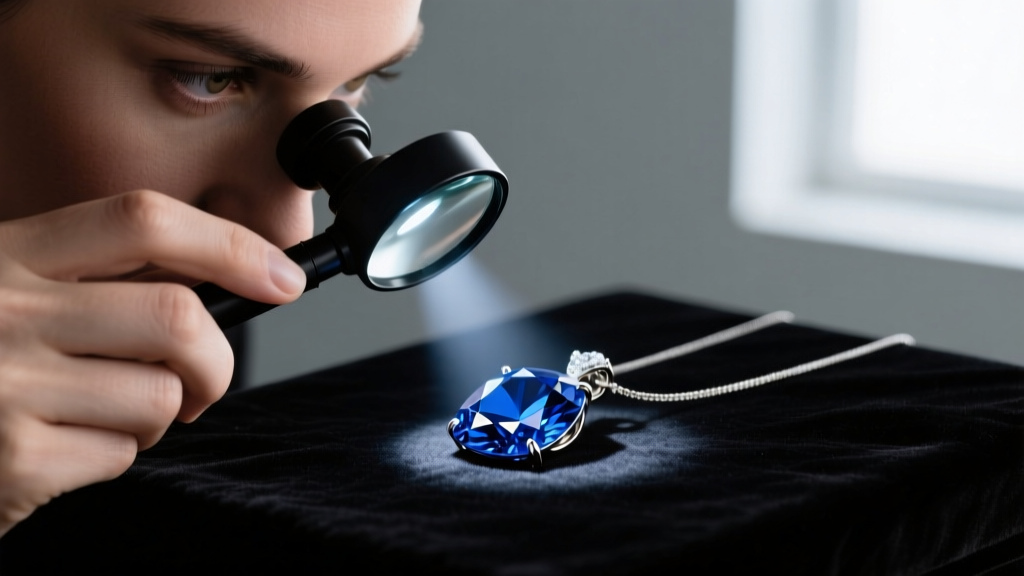
Owning a custom sapphire sports necklace requires a rigorous maintenance protocol. Human sweat is mildly acidic and contains chlorides that can slowly degrade lower-karat gold alloys and cause skin irritation. While platinum and high-purity sapphires are immune to this, the microscopic crevices of a chain can trap salts and dead skin cells, leading to a dull appearance and accelerated mechanical wear.
Ultrasonic vs. Steam Cleaning
While sapphires are generally safe in ultrasonic cleaners, fracture-filled or heavily included stones can shatter under high-frequency acoustic cavitation. For a high-value Ceylon or Montana sapphire pendant, the safest cleaning method is a warm bath of distilled water and a few drops of pH-neutral dish soap, agitated gently with a soft-bristled baby toothbrush. Steam cleaners should be avoided if the sapphire has been treated with beryllium diffusion, as rapid thermal shock can induce internal stress fractures.
Final Thoughts on Material Selection
The Yoshinobu Yamamoto sapphire necklace is more than a celebrity accessory; it is a masterclass in material science applied to luxury goods. By selecting an unheated, high-toughness sapphire, pairing it with a ruthenium-alloyed platinum chain, and utilizing shock-absorbing V-prong engineering, jewelers can create heirloom-quality sports pendants that withstand the rigors of the diamond and the demands of daily life. When investing in bespoke athletic jewelry, always demand a full metallurgical and gemological breakdown—true luxury lies in the unseen engineering.


