Acrylic Necklace Stand Guide: Display, Storage & Care Tips
Discover technical specs for choosing an acrylic necklace stand. Learn about cast vs extruded acrylic, UV protection, and safe display for fine jewelry.

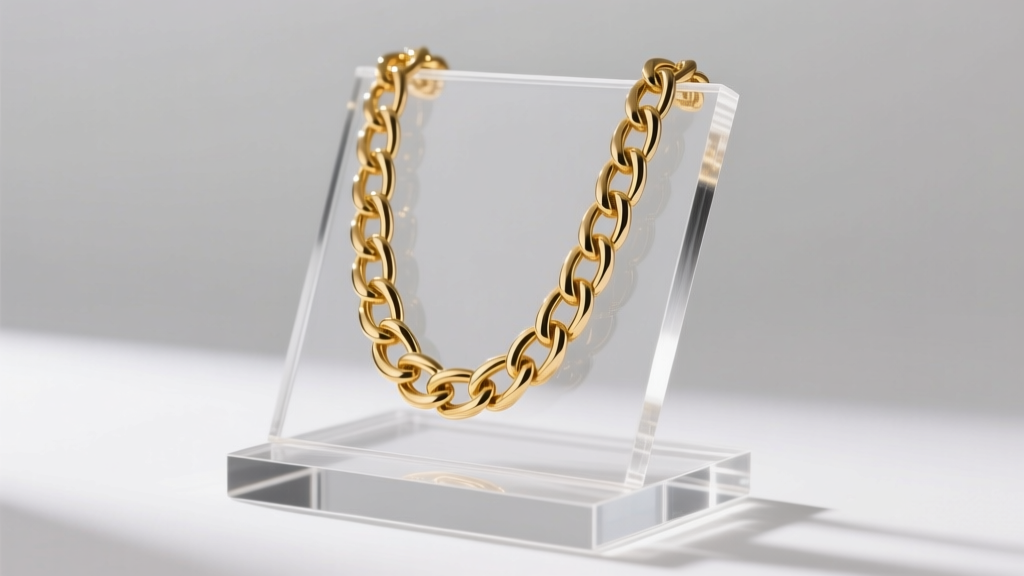
When merchandising or storing fine jewelry, the structural integrity and chemical neutrality of your display materials are just as critical as the pieces themselves. An acrylic necklace stand is a staple in both high-end retail environments and private collections due to its glass-like transparency and lightweight profile. However, not all acrylic displays are manufactured equally. Choosing the wrong polymer grade or ignoring the triboelectric properties of the material can lead to micro-scratching, chain tangling, and accelerated tarnishing. This expert guide breaks down the material science, load-bearing specifications, and conservation protocols required to select and maintain the perfect acrylic display for your necklaces and pendants.
The Polymer Distinction: Cast vs. Extruded PMMA
Acrylic, scientifically known as Polymethyl Methacrylate (PMMA), is manufactured using two primary methods: cell-casting and extrusion. Understanding the difference is vital for jewelry preservation.
Cell-Cast Acrylic
Cell-cast acrylic is produced by pouring liquid monomer into a mold and curing it under controlled heat. This process results in a higher molecular weight polymer with superior optical clarity (up to 92% light transmission) and exceptional resistance to solvents. For an acrylic necklace stand intended to hold high-karat gold or platinum, cell-cast is the mandatory choice. It machines cleanly without melting, meaning custom notches for chain clasps will remain perfectly smooth, preventing microscopic snagging on delicate cable or box chains.
Extruded Acrylic
Extruded acrylic is made by continuously pushing heated PMMA through a die. While significantly cheaper, it possesses lower molecular weight and higher internal stress. Over time, extruded acrylic is prone to micro-crazing (tiny internal fractures) and can warp under the sustained weight of heavy statement necklaces. Furthermore, extruded edges are often flame-polished, which can leave a slightly tacky residue that attracts dust and transfers to porous gemstones like turquoise or pearls.
Load-Bearing and Dimensional Specifications
The thickness of the acrylic sheet directly dictates its load-bearing capacity and resistance to bowing. A standard 3mm sheet is insufficient for anything beyond delicate, hollow-rope chains. When selecting a stand, refer to the following engineering specifications to match the acrylic gauge to your jewelry's weight.
| Acrylic Thickness | Imperial Equivalent | Max Recommended Load | Best Use Case |
|---|---|---|---|
| 3.0 mm | 1/8 inch | 45 grams (1.5 oz) | Delicate pendants, fine cable chains, lightweight lockets |
| 5.0 mm | 3/16 inch | 120 grams (4.2 oz) | Standard layered necklaces, medium-weight silver chains |
| 10.0 mm | 3/8 inch | 350+ grams (12+ oz) | Heavy Cuban links, gemstone bib necklaces, bust displays |
For T-bar style acrylic necklace stands, the vertical post must be at least 5mm thick to prevent lateral deflection (wobbling) when a heavy pendant is draped off-center. If the stand features a slotted base, ensure the slot depth is at least 15mm to maintain a secure center of gravity.
The Triboelectric Effect: Managing Static and Silica
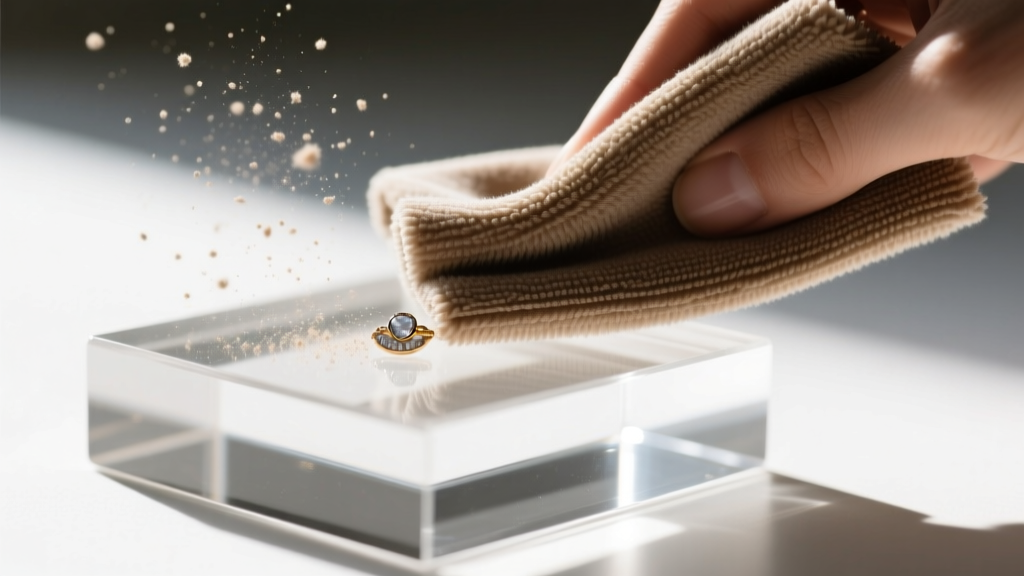
One of the most overlooked hazards of acrylic displays is their position on the triboelectric series. Acrylic is highly prone to accumulating a positive static charge through simple friction or changes in ambient humidity. This static charge acts as a magnet for airborne silica dust.
Silica dust particles rank at a 7 on the Mohs hardness scale. When a static-charged acrylic stand attracts silica, and a soft metal necklace (like 22k gold or high-polish sterling silver, which rank between 2.5 and 3) is dragged across the surface, the dust acts like sandpaper, causing permanent micro-scratches. According to the Gemological Institute of America (GIA), improper storage and display surfaces are a leading cause of degraded metal finishes in fine jewelry.
Mitigation Strategies
- Archival Silicone Dots: Apply museum-grade, acid-free silicone bumpers to the contact points of the stand where the metal chain rests. This creates a physical barrier between the metal and the static-charged acrylic.
- Ionizing Air Blowers: For retail environments, using a localized ionizing air blower neutralizes the static charge on acrylic displays, preventing dust accumulation entirely.
- Anti-Static Wipes: Avoid standard household dusting sprays. Use specialized anti-static acrylic cleaners that leave a microscopic conductive layer to dissipate electrical charges.
Base Geometry and Center of Gravity
The structural failure of an acrylic necklace stand rarely involves the material snapping; it almost always involves tipping. Necklaces, particularly those with heavy focal pendants or asymmetrical designs, shift the center of mass dynamically when being placed or removed.
To counteract this, expert merchandisers rely on specific base geometries:
- The Cantilevered L-Base: Ideal for single, heavy pendants. The horizontal base plate must extend at least 2.5 times the length of the longest hanging chain to prevent forward tipping.
- The Angled Easel (60-Degree Pitch):strong> By leaning the display back at a 60-degree angle, the gravitational pull of the necklace is directed into the backing plate rather than pulling the stand forward. This is critical for displaying multi-strand pearl necklaces or heavy gemstone chokers.
- Beveled vs. Flat Bases: A flat, laser-cut base provides maximum surface area friction. Beveled or routed edges look premium but reduce the contact patch, increasing the risk of sliding on glass display counters.
UV Transmission and Photochemical Vulnerabilities
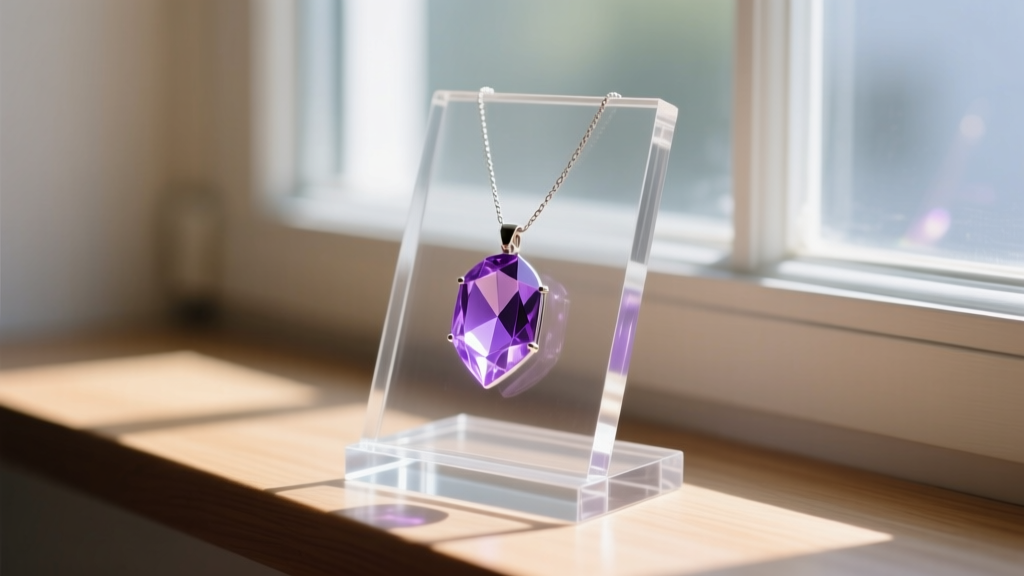
Standard clear acrylic transmits approximately 75% of ultraviolet (UV) light. While this is irrelevant for metals, it poses a severe threat to light-sensitive gemstones often featured in pendants. Prolonged exposure to UV radiation passing through a display stand can cause irreversible photochemical fading in stones such as kunzite, amethyst, morganite, and irradiated topaz.
If your acrylic necklace stand will be positioned within 10 feet of a window or under halogen merchandising lights, you must specify UV-filtering acrylic (often designated as UF-3 or UF-4 grade). As detailed by the American Institute for Conservation (AIC), UV-filtering PMMA contains specialized benzotriazole additives that absorb up to 98% of UV radiation up to 380 nanometers, effectively shielding vulnerable gemstones while maintaining optical clarity in the visible light spectrum.
Archival Maintenance and Cleaning Protocols
Maintaining the optical clarity of an acrylic necklace stand requires strict adherence to chemical compatibility. The most common mistake jewelers and collectors make is using ammonia-based glass cleaners (like Windex) or alcohol-based solvents. These chemicals attack the polymer chains in PMMA, causing environmental stress cracking—a network of tiny, silvery fissures that ruin the transparency and structural integrity of the stand.
The 3-Step Cleaning Protocol
- Dry Removal: Use a clean, oil-free compressed air duster to blast away loose silica particles. Never wipe a dry acrylic surface, as this guarantees micro-scratching.
- Surfactant Wash: Spray a dedicated plastic cleaner (such as Novus #1 or a mild solution of distilled water and a single drop of non-lotion dish soap) onto a high-pile microfiber cloth, never directly onto the stand. Direct spraying can force liquid into the microscopic seams of glued acrylic joints, weakening the cyanoacrylate bonds.
- Directional Buffing: Wipe in a single, linear direction rather than in circles. Circular buffing can create microscopic swirl marks that catch the light and create glare, obscuring the jewelry on display.
By understanding the material science, load dynamics, and chemical sensitivities of PMMA, you can select an acrylic necklace stand that not only showcases your collection with gallery-level elegance but actively preserves the condition and value of your most treasured necklaces and pendants.