Yellow Agate Necklace: Material Properties & Buying Guide
Discover the gemological properties, treatments, and pricing of yellow agate necklaces. Learn to identify genuine stones and avoid dyed imitations.

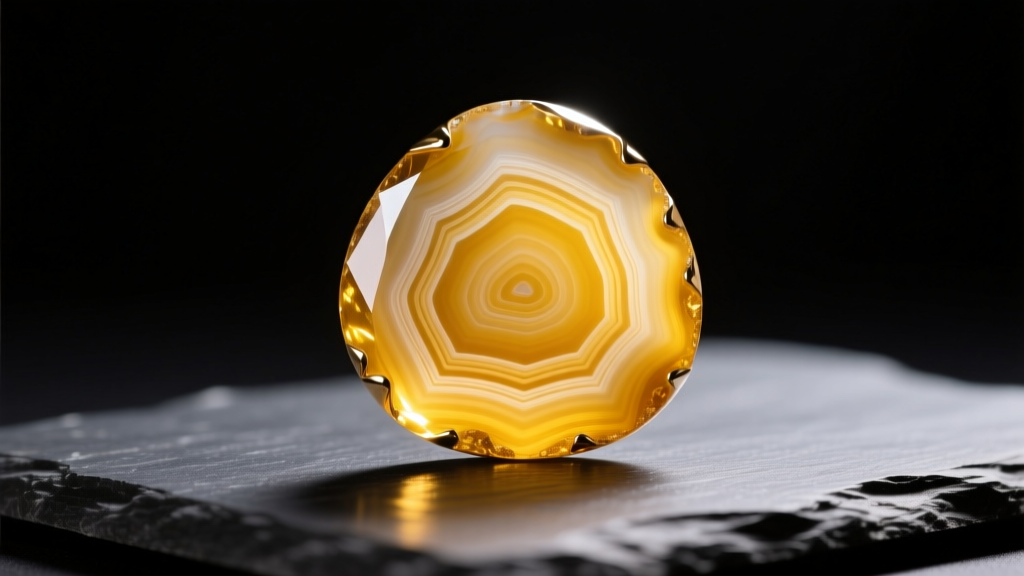
When shopping for a yellow agate necklace, consumers are often captivated by the stone's warm, honeyed hues and intricate banding. However, the commercial jewelry market is saturated with misidentified, heavily treated, and outright dyed alternatives. As a gemological staple in the chalcedony family, true yellow agate possesses specific physical and optical properties that dictate its value, durability, and care requirements. This comprehensive guide dissects the material science, treatment protocols, and craftsmanship markers you need to evaluate before investing in yellow agate jewelry.
The Mineralogy of Yellow Agate: Beyond the Surface
Agate is a cryptocrystalline variety of quartz (silicon dioxide, SiO2), characterized by its microfibrous structure and distinctive concentric banding. According to the Gemological Institute of America (GIA), agate forms in the hollow cavities of volcanic and metamorphic rocks, where silica-rich groundwater precipitates over millions of years.
Natural yellow agate derives its color from trace inclusions of iron hydroxides, such as limonite or goethite, trapped within the microcrystalline lattice. Unlike macrocrystalline quartz (like amethyst or citrine), the interlocking fibrous structure of agate gives it a slightly lower specific gravity and a waxy to vitreous luster.
Key Gemological Properties
- Chemical Composition: SiO2 (Silicon Dioxide)
- Mohs Hardness: 6.5 to 7.0 (Highly resistant to scratching, but susceptible to chipping from hard impacts due to conchoidal fracture patterns).
- Specific Gravity: 2.58 - 2.64 (Slightly lighter than single-crystal quartz due to microscopic porosity).
- Refractive Index: 1.530 - 1.540
- Porosity: Variable. The micro-porous nature of agate is precisely what allows it to be easily dyed, a critical factor in commercial necklace production.
Yellow Agate vs. Citrine vs. Yellow Jasper: A Gemological Comparison
Retailers frequently mislabel yellow jasper or citrine as yellow agate to command higher prices or capitalize on trending keywords. Understanding the structural differences is vital for accurate appraisal.
| Property | Yellow Agate | Citrine (Quartz) | Yellow Jasper | Amber (Organic) |
|---|---|---|---|---|
| Structure | Cryptocrystalline, Banded | Macrocrystalline, Transparent | Cryptocrystalline, Opaque | Amorphous, Organic Resin |
| Transparency | Translucent to Semi-Opaque | Transparent to Translucent | Opaque | Transparent to Opaque |
| Mohs Hardness | 6.5 - 7.0 | 7.0 | 6.5 - 7.0 | 2.0 - 2.5 |
| Inclusions | Concentric bands, dendrites | Color zoning, liquid feathers | Clay, iron oxides, no bands | Insects, plant debris, flow lines |
| Market Value | Moderate (High if natural) | High (Natural is rare) | Low to Moderate | Variable (Age/Inclusion dependent) |
While Mindat.org classifies jasper and agate under the same chalcedony umbrella, jasper lacks the translucency and distinct concentric banding that defines agate. If your 'yellow agate' bead is completely opaque with no light transmission at the edges, you are likely holding yellow jasper.
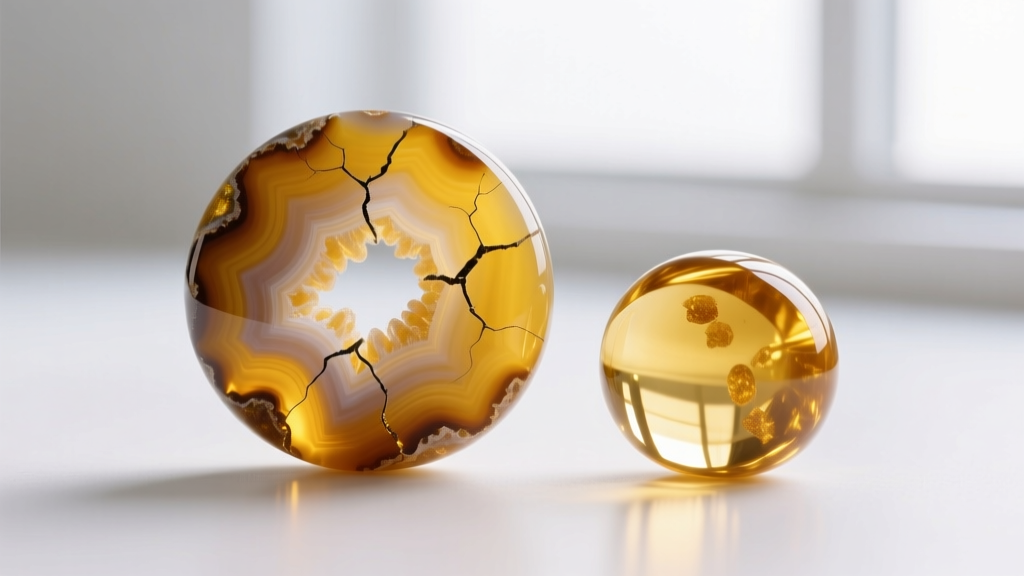
Treatments and Enhancements: What the Industry Won't Tell You
The most critical aspect of buying a yellow agate necklace is understanding gemstone enhancement. Natural, vividly colored yellow agate is exceptionally rare. The vast majority of commercial yellow agate on the market is actually gray or white agate that has been chemically altered.
The Sugar-Acid Carbonization Method
To achieve deep golden or mustard-yellow tones, manufacturers soak porous gray agate in a concentrated sugar solution for several weeks. Once the sugar penetrates the micro-pores, the stone is boiled in sulfuric acid. The acid carbonizes the sugar, leaving behind a permanent, vibrant yellow-to-brown coloration. While this treatment is stable and widely accepted in the commercial trade, it must be disclosed by ethical jewelers.
Iron Oxide Heat Treatment
Another common technique involves heating pale yellow or brownish agate to temperatures between 300°C and 400°C. This oxidizes the natural iron inclusions, intensifying the yellow or reddish-brown hues.
How to Spot Dyed Yellow Agate
Using a 10x jeweler's loupe, examine the surface of the beads or pendant. If you observe color pooling—where the yellow dye is heavily concentrated in microscopic fractures, cracks, or along the edges of the concentric bands—the stone has been dyed. Natural yellow agate exhibits a more uniform, albeit often paler, color distribution that follows the natural banding without sharp dye concentrations.
Evaluating Craftsmanship in Yellow Agate Necklaces
The value of a yellow agate necklace is not solely determined by the gemstone; the lapidary work and stringing mechanics are equally important. Because agate is heavy and prone to conchoidal fracturing, poor craftsmanship will lead to premature structural failure.
Drill Hole Quality
High-quality agate beads are drilled using ultrasonic or precision laser machinery, resulting in clean, sharp entry and exit holes. Mass-produced necklaces often use mechanical diamond-tipped drills that cause 'blowout' or chipping on the exit side of the bead. Run your fingernail over the drill holes; if you feel sharp, jagged edges or notice a cloudy, fractured halo around the hole, the lapidary work is substandard.
Stringing Materials
Agate beads have a high specific gravity, meaning a 16-inch strand of 8mm beads can exert significant tension on the stringing material. Avoid necklaces strung on cheap cotton or basic nylon threads, which degrade from skin oils and stretch over time. Look for necklaces strung on 49-strand micro-fused stainless steel wire (such as Soft Flex or Beadalon) or professionally knotted silk, which provides structural redundancy if a single bead fails.
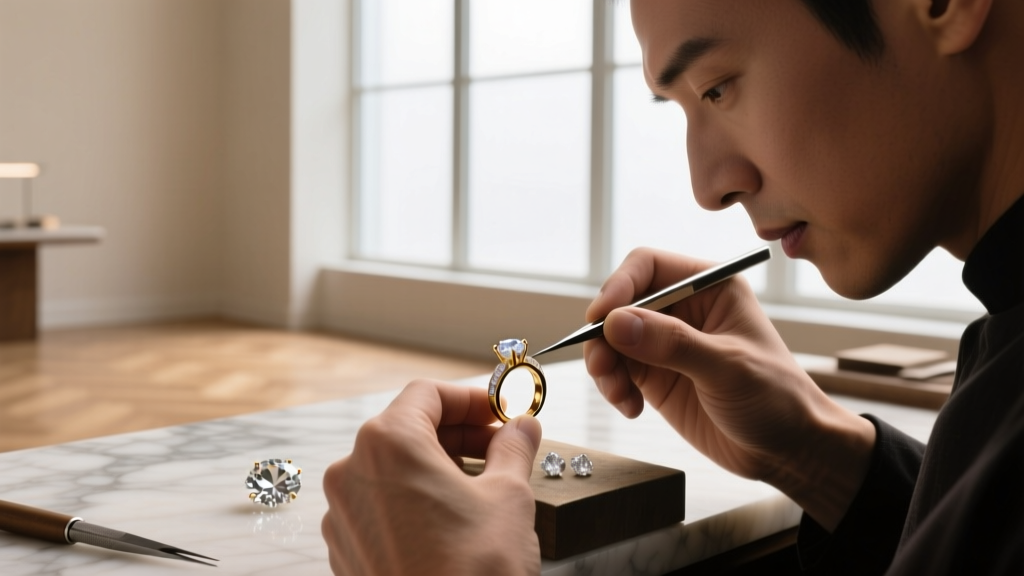
Pricing Tiers: What You Should Actually Pay
Navigating the pricing landscape for yellow agate necklaces requires an understanding of the material's origin and treatment status. Here is a realistic breakdown of market rates for standard 16-to-18-inch necklaces.
- Tier 1: Commercial Dyed Agate ($15 - $45) These are mass-produced, heavily dyed gray agates. The colors are often unnaturally vivid (think neon yellow or deep amber). The beads are usually machine-cut with minor size inconsistencies and strung on basic wire.
- Tier 2: Natural Pale/Mossy Agate ($50 - $120) Sourced from regions like Brazil or Uruguay, these stones feature subtle, natural yellow banding, often interspersed with white or gray layers. They are translucent and have not been subjected to chemical dyeing, though mild heat treatment may be present.
- Tier 3: Designer & Custom Lapidary ($150 - $400+) These necklaces feature hand-selected, natural yellow agate cabochons or precision-faceted beads. They are often paired with high-karat gold or sterling silver findings, feature custom wire-wrapping, and utilize premium stringing techniques like French knotting.
Care and Maintenance Protocols
Despite its impressive 6.5-7 Mohs hardness, a yellow agate necklace requires specific care to maintain its polish and structural integrity.
Never place a dyed yellow agate necklace in an ultrasonic cleaner. The high-frequency vibrations can fracture the stone along its natural banding planes, while the heat and chemical solvents used in the bath can strip the carbonized dye, leaving the beads a mottled, patchy gray.
For routine cleaning, use a soft microfiber cloth and a mild, pH-neutral dish soap diluted in lukewarm water. Gently wipe the beads and immediately dry them. Avoid exposing the necklace to harsh chemicals, including chlorine, bleach, and acidic household cleaners, as the micro-porosity of the chalcedony will absorb these liquids, leading to irreversible surface etching and discoloration. Store the necklace flat in a lined jewelry box to prevent the heavy beads from pulling and stretching the stringing wire over time.


