Authentic Yoruba Beaded Necklace: Ileke Beads & Craft Guide
Discover the technical anatomy of an authentic Yoruba beaded necklace. Explore ileke bead grades, stringing tension, and structural craft details.

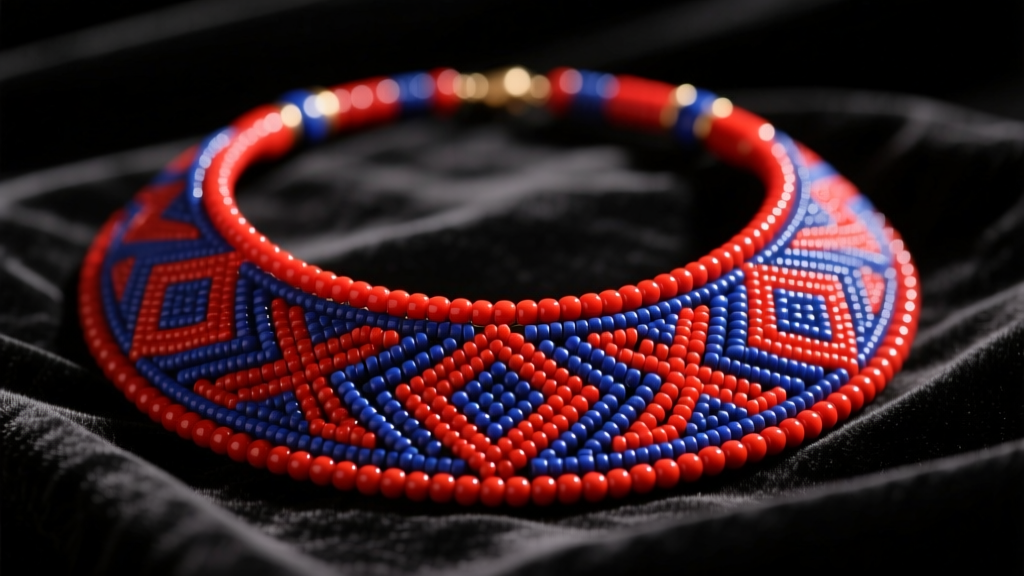
The Structural and Cultural Anatomy of Yoruba Beadwork
When evaluating a Yoruba beaded necklace, casual observers often see only a vibrant array of colors. However, to a jewelry historian or master stringer, these pieces are complex architectural feats. Originating from the Yoruba people of southwestern Nigeria and neighboring regions, these necklaces—particularly the dense, multi-strand collars known as ileke—are engineered to sit flush against the clavicle while supporting significant weight. Unlike standard Western stringing techniques that prioritize drape, traditional Yoruba beadwork prioritizes structural density, geometric symmetry, and material hierarchy. Understanding the technical specifications of these pieces is essential for collectors, appraisers, and conservators looking to authenticate vintage specimens or commission contemporary masterworks.
Material Science: Coral, Glass, and Specific Gravity
The value and authenticity of a Yoruba beaded necklace are intrinsically tied to its material composition. Historically, the highest-status necklaces were crafted from iyun (precious red coral) and ileke (drawn glass beads). Distinguishing between authentic vintage materials and modern synthetics requires an understanding of specific gravity and drill-hole morphology.
Authentic Red Coral (Iyun) vs. Dyed Alternatives
True precious coral (Corallium rubrum or similar deep-water variants) has a specific gravity of approximately 2.6 to 2.7. In contrast, modern dyed howlite or magnesite imitations sit around 2.4 to 2.6, while resin or plastic fakes drop to 1.2 or lower. Under 10x magnification, authentic coral exhibits a distinct fibrous, wood-grain-like internal structure and natural pitting. Furthermore, the drill holes in vintage coral beads (often hand-drilled prior to the 1970s) typically measure between 1.2mm and 1.5mm, featuring slight conical widening at the entry and exit points due to the use of traditional bow drills. Modern laser-drilled imitations will show perfectly cylindrical 0.8mm holes with sharp, un-chipped edges.
Venetian and Czech Glass Beads
Glass ileke beads, particularly vintage Venetian chevron or drawn glass beads, possess a specific gravity of roughly 2.5. Authentic antique trade beads often feature a characteristic 'powder glass' or layered millefiori cross-section. When examining a Yoruba beaded necklace, appraisers look for the 'seed' or air bubbles trapped within the glass matrix—a hallmark of historical wood-fired furnace casting, which is entirely absent in modern, mass-produced Czech or Chinese pressed glass.
Collar Architecture and Geometric Tapering
A master-crafted Yoruba collar is not a uniform cylinder of beads; it is a precisely tapered structure designed to map to the human neck. The central front section (the focal point resting on the sternum) utilizes the largest and most valuable beads—often 10mm to 14mm barrel corals or large rosette glass beads. As the strands progress toward the nape of the neck, the bead diameter systematically tapers down to 4mm or 6mm. This geometric tapering serves two critical engineering purposes:
- Weight Distribution: It concentrates the visual and physical mass at the front, preventing the necklace from sliding backward and choking the wearer.
- Flexibility: Smaller beads at the nape allow for a tighter articulation radius, enabling the collar to bend sharply around the cervical spine without kinking the stringing material.
In a standard 18-inch, five-strand collar, a master artisan will calculate the exact bead count per strand to ensure the inner strands are progressively shorter than the outer strands, creating a flat, ribbon-like lay rather than a twisted rope effect.
Stringing Mechanics and Tension Engineering
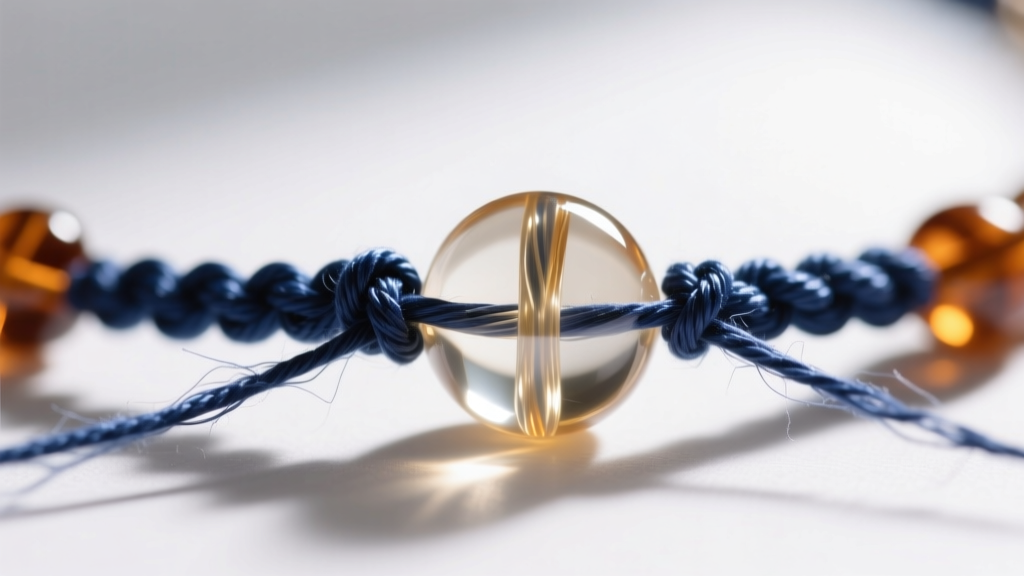
The failure rate of vintage African beadwork is overwhelmingly tied to the degradation of stringing materials. Historically, artisans used hand-spun cotton or raffia, which possess high tensile strength initially but are highly susceptible to moisture-induced rot and friction abrasion from the sharp internal edges of glass beads.
| Stringing Material | Diameter / Denier | Tensile Strength | Abrasion Resistance | Conservation Verdict |
|---|---|---|---|---|
| Traditional Cotton | ~0.40mm | Moderate | Poor (degrades in 10-20 yrs) | Historically accurate, but unsafe for heavy wear. |
| Silk (Size F) | 0.35mm | High | Moderate | Excellent drape, requires knotting between beads. |
| Bonded Nylon (Size E) | 0.45mm | Very High (12 lbs) | Excellent | Industry standard for modern restoration and heavy coral. |
| Stainless Steel Wire | 0.38mm (49-strand) | Extremely High | Superior | Too rigid; ruins the traditional drape of the collar. |
For contemporary restorations of heavy multi-strand pieces, master stringers utilize bonded nylon (such as Size E or F). Unlike monofilament, bonded nylon consists of multiple twisted plies coated in a protective polymer, preventing the sharp edges of vintage glass ileke from slicing the thread from the inside out. Tensioning is critical: the thread must be pulled taut enough to eliminate gaps between beads, yet retain a 2% elasticity allowance to prevent the nylon from snapping when the collar is bent.
Valuation Framework and Provenance Tracking
Appraising a Yoruba beaded necklace requires a multidimensional framework that goes beyond mere carat weight or material cost. According to curatorial guidelines from institutions like the Metropolitan Museum of Art, the historical context of African trade beads heavily influences market valuation.
- Pre-Colonial / Early Trade (Pre-1900s): Features irregular, hand-wound glass beads and naturally pitted, un-dyed coral. Commands the highest premium ($2,500 - $10,000+).
- Mid-Century Ceremonial (1940s-1970s): Often incorporates uniform Venetian chevron beads and polished, sometimes dyed, coral. Highly collectible ($800 - $2,500).
- Contemporary Tourist Market (1990s-Present): Utilizes plastic resins, dyed howlite, and machine-pressed Czech glass. Valued strictly as decorative costume jewelry ($50 - $150).
Provenance documentation, such as exhibition history or verified acquisition records from the Smithsonian National Museum of African Art archives, can multiply the baseline valuation by a factor of three or more.
Maintenance, Storage, and Structural Failure Modes
The most common structural failure mode in a multi-strand Yoruba collar is 'cascade snapping.' Because the strands are often bound together at the terminal ends using a wrapping technique, if one inner strand degrades and snaps, the sudden redistribution of kinetic energy places immense shock-load on the adjacent strands, causing them to snap in rapid succession. To mitigate this, collectors must adhere to strict conservation protocols:
Expert Conservator Tip: Never hang a heavy, multi-strand coral or glass collar on a standard jewelry hook. The gravitational pull will stretch the nylon or cotton thread over time, causing permanent 'necking' (thinning) of the fiber. Always store the piece flat in an acid-free archival box, coiled in a figure-eight pattern to prevent memory-kinks in the stringing material.
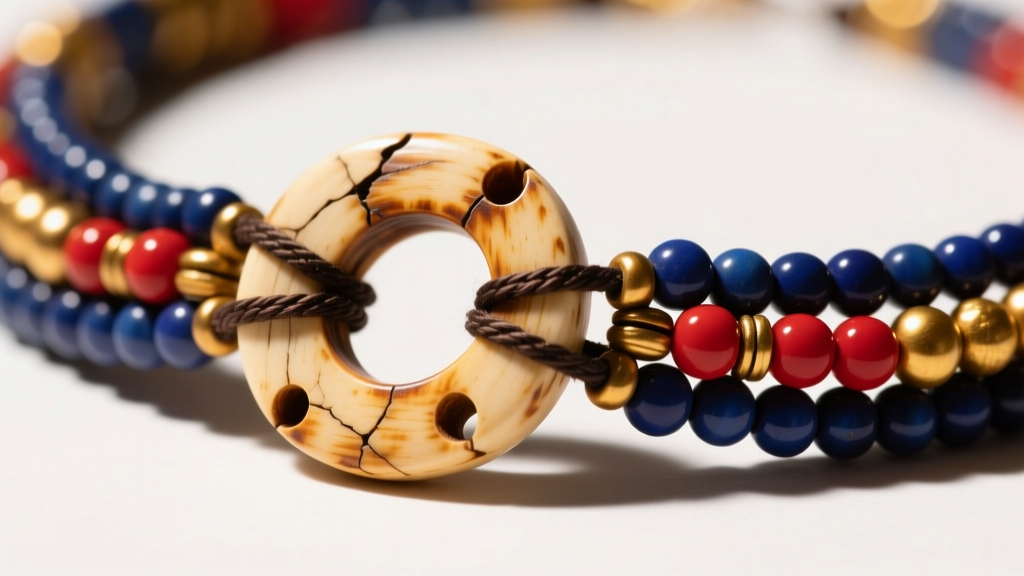
Furthermore, UV exposure is catastrophic for vintage dyed beads and organic bone clasps. Prolonged exposure to direct sunlight will cause the vibrant reds and indigos of the ileke to bleach, while simultaneously making carved bone or wood toggle clasps brittle. A strict regimen of flat storage, climate-controlled humidity (ideally 45-55% RH to preserve organic components), and professional restringing every 15 to 20 years will ensure these magnificent structural artifacts survive for future generations.


