2026 Trends: Styling the Sterling Silver Moonstone Necklace
Discover 2026 styling trends for the sterling silver moonstone necklace. Learn about adularescence, 925 silver grades, and layering.

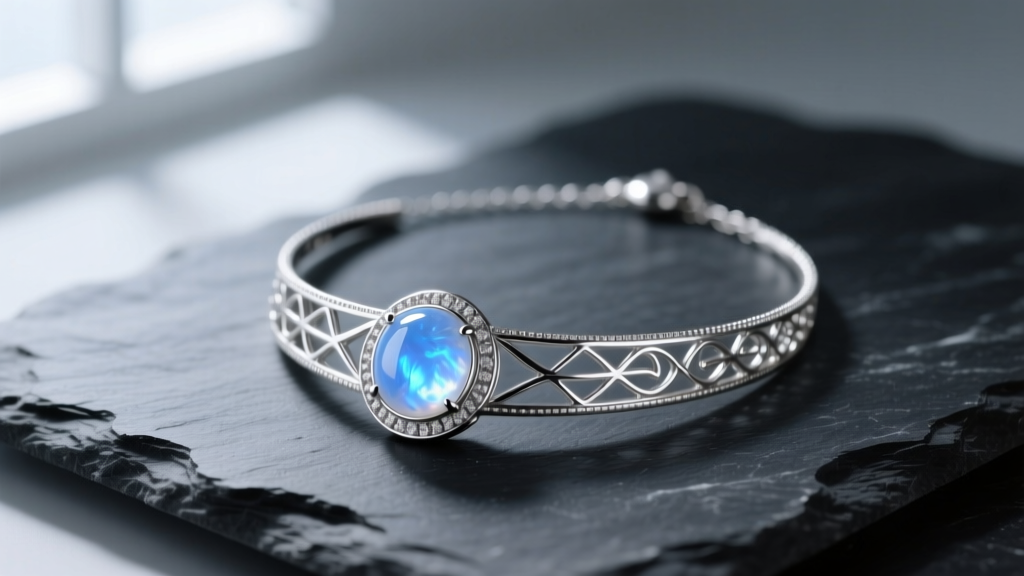
The 2026 jewelry landscape is defined by a distinct pivot toward 'mystic minimalism'—a design philosophy that pairs clean, architectural metalwork with gemstones possessing deep optical phenomena. At the absolute center of this movement is the sterling silver moonstone necklace. Moving away from the ultra-dainty, barely-there chains of the early 2020s, contemporary designers are embracing the ethereal glow of moonstone, setting it in substantial 925 sterling silver mounts that balance celestial romance with everyday wearability. Whether you are analyzing market trends or looking to curate your personal collection, understanding the gemological, metallurgical, and stylistic nuances of this specific pairing is essential.
The Gemological Appeal: Adularescence and Cut Profiles
To truly appreciate a sterling silver moonstone necklace, one must understand the optical phenomenon that gives the stone its value: adularescence. According to the Gemological Institute of America (GIA), this billowy, floating light effect is caused by the scattering of light between microscopic layers of orthoclase and albite feldspars within the stone.
Blue vs. Rainbow Moonstone
In 2026, the market is distinctly bifurcated between two primary variants:
- Blue Moonstone (Orthoclase): Prized for its sharp, electric-blue sheen that glides across the surface of a transparent to semi-transparent body. This variant is typically cut into high-domed cabochons to maximize the 'schiller' effect. It pairs best with highly polished, rhodium-plated sterling silver.
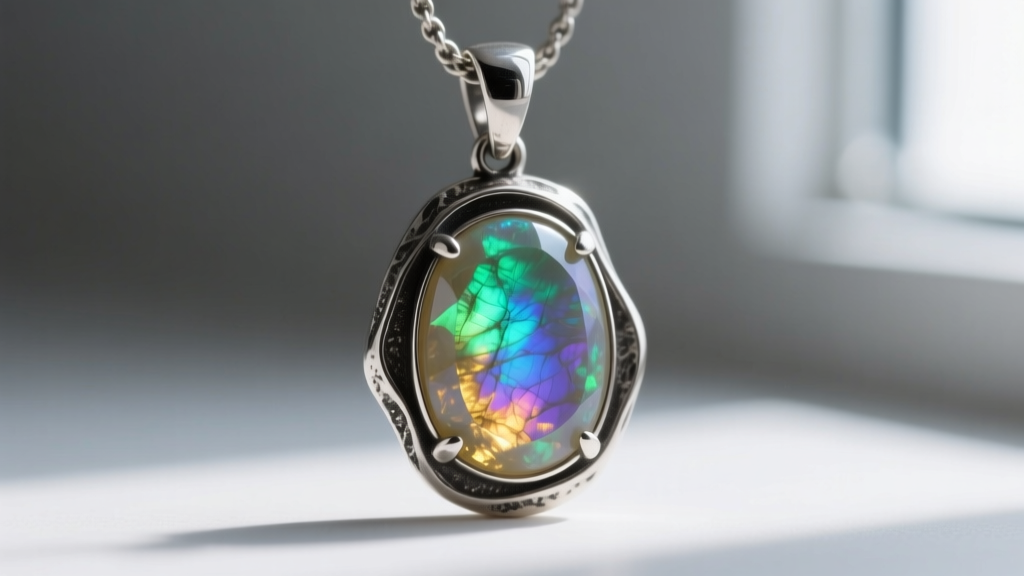
- Rainbow Moonstone (Plagioclase/Labradorite): Technically a transparent variety of labradorite, it exhibits a multicolored schiller (blues, greens, and occasional pinks). It is heavily featured in bohemian and oxidized silver designs, where the darker metal patina contrasts beautifully with the stone's internal fire.
Because moonstone ranks between 6 and 6.5 on the Mohs hardness scale and possesses two directions of perfect cleavage, it is highly susceptible to chipping. Therefore, the trend for 2026 heavily favors bezel and semi-bezel settings over traditional prong mounts. A sterling silver bezel not only secures the stone but provides a modern, flush silhouette that prevents the gem from snagging on knitwear.
The Metallurgy of 925 Sterling Silver in Celestial Designs
Sterling silver is an alloy composed of 92.5% pure silver and 7.5% copper. As noted by the Silver Institute, the copper addition provides the necessary tensile strength for jewelry, but it also introduces the propensity for oxidation (tarnish). How designers handle this oxidation is a major trend driver this year.
Intentional Patina vs. Rhodium Plating
The 'mystic minimalism' trend has popularized intentional oxidation. By applying liver of sulfur to the finished sterling silver piece and then polishing only the high points, jewelers create a dark, antique patina in the recesses of the setting. This dark background acts as a visual amplifier for the moonstone's adularescence, making the ethereal glow appear deeper and more pronounced. Conversely, for a sleek, high-fashion aesthetic, many premium sterling silver moonstone necklaces are plated with a micro-layer of rhodium. This platinum-group metal prevents tarnish and provides a mirror-like, white-gold finish that perfectly complements the icy blue sheen of top-grade orthoclase moonstones.
Chain Gauges and Profiles
The delicate 0.5mm chains of the past decade have been replaced by more substantial links. The current standard for a pendant necklace featuring a 12mm to 18mm moonstone cabochon is a 1.0mm to 1.5mm box chain or a 1.2mm cable chain. These gauges provide visual weight that balances the stone, ensuring the necklace feels like an intentional statement piece rather than an afterthought.
2026 Styling Matrix: Necklines and Layering
Styling a sterling silver moonstone necklace requires an understanding of proportion and neckline geometry. The stone's optical flash requires direct light to be visible, meaning it must rest on the skin rather than over thick fabrics. Below is a decision framework for matching chain lengths and pendant sizes to specific necklines.
| Neckline Type | Ideal Chain Length | Pendant Size & Setting | Styling Notes |
|---|---|---|---|
| Deep V-Neck | 20 to 24 inches | 15-20mm elongated teardrop cabochon | Follows the plunge of the fabric; draws the eye vertically. |
| Crew / Scoop | 16 to 18 inches | 10-12mm round bezel-set cabochon | Sits just below the collarbone; acts as a focal point against bare skin. |
| Off-the-Shoulder | 14 to 16 inches (Choker) | Horizontal marquise or three-stone cluster | Highlights the exposed clavicle; pairs well with intentional silver oxidation. |
| Button-Down Shirt | 18 to 20 inches | 12mm geometric or hexagonal cut | Worn inside the collar, resting against the sternum for a modern, androgynous look. |
The Art of the Layered Stack
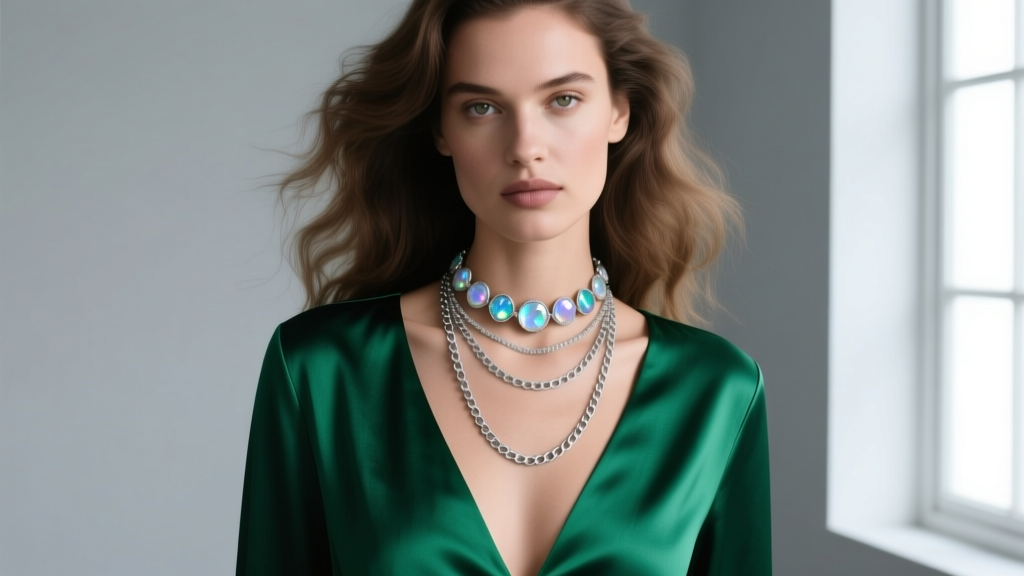
If you are layering your moonstone piece, adhere to the 'Rule of Three and Texture'. Combine your 18-inch moonstone pendant with a 16-inch sterling silver herringbone chain (for a liquid-metal texture contrast) and a 22-inch oxidized silver rolo chain featuring a small, unpolished tourmaline or onyx drop. This creates depth and prevents the necklaces from tangling by maintaining a strict two-inch length variance between each layer.
Market Pricing and Imitation Detection
As the demand for celestial jewelry surges, the market has been flooded with imitations. Knowing how to authenticate a sterling silver moonstone necklace and understanding fair market value is a critical skill for the modern consumer.
Spotting the Fakes: Glass and Opalite
The most common moonstone substitute is opalite, a synthetic, man-made glass. While opalite can be beautiful, it lacks the internal structural layering of true feldspar. To differentiate the two:
- The Flash Test: Real moonstone's adularescence shifts and moves as you rotate the stone under a single light source. Opalite's glow is static, uniform, and often looks milky or overly bright from all angles.
- Inclusions: Under a 10x jeweler's loupe, natural moonstone will often reveal tiny internal fractures (often called 'centipedes') or layers. Opalite is typically flawless or contains perfectly spherical gas bubbles.
- The Silver Stamp: Ensure the clasp or jump ring is stamped with '925'. A missing stamp on a piece claiming to be solid sterling silver is an immediate red flag.
2026 Pricing Tiers
Pricing for a genuine sterling silver moonstone necklace varies based on the origin of the stone (Sri Lankan blue moonstones command a premium) and the complexity of the metalwork.
- Mass Market ($35 - $75): Features smaller (6-8mm) commercial-grade rainbow moonstones with heavy inclusions, set in lightweight, mass-cast 925 silver with thin 0.8mm chains.
- Artisan / Mid-Tier ($90 - $250): The sweet spot for quality. Features highly transparent Sri Lankan blue moonstones with strong adularescence, custom-cut cabochons, and heavy, hand-finished sterling silver settings with secure bezels.
- Designer / High-End ($300 - $600+): Incorporates mixed metals (e.g., 14k gold accents on sterling silver), pavé diamond halos, and museum-grade, flawless moonstones.
Care Protocols for Soft Feldspars
Moonstone's relative softness and internal cleavage planes dictate strict care protocols. The most common failure mode for these necklaces is 'thermal shock' or acoustic damage. Never place a moonstone necklace in an ultrasonic cleaner. The high-frequency vibrations can easily exploit internal micro-fractures, causing the stone to split or cloud internally. Similarly, steam cleaners can cause the stone to craze.
For routine maintenance, use a few drops of pH-neutral dish soap in lukewarm water. Gently agitate the necklace with a baby-soft toothbrush, paying special attention to the back of the cabochon where skin oils and lotions accumulate, which can block light from entering the stone and dull the adularescence. Always pat dry with a microfiber cloth and store the necklace flat in an anti-tarnish flannel pouch to protect the sterling silver from sulfur compounds in the air.
'The 2026 consumer isn't just buying a stone; they are buying an optical experience. A well-cut moonstone in a properly engineered sterling silver bezel is less of an accessory and more of a wearable, kinetic light sculpture.' — Jewel Style Radar Trend Forecast, Q1 2026
Ultimately, the sterling silver moonstone necklace remains a masterclass in balancing organic mystery with refined metallurgy. By prioritizing optical quality, structural bezel settings, and mindful styling, you can harness the full potential of this celestial gemstone for years to come.