How to Adjust Nose Rings With Jewelry Needle Nose Pliers
Learn how to safely open, close, and adjust nose hoops and screws using jewelry needle nose pliers without scratching or ruining your metal.

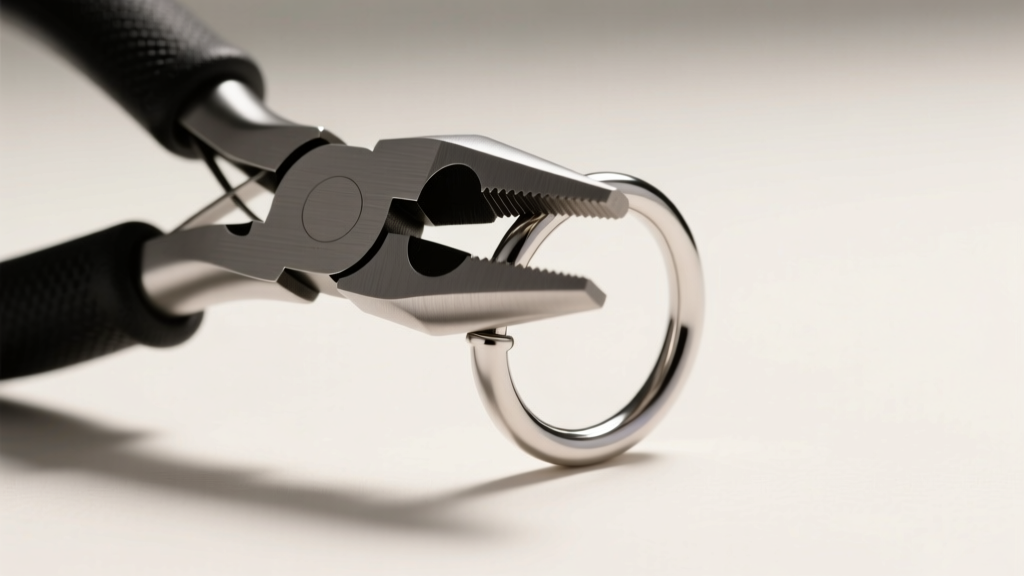
Changing or adjusting your nose jewelry should be a seamless experience, yet it frequently ends in frustration. Bent posts, scratched gold, and warped hoops are the unfortunate realities of using the wrong tools. When dealing with delicate, high-quality body jewelry, your fingers often lack the precision required, and standard hardware tools are a guaranteed way to ruin your investment. This is where specialized jewelry needle nose pliers become an absolute necessity for any nose piercing enthusiast or professional.
In this comprehensive guide, we will explore the metallurgy of nose jewelry, how to select the correct pliers, and provide a masterclass step-by-step tutorial on adjusting seamless hoops, nose screws, and septum clickers without compromising the integrity of the metal or your healing fistula.
The Metallurgy of Nose Jewelry and Tool Interaction
To understand why specialized tools are mandatory, we must first look at the materials used in high-end body jewelry. According to the Association of Professional Piercers (APP), the gold standard for initial and long-term piercings is implant-grade titanium (ASTM F136) and solid 14k or 18k gold.
Titanium is incredibly strong but possesses a lower surface hardness than the hardened steel used in standard hardware pliers. When bare steel jaws clamp down on an ASTM F136 titanium hoop, they create microscopic gouges. Similarly, 14k and 18k gold are relatively soft alloys. Standard pliers will instantly mar the polished finish, leaving deep scratches. These scratches are not just cosmetic issues; they harbor bacteria like Pseudomonas aeruginosa and Staphylococcus aureus, which can lead to severe localized infections or hypertrophic scarring inside the delicate nostril or septum tissue.
"Never let bare steel touch your body jewelry. The microscopic abrasions left by standard hardware tools turn a mirror-finish hoop into a bacterial breeding ground." — Master Piercer
Selecting the Ideal Jewelry Needle Nose Pliers
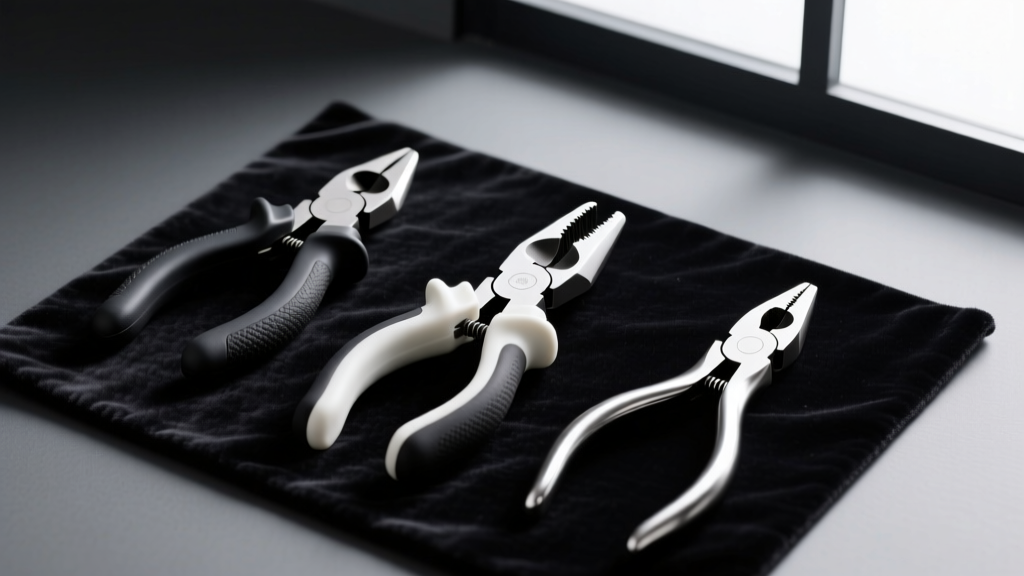
Not all pliers are created equal. When shopping for jewelry needle nose pliers, you must prioritize jaw composition and tip precision. Below is a comparison of the three most common types of pliers used in jewelry manipulation and how they interact with nose rings.
| Plier Type | Jaw Material | Best Use Case | Risk to Jewelry | Price Range |
|---|---|---|---|---|
| Nylon Jaw Pliers | Replaceable Nylon Pads | Opening/closing seamless hoops, bending thick gauge wires | Zero (Safest option) | $15 - $35 |
| Rubber-Dipped Pliers | Dip-Coated Rubber | Gripping small beads, adjusting thin 20G/22G nose screws | Low (Rubber can degrade) | $8 - $20 |
| Bare Steel Pliers | Hardened Carbon Steel | Heavy wire wrapping, cutting (Never for finished jewelry) | Extreme (Deep scratching) | $5 - $15 |
For nose jewelry, nylon jaw pliers (such as those manufactured by Eurotool or Beadalon) are the undisputed champions. The nylon pads provide immense grip without biting into the metal, ensuring your 16G or 18G seamless hoops remain perfectly smooth.
Step-by-Step Guide: Adjusting Seamless Nose Hoops
Seamless hoops are notoriously difficult to open and close correctly. The most common mistake enthusiasts make is pulling the ends apart laterally (forming a 'C' shape). This permanently warps the circle, making it impossible to close the seam flush later. Instead, you must use the torsion twist method.
Step 1: Sterilization and Grip
Before touching your jewelry, wipe down the jaws of your jewelry needle nose pliers with 99% isopropyl alcohol. Wash your hands thoroughly. Grip the hoop with two pairs of nylon jaw pliers. Place one pair on the left side of the seam, and the other on the right side, leaving a small gap in the middle.
Step 2: The Lateral Twist Technique
Instead of pulling the pliers away from each other, twist one pair of pliers toward your chest and the other pair away from your chest. Imagine you are wringing out a wet towel. This torsion motion separates the ends of the hoop laterally while maintaining the perfect circular geometry of the ring. For 16G (1.2mm) titanium, you will need to apply firm, steady pressure. For 18G (1.0mm) or 20G (0.8mm), use a much lighter touch to prevent kinking the wire.
Step 3: Closing the Seam Flush
To close the hoop, reverse the twisting motion. Bring the ends back together, but do not stop when they merely touch. You must push the ends slightly past each other (creating a tiny overlap) and then release the tension. This ensures the metal's memory pulls the seam tightly shut, resulting in a flush closure that will not catch on your healing fistula or snag on clothing.
Advanced Adjustments: Septum Clickers and Nose Screws
While hoops require twisting, other nose jewelry styles require highly specific bending techniques.
Bending Nose Screws and L-Bends
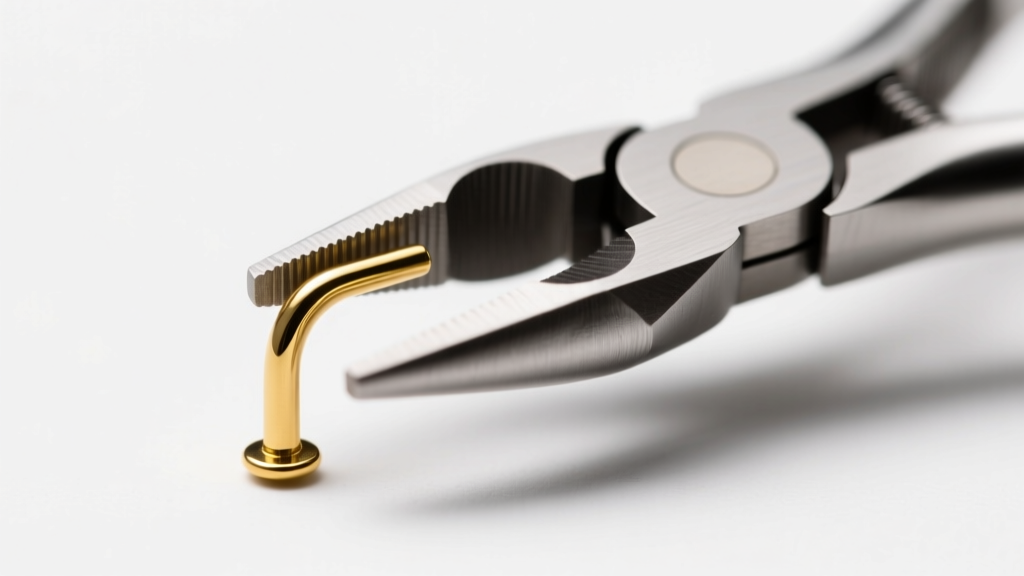
Custom-fitting a nose screw or an L-bend post requires precise angles to match the unique anatomy of your nostril. Using your jewelry needle nose pliers, grip the post exactly where you want the bend to occur. Apply slow, incremental pressure. Never bend the wire directly at the solder joint where the post meets the decorative gem or disc; the stress will snap the solder, ruining the piece. Always leave at least 1.5mm of straight wire between the joint and the bend.
Handling Septum Clickers
Septum clickers feature a delicate hinge mechanism. Never clamp your pliers onto the hinge barrel. The pressure will crush the internal pin, permanently locking the jewelry in an open position. If a clicker is slightly bent from shipping or wear, grip the solid segments of the ring on either side of the hinge and gently coax the metal back into a perfect circle using the torsion method described above.
Troubleshooting Common Nose Ring Adjustments
- The Hoop Won't Close Flush: You likely pulled it into a 'C' shape instead of twisting it. Grip the hoop on either side of the warped section and gently twist in opposing directions to restore the circular plane.
- The Nylon Jaws are Slipping: Over time, nylon pads accumulate skin oils and polishing compounds. Remove the pads and scrub them with warm water and dish soap, or replace them entirely to restore maximum grip.
- Scratches Appearing on Gold: Inspect your pliers. If the nylon pads have worn thin, the underlying steel jaw may be making contact with the jewelry. Replace the pads immediately.
Tool Maintenance and Sterilization Protocols
Your jewelry needle nose pliers are an extension of your piercing hygiene routine. While professionals use medical-grade autoclaves to sterilize tools, at-home enthusiasts must rely on chemical disinfection.
After every use, wipe the jaws and handles with 99% isopropyl alcohol. Avoid using 70% alcohol, as the higher water content can cause the internal steel springs and joints of the pliers to rust over time. For deep cleaning, submerge the metal parts (with nylon pads removed) in a Barbicide solution for 10 minutes, then rinse thoroughly with distilled water and dry completely. Store your tools in a clean, dust-free pouch to prevent environmental contaminants from settling on the jaws.
Final Thoughts on Precision Tooling
Investing in high-quality, nylon-jawed jewelry needle nose pliers is non-negotiable for anyone who wears seamless nose hoops, custom nose screws, or septum clickers. By understanding the metallurgy of your ASTM F136 titanium and solid gold jewelry, and mastering the torsion twist technique, you can safely adjust your pieces at home. This not only saves you costly trips to the piercer for minor adjustments but also ensures your jewelry remains smooth, hygienic, and perfectly fitted to your unique anatomy for years to come. For further reading on jewelry standards and material safety, refer to the guidelines published by ASTM International.


