Nose Ring Earring Guide: Can You Swap Them Safely?
Discover the truth behind the nose ring earring trend. Learn gauge differences, material safety, and how to safely swap multi-use hoops today.

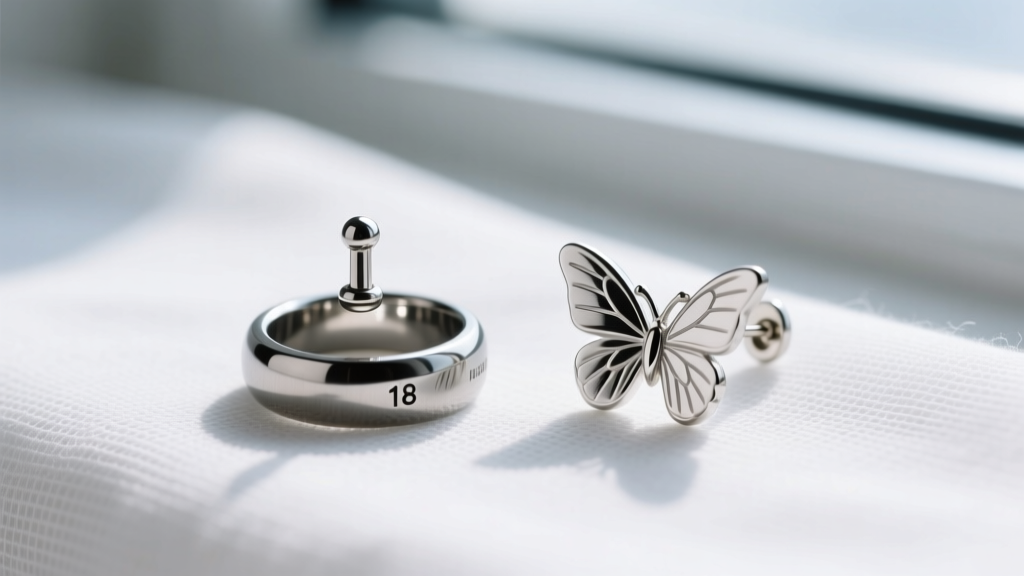
The "Nose Ring Earring" Confusion Explained
If you have ever found yourself typing "nose ring earring" into a search engine, you are not alone. Every day, thousands of newly pierced individuals and jewelry enthusiasts search for this exact phrase. The intent usually falls into two camps: either you are wondering if you can safely insert a standard earlobe earring into your fresh nose piercing, or you are hunting for a versatile, multi-use hoop that works flawlessly in both your ear cartilage and your septum or nostril.
As a general rule, the jewelry industry designs earrings and nose rings with entirely different anatomical requirements in mind. While the aesthetic overlap is undeniable, the structural differences—ranging from wire gauge thickness to closure mechanisms—can mean the difference between a beautifully healed piercing and a torn, infected one. In this comprehensive guide, we will break down the biomechanics of facial versus auricular jewelry, explain the infamous "cheese cutter effect," and teach you how to safely invest in multi-use clicker rings that serve both your ears and your nose.
Why Standard Earrings Fail in Nose Piercings
To understand why a standard earring is rarely a safe substitute for a nose ring, we have to look at the physics of how jewelry interacts with delicate fistula tissue. The Association of Professional Piercers (APP) strongly advises against using jewelry outside of its intended anatomical placement, primarily due to three critical failure points.
The Cheese Cutter Effect
Standard fashion earrings, particularly those designed for lobe piercings, are often manufactured at 22-gauge or 20-gauge thicknesses. This translates to a wire diameter of just 0.64mm to 0.81mm. When a wire this thin is subjected to the tension of a curved hoop or the weight of a dangle, it exerts immense localized pressure on the piercing channel. Over time, this thin wire acts exactly like a cheese cutter, slowly migrating through the tissue, thinning the fistula, and eventually causing the piercing to tear through the skin entirely. Nose rings, by contrast, are typically 18-gauge (1.02mm) or 16-gauge (1.29mm) to distribute weight safely across the nasal cartilage and skin.
Closure Mechanisms and Snagging
Most standard earrings utilize a butterfly-back push post or a flimsy fishhook wire. If you attempt to bend a fishhook earring into a circle to mimic a nostril hoop, the sharp, unpolished tip of the wire will scrape the inside of your piercing channel, introducing bacteria and causing micro-tears. Furthermore, butterfly backs are impossible to sanitize properly and harbor dead skin cells and sebum, making them a breeding ground for staph infections if wedged into the tight, moist environment of a nostril.
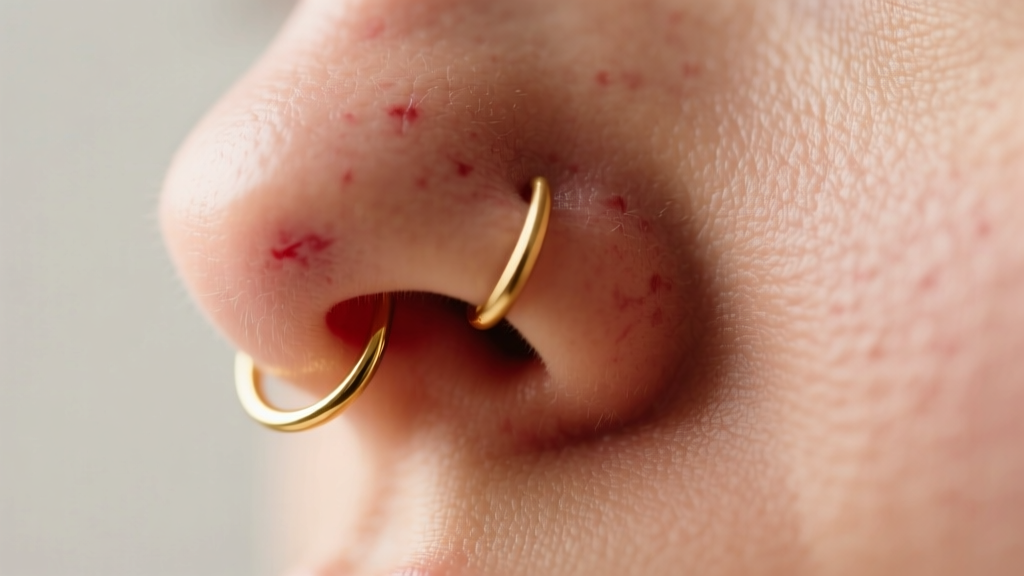
Earring vs. Nose Ring: The Spec Comparison
Before you attempt to swap your jewelry, it is vital to understand the manufacturing differences. Below is a direct comparison of standard earrings versus dedicated nose jewelry.
| Feature | Standard Lobe Earring | Dedicated Nose Ring (Nostril/Septum) |
|---|---|---|
| Typical Gauge | 22G to 20G (0.64mm - 0.81mm) | 18G to 16G (1.02mm - 1.29mm) |
| Standard Material | Brass, plated alloys, surgical steel | Implant-grade titanium (ASTM F136), 14k/18k Gold |
| Closure Type | Push-back, friction post, fishhook | Corkscrew, L-shape, seamless, hinged clicker |
| Inner Diameter | 10mm to 15mm (hoops) | 7mm to 10mm (hoops) |
| Polishing | Mirror finish (exterior only) | Mirror finish (interior and exterior) |
Notice the discrepancy in inner diameter. A standard 12mm earring hoop will look excessively large and droopy on a nostril piercing, increasing the risk of it catching on towels, masks, or clothing, which leads to traumatic swelling.
How to Safely Buy Multi-Use Jewelry
If your goal is to buy a single piece of high-quality jewelry that can transition seamlessly from a septum piercing to a helix or lobe piercing, you need to look for hinged segment rings, commonly known as "clickers."
The Hinged Clicker Solution
A clicker ring features a seamless hinge on one side and a secure, flush-fitting clasp on the other. Because the entire circumference of the ring is perfectly smooth and polished, it can glide through a septum, nostril, or ear cartilage piercing without snagging. An 18-gauge, 9mm or 10mm clicker is widely considered the ultimate multi-use "nose ring earring" hybrid. It is thick enough to prevent the cheese cutter effect in the nose, yet perfectly sized for a snug helix or standard lobe hoop.
Material Grades That Matter
When shopping for multi-use jewelry, material is non-negotiable. The Mayo Clinic notes that contact dermatitis from nickel allergies is one of the most common causes of piercing irritation. Many cheap "fashion" earrings contain high levels of nickel. To avoid this, strictly purchase jewelry certified as ASTM F136 Implant-Grade Titanium or Nickel-Free 14k/18k Solid Gold. Avoid "surgical steel" (316L) for fresh piercings or multi-use swaps, as it still contains trace amounts of nickel that can leach into the micro-tears of a healing fistula.
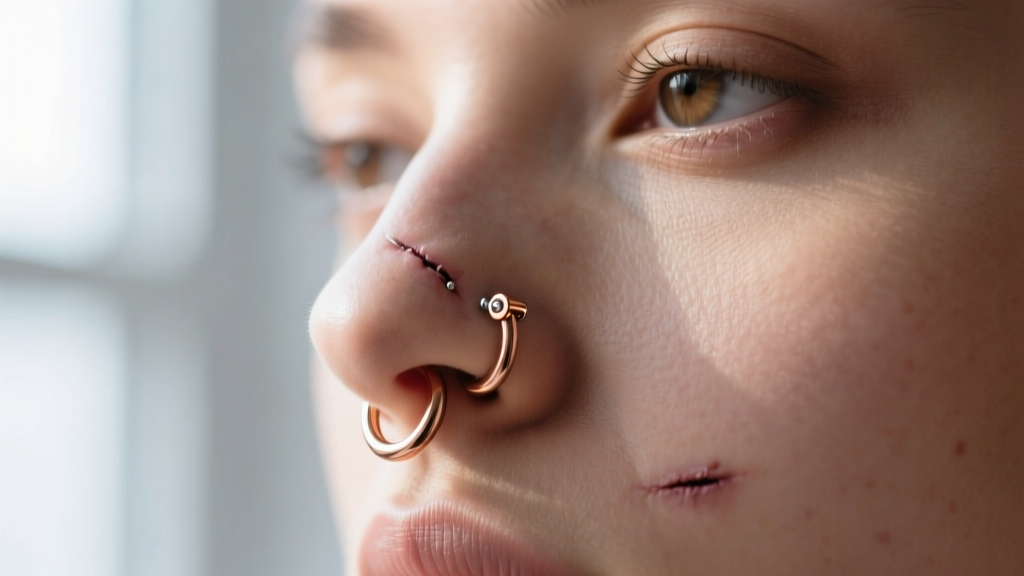
Inner Diameter and Anatomy Matching
Even if you buy a safe, implant-grade clicker, the sizing must match your specific anatomy. Here is a quick sizing framework for multi-use hoops:
- 7mm - 8mm: Ideal for tight nostril piercings and snug ear helixes. Too small for most septums unless the piercing was placed very high and close to the tip of the nose.
- 9mm - 10mm: The "Goldilocks" size for multi-use jewelry. Fits comfortably in a standard septum, most nostrils, and standard earlobes.
- 11mm - 12mm: Best reserved for earlobes, daith piercings, or septums with a lower placement. Will likely look too loose and droopy on a nostril.
"Never force a 10mm hoop into an 8mm nostril piercing just because it was the only earring you had on hand. The excess tension will cause immediate contact swelling and delay your healing process by weeks." — Professional Piercing Standard Guidelines
Step-by-Step Swapping Guide
If you have confirmed your piercing is fully healed (minimum 4-6 months for nostrils, 6-8 months for septums) and you have purchased a properly sized, implant-grade clicker, follow this protocol to swap your jewelry safely:
- Sanitize: Wash your hands thoroughly with antibacterial soap and pat dry with a lint-free paper towel. Do not use cloth towels, which harbor bacteria.
- Prep the Jewelry: Wipe the new clicker ring with a sterile saline wound wash or 70% isopropyl alcohol. Ensure the hinge and clasp are free of any manufacturing dust.
- Remove the Old Jewelry: If removing a seamless ring, gently twist the ends apart laterally (side-to-side), never pull them away from each other, which warps the metal.
- Insert the Clicker: Slide the smooth, rounded post of the clicker through the fistula. Follow the natural curve of your piercing channel.
- Secure the Clasp: Push the hinged segment closed until you hear and feel a distinct "click." Run your tongue or a clean finger over the seam to ensure it is completely flush and will not snag.
Final Verdict on the Nose Ring Earring Trend
The search for a "nose ring earring" stems from a desire for versatility and convenience, which is entirely valid in modern jewelry styling. However, treating ear and nose jewelry as completely interchangeable without respecting the differences in gauge, diameter, and material is a recipe for tissue damage and infection. By abandoning flimsy butterfly-back earrings and fishhook wires in favor of high-quality, implant-grade titanium hinged clickers, you can safely curate a minimalist jewelry collection that transitions flawlessly from your septum to your ear cartilage without compromising your piercing health.


