Needle Nose Pliers for Jewelry: Nose Ring Value & Budget Guide
Discover the true value of needle nose pliers for jewelry. Compare budget vs premium tools for handling 16G to 20G nose hoops safely.

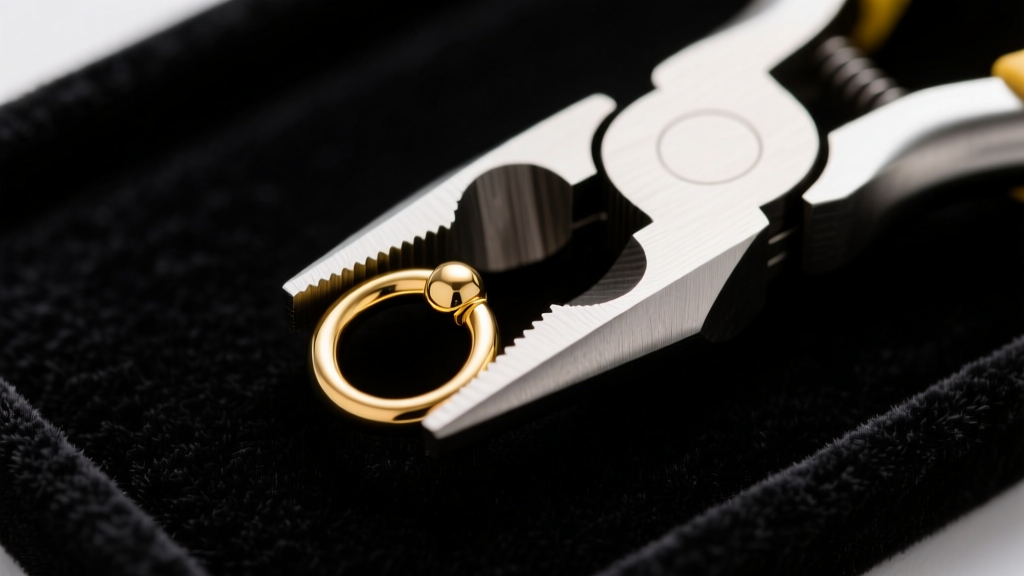
You have just invested $140 in a custom 14k gold, 16-gauge seamless septum hoop. The craftsmanship is flawless, the polish is mirror-like, and the implant-grade titanium or gold alloy is perfectly suited for your healed piercing. But when it comes time to adjust the tension, open the jump ring, or seat a captive bead, you reach for a standard pair of hardware store pliers. In a fraction of a second, the serrated steel teeth bite into the soft precious metal, leaving permanent, jagged scratches across your expensive nose jewelry.
When evaluating the true cost of maintaining and swapping nose piercing jewelry, the tools you use are just as critical as the metals you wear. Finding the right needle nose pliers for jewelry is not just about convenience; it is a vital budget and value assessment that protects your investment. In this comprehensive guide, we break down the material science, jaw mechanics, and cost-per-use value of jewelry-specific pliers, ensuring your 20G to 14G nose hoops remain pristine for years to come.
The Mechanics of Nose Jewelry Tension and Torque
Nose jewelry, particularly septum rings and nostril hoops, operates under intense mechanical tension. A standard 16-gauge (1.2mm) or 14-gauge (1.6mm) captive bead ring (CBR) relies on the inherent spring tension of the metal to hold a small bead in place. When you are dealing with high-quality materials like ASTM F136 implant-grade titanium or annealed 14k gold, the metal is remarkably resilient but highly susceptible to surface marring.
To open a 7mm or 8mm nose hoop without warping its circular geometry, you need precision tools that distribute torque evenly. Standard hardware pliers feature thick, blunt tips that simply cannot fit inside the narrow diameter of a nostril hoop. Furthermore, the aggressive serrations designed to grip rusty nails will instantly chew through the delicate anodized layers of niobium or the high-polish finish of gold, creating micro-abrasions that can harbor bacteria and irritate the delicate fistula of a nose piercing.
Why Standard Hardware Pliers Destroy 16G and 18G Jewelry
The failure modes of using non-jewelry pliers on nose rings are well-documented among professional piercers and jewelers. Here is exactly what happens when you use the wrong tool:
- Surface Marring and Scratching: Carbon steel hardware pliers are harder than gold and softer jewelry alloys. The serrated teeth will gouge the metal, destroying the mirror finish and reducing the resale or heirloom value of the piece.
- Carbon Transfer and Rust: Hardware pliers often contain high carbon content and are prone to microscopic rust. Transferring these particles into a healed or healing nose piercing can cause severe localized irritation or discoloration of the skin.
- Geometric Warping: Because hardware pliers have thick jaws (often 5mm or wider at the tip), applying pressure to a small 8mm septum ring forces the metal to fold or kink rather than bend smoothly along its radial axis.
- Slippage and Projectile Beads: Without the precise, flush-milled tips of jewelry pliers, the tool is highly likely to slip off a 2.5mm captive bead, sending it flying across the room at high velocity.
Budget vs. Premium: Evaluating Needle Nose Pliers for Jewelry
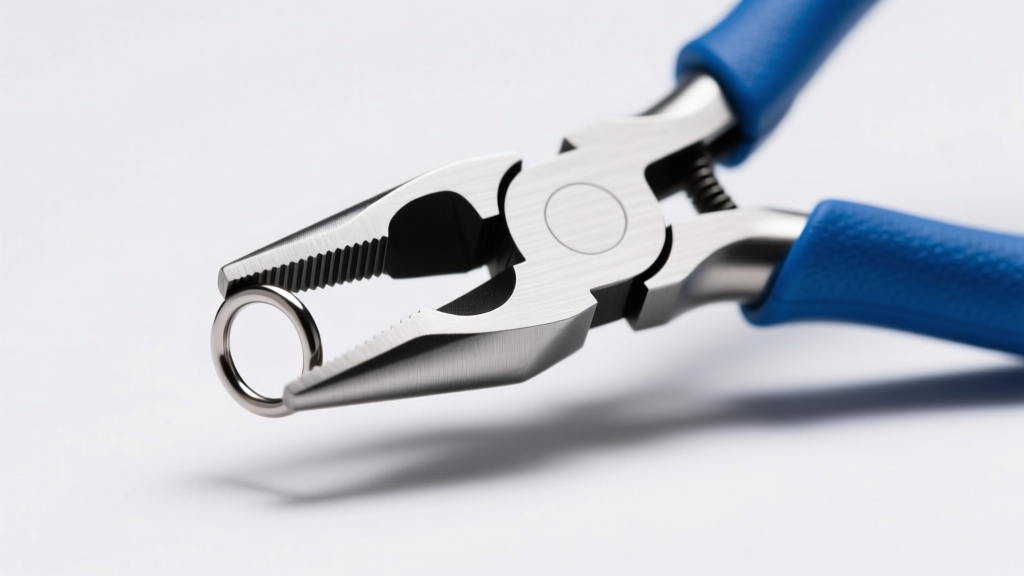
Not all jewelry pliers are created equal. When shopping for needle nose pliers for jewelry (often categorized alongside chain-nose and flat-nose pliers), the market is divided into three distinct tiers. Assessing the value of each tier requires looking at the jaw material, the pivot joint quality, and the spring mechanism.
Entry-Level ($10–$25): Nylon-Jaw and Basic Steel
For the casual wearer who only swaps their nostril stud twice a year, entry-level pliers from brands like EuroTool or basic Amazon imports offer acceptable value. The most crucial feature at this price point is the nylon jaw insert. These replaceable plastic pads cover the steel teeth, providing a soft, non-marring grip that is essential for handling polished gold and titanium seamless hoops. However, the pivot joints on budget pliers often develop lateral play over time, making it difficult to align the tips perfectly when trying to close a stubborn 14-gauge CBR.
Mid-Tier ($25–$60): Serrated vs. Smooth Jaw Titanium-Coated
The mid-tier is the sweet spot for most jewelry enthusiasts. These pliers feature precision-milled, smooth stainless steel jaws without serrations. Many are coated with titanium nitride (TiN) to increase surface hardness and prevent corrosion. The tips are drawn down to a fine 1mm to 1.5mm width, allowing them to reach deep into the tight curves of a 6mm nostril hoop. The inclusion of a dual-leaf spring mechanism reduces hand fatigue, which is critical when you are applying the sustained, heavy pressure required to open thick-gauge septum rings.
Professional Grade ($60–$150+): Tungsten and Precision-Milled
Professional jewelers and high-end piercing studios invest in premium pliers manufactured by companies like PepeTools or Lindstrom. These tools feature tungsten carbide inserts or flawlessly polished, hardened steel jaws that will never mar the jewelry. The pivot joints are laser-aligned and riveted to eliminate any side-to-side wobble. While the upfront cost is high, the cost-per-use over a decade of handling fine body jewelry makes them an exceptional long-term value.
| Tool Tier | Jaw Material / Type | Tip Width | Ideal Nose Jewelry | Est. Price Range |
|---|---|---|---|---|
| Entry-Level | Nylon-Jaw / Carbon Steel | 2.5mm - 3.0mm | 18G-20G Gold Hoops, Acrylic | $10 - $25 |
| Mid-Tier | Smooth Stainless / TiN Coated | 1.5mm - 2.0mm | 16G-14G Titanium CBRs, Niobium | $25 - $60 |
| Professional | Tungsten Carbide / Hardened Steel | 1.0mm - 1.5mm | 14G+ Heavy Septum, 18k Gold | $60 - $150+ |
Specific Nose Piercing Applications
Different styles of nose jewelry demand specific techniques, and your pliers must be up to the task. Here is how needle nose and chain nose pliers apply to common nose ring styles:
Captive Bead Rings (CBRs)
While specialized CBR opening and closing pliers exist, a high-quality pair of smooth-jaw needle nose pliers is often required to manipulate the ring itself. For 14-gauge septum CBRs, the tension is immense. You must use pliers with a robust pivot joint to grip the ring near the bead gap and gently twist outward, rather than pulling the ring apart like a wishbone, which permanently warps the circle.
Seamless Hoops and Segment Rings
Seamless hoops rely on a friction fit where one end slides into a hollow tube. To open them, you must twist the ends laterally (side-to-side), never pull them apart. Nylon-jaw needle nose pliers provide the necessary grip to twist stiff 16-gauge titanium without the tool slipping and scratching the highly polished exterior of the hoop.
Nose Screws and L-Bends
Custom-fitting a nose screw requires bending the wire to match the exact anatomy of your nostril. Using flat-nose or needle nose pliers with a smooth, flush jaw allows you to create sharp, precise 90-degree bends in 20-gauge or 18-gauge wire without leaving tool marks on the portion of the jewelry that will sit visibly on the outside of the nose.
The True Cost-Per-Use Value Framework
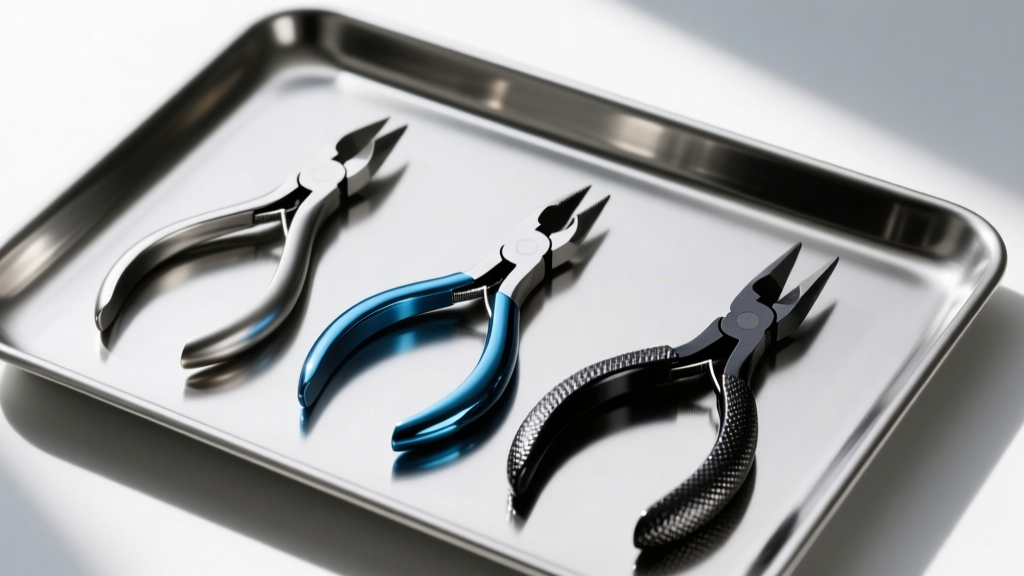
To accurately assess the budget for your jewelry tools, apply a cost-per-use framework. If you purchase a $15 pair of hardware pliers and subsequently ruin a $120 gold septum ring, your actual cost is $135. Conversely, investing $45 in a mid-tier pair of smooth-jaw jewelry pliers that lasts for five years and safely handles 50 jewelry swaps results in a cost-per-use of just $0.90.
When you factor in the risk of dropping and losing a bead because of tool slippage, or the medical costs associated with irritating a piercing due to carbon transfer from rusty hardware tools, the premium placed on dedicated jewelry pliers is not just justified—it is economically essential.
Sterilization and Tool Maintenance
According to guidelines emphasized by the Association of Professional Piercers (APP), any tool that comes into contact with body jewelry must be properly sanitized to prevent cross-contamination. While professional studios use medical-grade autoclaves, at-home enthusiasts must adopt strict hygiene protocols.
After every use, wipe down your needle nose pliers with 70% isopropyl alcohol. If you are using nylon-jaw pliers, inspect the plastic pads regularly; they can trap dead skin cells, sebum, and jewelry polishing compounds. Replace the nylon inserts as soon as they become deeply grooved or discolored. For smooth steel or tungsten pliers, an ultrasonic cleaner followed by an alcohol bath will ensure the pivot joint remains free of microscopic debris that could cause the tool to stiffen or scratch your jewelry.
Final Verdict on Tool Investment
The quest for the perfect needle nose pliers for jewelry ultimately comes down to respecting the materials you wear. Nose piercing jewelry represents a significant financial and aesthetic investment. By bypassing the hardware aisle and investing in purpose-built, smooth-jaw, or nylon-padded jewelry pliers, you safeguard the structural integrity and visual brilliance of your collection. Whether you opt for a $20 nylon-jaw starter tool or a $100 tungsten-carbide professional instrument, the value is realized every time your nose hoop slips perfectly into place, entirely free of scratches and tool marks.


