Nose Bridge Jewelry: Comparing Titanium, Gold, and Steel
Discover the best metals for nose bridge jewelry. Compare implant-grade titanium, solid gold, and surgical steel for optimal healing and rejection prevention.

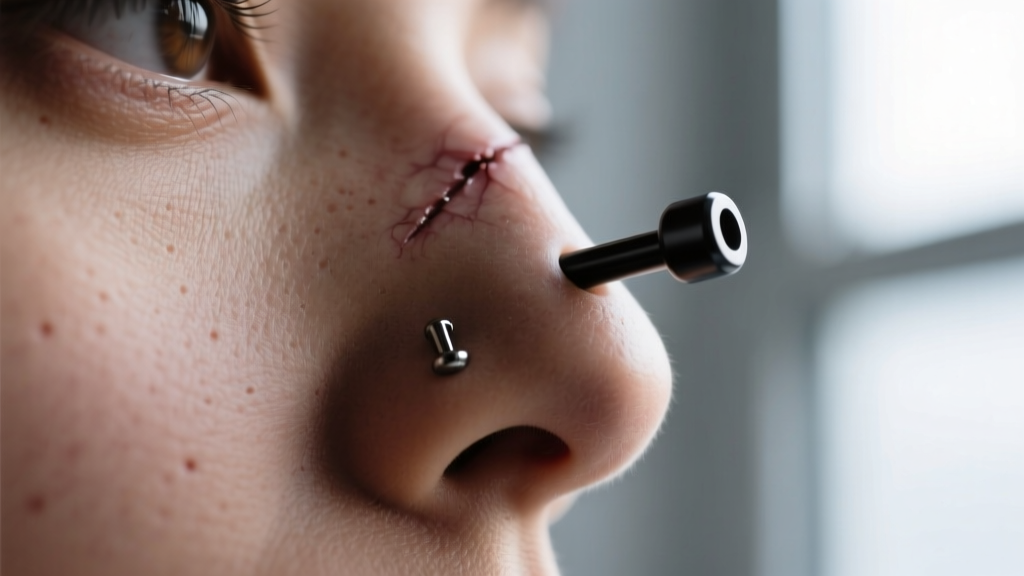
When it comes to facial modifications, the bridge piercing is undeniably striking. Sitting horizontally across the nasal bridge, this modification commands attention. However, it is also notoriously unforgiving. Because a bridge piercing is fundamentally a surface piercing, it carries a much higher risk of migration and rejection than a standard nostril or septum piercing. While aftercare and piercer skill are vital, the single most critical variable you can control is your choice of nose bridge jewelry. The metallurgical properties of the barbell resting beneath your skin will dictate whether your body accepts the modification or pushes it out.
In this comprehensive material comparison, we will dissect the biocompatibility, weight, and structural integrity of the three most common metals used for nose bridge jewelry: implant-grade titanium, solid gold, and surgical steel. By understanding the exact science behind these alloys, you can make an informed decision that maximizes your chances of a lifelong, healthy piercing.
The Unique Anatomy of a Bridge Piercing
To understand why material selection is paramount, we must first look at the anatomy of the piercing itself. A bridge piercing does not pass through a solid flap of cartilage or a thick lobe. Instead, it sits just beneath the thin layer of skin and subcutaneous tissue over the nasal bone. This creates constant tension on the entry and exit points.
The body's immune system is highly sensitive to foreign objects in surface-level tissue. If the metal leaches even microscopic amounts of reactive ions, the immune system triggers an inflammatory response. Over time, this chronic inflammation causes the body to treat the jewelry like a splinter, slowly pushing it toward the surface until it rejects entirely. Furthermore, the physical weight of the jewelry exerts a downward gravitational pull. Heavier metals can accelerate the 'cheese cutter' effect, where the weight of the bar slowly slices through the thin tissue bridge. Therefore, your nose bridge jewelry must be both chemically inert and exceptionally lightweight.
The Big Three: Material Breakdown for Bridge Piercings
Not all metals are created equal. The terminology used in jewelry shops can be misleading, so it is crucial to look for specific metallurgical grading when shopping for bridge barbells.
Implant-Grade Titanium (The Gold Standard)
For initial bridge piercings, and for those prone to rejection, implant-grade titanium is the undisputed champion. Specifically, you must look for titanium that meets the ASTM F136 or ASTM F1295 standards (Ti6Al4V ELI). This is the exact same alloy used in surgical joint replacements and pacemakers.
- Biocompatibility: Titanium is entirely nickel-free and highly inert. It forms a passive oxide layer when exposed to oxygen, which prevents corrosion and stops metal ions from leaching into the surrounding tissue.
- Weight: With a density of roughly 4.43 g/cm³, titanium is nearly 45% lighter than steel and significantly lighter than gold. This reduced weight minimizes the gravitational drag on the delicate bridge tissue, drastically lowering the risk of migration.
- Customization: Titanium can be safely anodized. By running an electrical current through the metal in an electrolytic bath, the oxide layer thickens and refracts light, allowing you to change the color of your nose bridge jewelry to gold, rose, blue, or purple without applying any toxic paints or platings.
Solid Gold (14k vs 18k)
Gold is a classic choice for healed piercings, but it requires careful selection for a bridge piercing. Pure 24k gold is too soft for body jewelry, so it must be alloyed with other metals to increase durability. This is where complications arise.
- The Nickel Threat: Many lower-quality 14k gold alloys use nickel to create white gold or to harden yellow gold. According to the American Contact Dermatitis Society, nickel is the leading cause of allergic contact dermatitis. In a high-tension surface piercing, even trace nickel can trigger rejection.
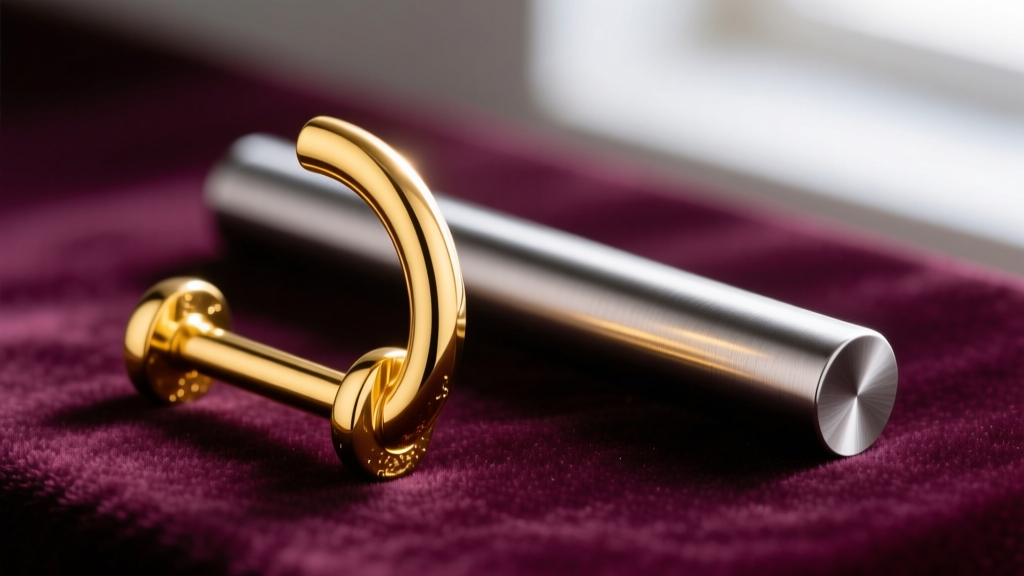
- Palladium Alloys: If you want gold nose bridge jewelry, you must seek out 14k or 18k gold that is explicitly alloyed with palladium or silver, not nickel. 18k gold is often preferred for initial piercings by high-end studios because it contains a higher percentage of pure gold (75%) and requires fewer reactive alloy metals to maintain its structure.
- Weight Factor: Gold is incredibly dense (up to 19.3 g/cm³ for pure gold, and roughly 15 g/cm³ for 18k alloys). A heavy gold barbell can pull on a healing bridge piercing, making it a better choice only after the fistula has fully matured and stabilized (usually after 12 to 18 months).
Surgical Steel (The Risky Budget Option)
Surgical steel (typically 316L or 316LVM) is the most common and affordable metal in the body jewelry market. However, it is highly controversial for surface piercings like the bridge.
- Nickel Content: 316L steel contains between 8% and 10.5% nickel. While the metal is polished to create a protective chromium oxide layer, this layer can be breached by the chloride in human sweat and saline aftercare sprays. Once breached, nickel ions leach into the tissue.
- Healing Verdict: The Association of Professional Piercers (APP) strongly advises against using steel for fresh surface piercings. While many people wear steel in their earlobes without issue, the bridge is a high-rejection zone. Using steel here is an unnecessary gamble that often ends in the body pushing the jewelry out.
Material Properties Comparison Matrix
To visualize how these metals stack up against one another specifically for the demands of a bridge piercing, refer to the comparison matrix below.
| Property | Implant Titanium (ASTM F136) | 18k Solid Gold (Nickel-Free) | Surgical Steel (316LVM) |
|---|---|---|---|
| Nickel Content | 0% (None) | 0% (If Palladium alloyed) | 8% - 10.5% |
| Density (Weight) | 4.43 g/cm³ (Ultra-Light) | ~15.6 g/cm³ (Heavy) | 8.0 g/cm³ (Moderate) |
| Corrosion Resistance | Exceptional | Excellent | Moderate (Vulnerable to chlorides) |
| Surface Finish | Mirror polish or Anodized | High Polish | Mirror polish |
| Bridge Healing Suitability | Highly Recommended | Conditionally Recommended | Not Recommended |
| Average Price Range | $40 - $90 | $150 - $350+ | $15 - $30 |
Surface Bar vs. Curved Barbell: Does Material Change the Choice?
The shape of your nose bridge jewelry is inextricably linked to the material you choose. Historically, piercers used curved barbells for bridge piercings. However, the natural curve of the barbell creates outward pressure on the entry and exit holes, forcing the tissue to bow and increasing the likelihood of rejection.
Today, the industry standard is the surface bar (often called a staple bar). This barbell features a straight post that sits flat beneath the skin, with two 90-degree angles that bring the decorative ends to the surface. This design eliminates the outward pressure of a curved barbell.
When selecting a surface bar, titanium is virtually mandatory. Because surface bars require precise bending and machining to achieve those sharp 90-degree angles, lower-quality metals can develop microscopic stress fractures or rough edges at the bends. These rough spots can harbor bacteria and irritate the fistula. High-end brands like Industrial Strength or Anatometal CNC-machine their titanium surface bars to ensure flawless, mirror-finished angles that glide through the tissue without causing micro-trauma.
Real-World Troubleshooting: Signs of Metal Rejection
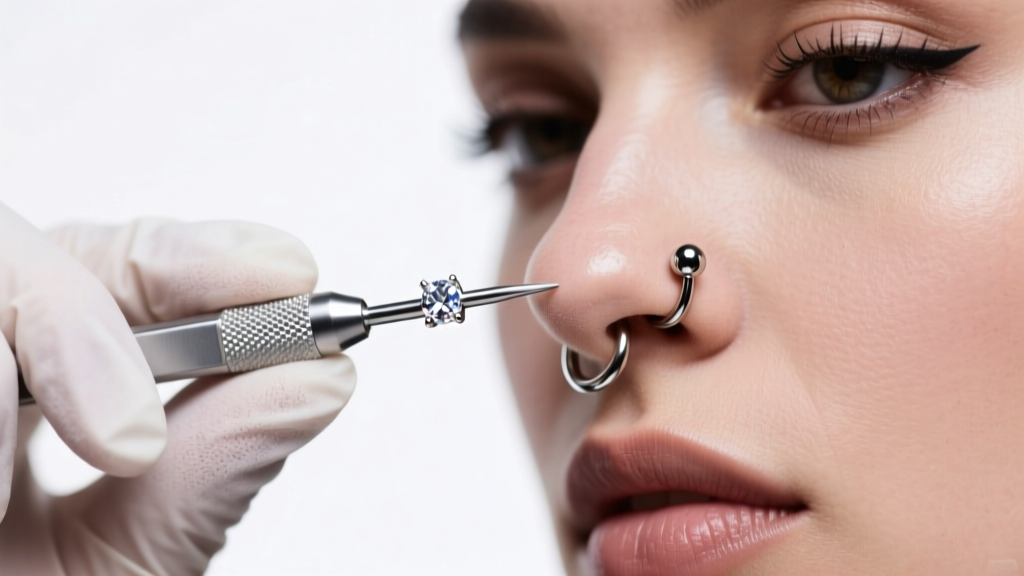
Even with perfect aftercare, the body may decide to reject a bridge piercing. However, choosing the wrong metal will accelerate this process from a matter of years to a matter of weeks. If you are currently wearing nose bridge jewelry, you must monitor the tissue for the following failure modes:
- The 'Window' Effect: If you can see the shadow or color of the barbell through the skin of your bridge, the tissue is thinning. This is often caused by the heavy weight of steel or gold dragging the bar upward toward the epidermis.
- Chronic Flaking and Itching: While some peeling is normal during the first month of healing, persistent flaking, redness, and intense itching at the entry points are hallmark signs of nickel contact dermatitis. If you are wearing surgical steel, this is your cue to downgrade to titanium immediately.
- Enlarged Piercing Holes: If the holes begin to look like horizontal slits rather than tight circles, the 'cheese cutter' effect is underway. The jewelry is migrating. Switching to a lighter 14-gauge or 12-gauge titanium surface bar can sometimes halt this process if caught early enough.
Final Verdict for Your Bridge Piercing
A bridge piercing is a significant commitment that requires respect for human anatomy and metallurgy. When selecting nose bridge jewelry, never compromise on material quality to save money. Implant-grade titanium (ASTM F136) remains the absolute best choice for both initial healing and long-term retention due to its zero-nickel composition and featherlight density. If you desire the luxury of gold, ensure it is a high-quality 18k palladium alloy, and wait until the piercing is fully seasoned before making the swap. Avoid surgical steel entirely for this specific piercing location. By pairing the right metal with a properly angled surface bar, you give your bridge piercing the best possible foundation to thrive for years to come.


