Nose Jewelry Types: A Technical Anatomy & Fitting Guide
Explore the biomechanics and metallurgy of nose jewelry types. Expert guide to gauge, tension, and material grades for optimal healing and wear.

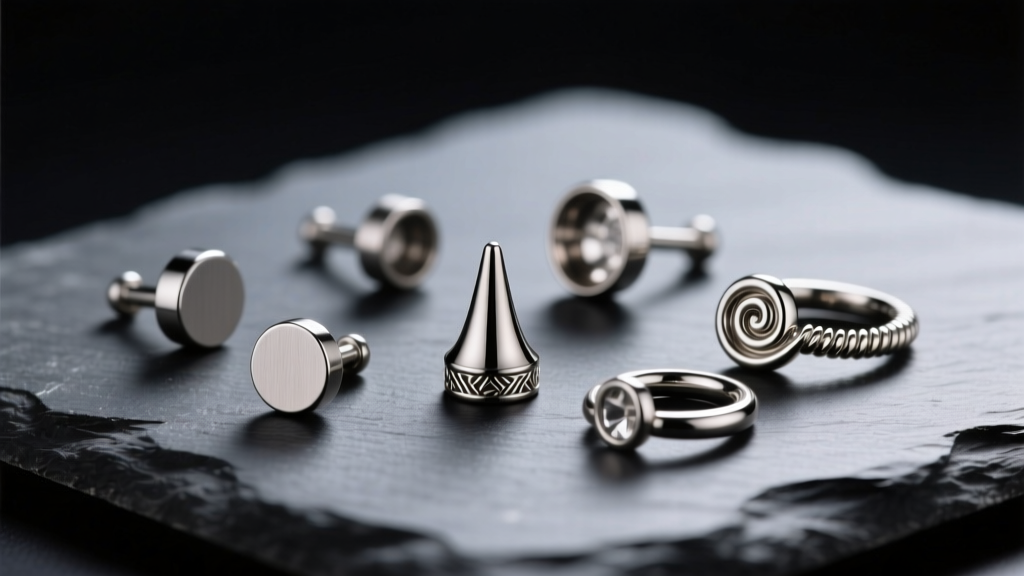
When evaluating nose jewelry types, most consumers focus purely on aesthetics. However, from a clinical and biomechanical perspective, the structural anatomy of your jewelry dictates the health of your fistula (the piercing canal). The wrong retention mechanism, improper alloy, or incorrect tension vector can lead to hypertrophic scarring, migration, and chronic irritation. This technical deep dive bypasses basic style guides to examine the metallurgy, physics, and precise fitting metrics of modern nose jewelry.
The Metallurgical Baseline: Implant-Grade Standards
Before analyzing specific nose jewelry types, we must establish the metallurgical baseline. The term 'surgical steel' is largely a marketing misnomer. For initial piercings and long-term wear, the Association of Professional Piercers (APP) strictly recommends materials that meet specific ASTM (American Society for Testing and Materials) standards.
- ASTM F136 Titanium (Ti6Al4V ELI): The gold standard for biocompatibility. It is entirely nickel-free, lightweight, and can be anodized to create a safe, non-toxic oxide layer for color variations.
- ASTM F138 Steel (316LVM): Implant-grade stainless steel. While highly polished and safe for healed piercings, it contains trace nickel and can trigger contact dermatitis in sensitive individuals during the inflammatory healing phase.
- Niobium (Unalloyed): Highly malleable and biocompatible, frequently used for seamless rings and clickers due to its ability to hold a bend without snapping.
- 14k to 18k Solid Gold: Must be alloyed for body safety (avoiding cadmium and nickel). Yellow and rose gold are preferred over white gold, which often relies on nickel or palladium alloys that can cause tissue reactions.
Biomechanics of Nostril Stud Types
The nostril is a highly mobile area of the face, subject to micro-traumas from facial expressions, sleeping, and washing. The retention mechanism of your stud determines how much kinetic energy is transferred to the healing fistula.
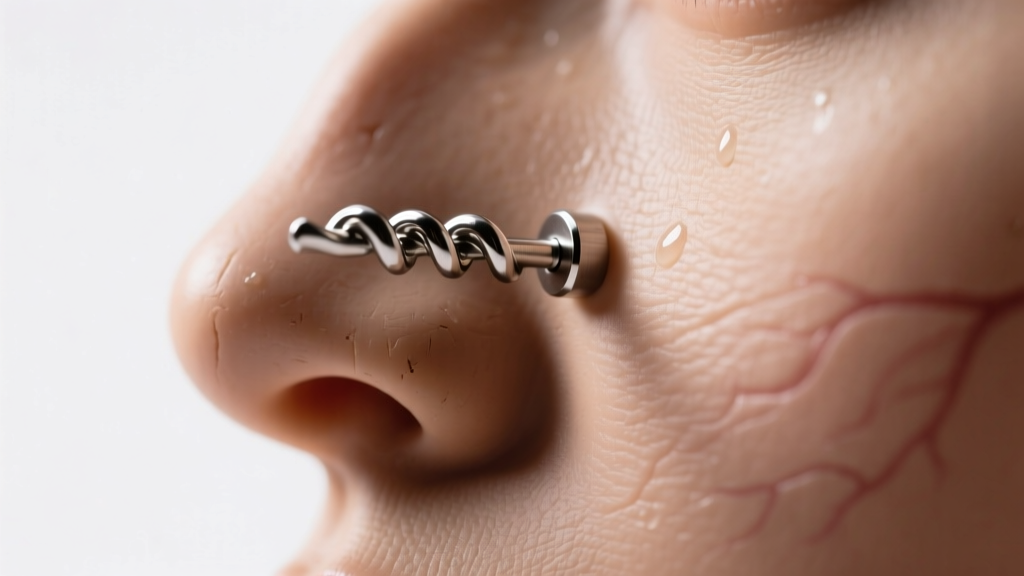
L-Bend vs. Corkscrew vs. Flat-Back Labrets
Traditional nose bones (straight posts with a retaining bead) are obsolete in professional studios due to their high tissue-tearing risk. Today, the market relies on three primary stud architectures:
| Stud Type | Retention Mechanism | Tissue Stress Level | Best Application |
|---|---|---|---|
| L-Bend | 90-degree wire drop | Moderate | Healed, tight nostrils |
| Corkscrew | Helical wire curve | Low to Moderate | Healed, active lifestyles |
| Flat-Back Labret | Internal thread / Threadless tension | Minimal | Initial piercings, swollen tissue |
The Flat-Back Advantage: A flat-back labret (typically 18G or 16G) distributes pressure evenly across the interior nasal mucosa. For a fresh piercing, an 18G (1.02mm) titanium flat-back with a 5/16-inch (8mm) post length accommodates initial edema (swelling). Once the swelling subsides around week 6, downsizing to a 1/4-inch (6mm) post is critical to prevent the 'cheese cutter effect' and snagging.
Hoop Tension and Ring Dynamics
Transitioning from a stud to a hoop introduces complex rotational forces. The diameter of the hoop must perfectly match the curvature of the nostril or the septum's anatomical drop. If the diameter is too small, the hoop creates an angular vector that pulls the fistula out of its natural alignment, leading to migration.
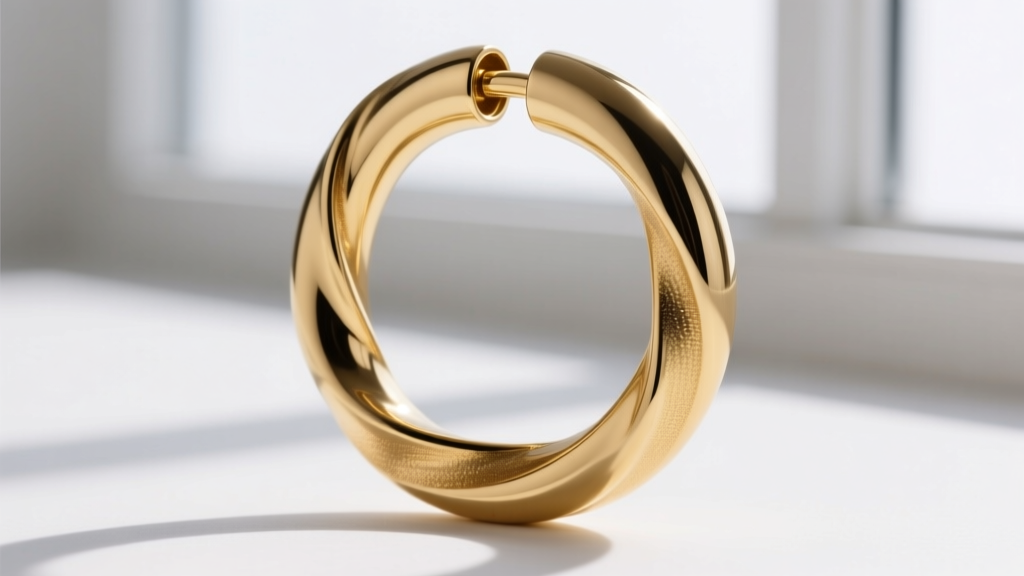
Seamless Rings vs. Segment Rings vs. Clickers
Continuous Seamless Rings: Crafted from a single piece of wire, these rely on the metal's inherent tension to stay closed. They are excellent for healed septums and nostrils but require precise twisting techniques to open and close without warping the circular geometry.
Segment Rings: Feature a removable segment that snaps into place via tension. While they provide a flawless 360-degree circle, the internal tension required to keep the segment locked can make them difficult to manipulate without specialized ring-opening pliers.
Clickers: Hinged rings with a locking snap mechanism. They are the most user-friendly hoop type, particularly for septum piercings. However, the hinge and locking clasp add bulk, meaning the internal diameter must be carefully measured to avoid resting the clasp directly inside the piercing channel.
Gauge Sizing and the 'Cheese Cutter' Effect
Gauge refers to the thickness of the jewelry wire. In the United States, the gauge system is inverse: the higher the number, the thinner the wire. Understanding gauge physics is vital for preventing tissue rejection.
- 22G (0.64mm) & 20G (0.81mm): Commonly found in commercial mall-kiosk jewelry. These thin gauges act like a wire cheese cutter against the skin. If the jewelry is snagged, the thin wire will slice through the fistula rather than stretching the tissue.
- 18G (1.02mm): The standard minimum thickness for a safe, stable nostril piercing. It provides enough surface area to distribute kinetic force without compromising the delicate nasal cartilage.
- 16G (1.29mm): The standard for septum piercings and high-nostril placements. The thicker wire provides structural rigidity, preventing the jewelry from bending and irritating the septal sweet spot.
According to the APP Guidelines for Initial Piercings, jewelry must have a mirror-finish polish to prevent microscopic bacteria from harboring in surface scratches, regardless of the gauge or metal type.
Expert Troubleshooting: Migration and Hypertrophy
Even with perfect aftercare, the wrong nose jewelry type can trigger adverse tissue responses. Here is how to diagnose and correct jewelry-induced complications:
Hypertrophic Scarring (Irritation Bumps)
Often mistaken for keloids, these localized bumps are usually the result of mechanical friction. If you are wearing an L-bend stud that shifts every time you speak, or a hoop with a diameter that is too tight (creating an upward angle), the fistula will produce excess collagen as a defense mechanism. The Fix: Switch to an internally threaded or threadless 18G titanium flat-back labret. The stable post eliminates micro-movements, allowing the bump to dehydrate and flatten within 2 to 4 weeks.
Angle Rejection and Migration
If the piercing hole appears to be elongating or the jewelry sits at an aggressive slant, the tissue is actively rejecting the foreign object. This is frequently caused by wearing heavy, dangling hoop styles before the collagen matrix of the fistula has fully matured (which takes 9 to 12 months for nostrils). The Fix: Immediately remove the heavy hoop and insert a lightweight, implant-grade titanium stud. If the skin between the piercing and the edge of the nostril is less than 2mm, consult a professional piercer or dermatologist, as the piercing may need to be retired to prevent a full facial tear.
Ultimately, mastering the technical specifications of nose jewelry types transforms your piercing from a high-maintenance wound into a stable, lifelong accessory. Prioritize ASTM-certified metals, respect the physics of gauge thickness, and always match the retention mechanism to your tissue's current healing phase.


