Can You Use an Earring as a Nose Ring? Care & Safety Guide
Wondering if you can use an earring as a nose ring? Learn the hygiene risks, gauge mismatches, and essential cleaning tips to avoid infections.

The Short Answer: Why Earrings and Nose Rings Aren't Interchangeable
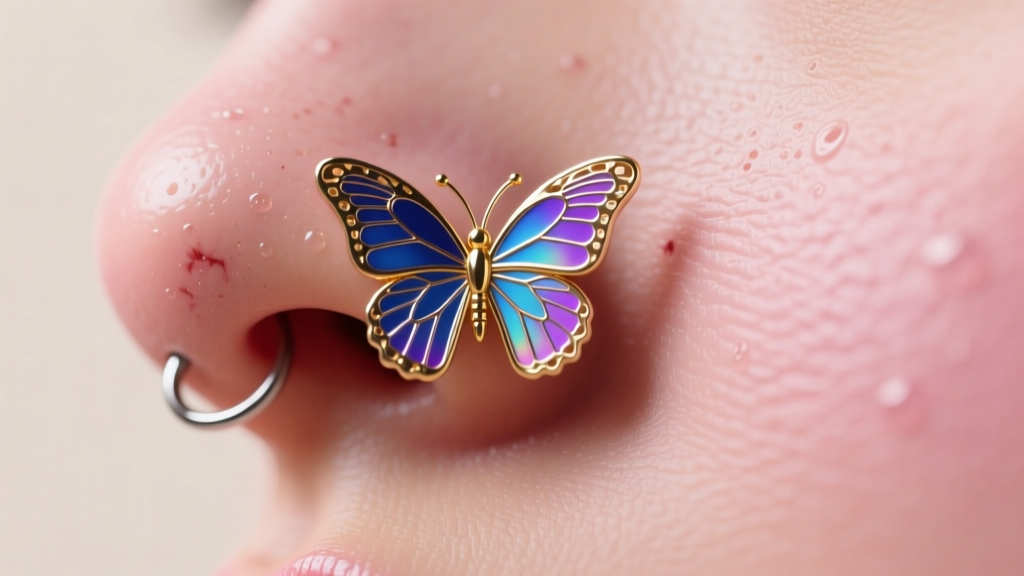
When you lose a nose stud or are traveling without your usual jewelry, a common emergency question arises: can you use an earring as a nose ring? The short answer is that while you physically might be able to push a standard earlobe post through a fully healed nostril fistula, it is highly discouraged by professional piercers and dermatologists. Doing so introduces severe care, maintenance, and hygiene complications that can quickly lead to infection, tissue tearing, and allergic contact dermatitis.
From a maintenance perspective, earlobe jewelry and nasal jewelry are engineered for entirely different anatomical environments. The nasal cavity is a mucous membrane-adjacent zone with high bacterial loads, while the earlobe is a relatively dry, low-mobility appendage. Substituting one for the other compromises your daily cleaning routine and creates structural vulnerabilities in the piercing channel. In this comprehensive care guide, we break down the exact anatomical mismatches, the hidden hygiene hazards of earring backings, and the strict cleaning protocols you must follow if you are forced to use an earring as a temporary placeholder.
Gauge and Post Length: The Physical Mismatches
The most immediate threat to your piercing's health when using an earring in your nose is the physical dimension mismatch. Standard fashion earrings are typically manufactured at 22-gauge (0.64mm) or 20-gauge (0.81mm). In contrast, professional nostril piercings are usually performed at 18-gauge (1.02mm) or 16-gauge (1.29mm).
If you insert a thinner 22-gauge earring post into an 18-gauge fistula, you trigger what piercers call the 'cheese-cutter effect.' The thin wire fails to support the tissue channel, causing the piercing hole to slowly stretch and migrate downward, eventually leading to rejection. Furthermore, earlobe posts are designed to traverse thick cartilage and skin, typically measuring 8mm to 12mm in length. Nostril tissue is incredibly thin, usually ranging from 1.5mm to 3mm. An earring post will protrude deeply into your nasal cavity, scraping the sensitive mucosa, trapping nasal mucus, and making proper saline cleaning nearly impossible without causing internal abrasions.
The Hygiene Hazard: Butterfly Backs and Bacteria Traps
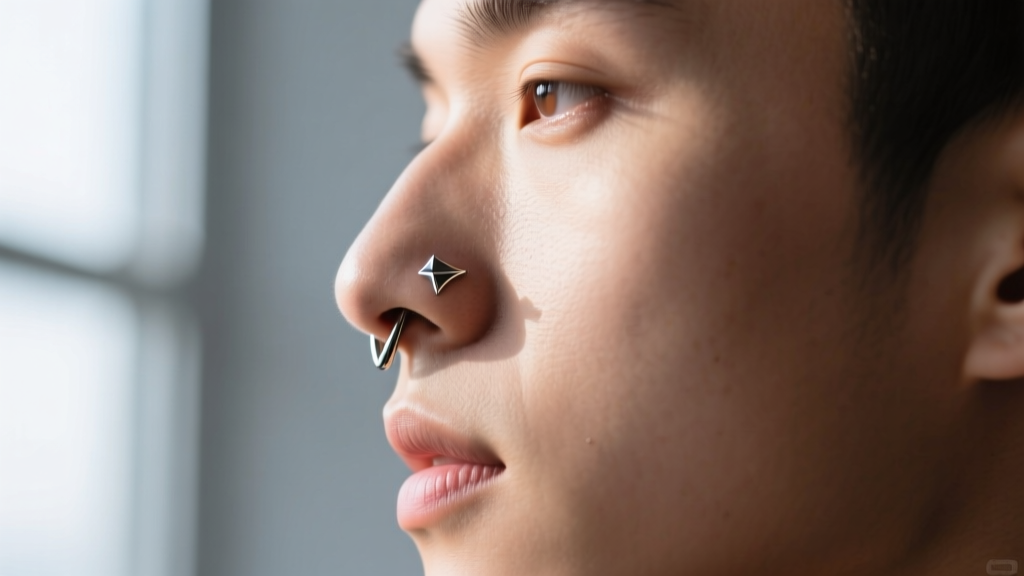
When evaluating if you can use an earring as a nose ring from a hygiene standpoint, the earring backing is the primary culprit for infection. Standard push-backs or butterfly clutches are notorious harbors for Staphylococcus aureus, dead skin cells, sebum, and environmental dust. On an earlobe, you can easily remove the backing, scrub it with antibacterial soap, and let it dry. Inside a nostril, however, the environment is warm, damp, and enclosed.
Attempting to secure a butterfly back inside your nose requires you to blindly fumble with your fingers, transferring bacteria directly from your hands into the nasal vestibule. The tiny crevices of the butterfly clutch trap nasal secretions and moisture, creating a perfect breeding ground for bacterial overgrowth and yeast infections. According to Healthline's guide to piercing irritation, trapped moisture and foreign debris are leading causes of irritation bumps (hypertrophic scarring) and localized pustules around the fistula.
Comparison: Nose Jewelry Backings vs. Earring Backings
| Feature | Proper Nose Jewelry (Flat-Back / Screw) | Standard Earring (Butterfly / Push-Back) |
|---|---|---|
| Post Length | 5mm - 7mm (flush to tissue) | 10mm - 12mm (protrudes into nasal cavity) |
| Internal Profile | Smooth, flat disc or seamless wire loop | Sharp prongs, crevices, and mechanical clutch |
| Hygiene Maintenance | Easy to flush with saline spray | Traps sebum and mucus; impossible to clean internally |
| Tissue Trauma Risk | Low (designed for nasal anatomy) | High (scrapes mucosa and catches on towels) |
Material Reactions: Nickel, Gold, and Nasal Tissue
Nasal tissue is highly vascular and significantly more reactive to base metals than the tough skin of an earlobe. Many commercial earrings are crafted from nickel-silver, brass, or low-karat gold alloys that contain nickel as a hardening agent. The American Academy of Dermatology (AAD) warns that prolonged exposure to nickel can trigger severe allergic contact dermatitis. Inside the humid environment of the nose, metal ions leach much faster, leading to rapid swelling, intense itching, weeping clear fluid, and eventual piercing rejection.
For safe, long-term wear, your nose jewelry must be crafted from ASTM F136 implant-grade titanium, niobium, or solid 14k/18k nickel-free gold. If you are considering using an earring as a temporary fix, you must verify the metal composition. If the earring is labeled merely as 'surgical steel' without the 'implant-grade' designation, it likely contains enough nickel to cause an adverse reaction in the sensitive nasal mucosa.
Proper Care and Cleaning If You Must Wear an Earring Temporarily
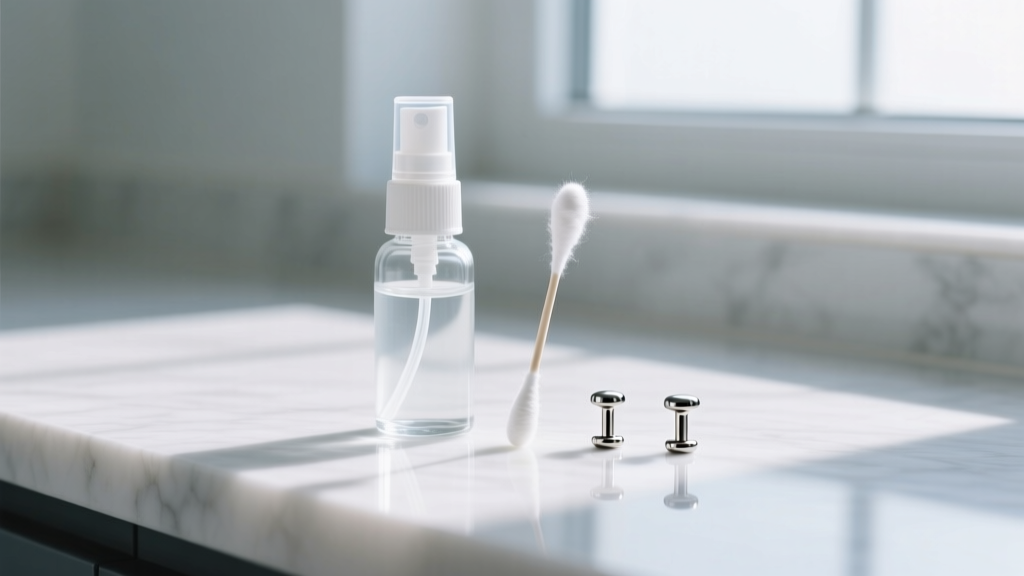
If you are in a bind and absolutely must use a standard earring to keep your nostril piercing from closing, you must elevate your cleaning routine to mitigate the structural flaws of the jewelry. The Association of Professional Piercers (APP) strictly advises against using harsh chemicals, alcohol, or hydrogen peroxide, which destroy the delicate healing cells of the fistula. Follow this emergency maintenance protocol:
- Use 0.9% Sterile Saline Wound Wash: Spray a sterile, isotonic saline solution (containing only purified water and 0.9% sodium chloride) directly onto the earring post and the piercing site twice daily. Avoid homemade sea salt mixtures, as incorrect ratios can dry out and damage the delicate nasal tissue.
- Do Not Twist the Post: A common myth is that you should rotate the jewelry to prevent it from 'sticking.' Twisting a rough earring post forces dried lymph and crusties into the piercing channel, causing micro-tears and introducing surface bacteria deep into the wound.
- Manage the Protruding Post: If the earring post is sticking out too far inside your nose, apply a tiny dab of sterile, water-based lubricant to the tip to prevent it from scraping your nasal septum or catching on the inside of your nostril when you wash your face.
- Cleanse the External Site Gently: After spraying with saline, gently wipe away softened debris using a non-woven gauze pad. Avoid cotton swabs or cotton balls, as they shed micro-fibers that can wrap around the earring post and cause severe irritation.
When to See a Professional Piercer or Dermatologist
Using an earring as a nose ring is strictly a temporary, last-resort measure. You should replace the earring with properly fitted, implant-grade nose jewelry as soon as possible. However, if you begin to experience signs of a deeper infection or allergic reaction, remove the earring immediately and consult a healthcare professional. Warning signs include:
- Thick, foul-smelling yellow or green discharge (pus) emanating from the fistula.
- Excessive heat radiating from the nostril tissue, accompanied by a throbbing sensation.
- A rapidly expanding red halo around the piercing site that feels hot to the touch.
- The development of a fluid-filled bump (granuloma) directly adjacent to the earring post.
Conclusion
So, can you use an earring as a nose ring? While physically possible in a fully healed piercing, the anatomical mismatches in gauge, post length, and backing design make it a significant hygiene and maintenance risk. Earlobe jewelry traps bacteria, scrapes delicate mucosal tissue, and often contains allergenic metals that trigger severe reactions in the nose. By understanding the structural differences and adhering to strict sterile saline cleaning protocols, you can minimize damage during an emergency. Ultimately, investing in high-quality, anatomically correct nose jewelry is the only reliable way to maintain a healthy, infection-free piercing for years to come.


