Troubleshooting Nostril Piercing Jewelry: Fix Bumps and Sinking
Discover expert troubleshooting for nostril piercing jewelry. Learn how to fix sinking studs, irritation bumps, and frequent fallout with proper sizing.

The Anatomy of a Perfect Nostril Fit
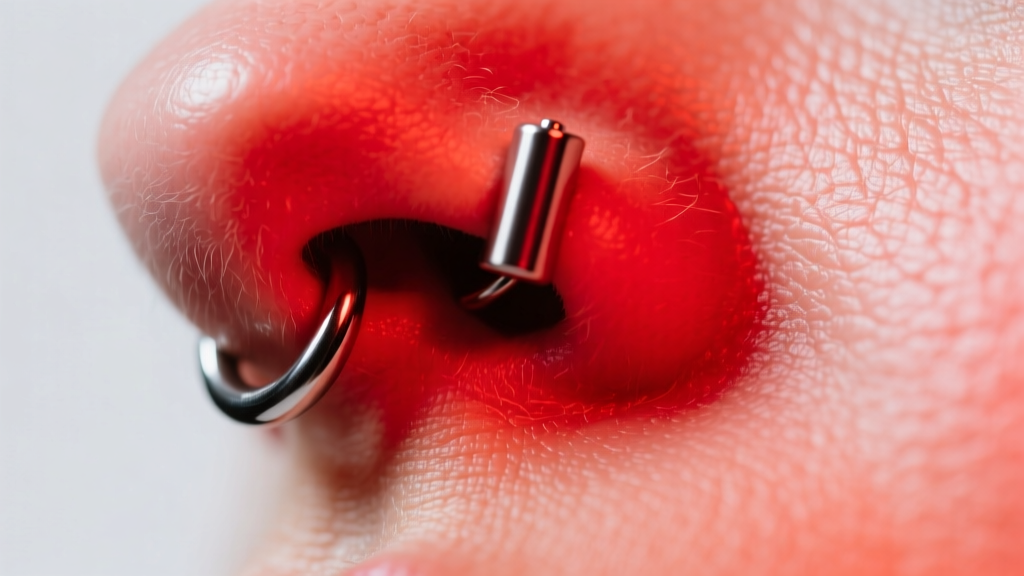
Nostril piercings are deceptively complex. Unlike earlobes, which consist of soft, uniform tissue, the nostril is composed of dense cartilage overlaid with a thin layer of skin and a mucous membrane on the interior. This anatomical reality means that choosing the wrong nostril piercing jewelry is not just a stylistic misstep; it is a biomechanical error that leads to chronic irritation, tissue embedding, and persistent hypertrophic scarring. According to the Association of Professional Piercers (APP), the vast majority of piercing complications stem from improper jewelry sizing, poor metallurgy, or structural designs that fail to accommodate the natural movement of the face.
If you are battling a sinking stud, an angry red bump that refuses to heal, or a hoop that constantly catches and falls out, the problem is rarely your aftercare routine. The problem is the hardware sitting in your fistula. This guide provides a clinical, problem-solving approach to diagnosing and resolving the most common nostril piercing failures by upgrading your jewelry specifications.
Problem 1: The Sinking Stud Syndrome
Why It Happens: Tissue Ischemia and the Cheese-Cutter Effect
A 'sinking stud' occurs when the decorative end of your jewelry compresses the exterior skin, while the flat back or cork-screw end presses into the interior mucosa. This compression cuts off capillary blood flow (ischemia), leading to tissue necrosis and hypergranulation. Furthermore, if you are wearing a thin 20-gauge (0.81mm) wire, the tension creates a 'cheese-cutter effect,' where the wire slowly migrates through the cartilage over time.
The Fix: Precision Downsizing and Gauge Upgrades
Initial piercings require long posts—typically 6.5mm to 8mm (1/4 to 5/16 inch)—to accommodate swelling. However, once healed (usually 4 to 6 months), the fistula shrinks. Leaving a long post in a healed piercing creates a lever that catches on towels and masks, driving the jewelry into the skin.
- Step 1: Measure the Fistula. Visit a professional piercer to measure your exact tissue thickness. Healed nostrils typically require post lengths between 3.5mm and 5mm.
- Step 2: Upgrade the Gauge. Abandon 20G jewelry. The modern professional standard is 18-gauge (1.02mm) or 16-gauge (1.29mm). The thicker metal distributes mechanical stress across a wider surface area, completely eliminating the cheese-cutter effect.
- Step 3: Switch to Flat-Back Labrets. Ditch corkscrews and L-bends. A flat-back labret provides a stable, flush anchor against the interior nasal wall, preventing the jewelry from being pushed inward.
Problem 2: Persistent Irritation Bumps
Material Sensitivities vs. Mechanical Irritation
Irritation bumps (hypertrophic scarring) are frequently misdiagnosed by amateurs as infections or keloids. True keloids are genetic and rare; they grow far beyond the piercing site. Irritation bumps, however, are localized, fluid-filled, or crusty mounds situated exactly at the exit point of the fistula. They are caused by two primary factors: metallurgical allergies and angle mismatches.
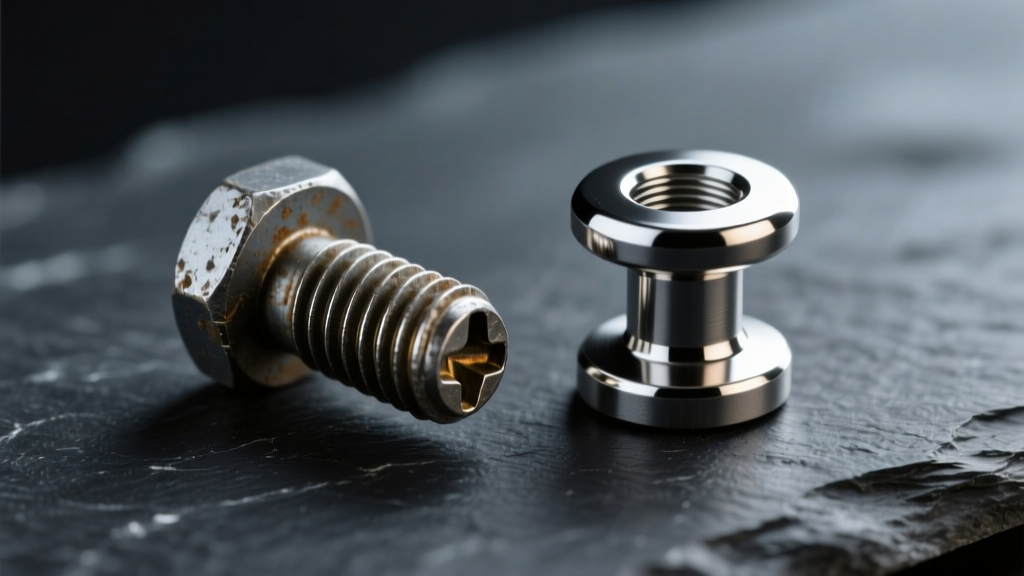
Traditional 'surgical steel' (often 316L stainless steel) contains 8% to 12% nickel. As the saline environment of the nasal mucosa breaks down the passive oxide layer of the steel, nickel ions leach into the tissue, triggering contact dermatitis and subsequent scarring. Additionally, if a rigid, straight post is forced into a fistula that healed at a slight angle, the constant tension creates micro-tears in the healing tissue.
The Fix: Implant-Grade Titanium and Threadless Pins
To eliminate the bump, you must remove the irritant. First, upgrade your jewelry to ASTM F136 implant-grade titanium. This alloy is entirely nickel-free and highly biocompatible, mirroring the materials used in orthopedic joint replacements. Second, switch to a threadless (press-fit) system. Threadless jewelry utilizes a small metal pin that is inserted into a hollow post. Because the pin is solid metal, a professional piercer can slightly bend it (usually by 5 to 10 degrees) before insertion. This custom bend perfectly matches the unique angle of your specific fistula, eliminating internal tension and allowing the bump to flatten and resolve within weeks. For comprehensive bump management, always follow the APP Aftercare Guidelines, which emphasize sterile saline over harsh chemicals like tea tree oil.
Problem 3: Jewelry Keeps Falling Out
Gauge Mismatches and Tension Loss
If your nostril stud frequently falls out while sleeping or washing your face, you are likely relying on outdated jewelry styles. Nose screws (corkscrews) and L-bends rely entirely on gravity and the friction of the cartilage to stay in place. As the fistula matures and relaxes, the channel widens slightly, causing these friction-based styles to slip out. Similarly, wearing a hoop (like a captive bead ring) in a piercing that is less than 9 months old will cause the ring to rotate constantly, dragging dried crust and bacteria into the open wound, leading to swelling that pushes the jewelry out.
The Fix: Internally Threaded or Threadless Anchors
Security requires a mechanical lock, not just friction.
- For Studs: Use an 18G or 16G internally threaded or threadless flat-back labret. Threadless pins use the tension of the bent metal to lock the decorative end into the post. They will not fall out unless you intentionally pull them apart with pliers.
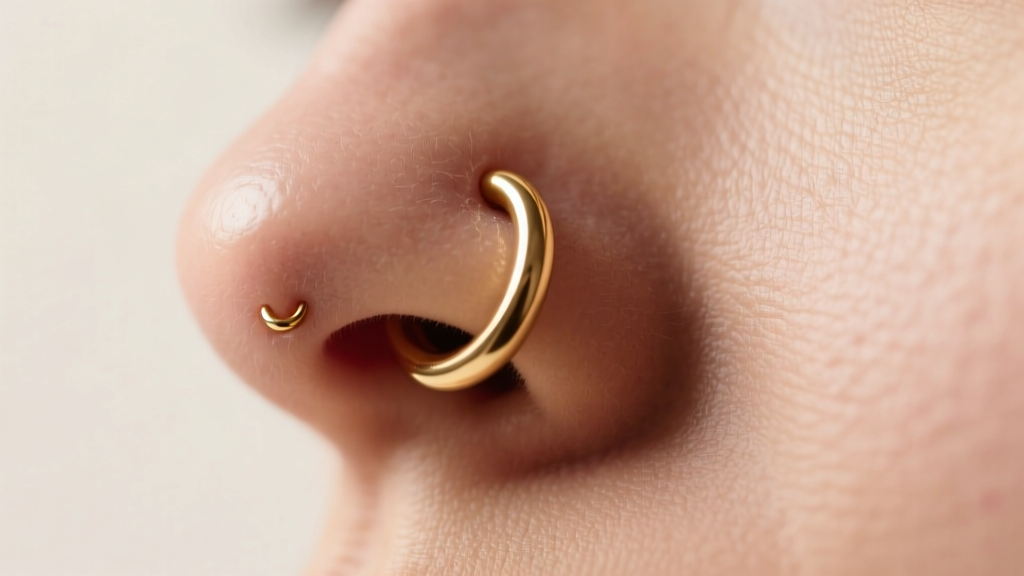
- For Hoops: Wait until the piercing is fully seasoned (12+ months). When you do transition to a hoop, avoid captive bead rings, which require excessive force to open and close. Instead, opt for a segment ring or a hinged clicker with an inner diameter of 8mm or 10mm. A snug fit prevents the hoop from rotating and catching on clothing.
Troubleshooting Matrix: Quick Diagnostic Guide
Use the table below to quickly diagnose your specific hardware failure and identify the exact specifications needed for a replacement.
| Symptom | Root Cause | Actionable Fix & Specs |
|---|---|---|
| Stud sinking into skin | Post is too short for current tissue thickness; decorative end is too wide. | Upsize post length by 1mm (e.g., from 4mm to 5mm); switch to a smaller, low-profile 2mm or 2.5mm gem. |
| Red, crusty bump at exit | Nickel allergy (surgical steel) or angle tension from a rigid straight post. | Switch to ASTM F136 Titanium; use a threadless pin bent to match the fistula angle. |
| Stud falls out during sleep | Corkscrew or L-bend lost friction due to fistula relaxation. | Replace with an 18G or 16G threadless (press-fit) flat-back labret. |
| Hoop rotates and irritates | Diameter is too large, or piercing is not fully mature (under 12 months). | Revert to a flat-back stud until month 12; then use an 8mm or 10mm fixed-bead clicker. |
| Cheese-cutter migration | Wire is too thin (20G or 22G) and cutting through the cartilage. | Immediately upgrade to a 16G (1.29mm) implant-grade titanium post. |
When to See a Professional Piercer
While understanding the mechanics of nostril piercing jewelry empowers you to make better purchasing decisions, certain troubleshooting steps require professional intervention. If your jewelry is actively embedded (the skin has grown over the decorative end), do not attempt to dig it out at home. This introduces staphylococcus bacteria into an open wound and guarantees severe scarring. A professional piercer or a dermatologist can safely perform a minor tapering procedure to remove the embedded hardware, clean the fistula, and insert a properly sized, sterilized titanium labret to preserve the piercing channel. Invest in high-quality, APP-compliant jewelry from reputable brands like NeoMetal, Anatometal, or BVLA, and treat your nostril piercing with the biomechanical respect it demands.


