Comparing Materials for Different Types of Nose Piercing Jewelry
Discover the best metals for all types of nose piercing jewelry. Compare titanium, gold, and steel grades for safe healing and long-term wear.
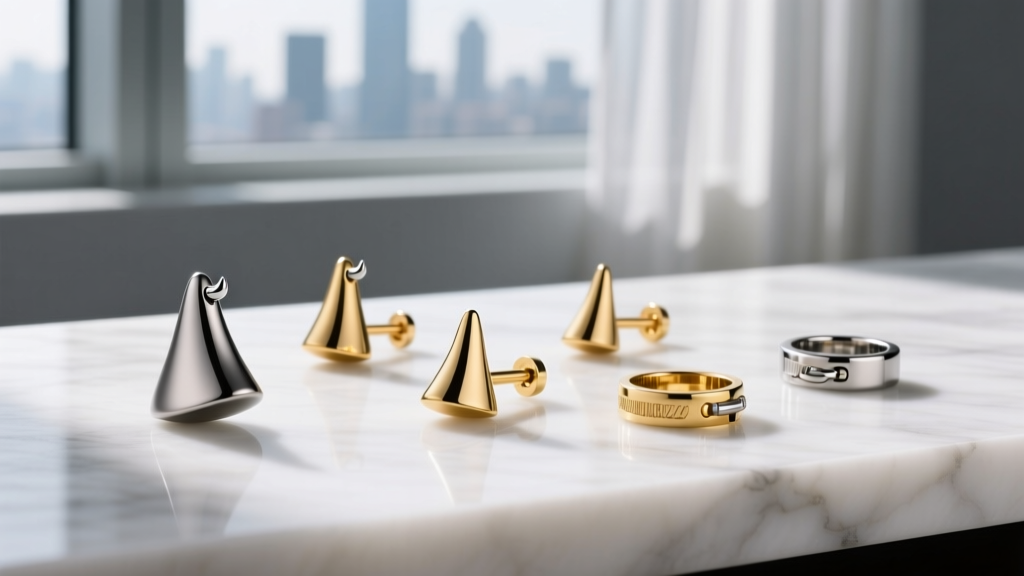
When browsing the vast array of types of nose piercing jewelry available on the market, most consumers focus primarily on aesthetics: the sparkle of a gemstone, the diameter of a hoop, or the intricate design of a septum clicker. However, as any seasoned piercer will tell you, the metal composition of your jewelry is the single most critical factor dictating your piercing's health, comfort, and longevity. A beautiful 16-gauge septum ring is useless if it triggers a severe allergic reaction, and a delicate 20-gauge nostril stud can become a biological hazard if its surface harbors bacteria due to microscopic pitting.
In this comprehensive material guide, we bypass the marketing fluff and dive deep into the metallurgical properties, ASTM grading standards, and real-world failure modes of the metals used in nose jewelry. Whether you are healing a fresh high-nostril piercing or upgrading a decades-old septum, understanding these material properties is non-negotiable.
The Hidden Dangers of Inferior Metals in Nostril and Septum Rings
The human body treats a piercing as an open wound that eventually forms a fistula (a tube of scar tissue). During the healing phase, which can take anywhere from 4 to 12 months for nostrils and up to 6 months for septums, the tissue is highly permeable. If your jewelry contains reactive alloys, the body's saline environment acts as an electrolyte, drawing metal ions out of the jewelry and into the bloodstream.
The most common culprit is nickel. According to the Association of Professional Piercers (APP), nickel sensitivity affects up to 20% of the population. When inferior "surgical steel" leaches nickel into a fresh 18-gauge nostril piercing, it causes Allergic Contact Dermatitis (ACD). Symptoms include persistent weeping, localized heat, itching, and the formation of hypertrophic scarring or piercing bumps that are frequently—and incorrectly—diagnosed as infections.
Understanding Implant-Grade vs. Surgical-Grade
Not all steel is created equal. The term "surgical steel" is largely an unregulated marketing buzzword. To ensure safety, you must look for specific ASTM (American Society for Testing and Materials) designations:
- ASTM F138 (316LVM): This is true implant-grade stainless steel. The "VM" stands for Vacuum Melted, a process that drastically reduces impurities and carbon inclusions, creating a smoother surface that resists bacterial adhesion.
- Mystery "Surgical" Steel: Often 304 or 316L steel that has not been vacuum melted. These metals contain microscopic pits and crevices where Staphylococcus aureus and Pseudomonas bacteria can hide, leading to chronic, low-grade infections that mimic allergic reactions.
Deep Dive: Titanium (The Gold Standard for Healing)
For fresh piercings of all types of nose piercing jewelry, titanium is the undisputed king. However, you must specifically seek out ASTM F136 Ti6Al-4V (Titanium-6 Aluminum-4 Vanadium) implant-grade titanium. This specific alloy is completely nickel-free, biocompatible, and features a naturally occurring passivation layer of titanium dioxide that prevents corrosion.
One of the unique advantages of titanium is its ability to be anodized. By running an electrical current through the metal in an electrolyte bath, the thickness of the oxide layer changes, refracting light to produce vibrant colors (like gold, rose, teal, or purple) without using any dyes or paints. This means you can have a colorful 16-gauge septum ring without compromising the biocompatibility of the base metal.
Pro-Tip: Titanium is incredibly lightweight. For heavy, ornate septum clickers or large-gauge (14G or 12G) nostril shields, titanium prevents the jewelry from dragging on the fistula, which can cause migration or tissue thinning over time.
Solid Gold vs. Gold Plated: What You Need to Know
Gold is highly coveted for its prestige and warmth, but it requires strict scrutiny. Never wear gold-plated, gold-filled, or vermeil jewelry in a healing piercing. The plating is microscopically thin; once it scratches or wears away, the reactive base metal (often brass or copper) is exposed directly to your healing fistula, leading to rapid corrosion and severe irritation.
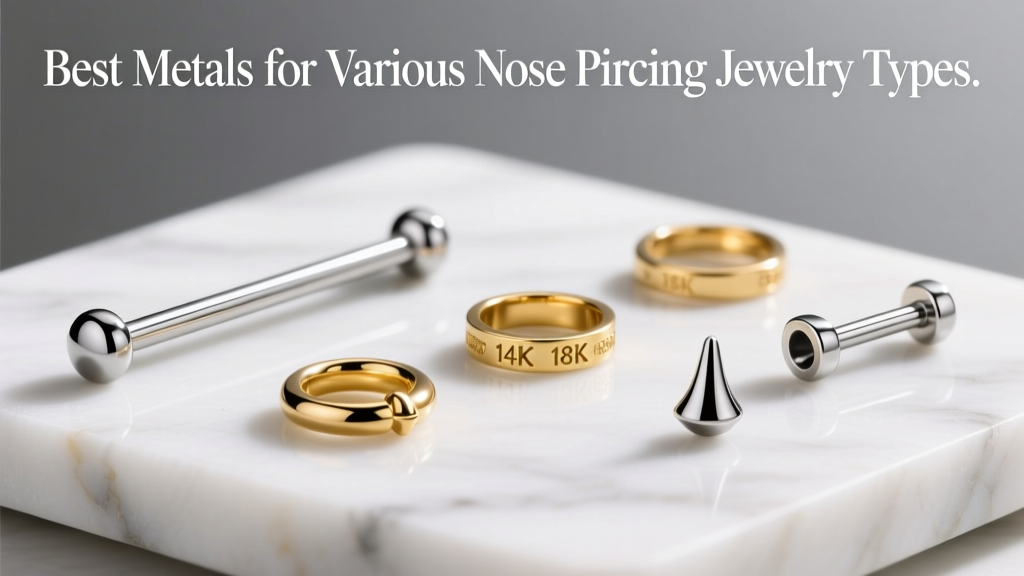
For safe, long-term wear in healed piercings, you must choose solid 14k or 18k gold. However, pure 24k gold is too soft for body jewelry and will easily deform, creating sharp edges that can tear the delicate tissue inside a nostril. Therefore, gold is alloyed with other metals for strength.
The White Gold Trap
Traditional white gold is alloyed with nickel to achieve its silver-like color. If you have a nickel allergy, a solid 14k white gold nose hoop will trigger a reaction just as severely as cheap mall-kiosk steel. If you prefer the look of silver but need gold's biocompatibility, specifically seek out nickel-free white gold, which is alloyed with palladium instead of nickel, or opt for yellow and rose gold variations.
Comprehensive Material Comparison Matrix
To help you make an informed decision based on your specific piercing type and budget, refer to the data table below. Prices reflect average retail ranges for high-quality, brand-name body jewelry (e.g., BVLA, Anatometal, Maria Tash) in standard 18G or 16G sizes.
| Material | Required Grade | Nickel-Free? | Avg. Price Range | Best Use Case |
|---|---|---|---|---|
| Titanium | ASTM F136 | Yes | $25 - $60 | Fresh piercings, allergies, anodized colors |
| Steel | ASTM F138 (316LVM) | No (Trace) | $15 - $35 | Healed piercings, budget-conscious buyers |
| Solid Gold | 14k or 18k (Palladium alloy) | Yes (if specified) | $80 - $250+ | Healed piercings, luxury, permanent jewelry |
| Niobium | Unalloyed (99.9%) | Yes | $20 - $45 | Highly reactive skin, custom bending |
| Glass | Borosilicate / Fused Quartz | Yes | $10 - $25 | Stretching, MRI safety, hiding piercings |
Niobium and Glass: The Hypoallergenic Alternatives
While titanium dominates the market, niobium and glass offer specialized solutions for difficult-to-manage piercings. Niobium is an elemental metal, meaning it is not an alloy and contains absolutely zero impurities or nickel. It is denser and heavier than titanium, making it less ideal for heavy septum pieces, but it is incredibly malleable. Piercers often use niobium wire to custom-bend seamless rings for nostrils that are healing at awkward angles, as the metal can be adjusted without stressing the piercing channel.
When to Use Glass Retainers
Borosilicate glass (the same material used in high-end laboratory beakers) is completely inert, non-porous, and can be autoclaved. Glass retainers are the ultimate solution for specific scenarios:
- Medical Procedures: If you need an MRI or surgery, glass is non-magnetic and radiolucent, meaning it will not interfere with imaging or magnetic fields.
- Piercing Stretching: Glass is incredibly smooth and heavy, providing the perfect taper and weight for safely stretching a septum from 14G to 12G or larger.
- Concealment: Clear or frosted glass retainers with small O-rings allow you to hide a fresh nostril piercing for professional or personal reasons without sacrificing healing integrity.
Material Selection by Piercing Stage (Decision Framework)
Choosing the right metal isn't just about preference; it's about matching the material to the biological state of your fistula. Use this framework to guide your purchase:
- Stage 1: The Fresh Piercing (Months 1-6)
Strictly use ASTM F136 Titanium or Borosilicate Glass. Avoid all gold, steel, and plated metals. The fistula is raw and highly susceptible to ion leaching and bacterial trapping in micro-scratches. - Stage 2: The Healing Transition (Months 6-12)
Your piercer may downsize your initial post to a shorter, more fitted titanium stud or a snug 16G titanium septum clicker. Stick to implant-grade metals until the piercing is completely settled and no longer secretes lymph. - Stage 3: Fully Healed & Mature (Year 1+)
Once the fistula is fully epithelialized (lined with skin cells), you can safely introduce 14k/18k solid gold, ASTM F138 steel, and niobium. This is the time to invest in intricate, gem-set BVLA ends or custom gold hoops.
Final Verdict on Choosing Your Metal
When navigating the diverse types of nose piercing jewelry, always prioritize metallurgical integrity over immediate visual appeal. A cheap, ungraded metal might save you $20 today, but it will cost you hundreds in piercing corrections, medical visits, and scar tissue management down the line. Always purchase from reputable body jewelry manufacturers that provide mill certificates proving their ASTM compliance, and consult with an APP-certified piercer to ensure your chosen material aligns perfectly with your unique anatomy and healing timeline. For further reading on safe jewelry standards, consult the APP's official guidelines on jewelry for fresh piercings.