Best Metals for Various Nose Piercing Jewelry Types
Compare titanium, gold, and steel across nose piercing jewelry types. Learn which metal grades prevent irritation and ensure fast healing.

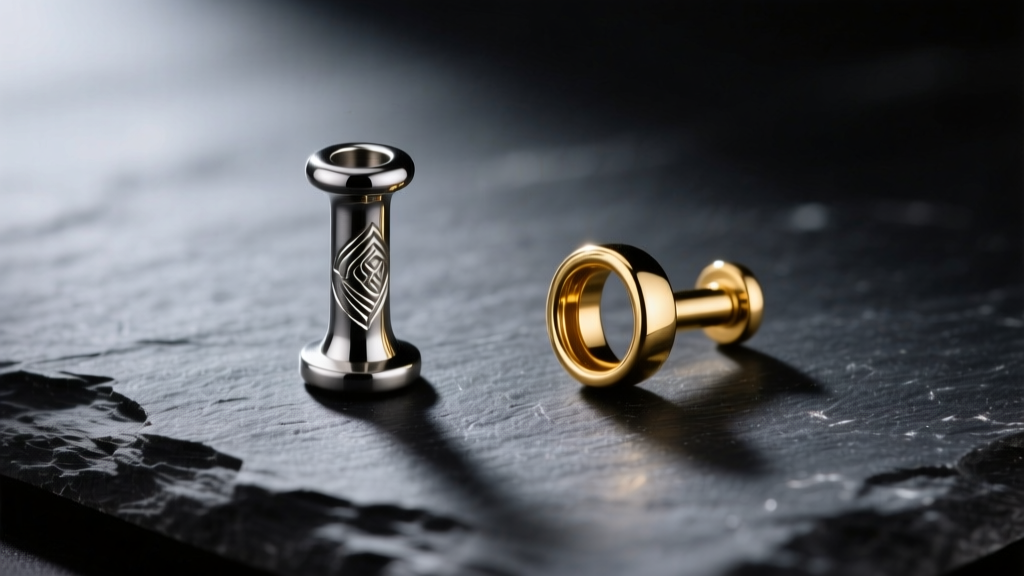
The Hidden Variable in Nose Piercing Jewelry Types
When enthusiasts browse the endless nose piercing jewelry types available online, the focus is almost exclusively on aesthetics and mechanics. We debate the merits of L-bends versus bone studs, or the visual weight of a 16-gauge septum clicker compared to a delicate 20-gauge nostril hoop. However, the metallurgical reality of the jewelry you insert into your fistula dictates the success of your piercing far more than the shape of the metal. A poorly alloyed gold hoop or a porous surgical steel stud will trigger contact dermatitis, hypertrophic scarring, and rejection, regardless of how perfectly the jewelry fits your anatomy.
In 2026, the body modification industry has largely standardized around specific implant-grade materials, yet consumer confusion remains rampant. Marketing terms like "surgical steel" and "hypoallergenic" are frequently weaponized to sell inferior alloys. This guide strips away the marketing jargon and evaluates the exact material properties, ASTM standards, and failure modes associated with the metals used in modern nasal jewelry.
Implant-Grade Titanium: The Undisputed Champion
For fresh piercings and individuals with reactive skin, Implant-Grade Titanium is the gold standard. However, not all titanium is created equal. You must look for ASTM F136 compliant titanium, specifically Ti-6Al-4V ELI (Extra Low Interstitial). This specific alloy contains tightly controlled levels of oxygen, nitrogen, carbon, and iron, which maximizes its biocompatibility and fracture toughness.
Unlike steel, ASTM F136 titanium contains zero nickel. It is entirely non-magnetic, making it safe for MRI machines, and it boasts a superior strength-to-weight ratio. Furthermore, titanium can be anodized. By applying a specific voltage to the metal in an electrolytic bath, a titanium dioxide layer is formed on the surface. This alters the way light refracts off the jewelry, creating vibrant colors (like purple, teal, or gold) without the use of toxic dyes, paints, or platings that could flake off inside your piercing channel.
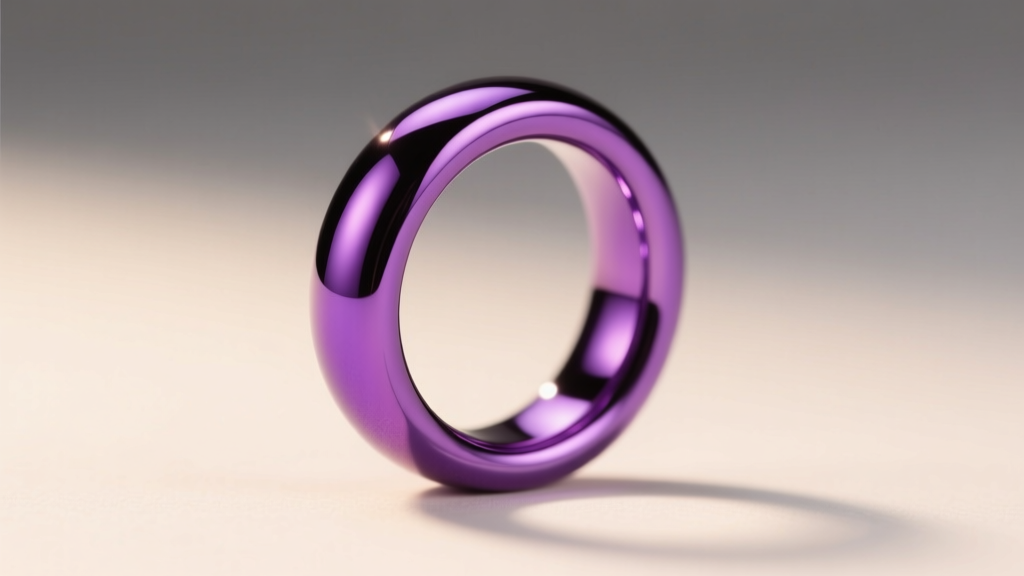
According to the Association of Professional Piercers (APP), implant-grade titanium is the only universally recommended metal for initial piercings due to its highly polished, pore-free surface finish that prevents bacterial adhesion during the critical healing window.
Solid Gold: Karat Purity and Alloy Dangers
Gold is a noble metal, meaning it resists oxidation and corrosion. However, 24-karat gold (99.9% pure) is far too soft for body jewelry; it would easily warp, scratch, and trap bacteria. Therefore, gold must be alloyed with other metals to increase its hardness. This is where the danger lies.
The 14k vs. 18k Debate
- 18k Gold (75% pure): The ideal balance of purity and durability for nose jewelry. It maintains a rich color and high corrosion resistance while being hard enough to withstand daily wear.
- 14k Gold (58.5% pure): Acceptable and highly durable, but the remaining 41.5% consists of alloy metals. If the manufacturer uses nickel to whiten the gold or cadmium to lower melting costs, it becomes a severe irritation risk.
Warning on White and Rose Gold: White gold is frequently alloyed with nickel to achieve its silver color. The American Academy of Dermatology notes that nickel is the leading cause of allergic contact dermatitis. If you prefer the look of white gold, you must explicitly verify that the jeweler uses a palladium alloy rather than nickel. Rose gold relies on copper; while generally safe, high copper content can cause localized green discoloration or irritation in highly acidic sweat environments.
Surgical Steel: Decoding the 316L vs. 316LVM Myth
"Surgical steel" is not a protected or regulated term in the jewelry industry. It is a marketing umbrella that covers everything from high-quality medical tools to cheap, nickel-laden novelty jewelry. When evaluating steel for nose piercing jewelry types like captive bead rings or labret studs, you must look for specific designations: 316L or, preferably, 316LVM.
The "L" stands for low carbon, which prevents carbide precipitation during welding. The "VM" stands for Vacuum Melted. Vacuum melting drastically reduces the size and number of non-metallic inclusions (microscopic impurities) trapped in the steel. While 316LVM is incredibly smooth and safe for healed piercings, it still contains between 10% and 14% nickel. In most high-quality 316LVM, the nickel is trapped within the chromium oxide passivation layer, but in a fresh, weeping piercing, the chloride ions in blood and lymph fluid can break down this layer, leaching nickel into the tissue and causing an allergic cascade.
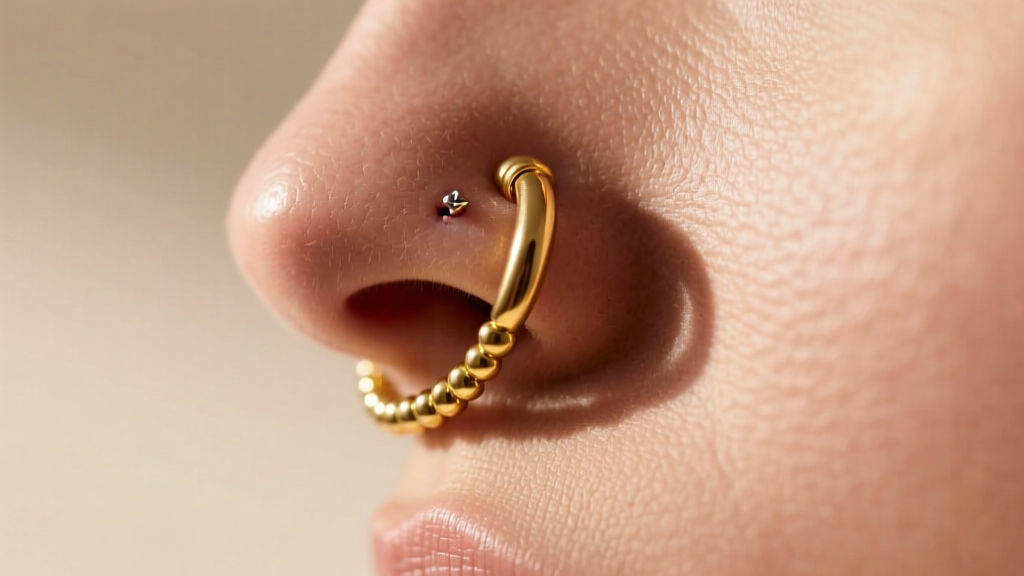
Material Compatibility Matrix by Jewelry Style
Different nose piercing jewelry types exert different mechanical stresses and sit in different micro-environments. The table below maps the optimal materials to specific jewelry styles based on biomechanical and metallurgical properties.
| Jewelry Type | Optimal Material | Acceptable Alternative | Materials to Avoid |
|---|---|---|---|
| Nostril Screws / L-Bends | ASTM F136 Titanium | 14k/18k Solid Yellow Gold | Silver, Plated Steel, Bioplast |
| Flat-Back Labret Studs | ASTM F136 Titanium | Niobium | Acrylic, 316L Steel (if fresh) |
| Septum Clickers | 14k/18k Solid Gold | ASTM F136 Titanium | Brass, Copper, White Gold (Nickel) |
| Seamless Hoops / Rings | Niobium | 14k Solid Gold | Surgical Steel (hard to polish) |
| Nostril Bones / Nails | ASTM F136 Titanium | None | All other metals (due to insertion trauma) |
Failure Modes: When the Wrong Metal Meets the Wrong Piercing
Understanding how materials fail in the human body is crucial for long-term piercing health. Here are the most common metallurgical failure modes associated with inferior nose jewelry:
1. Galvanic Corrosion
If you mix two different metals in the same piercing (for example, a titanium post with a 14k gold decorative end that uses a steel O-ring or internal threading), the saline environment of your piercing channel acts as an electrolyte. This creates a micro-battery, leading to galvanic corrosion. The less noble metal will rapidly degrade, releasing toxic ions into your tissue and causing severe localized swelling.
2. Micro-Porosity and Bacterial Trapping
Cheap metals, cast silver, and low-grade steel have microscopic pits and pores on their surface. Even if polished, these pores harbor anaerobic bacteria and dead skin cells. When inserted into a nostril, this leads to chronic low-grade infections and the dreaded "irritation bump" (pyogenic granuloma), which is often misdiagnosed as a keloid.
3. Sterling Silver Tarnish (Silver Sulfide)
Sterling silver (92.5% silver, 7.5% copper) is notorious in the piercing community. The copper content reacts with sulfur in the air and human sweat to form silver sulfide (tarnish). If this tarnish forms inside a healing fistula, it can permanently stain the tissue a grayish-blue color, a condition known as localized argyria. Never wear silver in a fresh or irritated piercing.
Final Verdict: Matching Metal to Your Healing Stage
The material you choose must align with the biological state of your piercing. For the first 6 to 12 months of a nostril piercing, or the 3 to 6 months of a septum piercing, your fistula is essentially an open, weeping wound. During this phase, ASTM F136 Implant-Grade Titanium is non-negotiable. Its lack of nickel and ultra-smooth surface finish provide the most stable environment for cellular migration and tissue repair.
Once the piercing is fully seasoned and the fistula has matured into a stable tube of epithelial tissue, you can safely introduce high-quality 14k or 18k solid gold, or 316LVM steel, provided you have no underlying nickel sensitivities. By prioritizing metallurgical integrity over mere aesthetics, you ensure that your chosen nose piercing jewelry types remain a beautiful, permanent fixture rather than a source of chronic medical frustration.


