Nose Bridge Piercing Jewelry: Expert Guide to Gauges, Metals, and Fit
Discover the technical specifications for nose bridge piercing jewelry, including implant-grade titanium, 14g vs 16g sizing, and rejection prevention.

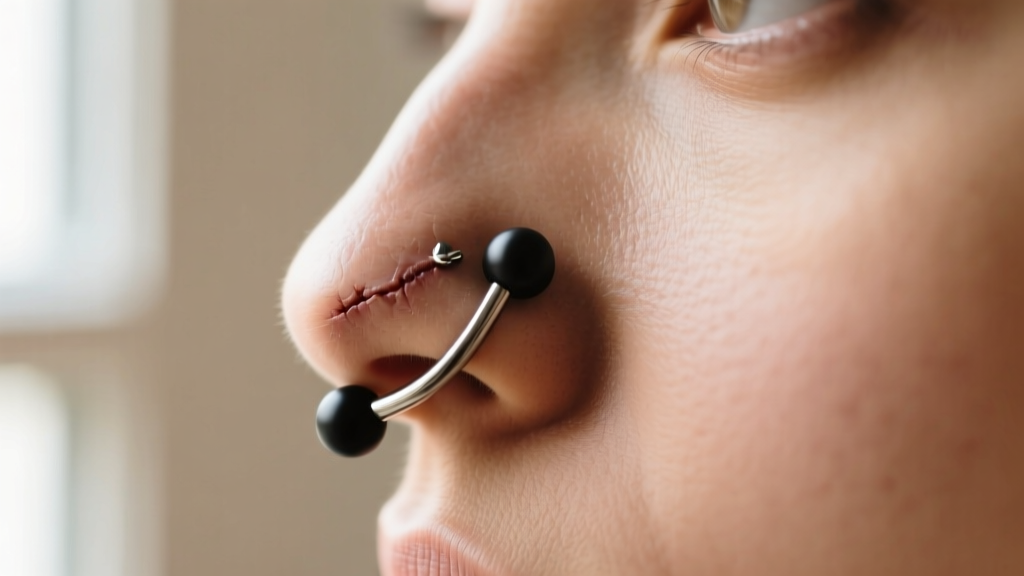
The nose bridge piercing—often referred to as an Erl piercing—is one of the most visually striking modifications in facial aesthetics. However, from a clinical and biomechanical perspective, it is classified as a surface piercing. Unlike a nostril piercing that passes entirely through a thick cartilage wall, a bridge piercing rests within a shallow fold of skin and tissue over the nasal bone. This anatomical reality dictates a high baseline risk for migration and rejection. Consequently, the selection of your nose bridge piercing jewelry is not merely an aesthetic choice; it is the primary mechanical variable that determines the long-term viability of the fistula.
The Biomechanics of Bridge Tissue and Jewelry Constraints
To understand why specific jewelry parameters are non-negotiable, we must examine the tissue matrix of the nasal bridge. The piercing channel typically passes through the procerus muscle fascia and the subcutaneous tissue layer, lacking the rigid structural support of cartilage. When jewelry is inserted, it creates a continuous vector of tension. If the jewelry is too heavy, too tight, or improperly curved, the body's immune system will treat the jewelry as a persistent foreign irritant, initiating a macrophage response that slowly pushes the metal toward the epidermis—a process known as rejection.
Because the bridge is a surface piercing, the jewelry must perfectly match the natural topography of the client's specific nasal anatomy. A standard "one-size-fits-all" approach inevitably leads to torque on the entry and exit points, causing chronic inflammation. Expert piercers will assess the pinchable tissue fold, measuring both the width of the bridge and the depth of the tissue shelf, to determine whether a standard curved barbell or a custom-bent surface bar will provide the most neutral resting state.
Decoding Gauge, Length, and Curvature
The most common technical error in bridge piercings is selecting an improper gauge and length. While 16-gauge (1.2mm) is standard for many facial piercings, a 14-gauge (1.6mm) is overwhelmingly preferred for initial bridge piercings. The physics behind this relies on surface area distribution. A thicker gauge disperses the mechanical tension across a wider cross-section of tissue, significantly mitigating the "cheese-cutter effect," where a thin wire slowly slices through the skin under constant tension.
Length is equally critical. The nasal bridge is highly vascular and prone to significant edema (swelling) that peaks between 48 and 72 hours post-procedure. Initial jewelry must accommodate this expansion without embedding into the tissue.
| Parameter | Initial Piercing (Weeks 1-8) | Healed / Downsize (Weeks 8+) |
|---|---|---|
| Gauge | 14g (1.6mm) to minimize cheese-cutter effect | 14g (1.6mm) or 16g (1.2mm) if anatomy permits |
| Length / Width | 3/8" (10mm) to 1/2" (12mm) for swelling | 5/16" (8mm) or custom surface bar fit |
| Curvature | Standard curved barbell or custom surface bar | Custom bent to match exact tissue resting angle |
According to the Association of Professional Piercers (APP), downsizing is a mandatory step in the healing protocol. Once the initial swelling subsides (typically around the 6-to-8-week mark), the longer initial bar must be replaced with a shorter, custom-fitted piece. Leaving a long bar in a healed bridge piercing creates a lever arm that catches on clothing and glasses, introducing micro-traumas that trigger migration.
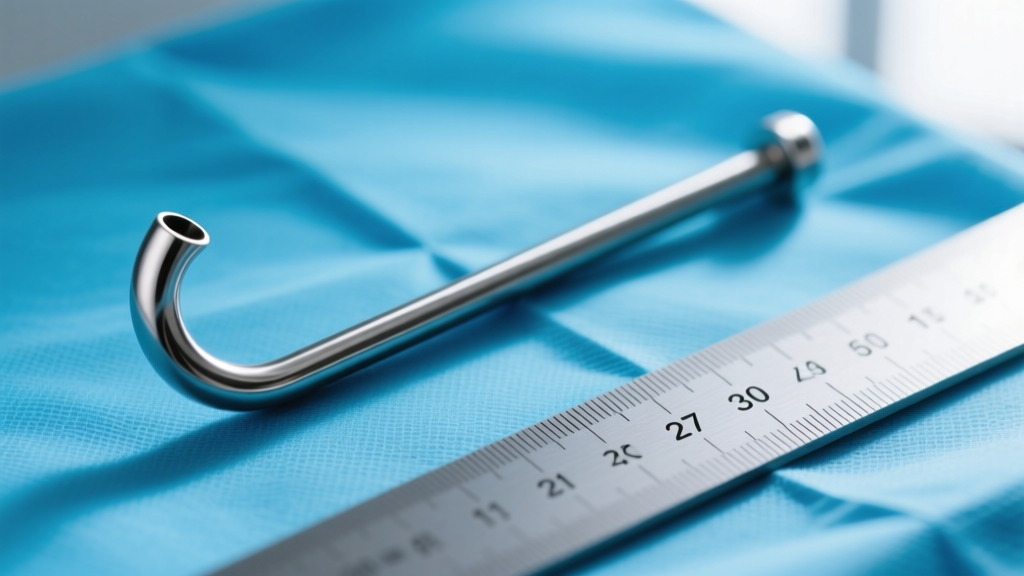
Material Science: Why ASTM F136 Titanium is Non-Negotiable
When dealing with surface piercings, the biocompatibility of the metal is paramount. The immune system's tolerance for sub-optimal materials is exceptionally low in high-tension areas like the bridge. Implant-grade titanium, specifically certified as ASTM F136 (Ti6Al4V ELI), is the undisputed gold standard for nose bridge piercing jewelry. This specific alloy is completely nickel-free, highly polished to a mirror finish (reducing bacterial adhesion), and possesses the exact tensile strength required to withstand facial movements without warping.
Conversely, "surgical steel" (often ASTM F138) contains nickel to prevent corrosion. Even in trace amounts, nickel can leach into the fistula when exposed to the saline environment of a healing wound. This triggers contact dermatitis, which the body misinterprets as an infection, accelerating the rejection process. While solid 14k or 18k gold (alloyed for biocompatibility without copper or zinc) is acceptable for fully healed bridge piercings, it is generally discouraged for initial placements due to its high density and weight, which can exert unnecessary downward drag on the delicate tissue fold.
Threading Mechanics: Securing the Fistula
The mechanism by which the decorative ends attach to the barbell shaft plays a crucial role in tissue preservation. External threading—where the screw is on the end of the decorative ball and must pass through the fistula—is strictly contraindicated. Forcing sharp, machined threads through a healing or even healed bridge channel causes microscopic tearing and scar tissue buildup.
Expert piercers utilize two superior alternatives:
- Internally Threaded Jewelry: The screw mechanism is housed inside the hollow shaft of the barbell, meaning the smooth exterior passes through the tissue. This is ideal for curved barbells.
- Threadless (Push-Pin) Systems: Utilizing a tension-fit mechanism, a slightly bent pin on the decorative end is inserted into the hollow shaft. The spring-like tension holds the jewelry securely in place. Threadless systems are highly favored for bridge piercings because they eliminate the risk of ends unscrewing due to facial muscle movements, such as squinting or flaring the nostrils.
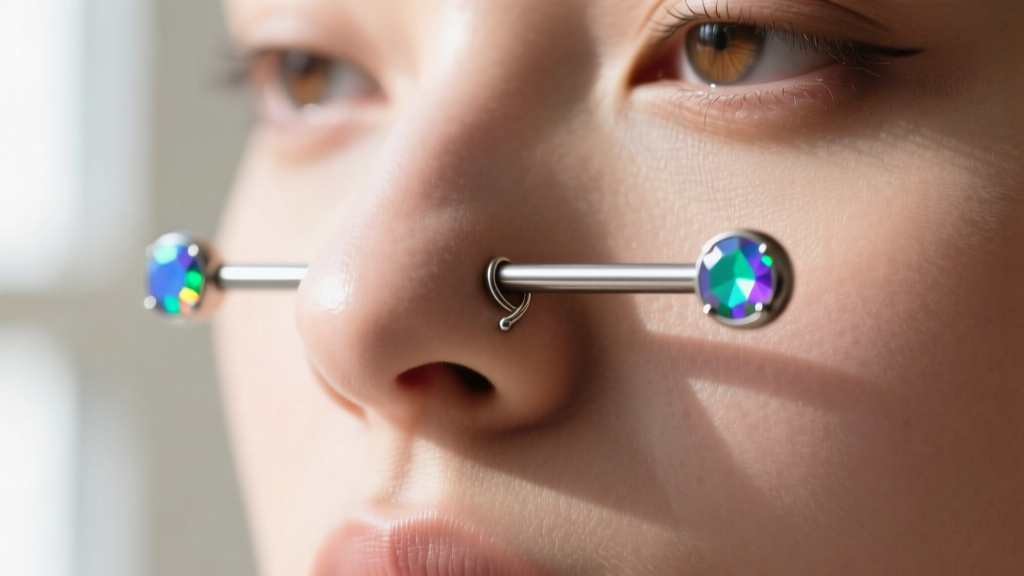
Mitigating Rejection: Stress Vectors and Migration Troubleshooting
Despite perfect technique and optimal nose bridge piercing jewelry, the biological imperative to reject surface piercings remains a persistent threat. Recognizing the early clinical signs of migration is essential for preventing severe scarring. Migration is not an overnight event; it is a slow, insidious process driven by chronic biomechanical stress.
Early Warning Signs of Migration
- Epidermal Thinning: The skin between the entry and exit points appears translucent or shiny, indicating the jewelry is moving closer to the surface.
- Persistent Erythema: Redness that does not subside with proper aftercare, specifically localized to the edges of the fistula.
- Flaking and Peeling: The skin over the bar begins to flake excessively as the body attempts to shed the tissue trapping the metal.
- Asymmetry: One end of the barbell appears deeper or more recessed than the other, indicating uneven tension vectors.
If any of these signs manifest, immediate intervention is required. The first step is to evaluate the jewelry's fit. Is the bar too tight, causing the tissue to bunch? Is it too long, allowing the jewelry to swing and catch? According to guidelines published by the APP on body jewelry materials and aftercare, switching to a lighter, custom-bent titanium surface bar can sometimes redistribute the tension and halt early-stage migration. However, if the skin has thinned to the point where the bar is visible beneath the epidermis, the only medically sound decision is to remove the jewelry immediately to preserve the tissue and minimize scarring.
Long-Term Maintenance and Jewelry Swaps
Once a bridge piercing has fully matured—a process that takes a minimum of 6 to 12 months due to the dense nature of surface fistulas—clients can explore a wider array of aesthetic options. However, the rules of biomechanics still apply. Swapping to heavy gemstone clusters or oversized decorative ends will alter the center of gravity, pulling the barbell downward and reigniting the cheese-cutter effect. Always prioritize lightweight, low-profile ends, and ensure that any jewelry changes are performed using sterile tapers to avoid blowing out the delicate tissue channel. By respecting the anatomical limitations and adhering to strict technical specifications, a nose bridge piercing can remain a stable, striking feature for years.


