The Ultimate Chain Nose Pliers Jewelry Guide for Nose Rings
Learn how to safely use chain nose pliers for jewelry adjustments. Discover expert tips for opening nose hoops, bending screws, and avoiding damage.

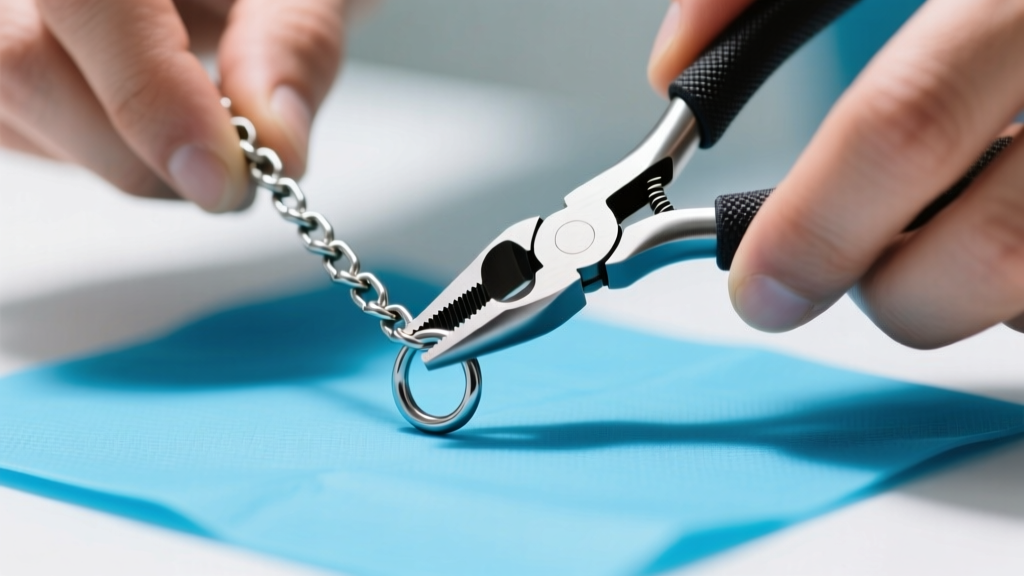
Why Chain Nose Pliers Are Essential for Nose Piercings
When it comes to adjusting, inserting, or customizing nose piercing jewelry, your fingers are rarely enough. The delicate nature of 20-gauge (0.8mm) and 18-gauge (1.0mm) nostril hoops, combined with the stubborn tension of 16-gauge (1.2mm) titanium septum rings, requires precision tooling. This is where the chain nose pliers jewelry technique becomes indispensable for both professional piercers and advanced home users.
Unlike standard hardware pliers, chain nose pliers feature a tapered tip and a smooth, flat inner jaw. This specific geometry allows you to reach into tight spaces—such as the interior curve of a small-diameter nostril hoop—without slipping or marring the metal. The flat inner surface distributes pressure evenly, preventing the dreaded "teeth marks" that serrated hardware pliers leave on soft precious metals.
Tool Comparison: Choosing the Right Jaw
Not all pliers are created equal. Using the wrong tool can permanently distort your jewelry or introduce nickel contamination. Below is a breakdown of common jewelry pliers and their suitability for nose rings.
| Pliers Type | Jaw Shape | Best Use for Nose Jewelry | Risk Level |
|---|---|---|---|
| Chain Nose | Tapered, flat inner | Opening/closing hoops, bending L-shapes | Low (if smooth-jawed) |
| Round Nose | Tapered, conical | Creating corkscrew loops, jump rings | Medium (can dent flat wire) |
| Flat Nose | Wide, flat inner | Holding straight posts, tightening clasps | Low (but too wide for small hoops) |
| Nylon-Jaw | Tapered or flat, soft | Adjusting 14k/18k gold, polishing | Zero (will not scratch) |
Material Science: Matching Pliers to Your Metal
Before you grip your jewelry, you must understand the metallurgy of the piece you are adjusting. Different metals react to mechanical stress in vastly different ways, and your chain nose pliers jewelry strategy must adapt accordingly.
ASTM F136 Implant-Grade Titanium
Titanium is incredibly strong, lightweight, and biocompatible, making it the gold standard for fresh piercings. However, its high tensile strength means it requires a firm grip to bend. Standard steel chain nose pliers work well here, but titanium can be slippery. Ensure your pliers have perfectly aligned jaws to prevent the wire from shooting out of your grip and scratching your face.
14k and 18k Solid Gold
Gold is a soft, malleable metal. If you use bare steel chain nose pliers on an 18k gold seamless hoop, the pressure will permanently emboss the steel's microscopic tooling marks into the gold. For gold jewelry, you must use nylon-jawed pliers (such as those made by Wubbers) or wrap the tips of your steel pliers in a single layer of painter's tape or heat-shrink tubing to create a protective barrier.
Surgical Steel and Niobium
Surgical steel (like 316L) is harder than gold but softer than titanium. It bends relatively easily but is prone to surface scratching. Niobium is highly malleable and can be bent by hand in thinner gauges, but chain nose pliers provide the necessary leverage for thicker 16-gauge or 14-gauge pieces without causing metal fatigue.
The Mechanics of Opening and Closing Seamless Hoops
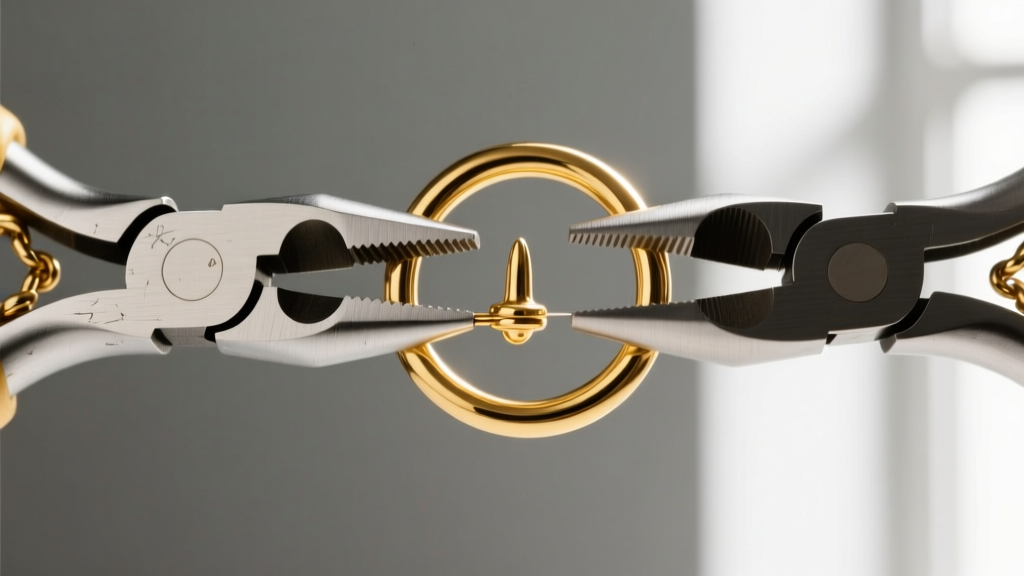
The most common mistake beginners make when dealing with continuous or seamless nose hoops is pulling the ends apart laterally (like opening a book). This lateral pull distorts the perfect circle into an oval, making it nearly impossible to close the ring flush again without specialized mandrels.
The Twist Method: Step-by-Step
To properly open a seamless hoop using chain nose pliers, you must use the twist method. This preserves the structural integrity and circular geometry of the ring.
- Grip: Hold one chain nose plier in your dominant hand and one in your non-dominant hand. Grip the hoop at the 3 o'clock and 9 o'clock positions, as close to the seam as possible without covering it.
- Twist: Gently twist your right hand toward your body and your left hand away from your body. The ring should open like a spiral staircase, not a hinge.
- Insert: Slide the hoop through the piercing channel. For septums, this is straightforward; for nostrils, you may need to use a taper to guide the wire through the fistula.
- Close: Reverse the twisting motion to bring the ends back together. Once they meet, apply a very gentle inward squeeze with the flat jaws of the pliers to ensure the ends are perfectly flush. Run your fingernail over the seam; if it catches, the ring is misaligned and will irritate the piercing.
Customizing Nose Screws and L-Bends
While captive bead rings and clickers are popular, custom-bent nose screws remain a favorite for their security and minimalist aesthetic. Bending the wire to match the exact anatomy of your nostril requires precision that only fine-tipped chain nose pliers can provide.
Creating the Perfect L-Shape
Standard nostril posts range from 6mm to 8mm in length. When creating an L-bend, the placement of the bend dictates how the jewelry sits against the inner nasal wall.
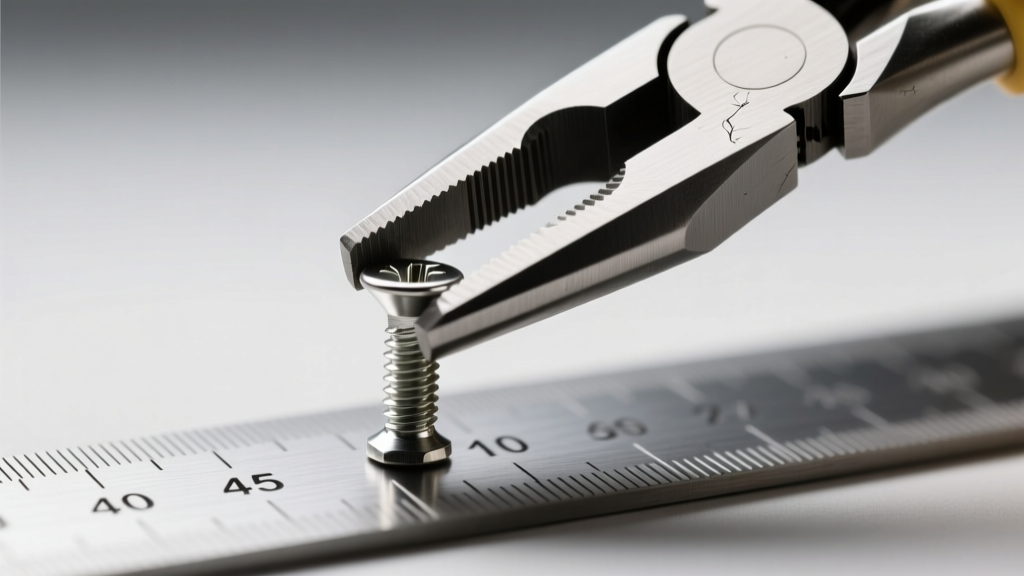
- Measure: Use a digital caliper to measure your required post length. Mark the bend point with a non-toxic jeweler's marker.
- Grip: Hold the wire with your chain nose pliers exactly on the mark. The flat jaw should be parallel to the wire.
- Bend: Use your thumb to push the protruding wire down against the pliers. Aim for an 85-degree angle rather than a perfect 90-degree angle. This slight inward tension ensures the flat part of the "L" presses gently against the inside of the nostril, preventing the jewelry from spinning or falling out.
Sanitation and Tool Maintenance
Introducing foreign bacteria into a healing or even fully healed piercing can lead to localized infections or hypertrophic scarring. According to guidelines outlined by the Association of Professional Piercers (APP), cross-contamination is a primary risk factor in piercing aftercare and jewelry handling.
Before your pliers touch your jewelry, they must be sanitized. Wipe the jaws thoroughly with a lint-free pad soaked in 70% isopropyl alcohol. Allow it to air dry for 30 seconds. Never use bleach or harsh household cleaners, as these can degrade the steel of the pliers and leave toxic residues. If you are using nylon-jaw pliers, be aware that the plastic tips degrade over time and can harbor bacteria in micro-scratches; replace the nylon inserts every few months if you use them frequently.
Common Beginner Mistakes to Avoid
Even with the right tools, poor technique can ruin expensive jewelry. Avoid these critical errors:
- Using Hardware Store Pliers: Standard utility pliers have serrated teeth designed to grip rusty nails. They will instantly destroy the mirror finish of a gold or titanium nose ring.
- Overworking the Metal: Bending a piece of wire back and forth to "get the angle right" causes metal fatigue. The wire will become brittle and eventually snap, potentially leaving a sharp edge inside your piercing.
- The "Teeth" Method: Never use your teeth to bend or bite a nose screw into shape. Human enamel is no match for titanium, and you risk cracking a tooth, ingesting metal shavings, and introducing massive amounts of oral bacteria to your jewelry.
- Ignoring Gauge Thickness: Trying to bend a heavy 14-gauge (1.6mm) septum ring with delicate, micro-tipped chain nose pliers will warp the tool's jaws. Match the tool's mass to the jewelry's gauge.
Conclusion
Mastering the use of chain nose pliers jewelry techniques transforms the way you interact with your nose piercings. Whether you are twisting a delicate 20-gauge gold hoop, bending a custom titanium nostril screw, or simply ensuring your seamless rings close with a flush, irritation-free seam, the right tool in the right hands makes all the difference. Invest in high-quality, smooth-jawed pliers, respect the metallurgy of your jewelry, and always prioritize sanitation to keep your piercings healthy and beautifully styled.


