Troubleshooting Nose Jewelry Sizes: Fix Fit & Swelling
Struggling with tight hoops or sinking studs? Learn how to troubleshoot nose jewelry sizes, fix fit issues, and choose the right gauge and diameter.

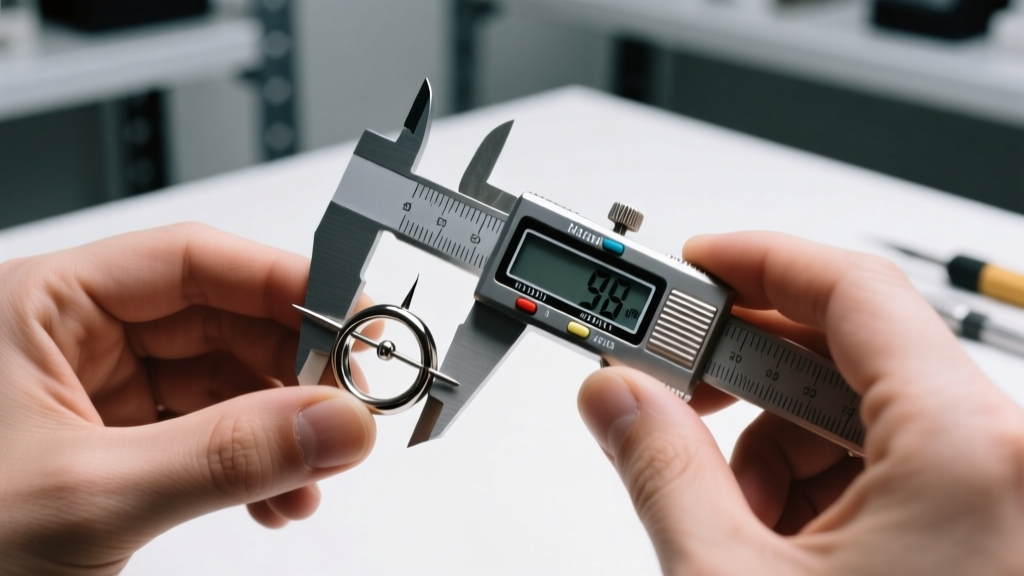
There is a profound difference between a piercing that thrives and one that constantly battles irritation, and much of that difference comes down to millimeter-level precision. When you experience persistent swelling, hypertrophic scarring, or the dreaded "cheese-cutter" migration, the culprit is rarely just your aftercare routine. More often than not, the root cause lies in improperly fitted nose jewelry sizes. Understanding the exact dimensions of your jewelry is the first step toward resolving chronic piercing trauma.
Whether you are dealing with a nostril stud that is slowly swallowing into your skin or a septum ring that refuses to hang straight, troubleshooting requires a deep dive into gauge thickness, wearable length, and inner diameter. This guide will walk you through the most common sizing failures and provide actionable, professional-grade solutions to restore your piercing's health.
The Two Dimensions of Nose Jewelry Sizes Explained
Before swapping out your jewelry, you must understand the two distinct measurement axes that dictate how a piece interacts with your unique anatomy. Many consumers confuse gauge (thickness) with diameter (width), leading to costly and painful mistakes.
- Gauge (AWG): This measures the thickness of the wire or post that passes directly through your fistula (the piercing channel). In the American Wire Gauge system, a smaller number means a thicker piece of metal.
- Wearable Length / Inner Diameter: For straight posts (like flat-back labrets), this is the wearable length—the exact distance between the decorative gem and the back disc. For hoops, this is the inner diameter—the distance across the inside of the ring, dictating how much "breathing room" the jewelry gives your tissue.
| Gauge (AWG) | Millimeters (mm) | Inches (approx) | Common Application |
|---|---|---|---|
| 20g | 0.81mm | 0.032" | Delicate nostril hoops, L-bends, nose screws |
| 18g | 1.02mm | 0.040" | Standard nostril studs, seamless rings |
| 16g | 1.29mm | 0.051" | Standard septum clickers, thick nostril hoops |
| 14g | 1.63mm | 0.064" | Septum, industrial, stretched piercings |
Troubleshooting Nostril Studs: Sinking, Sliding, and Swelling
The nostril is a highly dynamic environment. The tissue is relatively thin, but it is prone to sudden swelling due to lymph fluid accumulation, minor trauma, or even seasonal allergies. When your nostril jewelry size is incorrect, the physical symptoms manifest quickly.
Problem 1: The Sinking Stud (Embedding)
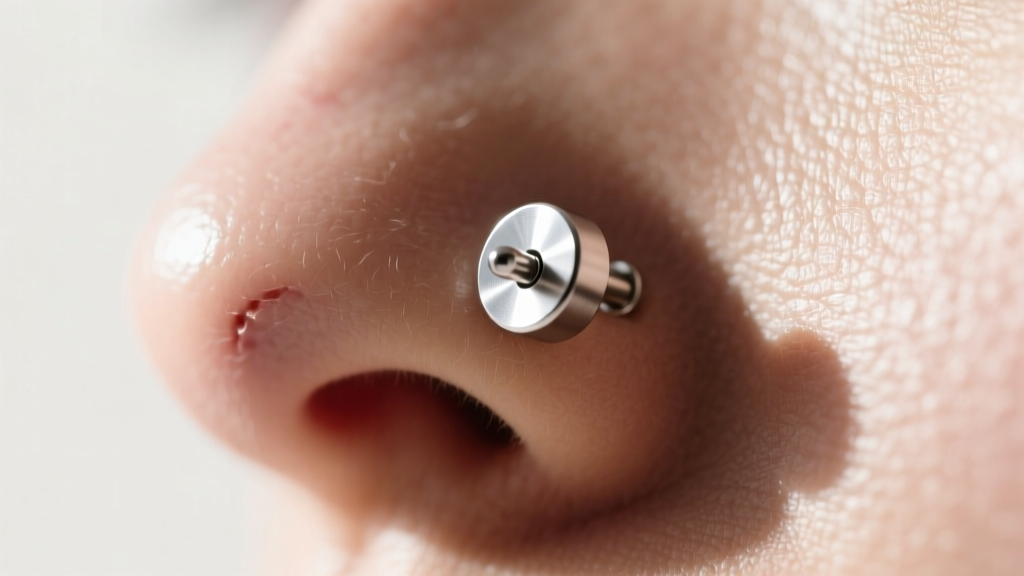
If the flat disc on the back of your nostril stud is disappearing into your skin, leaving a red, indented ring, you are experiencing embedding. This happens when the wearable length of the post is too short to accommodate your tissue's natural swelling or the thickness of your nostril wing.
The Fix: You need to upsize the post length immediately. If you are currently wearing a 5mm or 6mm post, swap to an 8mm or 10mm flat-back labret. Crucially, abandon corkscrews or L-bends during this troubleshooting phase. According to the Association of Professional Piercers (APP), straight flat-back labrets (either internally threaded or threadless/push-pin) provide the most stable, tissue-friendly fit. Once the swelling subsides and the fistula stabilizes, you can downsize to a snugger 5.5mm or 6mm post for a flush, comfortable fit.
Problem 2: The Spinning, Snagging Hoop
If your nostril hoop constantly spins, bringing the seam directly into the piercing hole and causing irritation, the inner diameter is likely too large. Conversely, if the hoop hugs the nostril tightly and pulls upward on the fistula, the diameter is too small, creating tension that can lead to migration.
The Fix: Standard nostril hoops usually range from 6mm (1/4") to 10mm (3/8"). For most average nostril piercings, an 8mm (5/16") inner diameter provides the perfect balance. If you have a thicker nostril wing or the piercing was placed slightly higher, step up to a 10mm diameter to relieve tension on the healing channel.
Troubleshooting Septum Rings: Flipping, Pinching, and Migration
Septum piercings pass through the "sweet spot" (the thin membrane between the cartilage and the bottom of the nose). Because this area is highly vascular and mobile, septum jewelry sizes require meticulous attention to inner diameter.
Problem 1: The Septum Flip
Does your septum ring naturally want to flip up into your nostrils, or does it rest awkwardly against your columella (the flesh between your nostrils)? This is almost always an inner diameter issue. If the ring is too small, it cannot clear the bulk of the tissue, forcing the jewelry to sit at an upward angle.
The Fix: Increase the inner diameter. A standard starter septum is often pierced with an 8mm (5/16") ring. If you experience the "flip" or pinching, upsizing to a 10mm (3/8") or even an 11mm ring will allow the jewelry to hang naturally and clear the tissue, eliminating the mechanical irritation that causes hypertrophic bumps.
Problem 2: The Cheese-Cutter Effect
The "cheese-cutter effect" is a severe failure mode where a thin wire slowly slices through the tissue, eventually causing the piercing to migrate out entirely. This is a physics problem: a thinner wire concentrates kinetic force into a smaller surface area.
The Fix: If your septum or high nostril is pierced at 18g or 20g, and you are wearing heavy or dangling jewelry, you must increase the gauge thickness to distribute the weight. Upgrading to a 16g (1.29mm) or 14g (1.63mm) ring drastically reduces the pressure per square millimeter on your fistula, effectively halting the migration process. Note that stretching a septum from 18g to 16g should be done gradually using a professional taper and high-quality lubricant to avoid tearing the tissue.
Material Considerations When Resizing Irritated Piercings
When troubleshooting nose jewelry sizes, you are often interacting with an already compromised, inflamed fistula. This is the absolute worst time to introduce reactive metals. If you are swapping out a poorly sized piece of jewelry to fix a fit issue, you must simultaneously upgrade the material.
"Implant-grade titanium (ASTM F136) is the material of choice for initial piercings and irritated tissue. Its biocompatibility and lack of nickel prevent the contact dermatitis that frequently complicates the healing process when jewelry is changed." — Association of Professional Piercers
Surgical steel (even 316L) contains nickel, which can leach into a swollen, open wound, causing an allergic reaction that mimics an infection. When ordering your correctly sized replacement flat-back or clicker ring, ensure the product description explicitly states ASTM F136 Implant-Grade Titanium or solid 14k/18k nickel-free gold. Avoid "titanium-plated" or "surgical steel" options when your piercing is actively rejecting its current size.
Step-by-Step: How to Measure and Order the Right Replacement
Guessing your nose jewelry sizes by holding a ruler up to your mirror is a recipe for wasted money and continued irritation. To accurately determine the size you need to order, invest in a pair of digital calipers.
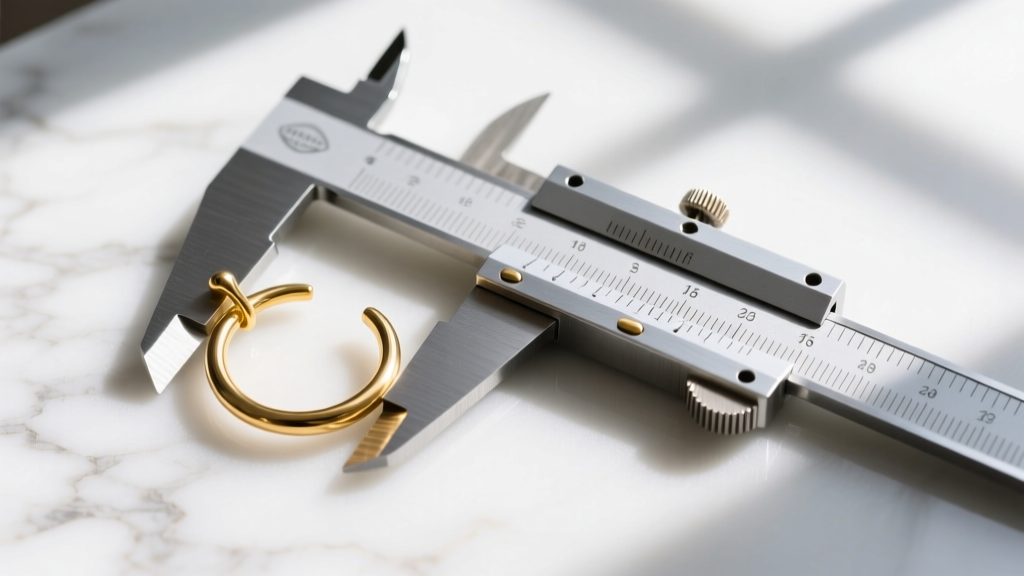
- Measure the Wearable Length (Posts): Remove your current flat-back stud. Using the digital calipers, measure the post from the base of the decorative end to the top of the back disc. Do not include the pin (if threadless) or the threading. If it measures 6.5mm and is embedding, you know to order an 8mm post.
- Measure the Inner Diameter (Hoops): Close the calipers inside the hoop. You are measuring the empty space inside the ring, not the outer edge of the metal. If your current 8mm septum clicker is flipping up, measure it to confirm, then order a 10mm replacement.
- Verify the Gauge: Gently clamp the calipers around the wire itself. A reading of ~1.2mm confirms you are wearing 16g; a reading of ~1.0mm confirms 18g. Never force a thicker gauge into a smaller hole without professional stretching tools.
When to Seek Professional Intervention
While understanding and troubleshooting nose jewelry sizes empowers you to make better purchasing decisions, some issues require a professional's hands. If your piercing is severely embedded (where the skin has grown entirely over the back disc), do not attempt to dig it out yourself. Visit an APP-certified piercer who can safely excise the tissue and insert a properly sized, sterile titanium post. Similarly, if you suspect your piercing is migrating due to the cheese-cutter effect, a professional can assess the angle of the fistula and determine if the piercing can be saved or if it needs to be retired and repierced at a safer depth.


