Nose Ring to Earring Chain: 2026 Trend & Style Guide
Explore the 2026 nose ring to earring chain trend. Learn about gauge limits, tension-relief hardware, materials, and styling frameworks for face chains.

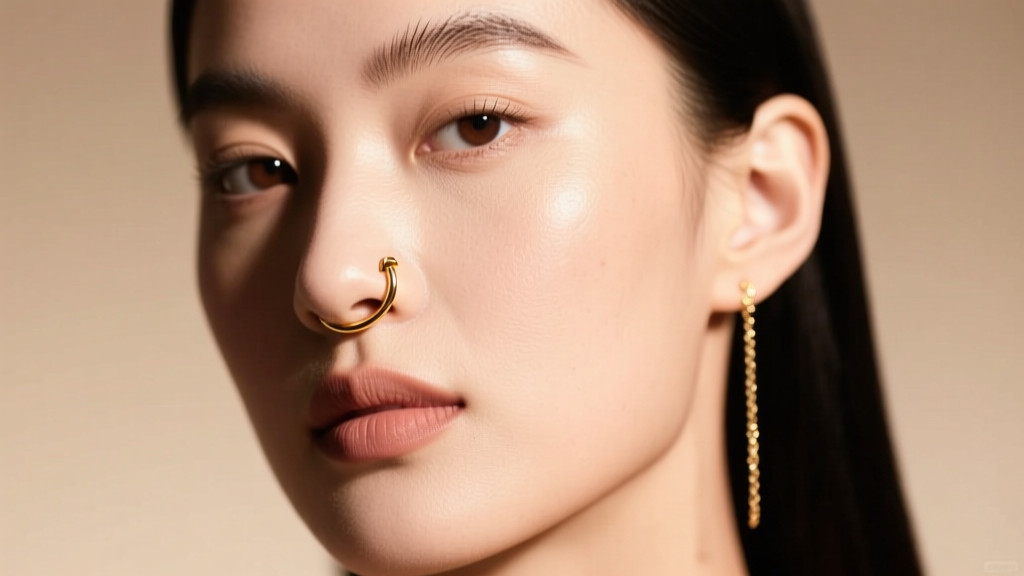
The nose ring to earring chain has transcended its niche subculture roots and traditional cultural origins to become one of the most defining facial jewelry trends of 2026. Once relegated to avant-garde editorial shoots, goth subcultures, or traditional South Asian bridal wear (where it is known as a Nath or Sahara chain), the ear-to-nose chain is now a staple in contemporary streetwear and minimalist high fashion. However, bridging the gap between two distinct facial piercings introduces unique biomechanical challenges. Unlike standard studs or hoops, a face chain creates a lateral tension bridge that can severely damage your piercings if the hardware and gauge sizes are not meticulously selected.
In this comprehensive style and trend analysis, we break down the anatomy of the modern nose ring to earring chain, explore the metallurgical requirements for long-term wear, and provide actionable styling frameworks to help you integrate this bold accessory into your everyday rotation without compromising your piercing health.
The Evolution of the Face Chain: From Tradition to 2026 Runways
Historically, the nose ring to earring chain served a highly functional purpose in South Asian cultures. Traditional gold Nath rings were often large, heavy, and ornate. The chain connecting the nose ring to the earlobe or hair was designed to bear the weight of the jewelry, preventing the heavy gold from tearing the delicate nostril fistula. Fast forward to the early 2010s, and the chain was co-opted by punk and grunge aesthetics, often utilizing heavy steel links and safety pins.
Today, the 2026 iteration of the nose ring to earring chain is defined by micro-jewelry and precision engineering. High-fashion houses and independent piercers are favoring ultra-fine box chains, delicate pearl strands, and invisible tension-relief clasps. The modern aesthetic is less about heavy, aggressive hardware and more about creating a subtle, shimmering line that accentuates the cheekbone and jawline. According to industry trend forecasts, searches for 'micro face chains' and 'tension-relief ear cuffs' have spiked as consumers look for ways to wear the trend safely in professional and everyday environments.
Biomechanics and Tension: Avoiding the Cheese-Cutter Effect
The most critical mistake enthusiasts make when adopting the nose ring to earring chain trend is ignoring lateral tension. A standard nostril piercing is typically performed at 20-gauge (0.81mm) or 18-gauge (1.02mm). If you attach a chain directly from a 20G nostril screw to a heavy ear stud, the natural movements of your head, talking, and facial expressions will pull on the chain. This lateral pull forces the thin 20G wire to act like a cheese wire against your fistula, leading to a phenomenon known in the piercing community as the cheese-cutter effect. This causes the piercing to migrate, reject, or tear entirely.
To safely wear a nose ring to earring chain, you must utilize a tension-relief system. The weight of the chain must be anchored on the ear side, leaving the nose connection purely decorative.
Gauge and Weight Tolerance Chart
| Piercing Location | Standard Gauge | Max Chain Weight (Without Relief) | Recommended Anchor Method |
|---|---|---|---|
| Nostril (Standard) | 20G (0.81mm) | Under 2 grams | Ear-cuff anchor or micro-clasp |
| Nostril (Upgraded) | 16G (1.29mm) | Up to 5 grams | Fixed barbell with soldered O-ring |
| Septum | 16G (1.29mm) | Up to 8 grams | Clicker ring with integrated jump ring |
| Earlobe (Anchor) | 14G - 12G | N/A (Bears the weight) | Flat-back labret with chain loop |
For a detailed understanding of how jewelry weight and gauge affect fistula health, the Association of Professional Piercers (APP) provides extensive guidelines on why proper sizing and weight distribution are non-negotiable for long-term piercing retention.
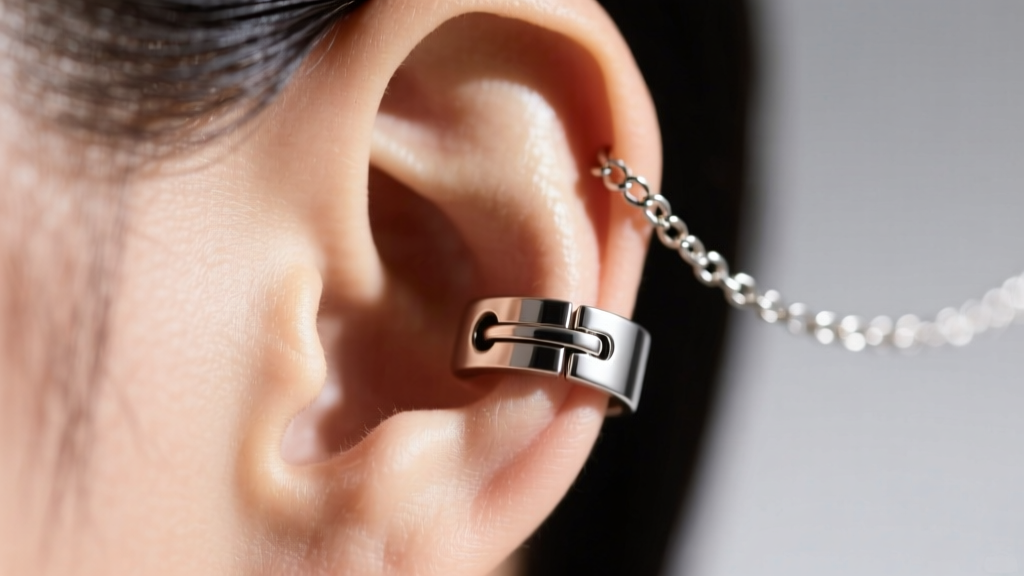
Material Science: What Touches Your Skin
Because a nose ring to earring chain spans a wide area of the face, it is exposed to varying temperatures, skincare products, and environmental pollutants. Furthermore, the chain rests against the cheek, making the material's biocompatibility paramount.
ASTM F136 Titanium vs. 316L Surgical Steel
Many budget-friendly face chains on the market are crafted from 316L surgical stainless steel. While 316L is common in entry-level jewelry, it contains up to 14% nickel. When a steel chain rests against the cheek and traps sweat or skincare serums, it can leach nickel ions, triggering allergic contact dermatitis. The American Academy of Dermatology notes that nickel allergies are cumulative; repeated exposure from face chains can sensitize your immune system over time. For 2026, the industry gold standard for the chain and hardware is ASTM F136 implant-grade titanium. It is entirely nickel-free, highly resistant to corrosion from acidic skincare (like Vitamin C or AHAs), and significantly lighter than steel, reducing the overall drag on your ear anchor.
Solid Gold (14k and 18k)
For those seeking the warmth and prestige of gold, 14k and 18k solid gold chains are excellent choices. However, gold is a dense, heavy metal. If you opt for an 18k gold rolo chain, you must ensure your ear anchor is a heavy-gauge (14G or 12G) flat-back labret to prevent the earlobe from stretching or migrating under the gold's weight. Avoid gold-plated brass or copper at all costs; the plating will inevitably wear off from friction against the cheek, exposing the base metals and causing severe skin discoloration and irritation.
Styling Frameworks: Matching the Chain to Your Aesthetic
The beauty of the nose ring to earring chain lies in its versatility. By swapping the chain type and the terminal ends, you can completely alter your facial profile. Here are the three dominant styling frameworks for 2026:
- The Minimalist Micro-Box: Utilizing a 1.2mm titanium or white gold box chain, this style offers a sleek, almost liquid-metal appearance. Box chains are highly recommended for those with long hair, as their smooth, interlocking square links are virtually immune to snagging. Pair this with a simple 2mm bezel-set diamond or opal nostril stud and a matching earlobe threadless end for a cohesive, high-end look.
- The Y2K / Streetwear Rolo: The rolo chain features alternating, chunky circular links. This style leans heavily into the early-2000s revival and streetwear aesthetics. To pull this off safely, use a 16G upgraded nostril piercing and anchor the chain to a cartilage piercing (like a flat or helix) rather than the earlobe, creating a sharper, more angular line across the face.
- The Avant-Garde Pearl Sahara: Drawing direct inspiration from traditional bridal wear, this style replaces the metal chain with a strand of micro-pearls (2mm to 3mm). Pearls are incredibly lightweight, solving the tension issue entirely. This look is usually anchored behind the ear or woven into the hair, creating an ethereal, editorial silhouette perfect for special events or high-fashion styling.
Practical Troubleshooting and Daily Maintenance
Living with a nose ring to earring chain requires a period of behavioral adjustment. The most common failure mode is accidental snagging on clothing, towels, or hairbrushes, which can result in immediate trauma to the nostril piercing.
Pro-Tip from Master Piercers: Always utilize a micro-lobster clasp or a magnetic breakaway clasp on the nose-side of the chain. If the chain gets caught, the clasp will pop open before the tension is transferred to your nostril fistula, saving you from a painful tear.
Sleeping and Hygiene
You should never sleep with your nose ring to earring chain attached. The friction against your pillowcase will create unpredictable lateral pulling. Before bed, unclip the chain from the nose ring, leaving only the lightweight stud in your nostril.
For cleaning, the chain must be removed and soaked in a mild, fragrance-free antibacterial soap solution once a week. Skincare products, particularly heavy moisturizers and chemical exfoliants, will build up in the microscopic crevices of cable and rolo chains, leading to dullness and potential bacterial growth. Use a soft-bristled baby toothbrush to gently agitate the links while soaking, then rinse thoroughly with distilled water and pat dry with a lint-free microfiber cloth to prevent water spots on gold or titanium finishes.
Sourcing and Investment
When investing in a nose ring to earring chain, avoid mass-market fast-fashion retailers. The clasps on cheap chains are notoriously weak and prone to snapping, while the base metals will tarnish within weeks of contact with facial oils. Instead, seek out specialized body jewelry brands or independent metallurgists who offer custom-length face chains. Expect to pay between $45 and $90 for high-quality, implant-grade titanium setups, and $150 to $400+ for custom 14k solid gold configurations. By prioritizing tension-relief hardware and biocompatible materials, you can safely enjoy the defining facial jewelry trend of the year without compromising the integrity of your piercings.


